Things to do in Baoding
Explore top experiences
Top 10 attractions in Baoding


West Street
West Street is located in Lianchi District, Baoding City, Hebei Province, extending from Lianchi South Street in the east to Hengxiang South Street in the west. With a total length of approx. 846m, it serves as the central axis and core historical and cultural district of the ancient city of Baoding. It was first built in the Song Dynasty, took shape in the Yuan Dynasty, and flourished in the Qing Dynasty. It was once the political, economic, and cultural center of Baoding Prefecture, and also a key thoroughfare connecting the city center with the West Gate. The district currently preserves 9 cultural experience areas, 5 cultural relic protection units, and 9 historical buildings. The architectural style features a blend of Chinese and Western elements from the late Qing and early Republic of China periods, with blue bricks, grey tiles, and arched doors and windows, presenting a simple and ancient appearance. The Zhanyue Gate archway standing at the entrance of the street is a landmark of the district, with the plaque inscription written by the late Qing calligrapher Pan Linggao. In 2021, Baoding City launched a renovation and improvement project, adhering to the concept of "micro-update and progressive" development, restoring the exteriors of historical buildings while integrating modern facilities to recreate the appearance of the old street. Today, it has become an important window for experiencing the historical heritage and urban vitality of Baoding.Baoding · 3km from downtown

Daci Pavilion
Located at the southern end of North Street, Baoding City, Hebei Province, it is also known as Dabei Pavilion. According to the "Baoding House Records", the Daci Pavilion was built by Zhang Rou, Marshal of the East and West Roads of Mongolia, in the tenth year of Song Chunyou (1250). The current Daci Pavilion is a building that was rebuilt many times after being burned during the Qianlong period of the Qing Dynasty. Daci Pavilion covers an area of 1,600 square meters and has a construction area of 600 square meters. The existing main buildings are Shanmen, Tianwang Hall, Bell Tower, Drum Tower, Daci Pavilion and Guandi Temple. The Hall of Heavenly Kings sits from north to south, with a pair of stone lions in front of the door, and the banner of "Zhenjue Zen Temple" is embedded on the lintel. Passing through the Hall of Heavenly Kings, the Bell Tower and the Drum Tower are quietly facing each other. The height and shape of the second floor are the same, each with a total height of 10.9 meters. To the north is the main building on a 4.6-meter-high stone foundation. Behind the Daci Pavilion is a Guandi Temple built in the Ming Dynasty, formerly known as "Han Shoutinghou Temple". The existing Guandi Temple was a building that was rebuilt in 1985. The main hall is three wide and one deep. Type building, front roll shed. Because it sits south to the north, it is called the inverted Guandi Temple, which is rare in the whole country. The main building, Daci Pavilion, is built on a stone platform with a height of 5.4 meters. There are 22 steps in front of the pavilion. The caisson and purlins in the pavilion are painted with swirls. There are eighteen arhats on both sides of the pavilion, which are still clearly visible and have different expressions. They are art treasures in the pavilion. Daci Pavilion is 31 meters high, majestic and can be seen from dozens of miles away. In the old poems, there is a sentence "Looking at the treetops of Zhulou in Yan City, only the golden pavilion is seen in the clouds", and it is listed as one of the eight scenic spots in Baoding, called "City Pavilion Lingxiao". .Baoding · 3.6km from downtown

Yesanpo Qingquan Mountain Scenic Area
Yesanpo Qingquan Mountain Scenic Area is located in the Yesanpo Tourism Resort Center of Laishui County, Baoding City, approximately 2 km from Yesanpo Station, offering a bustling and convenient location. The scenic area nestles alongside the murmuring Juma River, with lush green trees and cascading waterfalls throughout the mountains. It also features refreshingly cool karst caves and mountain springs.Qingquan Mountain"hence the name." The Juma River flows through the area, creating a pleasant climate with high negative oxygen ion content in the air, making it a true natural oxygen bar and air conditioner. With its diverse landscapes, stunning scenery, and abundant vegetation—including rare plants preserved in the valley's original secondary forests—it's often called Beijing's backyard garden. The attraction spans 13.65 square kilometers of natural landscapes, featuring stone forests and the Shuilong Cave.Baiyun TempleGoddess PeakQinglongtanThe canyon boasts spectacular waterfalls and wonders, featuring one spring, six waterfalls, and seventy-two scenic spots. It also offers attractions like sightseeing elevators, a UFO flying saucer, a mountain-top infinity pool, a glass suspension bridge in the clouds, a 9D Buddha's Hand glass platform, high-altitude rafting, and more.Forest Canyon Karst Cave DriftingLand sliding, speedboating, bamboo rafting, water swings, shouting springs, horseback riding, colorful suspension bridges, and pedal boats make it a great place for summer retreats and vacations in Yesanpo. Over millions of years of wind and rain erosion, this area has developed the majestic grandeur of northern mountains alongside the exquisite and precipitous charm of southern landscapes. The main peak of the attraction stands 888 meters tall, with its massive ridges resembling a reclining beauty gazing at the sky—hence the name Beauty Peak. The "beauty's head" measures 100 meters in height, while her "body" stretches over 2,000 meters, appearing vividly lifelike.QinglongtanThe crystal-clear waters shimmer, perfectly complementing the picturesque mountains. The scenic area also features multiple karst caves, including the 1,500-meter-long "Water Dragon Cave" adorned with stalagmites and stone flowers. The rugged rocks create a striking contrast with the vibrant yellow azalea bushes covering the hills. In late fall, the fiery red leaves paint the entire forest in breathtaking hues, creating a magnificent spectacle.Nantianmen and Stone Forest Towering into Baiyun MountainThe mountain is also home to numerous ancient structures, making it an excellent destination for historical exploration and tranquil retreats. byClear SpringNamed after coolness and designed with a refreshing concept, the attraction is built adjacent to Yesanpo Qingquan Mountain Hotel for guests' comfortable stay. Visitors can book this hotel in advance and reach the attraction within minutes on foot, avoiding the hassle of traveling in the scorching summer heat while enjoying a delightful cool getaway.Laishui · 39.7km from downtown

Shuǐpǔgōu Scenic Area
Shuipugou Scenic Area is located in Niwapu Town, Yi County, Baoding, 110 kilometers away from Baoding City, about 2 hours by car. There are rivers, streams and waterfalls in Shuipugou Attraction. The river is like a jade belt, the spring water is clear as jade, the stream has the sound of a royal pendant, and the waterfall has the posture of flying. The Attraction is densely forested, vines are entangled, and green mountains are continuous. Going up along the stream, the canyon is deep and winding. A waterfall rushes down along the mountain stream, and the falling water splashes layers of water mist and waves, like the hazy spring drizzle, as described by Xu Xiake, a traveler in the Ming Dynasty: "The cliff waterfall is as long as a cloth, turning like a tilt, and evenly forming a curtain."Yi County · 25.8km from downtown

Dingzhou Confucian Temple
Dingzhou Confucian Temple, also known as the "Temple of Confucius," is a site dedicated to honoring Confucius. Originally built in the late Tang Dynasty around 859 AD, it has hosted ceremonial activities for over a thousand years. Historically referred to as the "Prefectural School," "State School," or "Academy," it earned the reputation of "Zhongshan's temple school surpassing all under heaven." The temple underwent multiple expansions and renovations during the Tang, Song, Yuan, and Ming dynasties, achieving grand scale before being reduced to ashes during late Ming military conflicts. Restored in the Qing Dynasty, it largely retained its pre-Ming architectural layout. Covering an area of 15,685 square meters, the temple complex now consists of three adjacent northern courtyards and a southern courtyard. The southern courtyard features a quadrangle-style Jiexiao Shrine, while the eastern courtyard houses the Chong Sheng Shrine and Kuixing Pavilion. The western courtyard includes the Minglun Hall, ceremonial gate, and main gate, while the central courtyard boasts the Dacheng Hall, east and west side halls, halberd gate, east and west official halls, as well as shrines for distinguished officials and local sages, along with the Lingxing Gate. The majestic ancient architecture, lush and ancient cypress trees, the vibrant "Scholar Tree Embracing the Toon," and the celestial "Falling Star Stone" create an elegant environment, making it a leisure-friendly tourist attraction. With its long history and well-preserved layout, Dingzhou Confucian Temple stands as one of Hebei Province's most intact Confucian temple complexes and was designated a National Key Cultural Relic Protection Unit in 2013.Dingzhou · 978m from downtown

Ai Bao Yesheng Dongwu World
Ecological Park Aibao Wildlife World is located in the southeast corner of Baoding Ecological Park. It is an interactive wildlife park that integrates animal protection, tourism, animal behavior display, ecological gardens, green environment, farming experience and science education, narrowing the distance between people and animals and increasing the contact between people and animals.Baoding · 7.5km from downtown

Yugu Cave Spring
Yugudong Natural Scenic Area is located in the middle of Yesanpo. It flows through the small Xihe River surrounded by mountains. The scenery is beautiful, the climate is pleasant, and the strange springs and caves are interesting. It is an ideal place for adventure and leisure. Entering the cave, thousands of stalactites, stalagmites, stone pillars and spacious and tall caves, the winding passages are like the underground dragon palace under the illumination of the lights.Laishui · 48.4km from downtown

Geyuan Temple
Geyuan Temple was founded in the Eastern Han Dynasty. The earliest existing structure is the Manjushri Hall, built in the early Liao Dynasty. This hall is one of the earliest, largest, and best-preserved timber-frame structures in the country. It is also one of the few timber-frame structures in the country that is over a thousand years old, holding significant historical, scientific, and artistic value. Geyuan Temple was known as "Geziyuan" before the Ming Dynasty. Judging by its name, it may have once been a temple centered around a pavilion. The Manjushri Hall is a representative example of official architecture from the early Liao Dynasty. In the history of Chinese ancient architecture, its column-reduction construction, dougong, lattice windows, murals, exterior eave paintings, the original mummified statue inside the hall, and the ancient bell in the southeast corner of the courtyard are the "Seven Wonders" of Geyuan Temple. As a national treasure, the core of Geyuan Temple is this Manjushri Hall.Laiyuan · 864m from downtown

Dingzhou Ancient City
Dingzhou Ancient City is located 50 km southwest of Baoding and is renowned for its long history and splendid culture. Since the Shang and Zhou dynasties, Dingzhou has been a political, economic, military, and cultural center in the north, leaving behind a rich cultural heritage for future generations.Dingzhou · 1.3km from downtown

Quansheng Gorge Scenic Area
The Quansheng Gorge Scenic Area is the positive side of Qing Xuan Mountain, a northern Taoist holy site in northern China. Because it is a rare karst landscape in the north, the scenic area of Quanshengxia has three unique features: First, the Grand Canyon covers the sun and cools the area; Second, stalactites are all over the canyons, and there are more natural lotus stalactites; three, there are streams and lake waterfalls. The scenic area of Quansheng Gorge is facing the south and surrounded by mountains. The area is full of water, and the peculiar cave landscape is delightful.Tang County · 28.9km from downtown
Experiences you can't miss in Baoding
Featured Day tours in Baoding
View all Day tours
Free cancellation
Book now for tomorrow
FromJPY 7,094

Free cancellation
Instant confirmation
Book now for tomorrow
FromJPY 42,725
Free things to do in Baoding


What travellers say about Baoding

网开三十面5 October 2026
4.0
This is one of the must-visit streets in Baoding. It's basically a commercial street with little cultural heritage, but it's very crowded. Just stroll around; there's nothing particularly outstanding. The street is quite long, and the Governor's Office is on the next street. You can find some snacks and small commodities along the way. It will take about an hour and a half to walk around, stopping frequently. Parking is a real problem; you need to park far away.
West Street

yjw20003 August 2026
5.0
Tracing the footsteps of Baoding, one arrives at the Daci Pavilion of Zhenjue Temple. Its double-eaved roof soars high, earning it the nickname "City Pavilion Reaching the Sky." Ancient trees encircle the steps, and the gentle tinkling of wind chimes isolates it from the hustle and bustle of the city.
Inside, a solemn statue of compassion overlooks the myriad houses and streets. A rare quality in ancient architecture is that its Zen spirit is not detached from the human world. Incense burns regularly, and the common people live alongside it; through the ages, the ancient pavilion silently watches over the land of Shanggu.
Daci Pavilion

小驴蹄17 September 2021
5.0
The first time I went there, I didn't feel much. The mountains and rivers were beautiful, the scenery was pleasant, the environment was good, and the transportation was quite convenient. The most important thing was that I didn't feel too tired when going up and down the mountain! Overall, it was very beautiful and a relaxing place. Friends, don't worry!
Yesanpo Qingquan Mountain Scenic Area

M40***3229 April 2026
5.0
It's great value for money, with several good photo spots, making it a worthwhile experience. I had a lot of fun taking pictures here. Other tourist attractions I've visited only have one or two small waterfalls at most, but this one is much better.
Shuǐpǔgōu Scenic Area

龙行天下之飞龙在天5 December 2025
5.0
Dingzhou Confucian Temple (also known as Dingzhou Confucius Temple) is one of the oldest and largest existing Confucian temple complexes in northern China. Its specific information is as follows:
I. Construction Date: Dingzhou Confucian Temple was first built in the second year of the Dazhong era of the Tang Dynasty (848 AD). It has been rebuilt and expanded many times throughout history. The existing buildings are mainly from the Ming and Qing dynasties, preserving the typical layout of an ancient Confucian temple.
II. Architectural Style: The temple is built in the official architectural style of northern China, following the symmetrical layout of traditional Chinese ritual architecture. The architectural form is solemn and rigorous, reflecting the sense of order in Confucian culture and the solemnity of sacrificial architecture. Its architectural details (such as brackets, beams, and roof forms) have the characteristics of northern architecture in the Ming and Qing dynasties, while also incorporating local craftsmanship.
III. Building Area and Layout:
* Area: The temple covers an area of approximately 12,600 square meters, with a building area of approximately 3,000 square meters. It is a large-scale complex with progressively tiered courtyards.
• Layout: Adopting a typical Confucian temple layout, the main structures along the north-south central axis are as follows:
• Front Section: The towering palace wall (screen wall), the Lingxing Gate, the Pan Pool, and the Ji Gate.
• Core Section: The Dacheng Hall (main hall, enshrining Confucius), and the east and west wings (for secondary shrines to sages and scholars).
• Rear Section: The Minglun Hall (lecture hall), and the Chongsheng Shrine (for worshipping Confucius and his ancestors).
IV. Main Features
1. Outstanding Historical Value: As a Confucian temple originally built in the Tang Dynasty and rebuilt in the Ming and Qing Dynasties, it is a physical testament to the development history of Confucian temples in North China and was listed as a National Key Cultural Relics Protection Unit in 2006.
2. Well-Preserved Architecture: The axis is clear, and the main buildings, such as the Dacheng Hall and the Lingxing Gate, are well-preserved, showcasing the craftsmanship and form of official Ming and Qing architecture. 3. Unique Cultural Fusion: The Dingzhou Confucian Temple houses the Dingzhou Museum (originally the Minglun Hall and its rear courtyard), combining ancient architecture with local cultural relics displays, serving multiple functions including worship, education, and exhibition.
4. Ancient Tree Remains: Several ancient cypress trees remain within the temple grounds, the most famous being the "Dongpo Twin Locust Trees" (two locust trees in the north courtyard), said to have been planted by Su Shi himself. Although not originally planted during the Tang Dynasty, they add to the cultural significance.
5. Regional Representativeness: It is an important site for studying ancient ritual architecture, imperial examination education, and the dissemination of Confucian culture in Hebei Province and even northern China.
At one point, the Confucian Temple also served as a museum, exhibiting and preserving cultural relics unearthed in Dingzhou over the years: jade burial suits with gold and silver threads, as well as porcelain from the Ding kiln.
Historically, the Dingzhou Confucian Temple was adjacent to the Dingzhou Examination Hall (ancient examination hall), together forming a local cultural and educational center. Today, as an important part of the Dingzhou Ancient City cultural district, it is open to the public, serving both cultural relic protection and cultural education functions.
Dingzhou Confucian Temple

putaorain20 April 2025
5.0
Paradise on earth, very beautiful! Satisfied, satisfied, satisfied, the environment is quiet, so close and so beautiful. Come here on weekends. The scenery is pleasant and makes people feel relaxed and happy. Enjoy the beautiful scenery. Paradise on earth, very beautiful! Satisfied, satisfied, satisfied, the environment is quiet, so close and so beautiful. Come here on weekends. The scenery is pleasant and makes people feel relaxed and happy. Enjoy the beautiful scenery.
Ai Bao Yesheng Dongwu World

300***7525 August 2026
5.0
A unique journey blending natural wonders, geological science, and the charm of mountains and rivers
I. First Impressions: A Natural Secret Hidden Deep in the Mountains
II. Cave Wonders: A "Time Tunnel" of Geological Evolution
Stalactite Landscapes: Such as "Fish Scale Waterfall," "Sky Pillar," and "Lotus Pond," their lifelike shapes inspire awe at the wonders of nature. Especially some of the still-growing stalactites, with water droplets slowly falling, seem to allow one to hear the sound of time flowing by.
Underground River: Traveling by small boat through the dark waterways, the crystal-clear water and the boatman's gentle touch of the bamboo pole create a sense of adventure amidst the swaying light and shadows. It is said that the cave's spring water maintains a constant temperature year-round, never freezing in winter and remaining cool and pleasant in summer.
Fish Valley Spring Wonder: The most magical feature of the cave is the "Fish Valley Spring"—around the time of Grain Rain each year, a large number of live fish (often called "multi-scaled shovel-jawed fish") gush forth from the spring. This natural phenomenon remains unsolved and is known as a "world wonder spring." Although not always visible, the information plaques and legends at the spring still evoke a sense of wonder.
III. Combining Education and Fun
The scenic area pays attention to lighting design and guided tours:
Lighting Effects: While some areas are slightly overly bright, the overall effect highlights the layered texture of the cave, making it ideal for taking photos.
Geological Education: Along the way, there are illustrated explanations of the geological formation process, perfect for children to learn while playing and understand the mysteries of karst landforms.
Interactive Experiences: Some sections require bending over or climbing narrow ladders, increasing the fun of exploration (but the elderly or those with mobility issues should be careful).
IV. Surrounding Attractions: The Landscape of Yesanpo
A visit to Yugu Cave itself takes about 1-2 hours. It is recommended to combine it with nearby attractions:
Juma River Rafting/Bamboo Rafting: After exiting the cave, you can play in the Juma River and experience the gentle beauty of the mountains and rivers rarely seen in northern China.
Bailixia Scenic Area: The core attraction of Yesanpo, with its deep canyons and cascading waterfalls, suitable for hiking enthusiasts.
Yugu Cave Spring

冰咖啡彩虹糖19 January 2026
5.0
The ancient Geyuan Temple, with a history of over a thousand years, is located on the west side of Guangchang Street in Laiyuan County. Facing south, the temple's preserved central axis buildings include the Hall of Heavenly Kings, the Hall of Manjushri, and the Sutra Repository, flanked by a west gate, east and west side halls, and a west meditation room. Supporting cultural relics include a Liao Dynasty iron bell and two sutra pillars. The temple grounds are verdant with ancient pines, and its halls are scattered throughout. The "Geyuan Bell Chime" is one of the twelve ancient scenic wonders of Laiyuan. Geyuan Temple boasts eight unique features: among them, the dougong (bracket sets), window lattices, and murals are known as the "Three Treasures" of the Hall of Manjushri.
Geyuan Temple

中山阳明2 January 2026
4.0
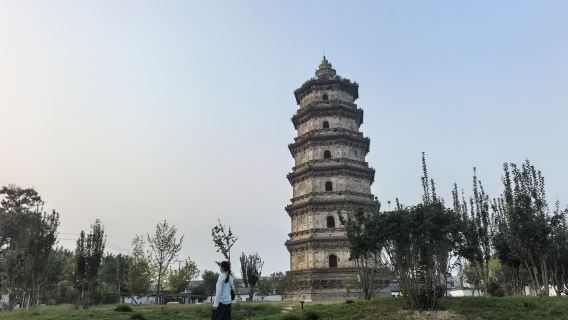
Dingzhou is a county-level city under Baoding. Although small, it boasts a treasure museum and a famous ancient pagoda. The ancient city of Dingzhou is situated around the pagoda, with a grand city gate and quiet alleyways surrounding it. The antique-style street is relatively quiet during the day, with few shops, but it might become more lively at night.
Dingzhou Ancient City

M29***3722 June 2026
5.0
This scenic area is pretty good; it's a good place to bring kids. There are mountains and water, and children can catch small fish and shrimp. However, you'll need some stamina to see the whole thing. 😄
Quansheng Gorge Scenic Area


