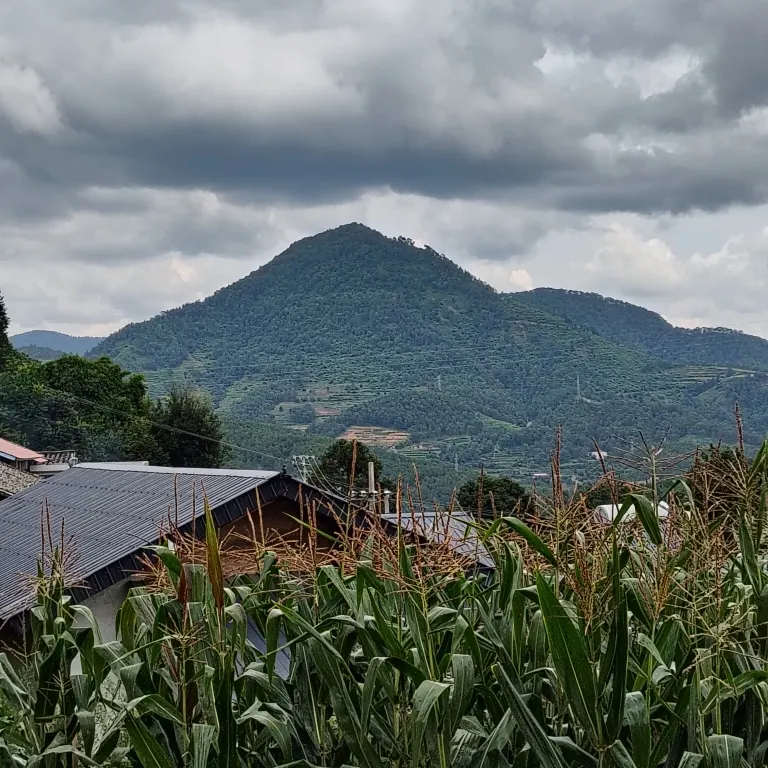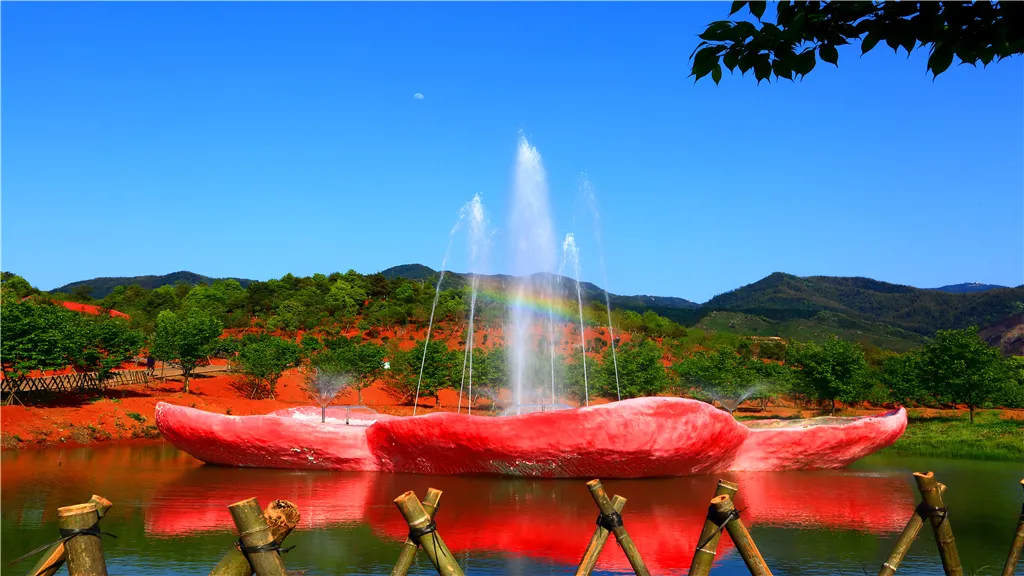
Changning

Things to do in Changning

Search attractions or local attractions & tours
Search

Explore top experiences

Top 10 attractions in Changning

View all Attractions
Yinshan Mountain

Yinshan Mountain

3.4
4.2/5
50 reviews

China Yinshan Cultural Tourism Area is located in Jinlong Village, Miaoqian Town, Changning City, Hengyang City. It has a certain tourism reputation in the province for its unique and colorful cultural resources and mountain scenery. It is an important leisure and tourism destination in Hengyang City and Hunan Province. It is themed on Yinshan cultural experience, geological sightseeing, and rural leisure, including Yinshan, Zhongtian Ancient Residence, God of Wealth Cave, Haiyi Bay and Shima Attraction. China Seal Mountain includes "one peak and three cities", namely, China Celebrity Seals City, China Calligraphy City, and China Commemorative Seals City. It includes seals of ancient celebrities, modern celebrities, seals of famous sayings and aphorisms from past dynasties, portrait seals from past dynasties, as well as calligraphy and stone carvings. It is mainly divided into Pre-Qin, ancient, modern and contemporary dynasties according to the dynasties, and it collects more than 4,800 seal patterns of various shapes. This mountain has carved Chinese seal patterns for thousands of years on the rocks, integrating the cultural landscape with the natural landscape. God of Wealth Cave It is called "underground art treasure house" and is located in the central section of "Changgui Baili Gallery". It is about 1,000 meters long and has many scenic spots, including Wealth God Welcoming Guests, Welfare God Gathering, Wealth God Pointing the Way, Azure Dragon Protecting Pearls, Jadeite Suspended Tower, Treasure Basin, Fairy Bridge of Yaochi, Eight Immortals Treasure Hunting, Dragon Boat Gifting, Gold Panning for the Poor, Wealth God Complimentary Treasures, Ingots Complimentary, and Divine Turtle Celebrating Birthday. Wealth God Cave is a typical karst landform landscape, which basically includes various lifelike forms of stalagmites, stone pillars, stalactites, stone curtains, etc. of karst cave landscape, and is known as "an enlarged fairy mountain and a shrunken bonsai". Zhongtian Ancient House Located in the core position of the entire Miaoqian Town tourist area, it covers an area of ​​about 256 acres. It was built in the second year of Yongle (1404 AD) and has been around for more than 600 years. It is a well-preserved and large-scale ancient building complex from the Ming and Qing Dynasties in Hengyang City and Hunan Province. Although it has experienced hundreds of years of wind and rain erosion, it still retains more than 100 old houses, more than 200 patios, 108 lanes, and a construction area of ​​14,000 square meters. The folk houses have both the architectural characteristics of Jiangnan folk houses. They also have a unique artistic style. The Miaoqian Folk Culture Leisure Area is centered on Zhongtian Ancient Village and Miaoqian Town. Zhongtian Ancient Village is mainly an attraction for Zhongtian Folk Village, which undertakes the function of viewing the Attraction. Miaoqian Town undertakes the core function of tourism services with relatively complete and concentrated service facilities. It has been successively rated as a "provincial key cultural relic protection unit" and a "provincial historical and cultural village". In 2012, Zhongtian Village was rated as the first batch of Chinese traditional villages. In March 2014, it was rated as a "Chinese landscape village". In October 2019, it was listed as the eighth batch of national key cultural relics protection units.

Changning · 26.1km from downtown
Tashan Yao Township Paradise Mountain Scenic Area

Tashan Yao Township Paradise Mountain Scenic Area

2.8
3.6/5
8 reviews

The Tiantang Mountain Attraction in Tashan Yao Township, Changning City is located in the southwest of Changning City. Tashan Yao Township is also known as Tiantang Mountain (the pond in pond). It is named because there is a living pond on the top of the mountain. This pond has spring water all year round, and it has never stopped flowing even in years of severe drought. Because of its high altitude and the beauty of clouds and mist, it has become a mountain that people yearn for, so it is named "Tiantang Mountain"! It is said that this place was once the dressing and washing hall for Princess Shengguo to practice in seclusion. Later, she ascended to heaven and left. This place is also a holy place. Tiantang Mountain has a unique feature in each season throughout the year, and there are many scenery in each season. It can be said that you can enjoy the azalea in spring, the sea of ​​clouds in summer, the sunrise in autumn, and the mist pine in winter! As the junction of Changning, Guiyang and Xintian, you can "step on three counties with one foot and know the three counties when the rooster crows" when you are at the peak. Tiantang Mountain is 1,265 meters above sea level and is the highest peak in southern Hunan except for Nanyue Zhurong Peak. Its terrain is elegant and beautiful, and its ecology is excellent. The forest coverage rate is 90.8%, and the negative ion content is 39,000 per cubic centimeter. It is known as the forest oxygen bar and is praised as "the source of water, the ocean of forests, the hometown of clouds, and the paradise of photographers". Every spring and summer, azaleas bloom quietly all over the mountains, colorful. In April, Tiantang Mountain is full of beautiful azaleas on thousands of peaks and valleys. Walking on the hiking trails, hundreds of flowers are in full bloom, pink and delicate, red and passionate, purple and charming... There are also rare white azaleas, which are dazzling. In the Yao language, azalea is called "Clever and Flat", which means a flower that makes people smart and wise. From ancient times to the present, climbing high and admiring azalea has become a traditional custom of the local Yao people. For young people, it can help them become smart and make progress in their studies; for middle-aged people, it can help them have a smooth career and a bright future; for the elderly, it can help them cultivate their minds and cultivate their character. Tiantang Mountain has a high altitude and overlapping peaks. After the rain, wisps of light fog are common. The clouds and stratus clouds rising from the ravines form a unique sea of ​​clouds, especially the clouds at sunrise and sunset after rain and snow. The glow of the sea of ​​clouds is even more spectacular. It is precisely because of the unique geographical conditions that Tiantang Mountain is rich in tea. Among them, Tashan Shanlan Tea is a famous tea in southern Hunan. In 1987, it was rated as a high-quality tea in Hunan Province. It is truly Genuine green and healthy organic tea. The azalea blooming season is the golden season for picking Guyu tea. If you are interested, you can go to the tea factory on the roadside to experience the joy of picking tea. When you go down the mountain, you can also walk into the hospitable Yao people's home and experience the joy of making glutinous rice cakes. The Yao people's glutinous rice cakes are made by shaking glutinous rice. When eating, they are dipped in ingredients mixed with white sugar, sesame seeds, and soybean powder. The taste is soft and sweet. Tiantang Mountain is rich in species, among which there are many azalea trees that are over 100 years old, with a high density and well preserved. There are also various rare species. Among them, the oldest trees are southern yew and ginkgo, which are more than 1,000 years old. Countless tourists come here to experience the dual feelings of climbing mountains and enjoying flowers, and go to the appointment of azaleas.

Changning · 28.5km from downtown
Orange Isle Scenic Area
No. 4 of Best Things to Do in Hunan Jiangxi Fujian Region

Orange Isle Scenic Area

9
4.6/5
13.7k reviews

Orange Isle Scenic Area is a narrow sandbar lying across the heart of the Xiang River in Changsha, stretching approx. five km. It faces Yuelu Mountain to the west and borders Changsha's old city to the east, surrounded by water on all sides. Named after the abundant orange trees planted on the isle, it was historically called Shuiluzhou. Formed by river alluvium, this sandbar has existed for over a millennium, where the "River and sky in evening snow" scenery was once among the Eight Views of Xiaoxiang. In 1925, the poem "Spring in a pleasure garden - Changsha" was composed here, with its iconic line "Alone I stand in the biting fall, watching the Xiang River flow north past Orange Isle's head," which made this riverine landmark widely renowned. The highlights of the visit are concentrated at the islet's head: A granite art sculpture over 30 m tall, modeled after the 1925 youth image, stands facing the river as Changsha's highly recognizable landmark. Nearby, the Questioning Heaven Platform extends toward the river center, where leaning on the railing reveals the mighty Xiang River flowing northward, with Yuelu Mountain and the city skylines on both banks facing each other across the water. The Songju Pavilion, white marble poetry stele, and the 200-year-old ancient phoenix tree at the islet head are all in this area. Heading north from the islet head, a hundred-acre orange orchard bears golden fruits in fall, while bamboo groves, peach orchards, plum gardens, and osmanthus groves take turns showcasing seasonal flora. The historic Zhuzhang Ferry (where Zhu Xi and Zhang Shi once crossed the Xiang River for lectures) and the Huxiang Culture Exhibition Hall are scattered along the way. At the islet's tail, the reconstructed Jiangshen Temple and Gongji Tower area was precisely where ancients admired the "River and sky in evening snow" scenery. The island is long and narrow, making round-trip walks quite tiring. A sightseeing train is available for transportation, with multiple stops along the way for hopping on and off. Travelers with limited time are advised to head straight to the island's tip to see the sculpture and river views, then stroll leisurely along the riverside path. At dusk, watching the sunset over the Xiang River and seeing the lights gradually illuminate both shores from the island's tip is especially worth setting aside time for.

China · Changsha
Elephant Hill Scenic Area
2027 Asia 100 - Best Things to Do

Elephant Hill Scenic Area

8.9
4.6/5
25.7k reviews

The Elephant Hill Scenic Area is located in the heart of Guilin, at the confluence of the Li River and the Peach Blossom River. It derives its name from its resemblance to a giant elephant stretching its trunk to drink from the sweet waters of the Li River. In his work "Records of Elephant Hill," Shu Shu, a Qing Dynasty official from the Ministry of Works, wrote: "The marvels of Guangxi lie in its mountains; the marvels of Guangxi's mountains lie in their rocks, and the elephant-shaped hill facing the provincial capital is the most marvelous of all." With its lifelike form, the attraction captivates visitors and stands as a quintessential representation of Guilin's landscape. In 1995, it was designated as the city emblem of Guilin. The main attractions in the scenic area include: Elephant Hill and Water Moon, Puxian Pagoda, Elephant Hill Scenic Area and Guilin Sanhua Liquor, Elephant Hill Scenic Area - Love Island, and Elephant Hill Scenic Area - Yunfeng Temple Taiping Heavenly Kingdom Exhibition Hall. Elephant trunk hill and water moon cave "Elephant trunk hill and water moon" is a spectacular wonder here, as described in the poem by Ji Bei Hermit of the Song Dynasty.Harmony of water, moon and caveThe poem reads: "The moon is beneath the water, the moon floats upon the water. The water flows but the moon stays, the moon departs yet the water still flows." On a moonlit night, visiting the Water Moon Cave at the Elephant Trunk Hill attraction presents a magical scene where the moon in the sky, the cave, and the water reflect each other beautifully. Inside the cave, you can find the "Poem and Preface of the Morning Sun Pavilion" by Zhang Xiaoxiang from the Song Dynasty and works by Fan Chengda.Inscription on the water and moon caveAnd over 50 precious cliff carvings including Lu You's poetry manuscripts. Xiangshan scenic area - Puxian pagoda Winding up along the rocky cliffs, you can see the Puxian pagoda standing tall amidst the greenery from afar. Built during the Ming dynasty, this 13.6m-high solid brick lama-style pagoda has a history of over 400 years. On the northern side of the pagoda, there is a line-engraved bluestone statue of a bodhisattva, with the mantra "Namo Puxian Bodhisattva" inscribed above it, hence the name Puxian pagoda in the Xiangshan attraction. Buddhist scriptures record that Puxian bodhisattva's mount is a six-tusked white elephant, making the pagoda's location atop Xiangshan mountain a perfect embodiment of this scripture. Elephant Hill Scenic Area and Guilin Sanhua liquor This is a natural wine cellar, with two-thirds of the mountain being hollow. It stays warm in winter and cool in summer, maintaining a constant temperature of 19°C and humidity above 90% year-round. Since the Song Dynasty, it has served as an official cellar for storing Sanhua wine. Sanhua wine is colorless and transparent, with a fragrant yet spicy taste. It drawsLi RiverWith the essence of the mountains and the soul of the Li River, it has become a representative of China's rice-aroma liquor. The cellar liquor was designated as a tribute to the imperial court as early as the Northern Song Dynasty and is one of the three treasures of Guilin. To date, nearly a thousand tons of liquor are stored in the caves. Love island Love island is located on the north side of the attraction, adjacent toLi RiverIt is another scenic viewpoint for distant viewing. The island boasts a beautiful environment and lush vegetation, making it a popular dating spot for locals in the 1970s, hence the name "love island". Today, it serves as an outdoor photography base for wedding celebrations against the backdrop of Guilin's landscape, where couples make their vows of love under the witness of the elephant trunk hill and the moon reflected in the water.

China · Guilin
Hunan Museum
2027 Asia 100 - Best Things to Do

Hunan Museum

8.8
4.8/5
16.4k reviews

Hunan Museum is a relatively large history and culture museum in Hunan Province, and among its collections, the artifacts unearthed from the Mawangdui Han Tombs are particularly representative. "The Changsha Mawangdui Han Tombs Exhibition" is the museum's permanent exhibition, presenting in a concentrated way the precious artifacts unearthed from three Western Han tombs. One of the most striking exhibits in the exhibition is the plain silk unlined robe with straight-cut front, as thin as cicada wings and weighing less than 50 grams, whose weaving technique is astonishing. In addition, visitors can see well-preserved printed silk padded robes, fine and elegant embroidery, brightly glossy painted lacquerware, and an exquisite T-shaped painted silk painting. More than 100,000 characters of silk manuscripts were unearthed from Tomb No. 3, among which are many lost texts long since gone from circulation, covering fields such as philosophy, history, astronomy, and medicine. The "Topographic Map of the Southern Part of the Changsha Kingdom," also from Tomb No. 3, was drawn using techniques broadly similar to those of modern maps and holds important value in the study of ancient maps. The well-preserved body of Lady Xin Zhui unearthed from Tomb No. 1 has survived intact for more than two thousand years and is another major highlight of the exhibition. The museum also features permanent exhibitions such as "Hunan People: A Historical and Cultural Exhibition of the Three Xiang Regions," displaying collections including Shang and Zhou bronzes, ceramics from famous Hunan kilns, and Ming and Qing calligraphy and paintings, presenting the historical and cultural threads of Hunan from different dimensions. The Mawangdui Han Tomb Exhibition and the Three Xiang Historical and Cultural Exhibition together form the museum's two core exhibitions, and are well worth setting aside ample time to view in detail.

China · Changsha
Mount Yuelu
No. 1 of Fall Viewing Attractions in Hunan

Mount Yuelu

8.3
4.6/5
5.5k reviews

Mount Yuelu stands on the west bank of the Xiang River and is a landmark mountain in Changsha. At its foot lies the Yuelu Academy, founded during the Northern Song Dynasty, a millennium-old institution sharing the mountain's name. Ascending from here leads to Qingfeng Gorge, where the Aiwan Pavilion, named after Du Mu's poetic line "I stop my carriage to admire the maple woods at dusk," is surrounded by maple trees. Midway up the mountain, the ancient Lushan Temple, established in the Western Jin Dynasty over 1,700 years ago, features a lush six-dynasty-era podocarpus tree in front of its sutra repository. At the summit stands the Yunlu Palace, a Taoist temple built during the Ming Dynasty, offering panoramic views of the Xiang River and Changsha's urban area. The mountain's historical sites extend further, with the Yu King Stele, Python Cave, and Changsha Battle Memorial Stele scattered along its trails. Modern figures such as Huang Xing, Cai E, and Chen Tianhua are also buried here, making the mountain a condensed repository of profound modern history. Most cultural attractions are concentrated near the south gate, where you can visit major historic sites in sequence from Yuelu Academy to Aiwan Pavilion. For those preferring not to hike, a cableway station near the east gate allows easy ascent, eliminating most uphill climbing. With an elevation of about 300 m and well-developed trails, reaching the summit on foot is manageable. Ancient trees like Jin dynasty podocarps, Tang dynasty ginkgos, Song-Yuan era camphor trees, and Ming-Qing maple-chestnuts line the paths, making the entire mountain resemble a natural botanical museum. In late fall when maple leaves turn red across the slopes, it becomes an ideal time for hiking. Allocate half a day to leisurely photograph Aiwan Pavilion and the mountaintop viewpoints.

China · Changsha
Longji Rice Terraces
2027 Global 50 - Fall Viewing Attractions

Longji Rice Terraces

8.2
4.5/5
8.5k reviews

Longji Rice Terraces is a massive cluster of terraced fields in the Guilin area. Several ancient ethnic minority villages are located here, inhabited by the Zhuang and Yao peoples. The famous villages arePing'an Village, Longji Rice Terraces Jinkeng Dazhai, Guzhuang Village, and Huangluo Yao Village. It is relatively convenient to take a self-drive trip to Longji Rice Terraces. Sightseeing here mainly involves hiking, enjoying the views, and taking photos. You can also taste local farmhouse dishes, stay in a homestay with beautiful scenery, and experience the customs of ethnic minorities. Ping'an Zhuang Rice Terraces scenic area: a classic picturesque pastoral landscape Visit Longji Rice Terraces,Ping'an VillageIt is a classic destination, as tourism was developed here early and the dining and entertainment facilities are more complete. There are 170 households and over 700 residents in this Zhuang village, mostly a settlement of the Zhuang people with the last name Liao. The terraced fields are mostly composed of small plots, and the scenery is quiet and beautiful. In fall, when the crops mature, the fields turn golden, and the fall-colored terraced fields are especially beautiful at this time. The viewing platforms in the attraction are "Seven Stars Accompanying the Moon" and "Nine Dragons and Five Tigers," though visitors need to use some imagination when enjoying them. "Seven Stars Accompanying the Moon" refers to the seven small hills left over from when the fields were first opened, like seven little stars accompanying the moon-shaped terraced fields. "Nine Dragons and Five Tigers" refers to the nine small ridges branching off from the main Longji ridge here, and the five slightly protruding hilltops like five tigers, which surround the terraced fields and guard this land. Longji ancient Zhuang village terraced fields: a time-honored pristine landscape Longji ancient Zhuang villageIt is one of the ancient villages with a long history in the attraction, dating back to the Wanli era of the Ming Dynasty.Longji ancient Zhuang villageWith more than 200 households and over 1,000 residents, this Zhuang village is mostly a settlement of the Zhuang people with the three last names Pan, Liao, and Hou. Due to poor transportation and late development, the original terraced field view is preserved here, and the traditional stilted wooden houses distributed along the mountain ridge are authentic and form a unique view. When visiting, you can walk up along the bluestone path, admire the stone bridges, stone tablets, stone carvings, and other relics that tell of the past, pass by the "Ancestral Field," and reach the "Longgou" viewing platform to overlook the beauty of the entire village. On the way down, you can stand at the "Youlong Xiajiang" viewpoint to see the terraced fields spiraling down like a giant dragon all the way to Jinjiang, which is truly spectacular. Jinkeng Hongyao rice terraces: majestic curves of the fields In addition to the spectacular and grand rice terrace scenery, the long hair of the Red Yao women here is also a beautiful sight. Dazhai Village has 245 households and a population of over 1,130. It is a Yao village, mostly a settlement of the Yao people with the last name Pan. When visiting, you can choose to walk up along the stone path and first go to the "Longji Rice Terraces - Thousand-Layer Sky Ladder" viewing platform to see the terraced fields stacked layer upon layer like a sky ladder reaching the clouds, which is very magnificent. Continuing upward, there is the "Xishan Shaoyue" viewing platform, where you can overlook the panoramic view of the terraced fields, which is truly spectacular. If you want to go to the "Golden Buddha Peak" viewing platform to enjoy the amazing view of the entire mountain sitting upright like a Maitreya Buddha, you need to take the cable car directly from Longji Rice Terraces Jinkeng Dazhai at the foot of the mountain to reach it. Travel route: 1-day tour:Ping'an Zhuang Rice Terraces or Ancient Zhuang Village Rice TerracesOr Longji Rice Terraces Jinkeng Dazhai + Huangluo Yao Village. If you only have one day to visit Longji Rice Terraces, it is recommended to head straight to one of the villages after purchasing the admission ticket to enjoy the scenery and taste the local farmhouse cuisine. 2-day/multi-day tour: Jinkeng Hongyao Rice Terraces-Ping'an Zhuang Rice Terraces-Longji ancient Zhuang village terraced fields. If you plan to stay for a few more days, you can visit in order from the farthest to the nearest to Guilin city. Admire the terraced fields, explore ancient villages, and experience the customs of ethnic minorities. Enjoy sunrise and sunset: Watching the sunrise over the rice terraces is a must-do for many visitors here, and even many photography enthusiasts come specifically for the sunrise. In the Jinkeng Red Yao Rice Terraces, there are three sunrise and sunset viewing spots: "Xishan Shaoyue" is a viewing spot that is farther away but offers a broader field of view, making it great for both sunrise and sunset — many promotional videos of Longji Rice Terraces were filmed here; the "Longji Rice Terraces - Thousand-Layer Sky Ladder" viewing platform is relatively close to the foot of the mountain, where you can see the Yao villages and feel the integration of culture and nature, making it suitable for watching the sunset; "Golden Buddha Peak" is a spot for photographing the sunset. Because it is relatively far, not many people used to take photos here, but since the cable car from the entrance of Longji Rice Terraces Jinkeng Dazhai directly to Golden Buddha Peak opened, taking photos here has become much more convenient.

China · Longsheng
Du Fu Pavilion
2027 Global 100 - Night Attractions

Du Fu Pavilion

8.2
4.6/5
10.9k reviews

Du Fu Pavilion is a Tang-style garden architecture built to commemorate the great Tang dynasty poet Du Fu. It stands on the Xiang River scenic belt in Changsha, gazing across the river at Orange Isle and Yuelu Mountain. In his later years, Du Fu lived in Changsha twice, renting a simple building by the Xiang River; because the house faced the river, he named it "River Pavilion," where he spent the final years of his life and wrote a large number of poems. The present pavilion was completed and opened to the public in 2005. Its main structure has four stories and stands approx. 18 m tall, with vermilion columns paired with antique lattice windows and a roof covered in dark blue-green glazed tiles, making it a highly recognizable landmark on the east bank of the Xiang River. The pavilion houses a Du Fu memorial hall, with a statue of Du Fu standing in the center. The poet's life is depicted on the walls in the form of paintings, and works by renowned calligraphers and painters such as Zhang Daqian and Lin Sanzhi are also displayed in the hall. The exhibitions on each floor follow Du Fu's travels and poetic works in Hunan as the main thread, presenting the wandering trajectory of the Poet Sage in his later years and the poems he composed during his time in Hunan through steles, calligraphy and paintings, and multimedia means. The pavilion also features a tea room where visitors can sip tea while gazing at the scenery on both banks of the Xiang River in the distance. After nightfall, the pavilion lights up, and the warm yellow glow reflects on the surface of the Xiang River, making it a popular night-view photo spot along the river. The pavilion also offers an immersive night tour experience, based on Du Fu's life experiences wandering in Xiaoxiang in his later years. With the help of digital light-and-shadow technology, the artistic conception of Du Fu's poems is transformed into real-life scenes. As visitors stroll through the corridors, they may unexpectedly encounter "people in the poems" dressed in ancient-style costumes, experiencing a thousand years of poetic charm among the corridors and pillars of the pavilion.

China · Changsha

Experiences you can't miss in Changning

Featured Day tours in Changning

View all Day tours
One-Day Tour to Mount Heng (Nanyue), Grand Temple, and Zhurong Peak from Changsha
󱌍
Duration: 12.8 hrs
English
Free cancellation
Instant confirmation
Book now for tomorrow
From€58.14
Departing from Changsha | One-day private tour of Hengshan Mountain, Nanyue Grand Temple, and Zhurong Peak / English-speaking guide optional
󱌍
From€104.72
Changning Today's weatherFoggy 8-16℃
Changning weather for the next 2 days11/20: 7-18℃, 11/21: 7-19℃

Free things to do in Changning

What travellers say about Changning
user-avatar
M19***8015 June 2020
5.0
As a traveler, I have visited many scenic spots in China and overseas, but I still felt a little surprised when I came here. I can see my hometown’s investment in tourism and the tremendous changes in its rural areas. I hope tourism in my hometown will get better and better!

Yinshan Mountain

user-avatar
M27***805 March 2023
5.0
Good mood, good scenery, take parents out and the whole family is very happy. Entering the park early can avoid crowds and take better photos. The cherry blossoms are blooming in patches and are very beautiful! If you are afraid of being tired, you can rent a sightseeing car and enjoy the beautiful scenery all the way! You can also camp, barbecue, and picnic

Changning Million Cherry Blossom Garden

user-avatar
自恋狂先生21 April 2020
5.0
It is a scenic spot worth visiting. The mountain has been redeveloped and is full of rhododendrons. The air in the mountains is good. There are various specialties of the Yao ethnic group at the foot of the mountain. There is a grassland on the top of the mountain and many large windmills. It is a bit similar to Wugong Mountain. It is worth reminding novice drivers to be careful. The road to here is a steep winding mountain road with eighteen bends.

Tashan Yao Township Paradise Mountain Scenic Area
user-avatar
蜂鸟树叶14 November 2026
5.0
The snowfall at Orange Isle was truly moving. The immersive performance with children, featuring ever-changing scenery and a dreamlike interplay of light, shadow, and mist, brought the Eight Views of Xiaoxiang to life. A blend of ancient and modern, brimming with poetic charm, the experience was unforgettable and well worth seeing!

Orange Isle Scenic Area

user-avatar
alex5916 November 2026
4.0
Even on weekdays, the crowds are still huge. It's a free attraction; enter through Gate 1 and exit through Gate 2 or 3. You can then directly access the Sun and Moon Twin Towers, Zhengyang Road Pedestrian Street, and East-West Alley for delicious food.

Elephant Hill Scenic Area

user-avatar
瑞提拉岛孙权16 November 2026
5.0
It was autumn break, so it was packed with people; people from all over the country flocked to the provincial museum. Our guide, Wenzi, gave a very detailed explanation. Although she calls herself a "Hunan girl," her cultural heritage is anything but lacking. We learned a lot about Han Dynasty history at Mawangdui; it's a city with a rich cultural heritage.

Hunan Museum

user-avatar
205***5117 November 2026
5.0
The hotel rooms are clean, tidy, and comfortable, with high-quality bedding. The buffet breakfast offers a wide variety of choices, including Hunan rice noodles and stinky tofu. There is also a free laundry room, a gym, and free parking. I will definitely come back next time. Ah Song's service is excellent.

Mount Yuelu

user-avatar
行走在民间的艺术家12 November 2026
5.0
The Longji Rice Terraces in autumn and winter offer a tranquil aesthetic entirely different from the golden autumn. The vibrant rice paddies have shed their bustling energy, leaving the entire landscape clean and clear. The terraced fields reveal distinct, flowing lines, winding and twisting along the mountainside like a natural ink painting, creating a particularly sophisticated atmosphere. Autumn and winter are off-peak seasons, with fewer tourists, making the entire village quiet and relaxed—perfect for unwinding and a slow-paced trip. In the early morning, a thin mist often drifts over the terraces and stilted houses, creating a soft, ethereal atmosphere where every snapshot is a serene and healing scene. Ping'an Village's "Seven Stars Accompanying the Moon" and "Nine Dragons and Five Tigers" terraces offer expansive views, with their terraced ridges arranged in a picturesque way. At Jinkeng Dazhai, take the cable car to the top for a panoramic view of the terraced fields—layered, undulating, magnificent, and breathtaking, especially at sunset when the light and shadow are stunning. The mountain villages are full of life, with rustic wooden stilted houses and authentic local dishes like bamboo rice and cured meat. Autumn and winter offer an excellent travel experience, free from crowds, allowing for a relaxed and unhurried pace. One small tip: the mountain air is damp, the stone paths are slippery, and there's a significant temperature difference between day and night, so it's recommended to wear non-slip shoes and bring a warm coat. If you want to avoid the crowds and quietly enjoy the scenery, autumn and winter are the perfect time to visit Longji.

Longji Rice Terraces

user-avatar
Anonymous user10 November 2026
5.0
The inside shows Du Fu’s life and poems. The real highlight is the night view. When the lights turn on, the pavilion looks stunning. It’s a fantastic spot to watch sunsets over the river and catch fireworks from Orange Island. Many visitors love taking photos here in Hanfu. They have an interesting show that you can watch outdoor before heading inside.

Du Fu Pavilion

Popular cities near Changning

Frequently asked questions

What are the recommended tours and excursions in Changning?

When choosing a tour, start with how much time you have and the kind of experience you're looking for. Trending options right now include One-Day Tour to Mount Heng (Nanyue), Grand Temple, and Zhurong Peak from Changsha, 1-day Tour to Dongjiang Lake + Longjing Valley + Bailang Scenic Area + Gao Yiling in Chenzhou, Hunan (Chinese and English Services Available), and 1-day tour to Yangmingshan National Forest Park + Ancient City Lingling + Liuzi Temple in Yongzhou with bilingual (Chinese-English) service available. Check the real-time availability and itinerary before you book.

As of 19 November 2026, the reference price for day tours and activities in Changning is around EUR 58.14 – EUR 188.56. Rates vary by duration, group size, transport, tickets, meals, and any special admission requirements. Before you book, please confirm the billing currency and whether the price is quoted per person or per group.

Get help anytime, anywhere within 30 secondsContact customer support

Change and cancellation policies vary by attractions and tours. Please check the product details page for more information.

Ticket prices may vary between weekdays and weekends, as well as during peak and off-peak seasons. When booking with Trip.com, you can also use Trip Coins to get extra savings. For more tips on booking discounted tickets, please visit Trip.com for the latest information.