
Things to do in Dai County
Explore top experiences
Top 10 attractions in Dai County


Yanmenguan
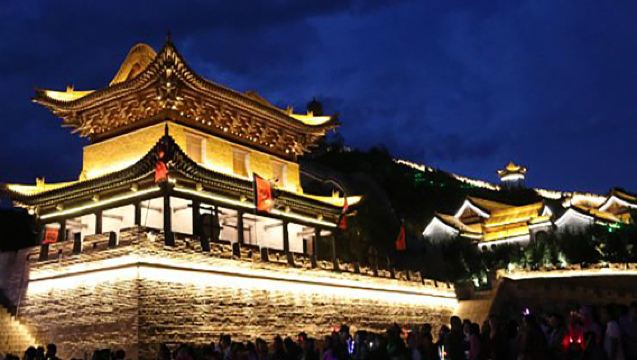
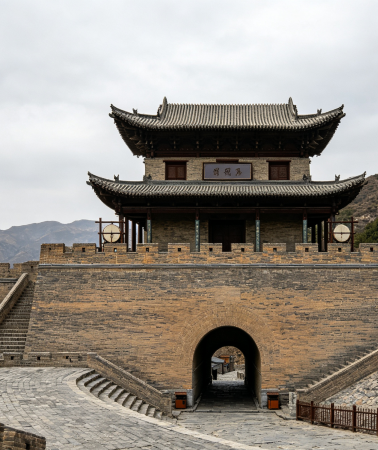
Yanmenguan, located approx. 30 km northwest of Dai County in Xinzhou, is a pass on the inner Great Wall of the Ming Dynasty, andNingwu Pass, together with Pianguan, they are known as the "three outer passes". There is no public transportation from Dai County town to the attraction, so you can only get there by private charter. Inside the attraction, you have to rely entirely on walking.YanmenguanSince ancient times, it has been a crucial pass for the Central Plains dynasties to defend against invasions from northern nomadic tribes. Its earliest history can be traced back to the Warring States period when King Wuling of Zhao fought against the Xiongnu here. Han Dynasty generals Li Guang, Wei Qing, and Huo Qubing once led troops to battle the Xiongnu in this area. During the Northern Song Dynasty,YanmenguanIt became the main battlefield between the Song and Liao dynasties, and the prototype of the well-known story of the Yang family generals took place here. A statue of Yang Liulang stands in the attraction. ExistingYanmenguanIt was built in the seventh year of the Hongwu era of the Ming Dynasty (1374) (with multiple reconstructions in recent years). Currently, there are three gates (east gate, west gate, and small north gate). A wild goose tower stands atop the east gate, and the lintel of the small north gate (i.e., the barbican gate) is inscribed with "Yanmenguan"Three large characters flanked by brick-carved couplets: 'Foremost strategic pass in three frontiers, most revered fortress among nine passes,' both inscribed by the great calligrapher Fu Shan of the late Ming and early Qing dynasties. You can visit the ruins of Ming and Qing military barracks on the hill north of the fortress. To the right outside the west gate areGuan Yu templeOutside the east gate stands the Jingbian Temple, dedicated to Li Mu, a renowned general of the Zhao state during the Warring States period. If you are a fan of the Great Wall, when you visit Yanmenguan, you can walk along the ancient pass trail here. The ancient pass trail in the attraction is built along the local mountain terrain, winding through the peaks. Climbing this section of the trail may be slightly tiring for those who usually work in offices, but when you ascend a peak along the ancient path and gaze at the vast expanse of withered grass outside the pass, quietly feeling the weight of history, you'll find the physical effort well worth it. There are some farmhouse inns near Yanmenguan that can provide food and stay, but most visitors return to Dai County or go to other counties or cities for accommodation. Walking the ancient pass consumes a lot of energy, so you can bring some dry food and drinking water.Dai County · 14.6km from downtown

Bianjing Drum Tower
Located in the center of Daixian County, it is also known as Qiaolou, commonly known as Drum Tower. It was built in the Ming Dynasty and has a history of more than 600 years. It is a landmark building in Daixian. The building is a wooden structure, about 26 meters high, with extraordinary momentum. The building is seven rooms wide and four rooms deep, and the plaques of "The First Floor of Yanmen" and "Three Passes of Wei Town" are hung upstairs. In the platform downstairs, there is a 10-meter-high stone coupon building hole leading from north to south, which can be passed.Dai County · 578m from downtown

Daizhou Ancient City - Ayuwang Pagoda
The Daixian Ashoka Pagoda, commonly known as the White Pagoda, is located in the Yuanguo Temple in the ancient city of Daixian, facing the Bianjing Tower. The Ashoka Pagoda was first built in the first year of Renshou in the Sui Dynasty (601 AD). It was originally a wooden structure and was called "Longxing". It was rebuilt in the first year of Dazhong in the Tang Dynasty (847 AD) and changed "Longxing" to "Yuanguo". In the following hundreds of years, it was abandoned and rebuilt several times. In the twelfth year of Zhiyuan in the Yuan Dynasty (1275 AD), it was rebuilt into a brick pagoda and has been preserved to this day.The Ashoka Pagoda is made of bricks and is a cone in the Tibetan Buddhist style. The base of the pagoda is rectangular, 50 meters long from north to south, 30 meters from east to west, and 1.5 meters high. The pagoda is built in the center of the base. It is built on a Sumeru pedestal with upturned lotus petals and a mixed belly and square pedestals, and is carved with various floral decorations, lotus petals, and Indian "Dharani Sutras".The tower has a L-shaped pedestal on which a brake pole is supported. The original brick pagoda had 13 floors, two of which have been destroyed. The upper part is covered with a plate and the middle is filled with a golden top jewel. The tower has a beautiful shape, is strong and upright, and is highly carved. It is a masterpiece among Tibetan towers in my country. Two stone statues of Sakyamuni and Duobao are placed side by side on the north wall of the third floor of the tower. The upper beam of the Buddha pedestal is engraved with an inscription that the statue was made for Emperor Taizong's birthday in the second year of Zhenguan. The frame of the south gate preserves the cloud pattern carved in Tang Dynasty, and the surface is left with inscriptions by tourists from Song Dynasty.Dai County · 236m from downtown

Daixian Confucian Temple
Daixian Confucian Temple consists of three courtyards. The front courtyard features main structures such as the Lingxing Gate. The middle courtyard houses the temple's main buildings, and the back courtyard is a place for honoring past Confucian scholars and sages.Dai County · 830m from downtown

Daizhou Ancient City
Located in Xinzhou City, Shanxi Province, China, the ancient city of Daizhou is an important frontier town with a long history and a rich cultural heritage. The ancient city wall is relatively well preserved, and the bricks and stones on the wall record the traces of repairs in successive dynasties. The city gate tower attracts tourists with its traditional architectural style. The layout of the streets and alleys in the city still retains the style of the Ming and Qing Dynasties. The houses on both sides of the bluestone road are mostly wooden structures, with carved window lattices and gray tile roofs. The ancient city of Daizhou is famous for its diverse historical and cultural background. Temples and ancestral halls are scattered among it, enshrining different gods, reflecting the belief traditions of local residents. During festivals, traditional folk activities are often performed in the ancient city, attracting residents from surrounding areas to participate. The natural landscape around the ancient city also provides tourists with opportunities for hiking and sightseeing. The interweaving landscape of mountains and rivers adds natural charm to Daizhou. Through the combination of history and nature, the ancient city of Daizhou provides tourists with an immersive cultural experience.Dai County · 617m from downtown

Yanmen Pass Section of the Great Wall
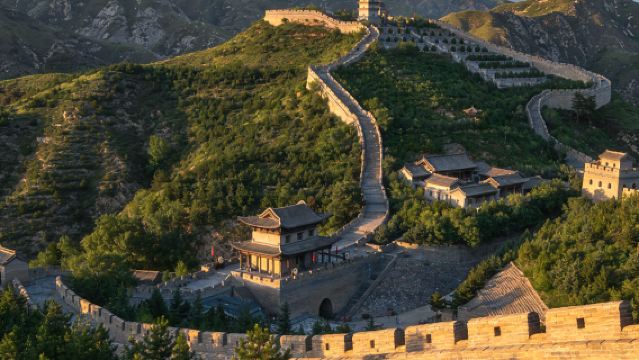
Yanmen Pass Section of the Great Wall,located 3,000m east of Baicaokou Village, Yanmenguan Township, Dai County, extending southwest from Xinguangwu, Shanyin County, and entering Dai County,starting at 3,000m east of Baicaokou Village, Yanmenguan Township, and ending at 1,500m northwest of Baicaokou Village.Dai County · 15.5km from downtown

Guangwu Great Wall
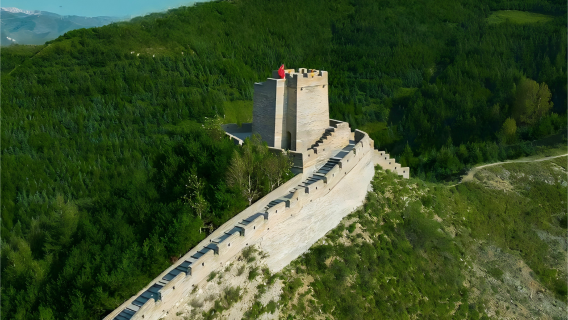
The Guangwu Great Wall starts from the east of Baicaokou River in Daixian County, Xinzhou City in the west, and ends at Xinguangwu Village in Shanyin County, Shuozhou City in the east, with a total length of 10 kilometers. This section of the Great Wall was built by Li Jingyuan, the governor of the capital, in the thirty-third year of the Wanli reign of the Ming Dynasty (1605). This line is also a mature donkey line, which is very famous among donkey friends. According to historical records, this section of the Great Wall is made of bricks and stone, with stone tombs at the bottom, bricks above, and soil construction inside, 6-10 meters high, 4 meters wide at the top, and 5 meters wide at the bottom. The towers, the enemy towers, the fortresses are disposed of in the narrow, and the secret doors are set up, and the east-west extension is connected to the outer Great Wall. Today, many of these brick walls have been demolished by locals to build houses, leaving only some remnants of the city walls and wall stacks. There are also many castles scattered inside and outside the Great Wall. Xinguangwu City is one of them. This kind of castle on the edge of the Ming Dynasty is usually planted, and it is used for expeditions during wartime. This is also the second line of defense to defend the Central Plains when the Great Wall defense line of the Datong Line is broken through. You can charter a car from Shanyin or Daixian to the scenic spot.Shanyin · 20.6km from Dai County

Tianxian Gate
Tianxianmen is renowned for its precipitous terrain and strategic importance. It's named for its steep and rugged terrain. The towering mountains and steep cliffs here form a natural barrier, making it a crucial pass for defending against foreign invasions in ancient times. At Tianxianmen, you can see the well-preserved remains of the ancient Great Wall. These walls, built along the mountainside, wind their way through the mountains, showcasing the wisdom and grandeur of ancient architecture. Standing atop Tianxianmen, visitors can overlook the surrounding mountains and rivers, immersing themselves in the richness of history and the magnificence of nature. Tianxianmen is not only a historical site but also a natural scenic spot. Its fresh air and beautiful environment make it an ideal location for hiking and exploring. Tianxianmen, with its unique location and rich historical and cultural heritage, attracts countless visitors. Whether you're a history buff or a nature enthusiast, Tianxianmen offers an unforgettable journey.Dai County · 15.6km from downtown

Badaling Great Wall
The Badaling Great Wall is renowned as one of the Nine Strategic Passes under heaven, combining majestic cliffs with picturesque greenery to form the most spectacular section of the Ming Dynasty fortifications. Living up to the Chinese saying "He who has never been to the Great Wall is not a true hero," this remains the premier choice for most Chinese visitors to experience the Wall. The fortress gate exhibits a trapezoidal shape, narrower on the east and wider on the west, featuring two gate towers. The eastern arch bears the inscription "Juyong Waizhen" (Frontier Town of Juyong), while the western gate displays "Beimen Suoyue" (Key to the Northern Gate). North of the fortress stretches the 12-tower Northern Wall section, while to the south lies the less crowded Southern Wall with 7 watchtowers. If time permits, we recommend exploring the Southern Wall first before tackling the more popular Northern section. ▲Walk Through Six Centuries of Golden History: A Visual Feast of Vermilion Foliage Blanketing the Great Wall ▲ As night descends, the Badaling Great Wall transforms into a gilded dragon winding through shadowed peaks, its illuminated battlements whispering tales of millennia - where imperial splendor meets enduring mystery beneath constellations of golden light. ▲Cloaked in winter's crystalline mantle, the Badaling Great Wall becomes a silver serpent coiled between snow-draped peaks, its ancient stones gilded by dawn's golden raysChina · Beijing

Yingxian Wooden Pagoda
The full name of Yingxian Wooden Tower is Sakyamuni Pagoda of Fogong Temple. It is in the Fogong Temple in the northwest of Yingxian County. The octagonal wooden pagoda has five stories. Except for the high-end stone foundation of the first floor, the rest of the pagoda is made of wood using the traditional craftsmanship of Sunmao. Each layer of the wooden tower is equipped with wind chimes for a pleasant sound when the wind blows.Ying County · 59.3km from Dai County
Experiences you can't miss in Dai County
Featured Day tours in Dai County
View all Day tours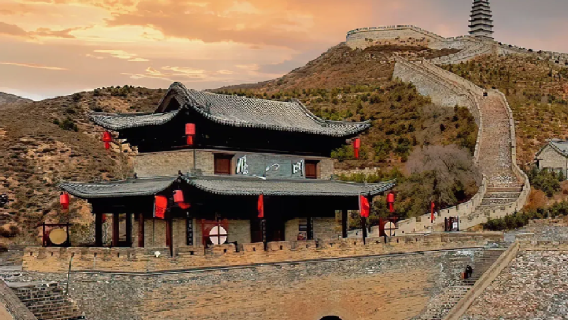
5.0/5
· 4 reviewsFree cancellation
Instant confirmation
Book now for tomorrow
From₹ 4,896.72

5.0/5
· 1 reviewInstant confirmation
Book now for tomorrow
5% off
Limited-time sale
From₹ 4,729.41₹ 4,978.33

Free cancellation
Instant confirmation
Book now for tomorrow
From₹ 11,425.67
5.0/5
· 1 reviewFree cancellation
Instant confirmation
Book now for tomorrow
From₹ 4,896.72
Instant confirmation
Book now for tomorrow
From₹ 4,243.82
![[Departure from Datong]Private chartered one-day tour: Yingxian Wooden Pagoda + Yanmenguan](https://ak-d.tripcdn.com/images/0351a12000sa8n66o642D_C_568_320.jpg?_fr=wc)
Free cancellation
Instant confirmation
From₹ 10,609.55
Free cancellation
Instant confirmation
From₹ 8,538.23

Free cancellation
Instant confirmation
Book now for tomorrow
From₹ 5,716.75
Free things to do in Dai County
Yanmen Pass Section of the Great Wall
Dai County · 15.5km from downtownGuangwu Great Wall
Shanyin · 20.6km from Dai CountyTianxian Gate
Dai County · 15.6km from downtown
Xinzhou Ancient City
Xinzhou · 76.5km from Dai County
Datong Ancient City
China · Datong
Taiyuan Ancient County
China · Taiyuan
Zhengding Ancient City
China · Zhengding
Thaiwoo Ski Resort
China · Zhangjiakou
Old Guangwu Ancient City
Shanyin · 22.9km from Dai County
Hebei Museum
China · Shijiazhuang
More ways to travel from Dai County
Private Tours in Dai County
View More Private Tours in Dai County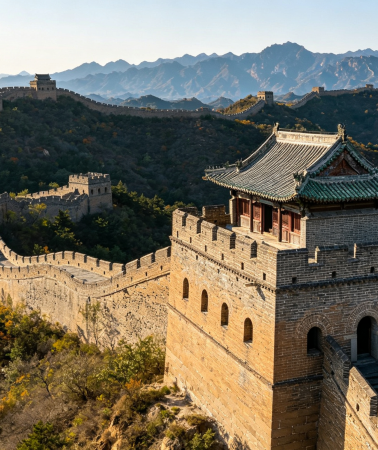


What travellers say about Dai County

youthseajelly4 October 2026
5.0
Admire the ancient plank road, listen to the stories of the fortified city wall—the meaning of travel lies in seeing different scenery and understanding different customs. Compared to other ancient buildings in Shanxi, Yanmen Pass may not be as visually striking, but its rich historical significance makes it worthwhile to experience it firsthand.
Yanmenguan

会飞的鱼zzt2 July 2025
5.0
边靖楼位于山西忻州市代县县城十字街心,居整个古代州城的最高点,是历史上长城险隘雁门关的重要依托和支撑点。是守望瞭敌、指挥作战,具有重要军事价值的建筑,有万里长城第一楼之美誉。楼身可以看到清雍正十一年知州杨弘题写的亚洲第一巨匾“威镇三观”和汤豫题的“声闻四达”匾额。
Bianjing Drum Tower

殷都老虎18 January 2026
4.0
The Ashoka Pagoda (a national cultural relic) is located in the backyard of the Daixian County government building in Xinzhou City, Shanxi Province, and is commonly known as the White Pagoda. Originally built in 601 AD (the first year of the Renshou era of the Sui Dynasty), it suffered three major destructions during its more than 600 years of existence, and was rebuilt as a brick pagoda in 1275 AD (the twelfth year of the Zhiyuan era of the Yuan Dynasty).
It is a conical Tibetan Buddhist pagoda with a rectangular base, the pagoda itself situated in the center of the base. The pagoda itself has a circular base, and the body is a slightly wider, round, dome-shaped structure with an 11-tiered brick spire. This large pagoda, 21.78 meters in diameter and 40 meters high, is harmoniously proportioned, stable and upright, simple and elegant, and features superb brick carving techniques, making it a masterpiece of Yuan Dynasty Lamaist pagodas in China.
While most Lamaist pagodas have square bases, this pagoda has a perfectly circular base. The Ashoka Pagoda and the Great White Pagoda of Miaoying Temple in Beijing are examples and models of early Lamaist pagodas still existing in the Central Plains region.
Ashoka was a king of ancient India in the 3rd century BC. His dynasty, named after the Mauryan clan, was founded by him. In 270 BC, after murdering his brother and ascending the throne, Ashoka waged war year after year, achieving the first major unification of India by force and establishing a vast dynasty. Ashoka was known for his volatile temper, cruelty, and bloodthirstiness, but he gradually repented, reformed, and joined the Sangha. To demonstrate his piety, Ashoka made Buddhism the state religion and ordered the construction of Buddhist temples throughout the country. Under his influence, Buddhism, founded by Prince Siddhartha Gautama of King Suddhodana, flourished in the Mauryan Empire. To show his reverence for the Three Jewels of Buddhism, Ashoka donated the entire country to Buddhist causes three times, only to redeem it with precious jewels. In the seventeenth year of his reign, he organized the Third Buddhist Council, which facilitated Buddhism's spread beyond India and into the world.
It is said that, to promote Buddhism, King Ashoka built 84,000 stupas around the world, including China, to enshrine the relics of Shakyamuni Buddha, which were originally divided among eight countries. All these stupas are called "Ashoka Stupas."
Travel Guide
Transportation: High-speed rail to Yanmenguan Station (military seats have charging stations). A shuttle bus from the station directly to Daizhou Ancient City (8 yuan one way). During peak season, there is a direct shuttle bus to Yanmenguan (40 yuan round trip); during off-season, buses only run at 8:00 and 12:00, so it is recommended to call the scenic area in advance. A taxi costs 30-60 yuan one way. Stay in a hotel in Daizhou Ancient City. You can book a bus to Yanmenguan at 8:30 am.
Ticket Price: Free.
Time: 15 minutes. (The same courtyard contains the County Government Office and Mao Zedong's Residence, both free, totaling 20 minutes.)
Food and Accommodation: Convenient. It is recommended to stay at the Home Inn Business Hotel, as it has a good location and service.
Route: West Gate, Bianjing Tower, Ashoka Pagoda, Confucian Temple (2-5 hours total), Yanmen Pass (3 hours).
Nearby attractions: Chongfu Temple, Yingxian Wooden Pagoda, Jingtu Temple, Huiji Temple.
Daizhou Ancient City - Ayuwang Pagoda

ie_liuxi6 May 2025
5.0
游完玩雁门关开车到代县找了个名宿住下,恰好就在文庙的旁边,过了六点吃过晚饭没事过去看看以为下班关门了,结果还能进去就进去转了转,还满有历史感的,庙区蛮大的,各个建筑几乎保持原味历史痕迹明显,临晚了没啥人进去看看安静得很,不错。
Daixian Confucian Temple

静水深流-ZWH1 May 2025
5.0
I passed by Dai County when I was traveling to Xinzhou. I arrived a little late, so I only went to the Confucian Temple. It was quaint and the blue glazed tiles had not faded after more than 600 years. It was very beautiful. The lady who gave the explanation was very professional and patient, which added to my knowledge. Overall it exceeded my expectations.
Daizhou Ancient City
封云起30 September 2025
5.0
There is an observation deck on the internal road from the north gate to the south gate of Yanmen Pass, where you can see the panoramic view of Yanmen Pass from the south gate. The through bus from the north gate of the scenic area to Yanmen Pass Station passes by the observation deck when taking the internal road. Such a beautiful scenery can only be seen from the internal road. It's a pity that tourists can't see it. It is recommended that the scenic area study the tourist viewing route. The first picture I found on the Internet, I didn't have time to take a photo on the scenic bus
Yanmen Pass Section of the Great Wall

忙忙忙忙里偷闲逛逛19 May 2026
5.0
The Guangwu section of the Ming Great Wall is absolutely worth a visit! It's authentic and far superior to any newly built section. Seeing the Great Wall winding along the mountain ridge amidst the undulating mountains evokes a sense of vastness and grandeur. The 600-year-old Great Wall and the modern wind turbines echo each other, reminding us that our efforts for a better life have never ceased. Standing atop the watchtower, one can imagine the clash of swords and the mournful sounds of war drums, and the red flags fluttering in the west wind – today we hold the long spear in our hands, when will we bind the dragon?
A visit here can be short or long. It takes about half an hour to walk from the parking lot to the Moon Gate. If time permits, you can continue walking to see several well-preserved watchtowers. Be sure to wear sunscreen as the UV radiation is strong.
Guangwu Great Wall

云自飘零水自闲15 November 2019
5.0
Tianxian Gate is the south gate of Yanmen Pass. It is tall and majestic. There is a tower on the gate called Yanlou. Outside the gate, a mountain road winds down the mountain and leads to the heart of the Central Plains. There are also some scenes reflecting the ancient business travel on the mountain road. This was once the only passage to the outside of the pass. Standing outside the gate, you can vaguely see the bustling scene of the past.
Tianxian Gate

Anonymous user5 October 2026
5.0
The Great Wall is magnificent, winding its way up the mountain peaks. The panoramic views from its heights are breathtaking, imbued with a profound sense of history. It's recommended to enter the park early to avoid crowds, wear non-slip sneakers, and bring plenty of water and sunscreen. Some steps are steep; the cable car is an option for the elderly and children. During peak season, queues can be long, but it's a once-in-a-lifetime experience.
Badaling Great Wall

Fel***dy4 October 2026
5.0
This tower is truly stunning and worth seeing. The large Buddha statue on the first floor is also quite magnificent. The entire park isn't large, but strolling around it creates a wonderful atmosphere, and the exhibits are lively and interesting. It's definitely worth buying.
Yingxian Wooden Pagoda


