


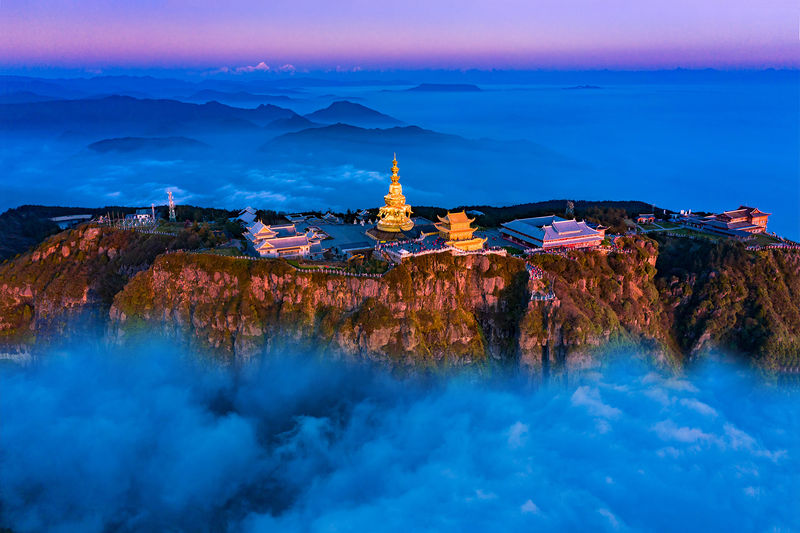
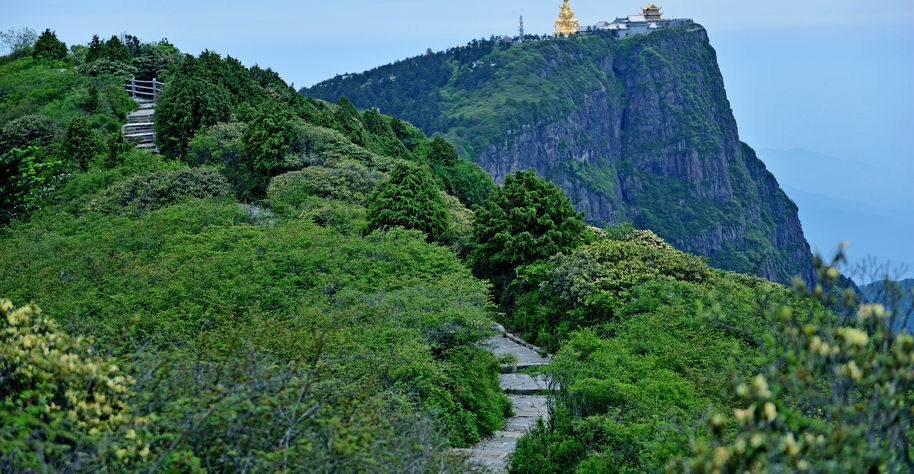
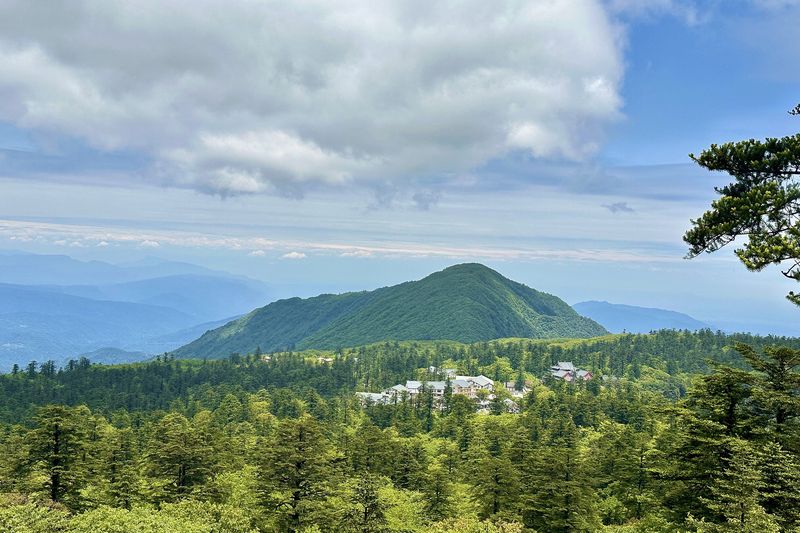
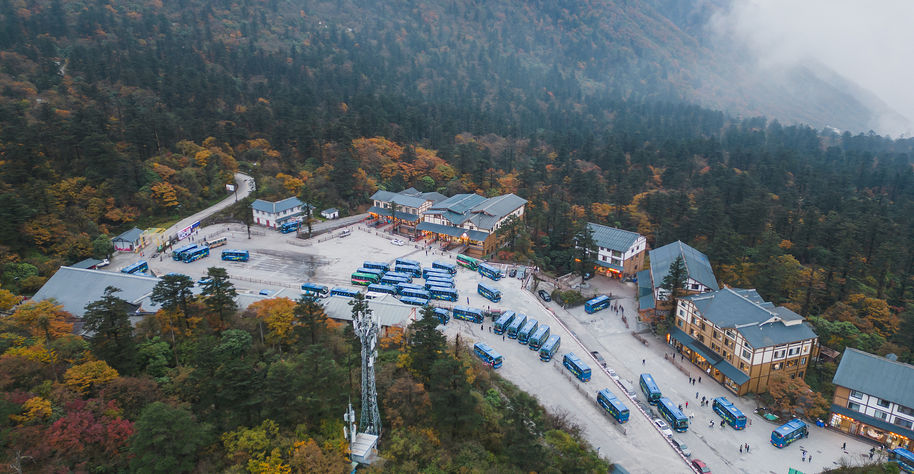
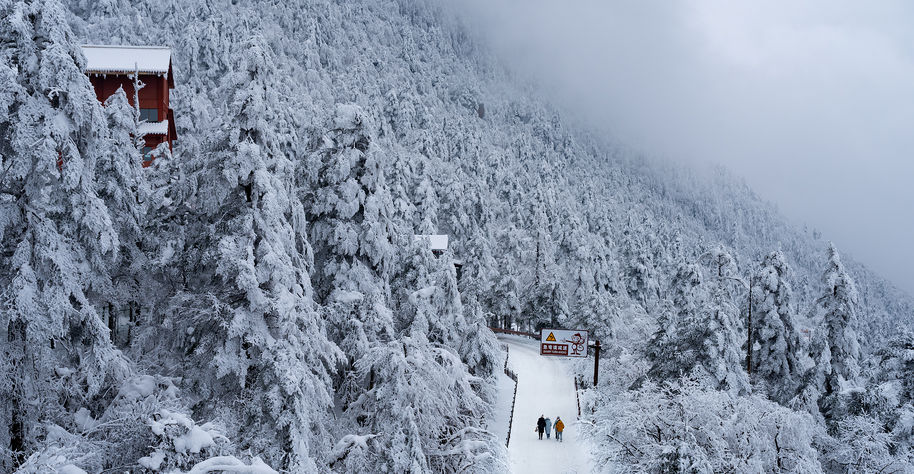
Mount Emei, aka Mt. Emei or Emeishan Mountain, is located in Leshan City, Sichuan Province. It is towering, beautiful, old, and mysterious. It is like a huge green screen standing in the southwest of the Chengdu Plain. Looking its winding and beautiful figure, you will find that Mount Emei resembles very much an eyebrow of a girl. It is the highest one among all the famous sight-seeing mountains in China.
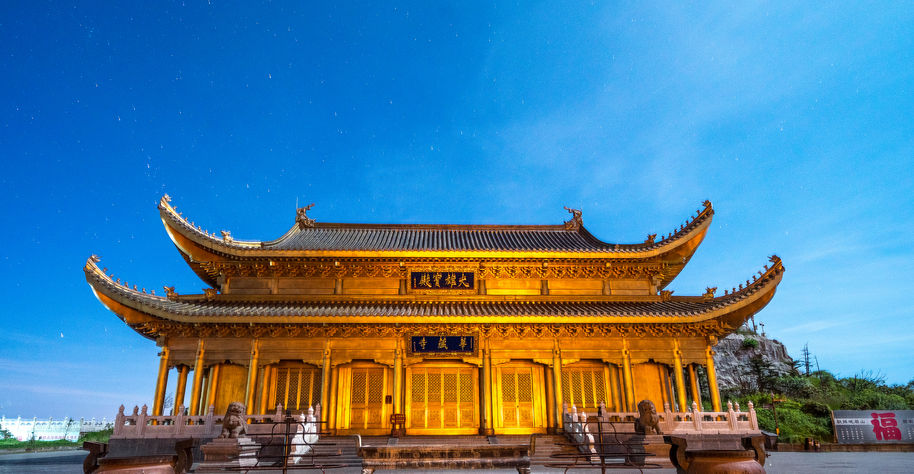
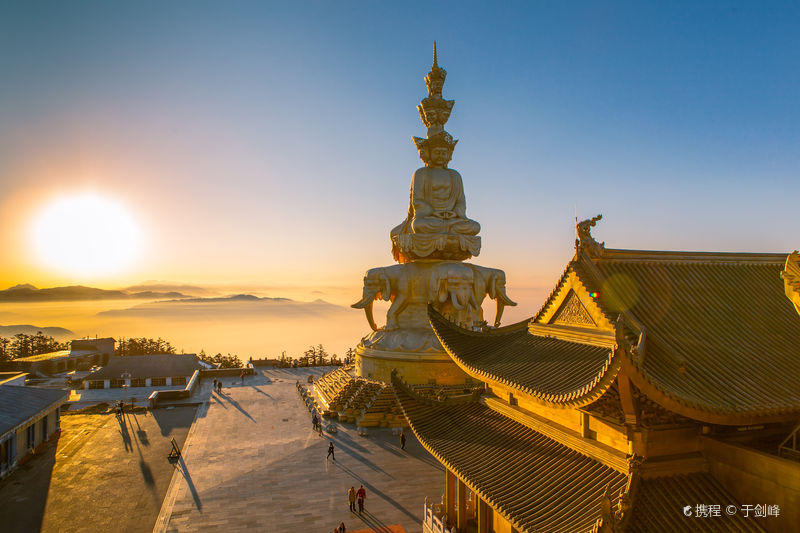
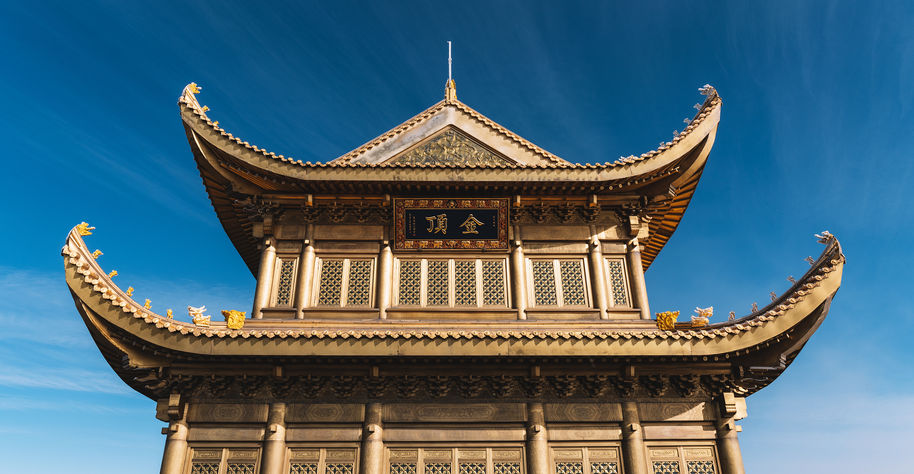
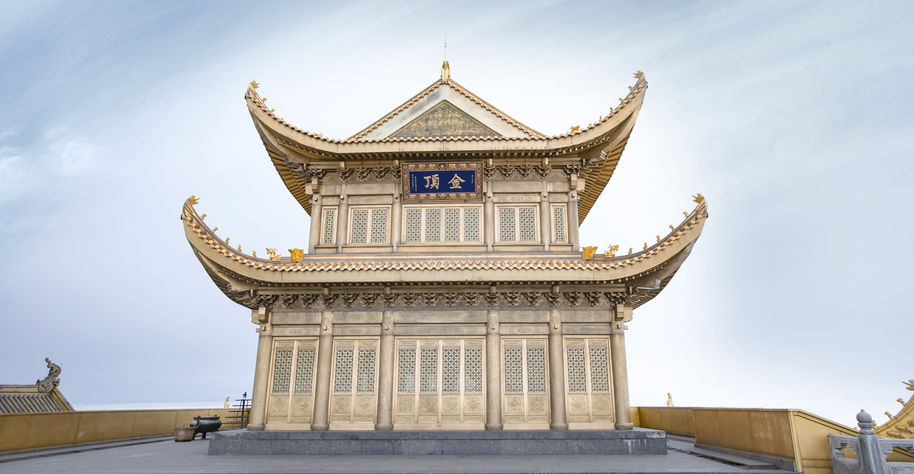
On the mountain, there are four scenic regions: Baoguo Temple, Wannian Temple, Qingyin Pavilion, and Golden Summit. Its main peak, the Golden Summit, is 3079.3 meters (10,103 feet) above sea level, seemingly reaching the sky. Standing on the top of it, you can enjoy the snowy mountains in the west and the vast plain in the east. In addition, in Golden Summit there are four spectacles: clouds sea, sunrise, Buddha rays, and saint lamps. In 1996 Mount Emei was enlisted in the world natural and cultural heritage by UNESCO.
Emeishan Mountain is a wondrous world. The trees are verdant almost all the year round; the waterfalls are splendid; the whole scenery is beautiful and quiet. The landscape varies according to the seasons, height and climate. The poet Tan Zhongyue living in the Qing Dynasty (1644-1911) once concluded the beautiful landscape in Mount Emei into ten scenic sights. Today more and more new scenery has been discovered and given beautiful names such as Listen to the Spring beside the Tiger Brook, Plank Road above Longjiang River, and Flying Waterfall Hanging over Dragon Gate. Go there and use your imagination, maybe you will discover a new sight by yourself.
Mount Emei has a long history. According to the archaeological material, people in remote ancient times have lived in this place. As early as 5,000 years ago, Emperor Xuanyuan paid two visits here to learn Tao thoughts. 1,900 years ago, a practitioner built the first monastery here, thus marked the mountain the birthplace of Buddhism in Yangtze Valley. Today the Buddhist culture has become the main body of Emei Culture. The Buddhist architecture, music, grotto and paintings in the mountain all reflect rich religious flavor and culture.


