Hengshui

Things to do in Hengshui

Search attractions or local attractions & tours
Search

Explore top experiences

Top 10 attractions in Hengshui

View all Attractions
Baotu Spring
No. 4 of Best Things to Do in Shandong

Baotu Spring

8.5
4.6/5
59.4k reviews

Baotu Spring is located in the bustling downtown area of Jinan, with Thousand Buddha Mountain to the south, Daming Lake attraction to the north, and Quancheng Square to the east. It is a distinctive garden themed around springs, renowned as "the finest spring under heaven" and ranked first among Jinan's "72 famous springs," with a history spanning over 2,000 years. It has also appeared in literary works many times, most notably in Lao She's essay "Baotu Spring." Visitors come here to witness the magnificent sight of the three springs erupting. The main spring is the centerpiece of the park. The spring water splits into three streams, clear and crisp, gushing day and night, and reaching several feet high when the flow is abundant. Around the spring are large stone blocks with railings, where visitors can look down at the spectacular sight of the three springs surging in the pool. Beside the spring stands a stone tablet inscribed with "First Spring" in dark green, written by Emperor Qianlong himself. In addition, nearby are scattered more than thirty famous springs, including Golden Thread Spring, Shuyu Spring, Xibo Spring, Liuxu Spring, Huanghua Spring, and Dukang Spring. Due to the abundant local rainfall in July and August, this is a good season to come and admire the spring water. In midsummer, visitors can have an intimate encounter with the spring water in the park. Some springs have no railings around them, and there are stone paths in the pools with spring water flowing over them. Visitors can step down into the pools to get close to the water, and walking on the stone paths, their feet will be splashed by the spring water, giving a cool sensation. Besides getting close to the water, there are also springs beside the pools that visitors can drink from directly. To the east of the spring is the Wanghe Pavilion Teahouse, which offers visitors specially preparedThis springFragrant tea brewed with water. In addition to the springs, another sight worth seeing in the park is the South Gate. It is magnificently and elegantly decorated. The horizontal plaque above the gate, with the words "Baotu Spring" in golden characters on a blue background, was written by Emperor Qianlong of the Qing Dynasty and is acclaimed as the "first gate" of Chinese gardens. In addition, the attraction frequently hosts various cultural activities. Every year during the first lunar month, a lantern festival is held in the park, lasting 20 days. There is also the Spring Water Culture Festival, during which the park features various folk activities, calligraphy and painting exhibitions, and opera performances for visitors to enjoy. The park also hosts a chrysanthemum exhibition; in the golden fall season, when the springs all surge forth and chrysanthemums and spring water complement each other beautifully, it is well worth a visit. In addition, the attraction has also launched a cruise route. After touring the attraction, visitors who are interested can board a boat at the boat station and sail through the West Gate Bridge in Jinan's old city area, passing by the East Gate of Wulongtan Park and entering Wulongtan Lock, Jinan's first passenger lock in history, where they can experience a drop of more than 2 m. Sitting on the east side of the boat, visitors can also see the relief sculptures of the "Eight Views of Jinan." Along the way, there are many aquatic plants on the banks, and the river water is so clear that the bottom is visible.

China · Jinan
Jingzhouta

Jingzhouta

2.5
4.8/5
41 reviews

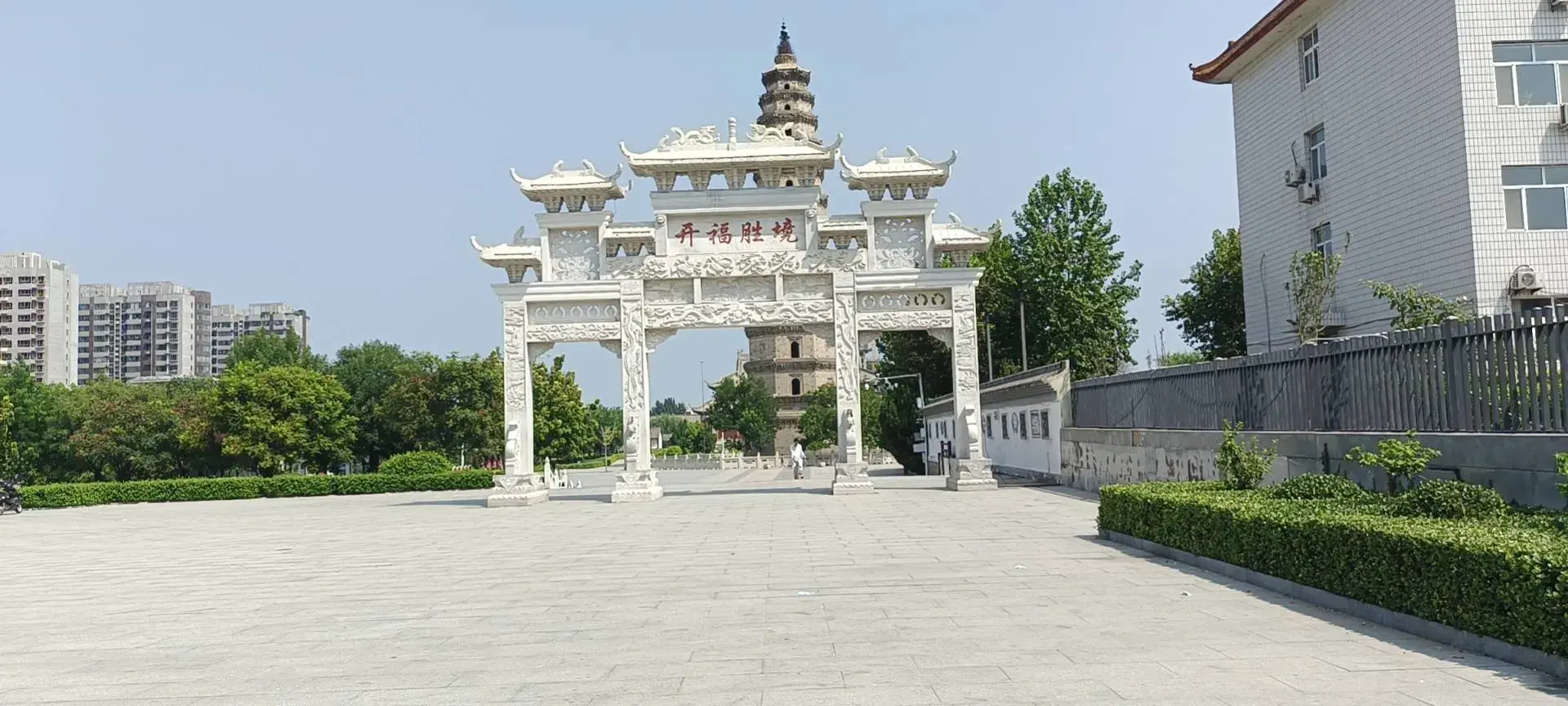
Hengshui Jingxian Relic Pagoda, formerly known as "Sakyamuni Relic Pagoda", is located in the original "Kaifu Temple" in the northwest corner of Jingxian City, that is, the northwest corner of Jingxian Prefecture, Hebei Province (now Jingxian Middle School). It is a national key cultural relic. protection unit. The tower was built in the third year of Yuanfeng in the Northern Song Dynasty (1080), with a brick pavilion-type double-sleeve structure, 13 floors on eight sides, a bottom side length of 6.31 meters, a tower height of 63.85 meters, and a stairway in the tower. There are 4 door openings on each floor, and the other four sides are made of brick-carved blind windows. The body of the tower is made of clear water bricks, and five pavilions are placed under the eaves as bucket arches, and the eaves are stacked on top. The pagoda consists of a brick lotus base, a phase wheel and a gourd. There are Buddhist scriptures, Buddha statues and gold and silver jewelry in the stupa of Kaifu Temple. Thousand-year-old pagoda, prepared for the wind and rain. After the restoration in the Qi and Sui Dynasty, the Song, Jin, Ming and Qing Dynasties have all been repaired, and the existing pagoda is in the style of the Song Dynasty. After the founding of the People's Republic of China, there were four repairs. During maintenance in the spring of 1973, 3 sets of Ming Dynasty woodblock Buddhist scriptures were taken out from the copper gourd on the top of the tower, and a bronze Buddha statue of Sakyamuni in horizontal Nirvana was taken out. The relic pagoda is tall and straight. The architecture is exquisite, and it is deeply appreciated by tourists of all dynasties.

Jing County · 214m from downtown
Summer Palace
No. 13 of Best Things to Do in North China

Summer Palace

8.4
4.7/5
52.4k reviews

The Summer Palace was originally an imperial palace and garden of the Qing Dynasty emperors, also known as Qingyi Garden. Built on the foundation of Kunming Lake and Longevity Hill and following the design techniques of Jiangnan gardens, it is the largest and best-preserved imperial garden extant in China, with highly elegant scenery and many precious cultural relics, and is known as the "Museum of Royal Gardens." Area overview: The Summer Palace is grand in scale and can be divided into three areas: the political activity area centered on the Hall of Benevolence and Longevity; the imperial and empress living area, mainly comprising the Hall of Jade Ripples and the Hall of Joyful Longevity; and the garden sightseeing area, mainly along the Long Corridor, the Back Hill, and the West Area. About three-quarters of the park is occupied by Kunming Lake. Along the lakeshore are more than 100 buildings of various types—pavilions, terraces, towers, galleries, and waterside pavilions—totaling over 3,000 rooms, among which the Tower of Buddhist Incense, the Long Corridor, the Marble Boat, Suzhou Street, and the Seventeen-Arch Bridge are all household representative structures and unmissable places when visiting the Summer Palace. Boating on Kunming Lake: When visiting the Summer Palace, in addition to touring the resplendent halls and buildings, you can take a cruise within the attraction and boat on Kunming Lake, which is both relaxing and pleasant without missing the sightseeing. There are more than ten cruise docks in the park, including the Bafang Pavilion, Wenchang Pavilion, Hall of Jade Ripples, Cloud-Dispelling Hall, Shizhang Pavilion, Bronze Ox, Marble Boat, and South Lake Island docks, with 5 different types of cruise: pedal boats, rowboats, battery-powered boats, dragon boats, and large painted boats. Cruise prices and routes vary, so you can choose according to your needs. On-site food & beverages: The Summer Palace is quite large, and a complete visit takes at least 4-5 hours. If you get tired and hungry while strolling, you can sit down and recharge. There are three fast-food kiosks in the park, located at Zhichun Pavilion, the east nine rooms of Cloud-Dispelling Hall, and Shizhang Pavilion, mainly serving everyday meals and noodles at relatively reasonable prices. If you want to match the occasion, there is also a traditional restaurant in the park specializing in imperial court cuisine: Tingli Hall, where you can taste food with imperial court flavors, though the prices are somewhat higher than everyday dishes.

China · Beijing
Daming Lake Scenic Area
Selected for Night Attractions in Shandong

Daming Lake Scenic Area

8.2
4.6/5
9.7k reviews

Daming Lake Scenic Area is located in the northeast of central Jinan, in the northern part of the old city, and is a park integrating water scenery, garden landscapes, and ancient architecture. Daming Lake is a natural lake fed by numerous springs within the city, giving rise to the saying "all springs converge here," and its history can be traced back to the Northern Wei period. The attraction is divided into the old scenic area and the new scenic area, with a total of sixteen classic views scattered throughout, connected to the city moat to form a lakeside touring route. Entering the old scenic area from the East Gate, the first thing that greets the eye is the Zeng Causeway Winding by the Water. Located in the eastern part of the attraction, the Zeng Causeway is a long embankment connecting the north and south, and it was also the necessary route from the south shore of the lake to Beizhu Pavilion in the past. Willows cast shade along the causeway, and the lake waters sparkle on both sides. Beside the Zeng Causeway, the Chaoran Tower offers a high vantage point for overlooking the entire lake scenery, and this spot is known as "Chaoran Zhiyuan." Walking south along the Zeng Causeway toward the South Gate leads into the new scenic area, where seven bridges of distinct styles form the "Seven Bridges in Wind and Moonlight." Among them, the Quehua Bridge has a long history and is one of the more famous ones. The Lao She Memorial Hall is also located here, displaying Lao She's life and creative experience in Jinan. Passing through the South Gate and heading west, visitors arrive at "Jiaxuan's Lingering Charm." Jiaxuan Garden, originally named Jiaxuan Shrine, was built to commemorate the Southern Song patriotic poet Xin Qiji, and within the garden visitors can experience his military career and bold, unconstrained poetic style. You can take a cruise to the small island in the middle of the lake. The Lixia Pavilion on the island is one of Jinan's famous pavilions; its plaque with red background and golden characters was handwritten by Emperor Qianlong, and the full text of "Ode to the Ancient Li Pavilion" by Pu Songling is engraved on the wall. Continue by boat to the northern part of the attraction near the East Gate, where the towering Huibo Tower stands. Climbing the tower, you can gaze south toward Thousand Buddha Mountain and look north toward Mount Que and Mount Hua in the distance. At sunset, the lake surface sparkles with rippling light—this is the "Huibo Sunset Glow." Descend Huibo Tower and walk west past the North Gate to reach "Canglang Lotus Charm," where the Iron Lord Shrine, Canglang Pavilion, and Small Canglang Pavilion are located. In summer, when the lotus flowers are in full bloom, the scenery is especially beautiful. Inside the Small Canglang Pavilion, you can also read the famous couplet by Liu Fenggao: "Lotus on four sides, willows on three; a city of mountain scenery, half a city of lake."

China · Jinan
Shanxi Museum
2026 Asia 100 - Family-friendly Attractions

Shanxi Museum

8.1
4.8/5
3.5k reviews

"Five thousand years of history can be seen in Shanxi." Located on Binhe West Road in Taiyuan, the Shanxi Museum showcases the essence of Shanxi's cultural relics. The museum consists of a main building and four corner annexes, with the main building resembling both a dipper and a ding vessel, serving as the primary venue for travelers to view the collection. The main building has four floors. The first-floor lobby features a general service desk, while the second and third floors host thematic exhibitions on history and culture. The fourth floor showcases art-themed exhibitions, which together form the permanent displays of the Shanxi Museum. After entering the first-floor lobby, proceed to the second floor via the stairs to begin the historical journey themed "Soul of Jin." The cultural and historical thematic exhibition showcases the highlights of Shanxi's five-thousand-year civilization through numerous precious artifacts, ranging from ancient human relics to the rise and fall of Shanxi merchants during the Ming and Qing dynasties over five centuries. During your visit, several exquisite artifacts are not to be missed. The bird zun, a bronze ritual vessel from the Western Zhou period, was used in the ancestral temple sacrifices of the Jin marquis. The bird zun features an exquisitely crafted design with a phoenix as its main form. On the phoenix's back rests a small bird, serving as the handle for the vessel's lid. At the tail of the phoenix, an elephant is depicted, with its long trunk perfectly balancing the phoenix's two legs to form a stable tripod base. This artifact is a representative piece among the bronze collections in the museum. In addition, you can also admire: the Houma covenant texts, which are oath documents from the Spring and Autumn period used by the ministers of the Jin state; the lacquered wooden panel paintings, a painted screen from the Northern Wei dynasty depicting colorful stories from the "Biographies of Exemplary Women"; the white marble sarcophagus, a relic from the Sui dynasty, belonging to a tomb occupant who was a member of the Central Asian Yu people, with intricate carvings both inside and outside the sarcophagus, featuring figures with deep-set eyes, high noses, and black hair, characteristic of the Mediterranean Caucasian race. In the cultural thematic exhibition, you can also learn about the origins and development of Buddhism and traditional opera in Shanxi. The fourth floor of the main hall features an art thematic exhibition area. Among them, the "Timber and earth splendor" - ancient architectural art thematic exhibition showcases Shanxi's status as a province rich in cultural relics and ancient structures. "For above-ground relics, look to Shanxi" - Shanxi is renowned as the "treasure trove of ancient Chinese architecture," boasting over half of China's above-ground ancient structures with comprehensive categories, especially in the quantity of religious buildings. If you're a fan of ancient architecture, this is a must-visit. The Shanxi Museum also hosts temporary exhibitions periodically. At the first-floor lobby service desk, services such as hiring on-site guides (Chinese and English) and renting audio guides are available. The main building also houses a restaurant and a tea house for visitors.

China · Taiyuan
Ancient Town of Qingzhou
No. 3 of Night Attractions in Shandong

Ancient Town of Qingzhou

8.1
4.5/5
4.7k reviews

Qingzhou is one of the ancient nine provinces of China. Since the early Western Han Dynasty, six cities—Guang County, Guanggu City, Dongyang City, Nanyang City, Dongguan Weizi City, and Qicheng—were successively built on this land, with a continuous urban history spanning over two thousand years. Today, the Ancient Town of Qingzhou has been comprehensively protected and restored, forming three major districts: the Beiguan ancient block in Dongyang City, the Ouyuan historical and cultural block and the South Gate block in Nanyang City, and the Zhaode ancient block in Dongguan Weizi City. Government buildings, traditional residences, and classical gardens are scattered across hundreds of ancient streets and alleys, such as North Gate Street and East Gate Street, with their blue bricks and dark tiles showcasing distinct Ming and Qing architectural styles. Unlike many entirely reconstructed ancient towns, this is a "living ancient town," where original residents still live in the old streets and alleys, and intangible cultural heritage items like the cuoqin are passed down on the streets, blending the vibrancy of daily life with ancient charm. A visit can begin by ascending the Fucai Gate Tower at the south gate of ancient Nanyang City for a panoramic view of the town's sea of dark tiles. Ouyuan is a preserved classical garden within the town, originally the eastern garden of the Ming Dynasty's Prince of Heng's residence and later the private garden of Feng Pu, a grand secretary during the Qing Kangxi era. Its three-peak rockery embodies the grandeur of northern landscapes. Figures like Fan Zhongyan and Ouyang Xiu once served as officials here, and Li Qingzhao lived in Qingzhou for over a decade, composing numerous ci poems. Historical relics like the Qingzhou Prefecture Examination Hall are also scattered throughout the streets, where traces of this cultural legacy can often be encountered. The main street is densely lined with shops, but to avoid crowds, one can turn into the side alleys or head straight to Zhaode Ancient Street—where rows of Ming and Qing-era houses remain, with wooden doors, stone steps, and flagstone paths offering a glimpse of old Qingzhou's daily life.

China · Qingzhou
POP LAND
No. 3 of Family-friendly Attractions in Beijing

POP LAND

8.1
4.5/5
3.1k reviews

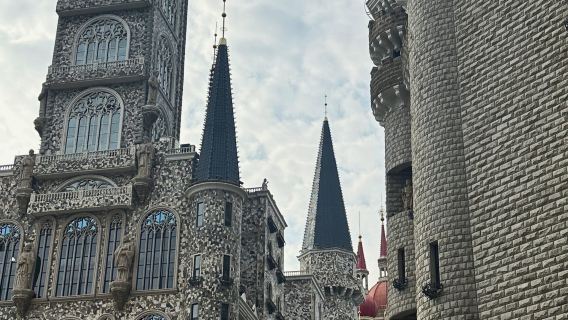
POP LAND is located within Beijing Chaoyang Park. As an immersive IP-themed park in the pop toy industry, it opened in 2023. Centered around popular IPs such as MOLLY, LABUBU, and DIMOO under Pop Mart, the park brings pop toy characters from blind box shelves into real-world scenes, creating a compact urban theme park with a rich immersive experience. The park is divided into four major themed areas. MOLLY Castle is the visual center of the park. On the basement level of the castle is the immersive theater show "Wish Journey," where visitors can board a boat with MOLLY and embark on a 4D adventure storyline; the castle also houses a designer toy collection gallery and an IP merchandise shop, making it a favorite photo spot for blind box and figure enthusiasts. The whimsical bean play house inside the castle is an indoor play area for younger children, equipped with ball pits, slides, and other facilities. LABUBU Adventure Forest is themed around THE MONSTERS elf squad, recreating scenes such as a mysterious fishing village, elf tree hollows, and a warrior tribe, where visitors can wander through as if stepping into the elves' everyday dwellings. The forest market features a variety of carnival interactive mini-games, alongside large rides such as a pirate ship and a drop tower, and visitors can also ride a retro-style aerial monorail to take in panoramic views of the entire park. The outdoor "Hatti's Little Hat Playground" is a large non-powered family-friendly play area with climbing nets and slides, ideal for families with young children. Bubble Street is the first themed street after entering the park, lined on both sides with IP merchandise shops for MOLLY, LABUBU, DIMOO, SKULLPANDA, and others, as well as street mini-games such as ring toss and basketball shooting. DIMOO Cloud Lake is styled with a healing aesthetic, and the carousel and flying chairs by the lakeside are softly colored, making it a great spot for photos within the park; themed yachts on the lake also sell IP-shaped desserts. The park hosts a daily character grand parade and IP character meet-and-greets, where characters such as LABUBU and MOKOKO interact closely with visitors. The Elf Tribe stage and the Cloud Spring performance venue feature themed shows and live performances running on a rotating basis throughout the year, and in the evening, the lighting and bubble effects in front of the castle create a rich and immersive atmosphere.

China · Beijing

Experiences you can't miss in Hengshui

Hengshui Today's weatherClear 3-12℃
Hengshui weather for the next 2 days11/18: 0-9℃, 11/19: 0-10℃

Free things to do in Hengshui

What travellers say about Hengshui

user-avatar
Anonymous user16 November 2026
5.0
they will send QR and its very easy to enter just using the QR provided

Temple of Heaven

user-avatar
空山新雨后316 November 2026
5.0
Today, my child and I visited Baotu Spring in Jinan. We happened to arrive during a chrysanthemum exhibition, which added a lot of beauty to the spring. It was bustling with tourists, and the scenery was delightful. It was a very enjoyable trip, and I hope to have the opportunity to visit again.

Baotu Spring

user-avatar
幸福姐姐22 April 2026
5.0
The Jingzhou Relic Pagoda, also known as the Kaifu Temple Relic Pagoda, is located in the city center of Jing'an Street, Jingxian County. This 13-story pagoda features a spiral staircase that winds its way upwards. Each direction has a small door, but at the top, there are only two small doors, one to the north and one to the south. The edges of these doors are wide enough for a person to walk around them. At the top of the pagoda is a gourd. Legend has it that the gourd on the pagoda belonged to Tieguai Li, one of the Eight Immortals, who, while attending the Queen Mother of the West's Peach Banquet, drank too much and stopped to rest at the top of the pagoda. He left his gourd there before leaving.

Jingzhouta

user-avatar
橙子🍊072115 November 2026
4.0
It looks quite spectacular from a distance, and many cats randomly spawn along the way. The most immediate impression upon climbing it is how narrow the passageways are; in some places, only one person can pass at a time. If you're not afraid of heights, it's fine, but those who should be careful. What attracts me most is Li Bai's poem: "A perilous tower a hundred feet high, one could pluck the stars with their hand. I dare not speak loudly, lest I startle the celestial beings."

Xuankong Temple

user-avatar
M74***7015 November 2026
5.0
This was the most beautiful spot on my trip to Beijing. I have to admire how much the ancient imperial family knew how to enjoy life; such a large and beautiful garden was their private property. The garden is huge; you should set aside at least a day for it. Trees, lakes, houses, bridges, corridors, and people blend seamlessly into the same picture, something I've never seen before. Every step in the garden is a scene of beauty. When I went, the sun was shining brightly, willow catkins were drifting in the breeze, and the water was gently rippling. Sitting on a bench by the lake, enjoying the view and basking in the sun, I really didn't want to leave. If I could live in Beijing more often, I would definitely get an annual pass and stay there as long as I wanted.

Summer Palace

user-avatar
下一站85415 September 2022
5.0
The brewing history of Hengshui Laobaigan can be traced back to the Han Dynasty according to written records. In the year 104 AD, Emperor He of the Han Dynasty issued an edict to prohibit Hengshui from brewing wine due to famine. This shows that Hengshui's brewing industry had already reached a considerable scale in the Han Dynasty. Laobaigan liquor was popular in the Han Dynasty, flourished in the Tang Dynasty, and was officially named Laobaigan in the Ming Dynasty and listed as a national banquet wine. At the Panama World Expo in 1915, the predecessor of Hengshui Laobaigan, Zhili Guanting Gaoliang Liquor, won the highest award, the first-class gold medal, and Laobaigan liquor became famous all over the world. The production and brewing of Chinese liquor pays attention to the natural law and the co-brewing of heaven and man. Hengshui has a beautiful environment and a thousand-acre Hengshui Lake in Hengshui, which provides natural conditions for Laobaigan to brew good wine. The thousand-year inheritance, ground jar brewing, good water, good koji, good grain, and good craftsmanship have made this jar of Hengshui Laobaigan wine, which has been passed down for thousands of years, ingeniously brewed and co-brewed by heaven and man.

Laobaigan Wine Culture Exhibition Hall

user-avatar
E32***4525 October 2026
5.0
The hotel is very close to Baotu Spring Scenic Area, just 200 meters from the south gate, which is very convenient. Guests can also enjoy Baotu Spring water while staying at the hotel. It's also not too far to get to Daming Lake Scenic Area. The hotel service is excellent, very 👍.

Daming Lake Scenic Area

user-avatar
M33***9716 November 2026
5.0
Three hours of patient and meticulous explanations this morning, and Ms. Ma demonstrated her professional expertise. Timely interaction, engaging stories, insightful and independent analytical thinking, and a warm service attitude made our museum visit a perfect success. Thank you for your hard work!

Shanxi Museum

user-avatar
丨哎呦喂丨13 November 2026
5.0
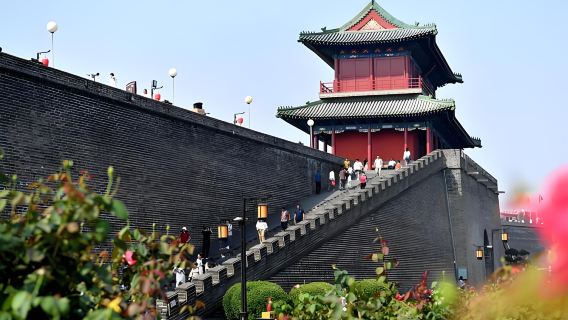
It's just a city gate tower, part of the preserved and restored ancient city of Qingzhou. From there you can see most of the ancient city. It's worth a visit; you won't find such an old city wall anywhere else.

Ancient Town of Qingzhou

user-avatar
文程程先生10 November 2026
5.0
I went to Pop Mart theme park for Halloween, and it was more fun than I expected. The immersive show inside the castle is a must-see, the toy wall is great for photos, and there are plenty of hidden spots in the stamp book. Remember to arrive half an hour early to get a good spot for the meet-and-greet; the staff also have random stickers. On weekdays, 98 RMB allows you to spend 2-3 hours there, while on weekends it's 128 RMB, which is a bit pricey. Perfect for IP fans to take their time taking photos for an afternoon without rushing.

POP LAND

Trip Moments in Hengshui

Popular cities near Hengshui

Frequently asked questions

What are the recommended tours and excursions in Hengshui?

When choosing a tour, start with how much time you have and the kind of experience you're looking for. Trending options right now include Hengshui Museum + Anji Bridge + Baoyun Pagoda + Shanghai Mansion 1-day Tour with Chinese and English Services, 1-day tour to Hebei Academy of Fine Arts, Berlin Zen Temple and Zhaozhou Bridge in Shijiazhuang with Chinese and English services, and One-day tour of Zhengding Ancient City + Longxing Temple + Rongguo Mansion + Zhaozhou Bridge in Shijiazhuang, Hebei: Chartered car + admission. Check the real-time availability and itinerary before you book.

As of 18 November 2026, the reference price for day tours and activities in Hengshui is around SGD 49.77 – SGD 263.41. Rates vary by duration, group size, transport, tickets, meals, and any special admission requirements. Before you book, please confirm the billing currency and whether the price is quoted per person or per group.

Get help anytime, anywhere within 30 secondsContact customer support

Change and cancellation policies vary by attractions and tours. Please check the product details page for more information.

Ticket prices may vary between weekdays and weekends, as well as during peak and off-peak seasons. When booking with Trip.com, you can also use Trip Coins to get extra savings. For more tips on booking discounted tickets, please visit Trip.com for the latest information.