
Things to do in Fenyang
Explore top experiences
Top 10 attractions in Fenyang


Yingxian Wooden Pagoda
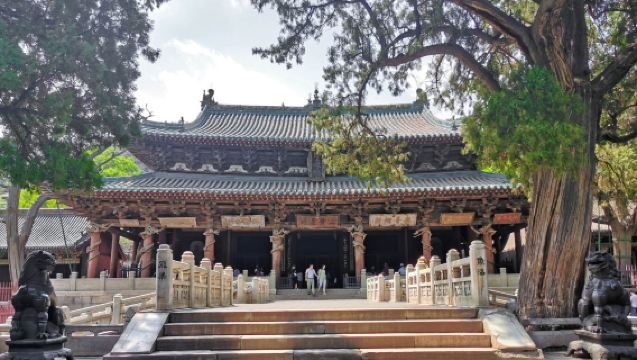
The full name of Yingxian Wooden Tower is Sakyamuni Pagoda of Fogong Temple. It is in the Fogong Temple in the northwest of Yingxian County. The octagonal wooden pagoda has five stories. Except for the high-end stone foundation of the first floor, the rest of the pagoda is made of wood using the traditional craftsmanship of Sunmao. Each layer of the wooden tower is equipped with wind chimes for a pleasant sound when the wind blows.China · Ying County

Xianshen Tower
Located in Jiexiu City, Zoroastrian God Tower, also known as Xuanshen Tower and Yaoshen Tower, is a pavilion-style building that combines a gatehouse, a music tower and a street crossing tower. Zoroastrian God Tower was originally part of the Zoroastrian Temple, which was destroyed in the 11th year of Jiajing in the Ming Dynasty (1532). It was converted into the Sanjieyi Temple during the Wanli period of the Ming Dynasty, and was rebuilt in the Qing Dynasty. The Zoroastrian God Tower was built in the 50th year of Qianlong (1786).The front of the Zoroastrian building is in the shape of a "convex" character, with a total depth of 20 meters. The street-passing building protruding from the corridor is three bays wide and three bays deep. The wider part, the music building inside the temple, is five bays wide and four bays deep. There are corridors around it, and the space is spacious. The flat platform at the waist of the mountain gate is connected to the flat platform of the street-passing building, and the floor is laid on it, forming a music building for offering sacrifices to the gods in the temple.The temple's interior and exterior are both two-story, and together with the terrace and the double eaves on the upper floor, it is four stories high. The four pillars in the building directly support the upper beams, and the mountain gate and theater are stacked up and down. The roof is a cross-shaped hip roof, all covered with glazed ridge tiles. This high-rise ancient building has a harmonious proportion of depth and width, which gives it a very majestic and stable appearance.The Zoroastrianism Tower is a Zoroastrianism building. Its main doctrine is to worship the sun. It is also called "Zoroastrianism" and was born in ancient Persia. The Mingjiao in Jin Yong's novel "The Heaven Sword and Dragon Saber" is the Chinese Zoroastrianism. In the Zoroastrianism Tower, you can see many decorative patterns that are not common in other temples, such as tigers, sheepdogs, sacred cows, elephants, etc. These are all sacred animals of Zoroastrianism. It is known as the "Four Famous Towers of Shanxi" together with the Guanque Tower in Puzhou, the Feiyun Tower in Wanrong, and the Qiufeng Tower. It is also the only Zoroastrianism building preserved in China and even in the world.Jiexiu · 29km from Fenyang

Shanxi Museum
"Five thousand years of history can be seen in Shanxi." Located on Binhe West Road in Taiyuan, the Shanxi Museum showcases the essence of Shanxi's cultural relics. The museum consists of a main building and four corner annexes, with the main building resembling both a dipper and a ding vessel, serving as the primary venue for travelers to view the collection. The main building has four floors. The first-floor lobby features a general service desk, while the second and third floors host thematic exhibitions on history and culture. The fourth floor showcases art-themed exhibitions, which together form the permanent displays of the Shanxi Museum. After entering the first-floor lobby, proceed to the second floor via the stairs to begin the historical journey themed "Soul of Jin." The cultural and historical thematic exhibition showcases the highlights of Shanxi's five-thousand-year civilization through numerous precious artifacts, ranging from ancient human relics to the rise and fall of Shanxi merchants during the Ming and Qing dynasties over five centuries. During your visit, several exquisite artifacts are not to be missed. The bird zun, a bronze ritual vessel from the Western Zhou period, was used in the ancestral temple sacrifices of the Jin marquis. The bird zun features an exquisitely crafted design with a phoenix as its main form. On the phoenix's back rests a small bird, serving as the handle for the vessel's lid. At the tail of the phoenix, an elephant is depicted, with its long trunk perfectly balancing the phoenix's two legs to form a stable tripod base. This artifact is a representative piece among the bronze collections in the museum. In addition, you can also admire: the Houma covenant texts, which are oath documents from the Spring and Autumn period used by the ministers of the Jin state; the lacquered wooden panel paintings, a painted screen from the Northern Wei dynasty depicting colorful stories from the "Biographies of Exemplary Women"; the white marble sarcophagus, a relic from the Sui dynasty, belonging to a tomb occupant who was a member of the Central Asian Yu people, with intricate carvings both inside and outside the sarcophagus, featuring figures with deep-set eyes, high noses, and black hair, characteristic of the Mediterranean Caucasian race. In the cultural thematic exhibition, you can also learn about the origins and development of Buddhism and traditional opera in Shanxi. The fourth floor of the main hall features an art thematic exhibition area. Among them, the "Timber and earth splendor" - ancient architectural art thematic exhibition showcases Shanxi's status as a province rich in cultural relics and ancient structures. "For above-ground relics, look to Shanxi" - Shanxi is renowned as the "treasure trove of ancient Chinese architecture," boasting over half of China's above-ground ancient structures with comprehensive categories, especially in the quantity of religious buildings. If you're a fan of ancient architecture, this is a must-visit. The Shanxi Museum also hosts temporary exhibitions periodically. At the first-floor lobby service desk, services such as hiring on-site guides (Chinese and English) and renting audio guides are available. The main building also houses a restaurant and a tea house for visitors.Taiyuan · 94.9km from Fenyang

Luoyang Museum
The Luoyang Museum was established in 1958 and fully opened to the public on April 16, 2011. It is a comprehensive museum integrating cultural relic collection, exhibition display, and social education. Its collections span the long history of Luoyang as an ancient capital of thirteen dynasties. The main building stands like a giant ding (ritual vessel), symbolizing the "establishment of the capital in Luoyang." Its solemn and majestic facade itself serves as a popular photo backdrop. The large-scale permanent exhibition "Heluo civilization" unfolds along the timeline of prehistoric times, the Xia, Shang, and Zhou dynasties, the Han and Wei dynasties, the Sui and Tang dynasties, and the Five Dynasties and Northern Song period, connecting thousands of years of Luoyang's capital history into a complete viewing experience. The treasure hall on the second floor rotates displays of representative artifacts from the collection, including the Cao Wei white jade cup, the Northern Wei clay Buddha face sculpture, and the vividly expressive Northern Wei painted pottery figurine of two women holding hands, affectionately called the "best friends figurine" by visitors, all worth pausing to admire. In the Tang tri-color ceramics hall, the rare and majestic black-glazed tri-color horse and the massive Eastern Han stone artifacts are equally popular. The palace artifacts hall displays Qing Dynasty imperial artifacts transferred from the Forbidden City, including a golden nanmu wood tower carved from a single log and adorned with gilded miniature Buddhas, exuding royal grandeur. The stone carving hall is rustic and imposing, while the Wang Xiu peony art exhibition brings Luoyang peonies into paintings, each showcasing a unique blend of strength and delicacy. You can start your visit from the "Heluo civilization" exhibition and stone carving hall on the first floor, then proceed to the second floor to explore the treasure hall, Tang tri-color glazed pottery hall, and imperial artifacts hall in detail. The treasure hall features rotating exhibitions, and the specific exhibits are subject to the on-site display. A thorough visit typically takes two to three hours, so it is recommended to allocate sufficient time. Luoyang Museum consistently organizes flexible and diverse temporary exhibitions, continuously providing the public with new cultural offerings. It has introduced exotic-themed exhibitions such as "Civilizations of Qin-Han and Rome," "Norwegian style painting exhibition," "African cultural relics and art exhibition," as well as independently curated large-scale temporary exhibitions like "The starting point of the Silk Road - the Silk Road and Luoyang" and "The hub of the Grand Canal - the Grand Canal and Luoyang," enriching the exhibition content and ensuring visitors always find something new. Adhering to its mission of reaching out, Luoyang Museum has independently or collaboratively held cultural relic exchange exhibitions in over 20 countries and regions, including the United States, France, Japan, South Korea, Italy, Belgium, Sweden, and Australia, generating positive impacts both domestically and internationally. Luoyang Museum adheres to the organic integration of collection preservation, scientific research, and social education for balanced development. Practicing a people-oriented service philosophy, it enhances integration and interaction with society while excelling in exhibition reception and educational promotion. The museum actively recruits volunteers passionate about museum education, establishes cooperative units, and extends its reach to communities, schools, rural areas, and military camps to expand its coverage and influence. Additionally, it hosts monthly traditional culture lectures to disseminate heritage knowledge and cultivate museum audiences, achieving remarkable results. Luoyang Museum boasts a team of professionals with high academic standards. It has published numerous works and collections, with over 1,000 papers and representative publications including: "Han tombs at Shaogou in Luoyang," "Luoyang tri-colored glazed pottery of the Tang dynasty," "Bronze mirrors unearthed in Luoyang," "Han dynasty murals in Luoyang," "A collection of essays commemorating the 40th anniversary of Luoyang Museum," "Cultural treasures of Luoyang," "The charm of Luoyang—highlights of archaeological achievements in the Heluo region," "A history of the ancient capital Luoyang," "Research on Western Zhou bronze ware," "Heluo civilization," and more, all widely recognized by society and academia. In the era of promoting cultural development and prosperity, Luoyang Museum is bound to play an even greater role in the construction of socialist spiritual civilization.China · Luoyang

Xinzhou Ancient City
Xinzhou was called Xiurong in ancient times. It is located between Taiyuan and Mount Wutai. It is the seat of Xinzhou Administrative Office and Prefectural Committee. In the Spring and Autumn Period, Xinzhou belonged to Jin State. In the Warring States Period, it belonged to Zhao State. In the Qin and Han Dynasties, it belonged to Taiyuan County, Yanmen County, and Taiping County. In the Sui Dynasty, it was Xinxingdu and Yanmen. During the Tang, Five Dynasties and Song dynasties, it was called Dingxiang Prefecture of Xinzhou. During the Jin, Yuan, Ming and Qing dynasties, it was called Xinzhou, Daizhou and Baodezhou. During the Anti-Japanese War and the War of Liberation, most of the area belonged to Jinchaji, and the area to the west belonged to Jinsui. In 1949, Xinzhou Prefecture was established. The cultural relics and historical sites in Xinzhou City include: Xinzhou North Gate Tower. Located in Xinzhou City, on the Gongchen Gate of the old north city wall. The North Gate Tower was built in the 24th year of Wanli in the Ming Dynasty. The tower is located on the 12-meter-high city wall, which makes it more majestic and magnificent. The city wall stands tall and is painted red on the outside. There is a Voucher doorway below, with a very high top and a bottom width of more than 3 meters.China · Xinzhou

xiao yi gu cheng
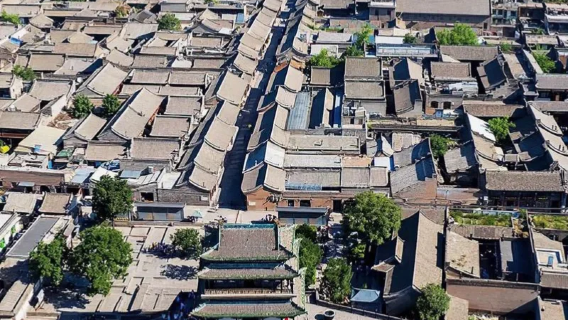
Located in the western part of Xiaoyi City, Shanxi Province, the ancient city of Xiaoyi in Lüliang City boasts a rich and well-preserved history dating back to the Northern Wei Dynasty. Named for the touching legends of filial piety and righteousness, it carries a rich legacy of moral culture. The city boasts a well-organized layout, with preserved streets and alleyways. Remains include the county government office from the Ming and Qing dynasties, the remains of ancient city walls, historic streets, and numerous traditional dwellings. The towering rammed earth walls and quaint courtyards together tell of the prosperity and vicissitudes of a bygone era. This is not only an important window into the culture and customs of Shanxi merchants, but its unique heritage of filial piety and righteousness imbues this ancient city with a profoundly moving human warmth beyond its brick, tile, wood, and stone facades, making it a tranquil and beautiful place to explore the history and culture of the Three Shanxi provinces.Xiaoyi · 15.5km from Fenyang

Taiyuan Ancient County
The ancient county seat of Taiyuan is located in Jinyuan District, covering an area of about 0.8 square kilometers. There are many relics of historical buildings in the city, the pattern of cross streets is clear, and the texture of streets and alleys is perfect. It follows the ancient architectural pattern of Jinyang ancient city "Phoenix Flying in the City", just like a phoenix with its head north and tail south. It has the reputation of "Phoenix City" since ancient times. It is the continuation of the 2500-year-old Jinyang ancient city. There are 79 existing cultural relics buildings in the city, and 49 historical buildings listed for protection by the Taiyuan Municipal Government. Among them, the Confucian Temple is listed as a national key cultural relics protection unit.Taiyuan · 81.7km from Fenyang

Guangfu Ancient City
Guangfu Ancient Cityis located in Guangfu town, Yongnian district, Handan city, Hebei province. It is a national 5A-level attraction, a famous historical and cultural town in China, and a wetland park with profound historical heritage. Featuring beautiful northern water town scenery and a long-standing tai chi culture, it is China's unique ancient town, water town and tai chi town. The ancient town. Guangfu ancient town has a history of over 2,600 years, with its city walls stretching 4.5 km in circumference and covering an area of 1.5 square kilometers. The town boasts numerous historical relics, including two national-level protected sites - Guangfu ancient town itself and Hongji bridge, along with over 20 provincial and municipal protected sites such as the former residences of Yang Luchan, Wu Yuxiang and Wu Ruqing. The water town. Guangfu ancient town is located in the Yongnian depression covering an area of 46,000 mu. Surrounding the town walls is a 5 km moat that's 100 m wide, with wetlands beyond it. This "town between two waters" forms a unique view of Guangfu. The depression has perennial water accumulation with lush reeds, thriving fish and shrimp, lotus ponds, and migratory birds, earning it the reputation of "little Jiangnan in the north". The city of taiji. Guangfu ancient town is the birthplace of Yang-style and Wu-style taijiquan, where the founders of the two major schools, Yang Luchan and Wu Yuxiang, were born. It is a renowned hometown of taiji, from which taijiquan spread across China and the world.China · Handan

Zhengding Ancient City
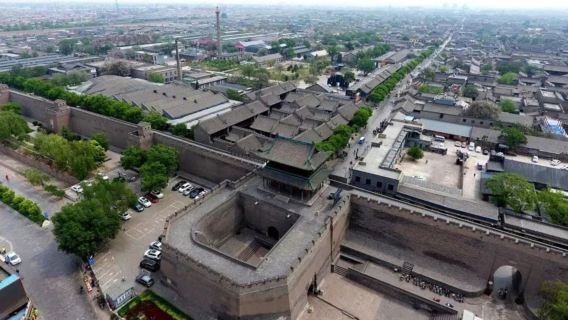
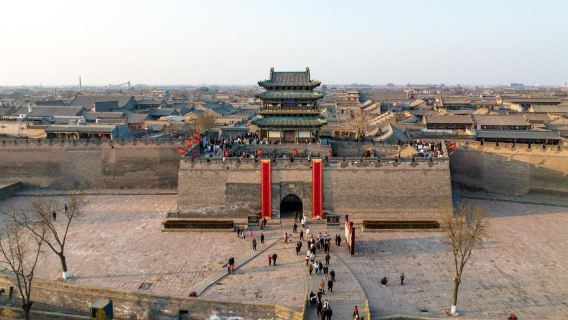
Zhengding Ancient City is located 15 km north of Shijiazhuang, the capital of Hebei Province. Built according to traditional Chinese planning concepts and architectural styles, it embodies China's historical and cultural characteristics from the 5th to 19th centuries, showcasing the wisdom and perseverance of ancient laborers. Historically known as one of the "Three Northern Strongholds" alongside Baoding and Beijing, its southern gate still bears a stone inscription reading "Stronghold of Three Passes." Zhengding is also the hometown of Zhao Zilong, a renowned general from the Three Kingdoms period. The long and rich history has endowed Zhengding Ancient City with magnificent and uniquely styled cultural relics and historic sites, renowned for its "Three Invisible Mountains, Nine Non-Flowing Bridges, Nine Towers, Four Pagodas, and Eight Great Temples, along with Twenty-Four Exquisite Memorial Archways." "Three Invisible Mountains" refers to the fact that Zhengding was historically the administrative center of the Zhongshan State, Hengshan Commandery, and Changshan Commandery, yet the area itself has no mountains. "Nine Non-Flowing Bridges" describes a single-arched three-path stone bridge in front of the Longxing Temple, as well as the pan bridges (ancient pan bridges typically featured three parallel bridges) in front of the Prefectural Confucian Temple and the Zhengding County Confucian Temple—none of which have flowing water. "Nine Towers, Four Pagodas, and Eight Great Temples" refers to the original four gate towers, four corner towers, and the Yanghe Tower within the city; the four pagodas are the Tianning Temple Pagoda, Huata Pagoda of Guanghui Temple, Xumi Pagoda, and Chengling Pagoda of Linji Temple; the eight great temples include Longxing Temple, Guanghui Temple, Linji Temple, Kaiyuan Temple in Zhengding Ancient City, Tianning Temple, Hongji Temple, Sheli Temple, and Chongyin Temple—the latter three of which have been destroyed. Zhengding once boasted 24 magnificent memorial archways, including the Xu Family Archway, Liang Family Archway, Ancient Changshan County, Supreme Virtue Reaching Heaven, Virtue Matching Heaven and Earth, and Wooden Bell for All Affairs. However, due to historical changes, weathering, and especially the destruction during the decade-long Cultural Revolution, many precious cultural relics were damaged. Yet with 9 nationally protected relics, 6 provincially protected relics, and over 10 county-level protected relics, Zhengding still retains the grandeur of a renowned historical and cultural city. The ancient city of Zhengding was designated as a provincial-level historical and cultural city in 1990 and recognized as a national historical and cultural city in 1994. Zhengding's tourism features a unique blend of "modern and ancient," "elegant and folk" characteristics. Among its historical sites, the Longxing Temple, originally built in 586 AD during the Sui Dynasty and expanded under the decree of Emperor Zhao Kuangyin, the founding emperor of the Song Dynasty, stands majestic and well-preserved. It enjoys high acclaim both domestically and internationally, praised by renowned architect Liang Sicheng as "the foremost temple beyond the capital." The temple's "Reclining Guanyin" mural sculpture was hailed by Lu Xun as "the Goddess of Eastern Beauty."Revolving Sutra LibraryDubbed by physicists as a prime example of Newton's laws in action, along with China's scripture cabinets. The Sui Dynasty Longzang Temple Stele is one of the country's renowned ancient stone inscriptions, showcasing the evolution from Han clerical script to Tang regular script, praised by Kang Youwei as "the finest Sui stele." Standing 22 meters tall, the grand Buddha statue is among China's earliest and tallest surviving bronze standing Buddhas. The cross-shaped Mani Hall exemplifies classic Song Dynasty architectural techniques. Zhengding's vicinity also boasts four famous pagodas, including Huagong Pagoda at Guanghui Temple—a brilliant fusion of diamond throne and floral pagoda styles. Tianning Temple's...Lingxiao PagodaIt is the foremost wooden pavilion tower in China. The symmetrical arrangement of the Tang Dynasty bell tower and ancient pagoda at Kaiyuan Temple in Zhengding Ancient City exemplifies the transition in Chinese Buddhist temple architecture from pagoda-centered to hall-centered layouts. The Chengling Pagoda at Linji Temple serves as the reliquary pagoda for Master Yixuan, founder of the Linji school of Buddhism, and has become a symbol of Sino-Japanese friendship. Located within Zhengding, the Zhengding Rongguo Mansion was meticulously designed and constructed according to descriptions in Cao Xueqin's literary masterpiece "Dream of the Red Chamber" while strictly adhering to China's "Great Qing Code", making it the country's first architectural complex replicating Ming-Qing architectural styles. Most scenes from the TV series adaptation of "Dream of the Red Chamber" were filmed here. The Qing Dynasty-style Ningrong Street by Rongguo Mansion's west gate stretches over 200 meters, where pivotal scenes like "Imperial Consort Yuan's Homecoming" and "Qin Keqing's Funeral" were shot. With over 1,600 years of history, Zhengding Ancient City's walls were originally earthen fortifications during the Eastern Jin Dynasty, rebuilt in stone during the Northern Zhou Dynasty, expanded into earthen walls during the Tang Dynasty, and finally reconstructed as 24-li (approximately 12 km) brick walls during the Ming Dynasty. The surviving 8,106-meter Ming-era walls feature four magnificent gates: Yingxu (later renamed Huancui) to the east, Changle to the south, Zhenyuan to the west, and Yong'an to the north. While time has eroded the western and northern gates, the eastern gate was entirely buried under 1960s military fortifications. In 2001, the southern gate tower and 50-meter flanking walls were restored through public donations of original bricks and a CNY 3.99 million investment.China · Zhengding

Donghu Vinegar Garden
Explore Donghu Vinegar Garden and discover the history of vinegar brewing in Shanxi. As a national AAAA-level tourist attraction, a national industrial tourism demonstration base, and a provincial research and practice education demonstration base for primary and secondary schools, Donghu Vinegar Garden covers a total construction area of approximately 16,667 square meters. Rooted in Shanxi's long-standing Yellow River farming culture, it preserves and innovates the history of the "Meiheju" vinegar workshop founded during the Hongwu period of the Ming Dynasty, the national intangible cultural heritage "Meiheju" aged vinegar brewing technique, and Shanxi's vinegar history and culture. Based on the ancient brewing process of "steaming, fermenting, smoking, filtering, and aging," it truly embodies "inheriting traditional craftsmanship and realizing a health-oriented philosophy." Since its opening in 2000, Donghu Vinegar Garden has launched distinctive "intangible cultural heritage" vinegar culture study tours, offered Shanxi aged vinegar DIY courses, added "intangible cultural heritage" vinegar-making experience programs, and developed traditional Shanxi vinegar-themed banquets. It has welcomed over 5 million visitors from home and abroad, with annual visits by minors exceeding 30,000, making it a highlight for promoting traditional Chinese agricultural culture and vinegar culture in China's condiment industry. The garden features twelve specialized exhibition halls including "Donghu Meiheju Development History Museum," "Vinegar Therapy Garden," "Vinegar Museum," "Vinegar Cellar," and "Craft Brewing Workshop," each displaying agricultural tools and vinegar-making equipment from different historical periods. Donghu Vinegar Garden showcases the unique charm of "National Intangible Cultural Heritage - Traditional Vinegar Brewing Techniques" to visitors from around the world through displays of ancient and modern utensils, vinegar product exhibitions, and hands-on experiences of intangible cultural heritage vinegar-making techniques. It opens a time tunnel for people to understand Shanxi's vinegar culture, deeply experience the intangible heritage vinegar-making process, and recognize the health benefits of Shanxi aged vinegar. Visitors can not only explore the profound history of Shanxi vinegar culture, breathe in the rich aroma of Donghu vinegar, enjoy a "Donghu vinegar sauna," and taste authentic Donghu aged vinegar, but also deeply engage with the national intangible cultural heritage of traditional vinegar brewing techniques. Visitors can also sample various vinegar-infused specialties like vinegar-soaked beans and vinegar snacks, as well as traditional Shanxi vinegar banquets, gaining a deeper understanding of Shanxi aged vinegar. Over its 20+ years of operation, Donghu Vinegar Garden has earned honors such as the "Certificate of Origin Registration," "National Silver Quality Award," and inclusion in China's "Intangible Cultural Heritage" protection list. It is highly revered by domestic and international biology experts as the "Living Fossil of Chinese Grain Vinegar Brewing" and the "Finest Vinegar in China." Praised by Europeans and Americans as the "Secret of China" and by Japanese merchants as the "Chinese Mystique," it has evolved into an immersive vinegar experience center integrating production, tourism, dining, and research, becoming a cultural landmark of Shanxi with distinct ethnic charm.China · Taiyuan
Experiences you can't miss in Fenyang
Featured Day tours in Fenyang
View all Day tours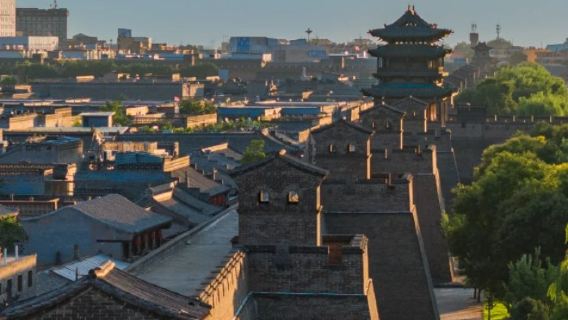
5.0/5
· 1 reviewFree cancellation
Instant confirmation
Book now for tomorrow
From€62.16
Free cancellation
Instant confirmation
Book now for today
From€120.99
Free cancellation
Instant confirmation
From€136.11

5% off
Limited-time sale
From€143.67€151.24
Free cancellation
Instant confirmation
Book now for tomorrow
From€68.01
Free cancellation
Instant confirmation
Book now for tomorrow
From€90.74
Free cancellation
Instant confirmation
Book now for tomorrow
From€98.31
Free cancellation
Instant confirmation
From€75.62
Featured Cultural experiences in Fenyang
View all Cultural experiences
Free cancellation
Instant confirmation
Book now for tomorrow
From€14.64
5.0/5
· 1 reviewFree cancellation
Book now for tomorrow
From€5.33
From€14.64
Free cancellation
Instant confirmation
Book now for tomorrow
From€36.30
Free cancellation
Book now for tomorrow
From€14.64
Free cancellation
Instant confirmation
Book now for tomorrow
From€140.48
Free cancellation
Book now for today
From€35.80
Free things to do in Fenyang
Yingxian Wooden Pagoda
China · Ying CountyImmediate access, Book now for today, Cancel anytimeXianshen Tower
Jiexiu · 29km from FenyangShanxi Museum
Taiyuan · 94.9km from FenyangLuoyang Museum
China · LuoyangXinzhou Ancient City
China · Xinzhouxiao yi gu cheng
Xiaoyi · 15.5km from FenyangTaiyuan Ancient County
Taiyuan · 81.7km from FenyangGuangfu Ancient City
China · HandanZhengding Ancient City
China · ZhengdingDonghu Vinegar Garden
China · Taiyuan
What travellers say about Fenyang

夕颜👑🌻🌈🍓🍭🎀17 October 2026
5.0
Although a single tower has become an entire tourist attraction, you'll be constantly amazed as you walk around, and this amazement intensifies once you enter the tower's first floor. The wisdom of the ancients is truly remarkable…
Yingxian Wooden Pagoda

孤独的隐者24 February 2026
5.0
Admission is free. It's the only Zoroastrian building in China, with exquisite architectural style and stunning beauty, perfect for taking photos. Unfortunately, it's been closed for renovations for the past few months, so I could only photograph half of it. The courtyard is off-limits, so I couldn't see the other half, which was a bit of a disappointment.
Xianshen Tower

Anonymous user7 October 2026
5.0
The tour guide was attentive and incredibly friendly, covering everything he needed to, and explaining things in considerable detail. With so many people during the National Day holiday, his experience helped us squeeze in every possible moment, and surprisingly, the trip wasn't crowded at all. The Yungang Buddha and the VR tour of Wutai Mountain were definitely worthwhile, and the Yanmen Pass Great Wall and Wang Family Courtyard were also very enjoyable. The driver was fantastic, incredibly experienced, and knew many shortcuts to Xiaoxitian, taking us directly to the scenic area entrance and saving us a lot of walking. The small group size meant it wasn't crowded, and the hotel arrangements were quite reasonable. The Yingxian Wooden Pagoda, the Yanmen Sunset, and the Wang Family Brick Carvings were all breathtakingly beautiful. The local tour guide was completely transparent and honest. I highly recommend this Shanxi tour; if you want to see ancient architecture but are afraid of doing research, book this tour without hesitation.
Shanxi Museum

薛薛13 October 2026
5.0
Our guide at the Luobo Museum, Mr. Pei, was excellent. He was considerate of the artifact display cases, reminding the children in our group and others to keep a safe distance to avoid obstructing photos or leaving handprints. His explanations were engaging and detailed, although latecomers sometimes interrupted him. Overall, it was a good experience, and we saw all the museum's treasures and popular artifacts within the limited time – definitely worth it.
Luoyang Museum
Anonymous user17 September 2026
5.0
This is the most spectacular iron flower display I've ever seen! The program was diverse and engaging, the host was witty, the audience interaction was lively, the iron flower workers were incredibly skilled, and the iron flowers were dazzling and colorful – the effect was absolutely stunning! Thumbs up! 👍👍👍
Xinzhou Ancient City

梦云人伊人17 February 2026
5.0
Excellent, definitely worth seeing. It truly lives up to its reputation for filial piety, righteousness, tolerance, and magnanimity; its spirit is truly awe-inspiring.
xiao yi gu cheng

楚云霁月21 August 2026
4.0
The old town was rather deserted. The art exhibition was quite nice, though a bit over the top. But the park at the exit was absolutely gorgeous. Winding paths led to secluded spots, and unexpected beauty unfolded.
Taiyuan Ancient County
Anonymous user3 October 2026
4.0
The hometown of Tai Chi has well-preserved ancient city walls and many performance programs, but it is still quite commercialized. During the National Day holiday, there are a lot of tourists, especially at night, which causes serious traffic jams.
Guangfu Ancient City
Anonymous user5 October 2026
5.0
This is a Buddhist holy site well worth visiting. The Thousand-Handed and Thousand-Eyed Buddha and the mural of the Reclining Guanyin are historical and artistic treasures that have been preserved intact for future generations to appreciate and understand history! An even greater gain was visiting the memorial hall of Mr. Liang Sicheng, where I learned about the contributions he and Lin Huiyin made to the preservation of historical sites in my country and their transmission in education, so that we, the later generations, can appreciate these historical sites!
Zhengding Ancient City

酷姐驾到28 September 2026
4.0
The vinegar-making experience presented so far is too simplistic and crude. I hope it can be further optimized to include more scientific knowledge and engaging elements. Could you explain how the fumigation method was discovered, the detailed principles behind each process, the corresponding chemical reactions, and the role of microorganisms? And how does this compare to industrial vinegar-making processes?
Donghu Vinegar Garden


