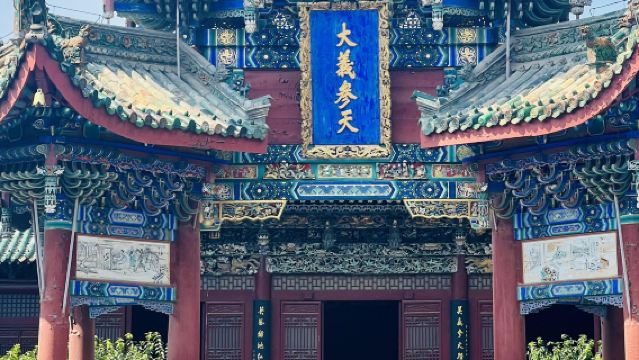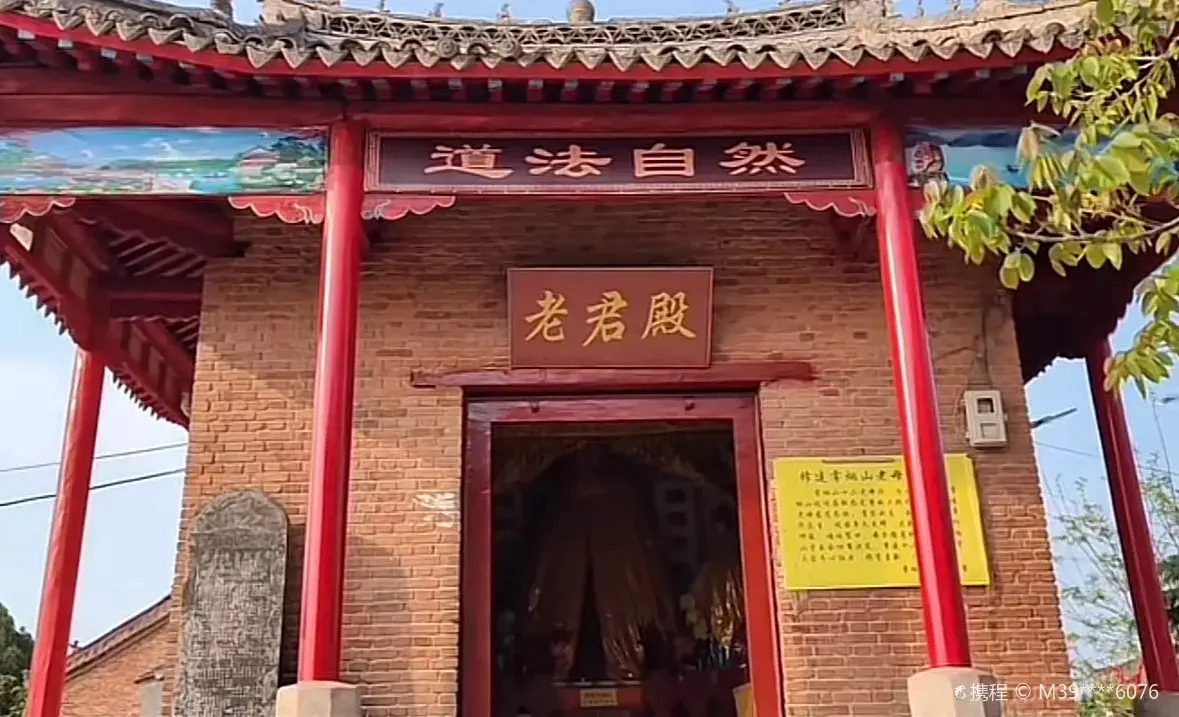
Fugou

Things to do in Fugou

Search attractions or local attractions & tours
Search

Explore top experiences

Top 10 attractions in Fugou

View all Attractions
Millennium City Park
2026 Asia 100 - Night Attractions

Millennium City Park

8.8
4.6/5
29.1k reviews

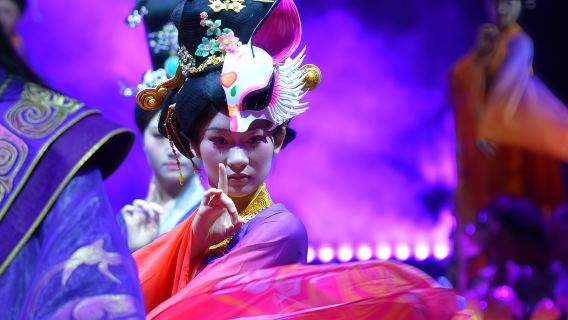
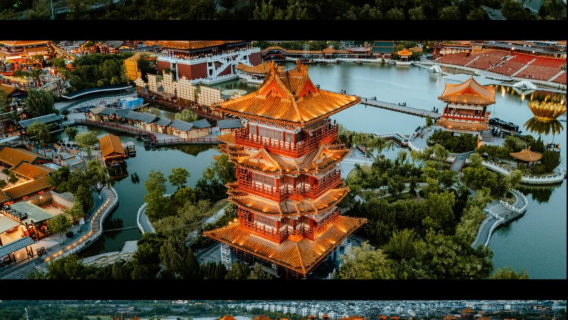
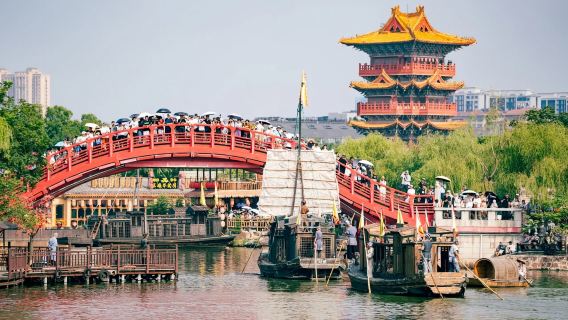
Millennium City Park is located by the shores of Longting Lake in Kaifeng. It is a large-scale historical and cultural theme park of the Song Dynasty, recreated one-to-one based on the famous painting Along the River During the Qingming Festival by Song Dynasty painter Zhang Zeduan. The park is divided into two sections by the Shuangting Bridge: the South Garden recreates the bustling street life of the Bianjing city, with taverns, eateries, teahouses, and pharmacies lined up along the streets; the North Garden is an imperial garden, with waterside halls, the Sifang Courtyard, and other palace buildings standing by the lake. Performers and street vendors in the park mostly wear Song Dynasty costumes, with ancient music lingering and bells and drums sounding, so that after a few steps visitors can easily fall under the illusion of "stepping into a painting in one morning, dreaming back a thousand years in one day." Architecture is the intuitive and tangible highlight here: the Rainbow Bridge spanning the Bian River is a replica of the famous bridge in the painting, shaped like a long rainbow, and standing on the bridge watching the grain boats pass by feels much like being inside the painting; the Fuyun Pavilion towers above all the other pavilions in the garden, with its tiered red towers and golden tiles on all four eaves, inviting one to climb from afar; the Shangshan Gate is rebuilt after the Northern Song dynasty Dongjing city gate, tall and majestic with brilliant painted decorations, making it the most imposing gate tower in the garden; and the Shuixin Xie, Shuangting Bridge, Jiulong Bridge, and other pavilions and waterside structures are scattered among the blue waves. The main attraction of the day is the immersive performances staged throughout the park: "Bao Zheng Inspects the Bian River Grain Transport" unfolds on the water on both sides of the Rainbow Bridge; "Squire Wang Seeks a Son-in-Law" features a decorated tower erected in front of Squire Wang's house where a silk ball is tossed to choose a groom; "Yue Fei Challenges Prince Xiao Liang" raises dust on the Song dynasty parade ground as horses gallop; and folk performances such as cockfighting, stilt walking, and pan drumming are interspersed throughout. To step into the action yourself, head to the Four Directions Courtyard to don traditional costumes and enter the examination cells for a hands-on Song dynasty imperial exam experience; families with children can enjoy carousel rides, roller coasters, and other amusement facilities wrapped in Song dynasty storytelling at the Song Dynasty·Royal Pleasure Ground; and in the entertainment quarters, face-changing, qigong fire-breathing, ancient magic, and other Song dynasty variety acts take turns on stage, with intangible cultural heritage feats ready to break out at any moment right beside you. After nightfall, the park takes on a different face: red lanterns light up one after another, the market streets are brightly illuminated, and it feels like a completely different park from the daytime. The large-scale water-based live performance "The Great Song Dynasty's Eastern Capital: A Dream of Splendor" is staged on the surface of Jinglong Lake. The entire show is woven together from eight classic Song ci poems and the painting Along the River During the Qingming Festival, drawing the audience back to the Northern Song dynasty's Eastern Capital a thousand years ago. The performance runs about 70 minutes, and many visitors deliberately plan their itinerary to stay until the evening to catch this show. Dining in the park is also convenient: the snack street at Dongjing Food Court brings together Kaifeng snacks such as fried liangfen, tongzi chicken, and almond tea, perfect for eating while strolling; if you want to sit down for a proper meal, you can visit the reconstructed Sun Yang Zheng Dian in the park, which was originally one of the seventy-two official restaurants of Bianjing in the Northern Song Dynasty, where you can taste traditional Henan dishes such as soup dumplings and carp with baked noodles.

Kaifeng · 83.5km from Fugou
Longmen Grottoes
2026 Asia 100 - Best Things to Do

Longmen Grottoes

8.9
4.7/5
62.4k reviews

Longmen Grottoes are located in the southern suburbs of Luoyang, Henan Province, on the cliffs along both banks of the Yi River. As one of China's three major grotto art treasures, they were inscribed on the World Cultural Heritage list in 2000. The grottoes were first carved when Emperor Xiaowen of Northern Wei moved the capital to Luoyang, and construction continued through the Eastern Wei, Western Wei, Northern Qi, Sui, and Tang dynasties, with the vast majority of niches and statues left from the Northern Wei and Tang periods. Today, more than 2,000 niches and over 100,000 statues remain, along with a large number of inscriptions and steles, making the site an important representative of Chinese stone carving art. The attraction is divided by the Yi River into two parts: West Hill and East Hill. The West Hill Grottoes are the essence of the site, carved from the Northern Dynasties through the Sui and Tang periods. Famous caves include Guyang Cave, Binyang Cave, Lotus Cave, Wanfo Cave, and Fengxian Temple. The Lushena Buddha at Fengxian Temple stands about 17 m tall, making it one of the larger Buddha statues at Longmen Grottoes. Its face is dignified and serene, with a faint smile, and legend holds that it was modeled on the appearance of Wu Zetian, earning it the name "Oriental Mona Lisa." The inner walls of Wanfo Cave are densely covered with about 15,000 small Buddha statues, each only a few cm tall, neatly arranged and finely crafted. Guyang Cave is the earliest cave carved at Longmen, and its inscription calligraphy is exquisite; the selected "Twenty Masterpieces of Longmen" are representative works of Wei stele calligraphy. Binyang Cave consists of the South, Middle, and North caves and took more than twenty years to complete. Its original reliefs depicting emperors and empresses worshipping the Buddha were looted and lost overseas in the 1930s. In Binyang North Cave, a Buddha statue has a distinctive hand gesture, with the right index and middle fingers raised in a shape resembling the modern "scissors hand," though it is actually a Buddhist mudra, and it once sparked heated discussion online. The East Hill Grottoes are mostly Tang dynasty works and are smaller in scale than those on West Hill, but from the opposite bank visitors can enjoy panoramic views of West Hill from different angles, especially distant views of the Lushena Buddha. The attraction also includes Xiangshan Temple and Bai Juyi Memorial Park (Bai Garden). The Tang dynasty poet Bai Juyi lived in Luoyang in his later years and once praised it, saying, "Of the scenic splendors of Luoyang's surrounding mountains and waters, Longmen ranks first." When visiting, simply follow the route West Hill—East Hill—Xiangshan Temple—Bai Garden, proceeding in one direction without backtracking. The West Hill Grottoes are densely packed with content, so it is advisable to set aside ample time for a closer look; East Hill is quieter and more secluded, suitable for a brief visit and gazing across the river when energy is limited.

China · Luoyang
Song Du Huangcheng Cultural Tourism Resort

Song Du Huangcheng Cultural Tourism Resort

8.6
4.6/5
179 reviews

Song Du Huangcheng Cultural Tourism Resort is located in the northern part of the old city of Kaifeng, precisely on the site of the imperial palace of the Northern Song Dynasty's Dongjing city. The millennium-old central axis of Kaifeng runs through this area, making it the core zone of the royal culture of the Song Dynasty. Here, you can find the Song-style imperial architecture of the Longting attraction, the tales of the Yang Family Generals at Tianbo Yang's residence, and the calligraphic steles of Han Yuan Stele Forest. The Shuanglong Lane historical and cultural block, 960 Cultural and Creative Park, and Qisheng Corner have transformed old streets and courtyards into Song-style blocks perfect for leisurely exploration. The resort also connects a series of Song culture attractions: Wansui Mountain Great Song Martial Arts City stages year-round martial arts live shows and intangible cultural heritage iron fireworks, while historic sites like the Iron Pagoda, Kaifeng city wall, Zhouqiao and Bian River ruins, Shanshangan Guild Hall, Yanqing Taoist Temple, and Fan Pagoda are scattered across the old city, along with niche spots like the underground wartime grain storage. These places are hard to cover in one day, so we recommend focusing on two or three key sites. After dark, a different experience awaits as the attractions light up in unison. Boarding a painted pleasure boat on the Great Song Imperial River to watch the illuminated pavilions and towers sway with the rippling water is a popular nightlife option here.

Kaifeng · 82.6km from Fugou
Wansuishan Martial Arts City
No. 1 of Family-friendly Attractions in Henan

Wansuishan Martial Arts City

8.6
4.6/5
16.7k reviews

Wansuishan Martial Arts City is located in the northwest of Kaifeng's urban areaWansuishan Martial Arts City, it is a large-scale attraction built with Song Dynasty culture and wuxia culture as its backdrop. Within the attraction, there are quaint and charming Song Dynasty garden streets and alleys, year-round exciting wuxia and period costume performances, as well as a wealth of entertainment facilities, making it a great place for relaxation and entertainment in Kaifeng, Zhengzhou, and surrounding areas. When visiting Wansuishan Martial Arts City, the first thing you will notice is the beautiful scenery of the attraction. Wansuishan Martial Arts City as a whole creates an atmosphere of the Song Dynasty, among which many views are very eye-catching, such as Wansui Temple, which recreates the splendor of a thousand-year-old ancient temple from the Song Dynasty, the Dragon Altar, which embodies the spirit of Buddhism, Confucianism, and Taoism, the relatively well-preserved ancient city wall of Kaifeng in China, and the "Nine Dragons Waterfall," one of the large man-made stream and waterfall groups in China. What is rare is that the attraction also has a very large area of forest and green space, with a quiet environment, and flowers bloom in season, making it very suitable for photography. Afterward, visitors will notice the unique wuxia features within the attraction. Year-round, multiple wuxia-themed performances are staged here, with several themed shows such as "Cross Slope," "Wu Song Drunkenly Beats Jiang the Gatekeeper," and "Wild Boar Forest" being quite spectacular—definitely not to be missed when visiting. Interactive performances like the "Wuxia Film and Television Experience Hall," "Martial Arts Champion," and "Li Kui Judges a Case" also allow visitors to participate in wuxia stories, offering plenty of fun. In the architectural design of the attraction, there are also many wuxia elements: the Wuxia Road built with large-scale weapons such as the "Heaven-Reliant Sword" and "Overlord Blade," the "Gallant Heroes Portrait" at the Great Song Martial Arts Hall, the "Sword Altar" at Cross Slope, Juxian Manor, and the Martial Arts Arena—all are uniquely distinctive. Additionally, every year during the Spring Festival periodWansuishanLarge-scale temple fairs are held, featuring grand performances, a rich variety of specialty snacks, a dazzling array of handicrafts, and highly distinctive entertainment activities, creating a lively atmosphere. It has now become one of the most popular temple fairs in the Central Plains region.

Kaifeng · 84.7km from Fugou
Laojun Mountain Scenic Spot
No. 1 of Fall Viewing Attractions in Henan

Laojun Mountain Scenic Spot

8.6
4.7/5
16.7k reviews

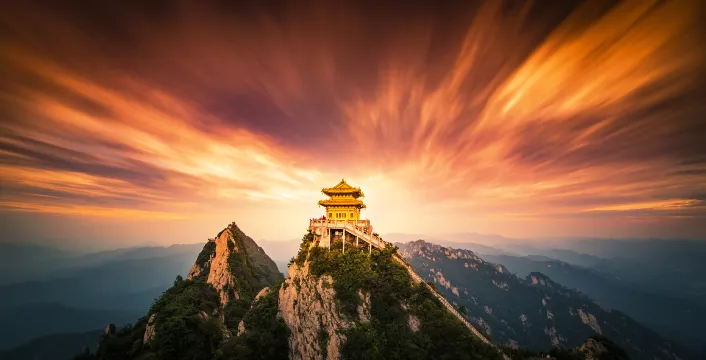
It is said that Laojun Attraction is the place where Li Er (Laozi), the founder of Taoism, practiced in seclusion. During the Northern Wei Dynasty, a temple was built in the mountain to commemorate it. Later, it was named "the famous mountain in the world" and has always been popular. The mountain is lush with trees and picturesque, and mountain springs can be seen everywhere. In the golden autumn, this is the best choice for viewing red leaves in the Souvenir areas. After the rain, Laojun Mountain is surrounded by clouds and mist in each peak, like a fairyland in the sky. The Attraction area is huge and is mainly divided into the main Laojun Mountain Attraction in the center, the Dream Valley Attraction in the west, and the Zhaigou Attraction Area in the east. Generally, tourists will spend a day to visit the main Laojun Mountain Attraction, which is also the most developed area of ​​the entire Attraction. If you go to the top of the mountain, you will also have the opportunity to see the beautiful sea of ​​clouds, sunrise, and sunset. The main Attraction of ​​Laojun Mountain includes Zhongtianmen, Jinding, Laojun Temple, Nantianmen, Yuhuangding and Mazongling. Since its construction in the Northern Wei Dynasty, Laojun Temple has been the center of worship for pilgrims from the Central Plains; the Taoist temple on Yuhuangding enshrines the Jade Emperor and is also a good place to view the scenery in the mountain; Jinding and Mazongling are good places to watch the sunrise and the sea of ​​clouds. Recommended itinerary: Day Trips Most tourists choose to spend a day to visit the main Attraction of ​​Laojun Mountain. Lingguan Hall - the statue of Laojun at the foot of the mountain - Lincu Hall - Zhongtianmen - tree-lined trail - Lying Yunsong - Bodhisattva Hall - Laojun Temple, Jinding - Yuhuangding, and then return along the original route. Tourists can choose to walk the whole way or take a "walk + cable car" tour of Laojun Mountain according to their own conditions. There is the Zhongling Cableway of the Attraction between the Lingguan Temple at the foot of the mountain and the Zhongtian Gate on the mountainside. Take the Zhongling Cableway and then walk from Zhongtian Gate to the top of the mountain, Yuhuang Peak. The road from Zhongtian Gate to the top of the mountain is not very steep and can usually be completed in about an hour. Two-day tour If you have enough time, you can spend two days to visit Laojun Mountain. The general route is: D1: Visit the main Attraction of ​​Laojun Mountain and stay in the mountain that night. D2: From the top of Laojun Mountain, choose to go down the mountain to the Dream Valley in the west or the Zhaigou Attraction in the east, and arrive at the west gate and east gate of the Attraction respectively. In the main Attraction of ​​Laojun Mountain, you can stay near Zhongtianmen on the mountainside and Laojun Temple on the top of the mountain. There are hotels near Zhongtianmen with better accommodation conditions, while the accommodation conditions Souvenir Laojun Temple are relatively poor. If you plan to go to the top of the mountain to watch the sunrise the next morning, you can stay Souvenir Laojun Temple. Compared with the Zhaigou Attraction in the east, the mountain roads in Dream Chasing Valley are smoother, and tourists can choose one of them to go down the mountain according to their preferences. There are many places in the Attraction that can provide Dining services for tourists, but the signboards on some sections of the road in the Attraction are not yet very complete, so tourists need to pay more attention when visiting.

China · Luanchuan
Kaifeng Fu (Kaifeng Palace)
No. 6 of Best Things to Do in Henan

Kaifeng Fu (Kaifeng Palace)

7.9
4.5/5
16.5k reviews

Kaifeng Fu (Kaifeng Palace) was first built during the Later Liang period of the Five Dynasties. During the Northern Song Dynasty, it was grand in scale and served as an important institution for managing the capital and the surrounding metropolitan region. Famous officials such as Bao Zheng, Ouyang Xiu, Fan Zhongyan, and Su Shi all once held posts here. The Kaifeng Fu of the Song Dynasty, having endured wars and floods, no longer exists. What visitors see today is a reconstructed imitation ancient attraction built according to the Northern Song architectural treatise "Yingzao Fashi." The gate of the palace faces south. The attraction is centered on an axis formed by the main hall (grand hall), the council hall, and the Plum Blossom Hall, with various halls of different sizes distributed on both sides, including Tianqing Temple, Mingli Courtyard, Hidden Dragon Palace, Qingxin Tower, the prison, Yingwu Tower, and Yinbin Guesthouse. The main hall on the central axis replicates the appearance of the case-hearing venue of the Kaifeng Fu (Kaifeng Palace) magistrate in the Northern Song Dynasty. In front of the hall are displayed three bronze guillotines with dragon, tiger, and dog heads, which are widely known furnishings of Lord Bao culture. The council hall restores the office scene of the Northern Song Dynasty government office. The Plum Blossom Hall in the northern part of the attraction features a wax figure scene of Lord Bao hearing cases while "sitting facing south" at the southern government office. In the Hidden Dragon Palace east of the central axis, the Hidden Dragon Hall enshrines statues of three emperors — Emperor Taizong, Emperor Zhenzong, and Emperor Qinzong of Song — all of whom served in Kaifeng Fu before ascending the throne. The adjacent Qingxin Tower is a high-rise building within the attraction, with a large bronze statue of Lord Bao on the ground floor and exhibitions of the life stories of successive Kaifeng Fu magistrates of the Northern Song Dynasty inside. The West Prison of the Fu Office on the southwest side of the palace gate includes a warden's room, a prison god temple, death cells, and male and female prison cells, furnished with sculptures, torture instruments, and scenes reflecting the prison administration of the Northern Song period. The attraction also stages ancient-style live performances such as "The Opening Ceremony of the Government Office" and "Lord Bao Judges Cases," offering an immersive visiting experience.

Kaifeng · 81.3km from Fugou
Henan Museum
No. 2 of Family-friendly Attractions in Henan

Henan Museum

8.1
4.8/5
10k reviews

[Henan MuseumIntroduction Founded in 1927, it is one of the earlier-established museums in China. The museum covers an area of 126 mu, with a building area of 55,000 square m. The museum currently has a collection of approximately 250,000 artifacts (sets), with particular strengths in prehistoric artifacts, Shang and Zhou bronzes, ceramics from successive dynasties, jade objects, and stone carvings. The fine artifacts are numerous in quantity, comprehensive in variety, high in quality, and great in value, making this a cultural and artistic treasury that bears witness to the trajectory of Chinese civilization and showcases the course of China's historical development. Currently open are the permanent exhibition "Great China: Building the Capital at the Center" and the thematic exhibitions "Henan in the Ming and Qing Dynasties," "Ancient Stone Carving Art of the Central Plains," "Auspicious Bronzes from Dan and Xi: Chu Bronze Art of the Central Plains," "Treasures of Craftsmanship: Ming and Qing Treasures from the Museum Collection," and "Special Exhibition of National Treasures," among others. The "Social Education Experience Hall" and the "Hall of Ancient Chinese Music," which complement the exhibitions, are also open for use. With the mission of "carrying forward inherent culture, promoting academic research, enhancing public knowledge, and advancing social civilization," it meticulously builds a public welfare cultural service brand, serving as an important window to appreciate Central Plains culture, Yellow River culture, and the Chinese cultural lineage, an important front for promoting core values, and an important platform for enhancing cultural exchange and cooperation. [Existing exhibition guide] Permanent exhibition "The Great Chinese Civilization: Choosing the Center to Build the Capital" The permanent exhibition "The Great Chinese Civilization: Choosing the Center to Build the Capital" takes the history of capital establishment in the Central Plains as its main thread, the development history of Central Plains civilization as its outline, and the backdrop of world civilizations as its reference. It integrates the cultural relic advantages of the Henan region, captures the highlights of ancient development in the Central Plains, showcases the trajectory of the Chinese nation's civilizational development, and recreates the long-standing splendor of Central Plains culture as well as its influence and radiating power. At the same time, from a global perspective, it presents the similarities and differences between Central Plains culture and cultures of other regions, and initiates a dialogue between this civilization and other civilizations. The permanent exhibition is located on floors 1, 2, and 3 of the main exhibition hall and is divided into 10 galleries, consisting of seven sections: the Neolithic Age, Xia and Shang, Western Zhou, Eastern Zhou, Qin, Han, Wei, Jin, and Northern and Southern Dynasties, Sui and Tang, and Song, Jin, and Yuan. It interprets the capital culture of the Central Plains and the cultural life within the capitals across various historical periods. [Henan MuseumHuaxia Ancient Music Orchestra] Henan is located in the Central Plains and has been a land of rites and music since ancient times, enjoying exceptional advantages for the development of musical culture. From the bone flutes of eight thousand years ago, to the bells, drums, chimes, and zithers, as well as the pipes, flutes, and mouth organs of the Xia, Shang, and Zhou dynasties, and to the music and dance, hundred entertainments, and banquet music and grand suites of the Han and Tang dynasties, the ancient music of the Central Plains is like a long river of history, surging endlessly and magnificent. Since its establishment in 2000, it has conducted restoration research on Central Plains musical artifacts, restored and reconstructed ancient musical scores, costumes, and performance scenes, and launched concerts with different themes, which have been highly praised by audiences at home and abroad. Millennia-old music, passed down through generations, the Huaxia Ancient Music Orchestra is resounding with the ceaseless spiritual voice of the Chinese nation... [Henan MuseumCultural and creative area] "Yubo Cultural Creativity" actively cooperates with enterprises both within and outside the province. By absorbing the creative concepts, design styles, and product characteristics of various enterprises, it has sorted out more than 300 cultural relic elements (sets) suitable for development. Adhering to the development principle of "highlighting originality," it has cumulatively produced nearly 800 cultural and creative products, covering categories such as stationery, toys, daily necessities, apparel, and food. Among them, a series of cultural and creative products developed with the museum's treasured artifacts and star relics as themes have achieved excellent results in various cultural and creative competitions across the country and have represented our province on the exhibition stages of major cultural and creative themes on multiple occasions. Currently, Yubo Cultural Creativity has focused on building physical product brands such as "Zhuozhen Cultural Relic Coffee," "Lost Treasures — Archaeological Blind Box," and "Cup of Light," as well as event brands such as "Museum Elegance Hall" and "Cultural Creativity Competition." At the same time, it is actively exploring the deep integration of cultural creativity and scientific research, collaborating with multiple universities to establish cultural creativity talent training and practice bases, and accelerating the training of cultural creativity talent. "The movement of the great Peng bird does not rely on the lightness of a single feather; the speed of a fine steed does not depend on the strength of a single foot." In the future, Yubo Cultural and Creative will continue to draw on more social forces to jointly explore the charm of history and culture, create more cultural and creative works, and make due contributions to the high-quality development of our province's cultural and creative industry. Location: Boutique on the west side of the first-floor lobby, book café on the third floor, pop-up store at the west exit [Henan MuseumSocial education experience hall] When visiting the Henan Museum, besides seeing exhibitions, listening to ancient music, and shopping for cultural creative products, there is one more place you must experience. Located on the first floor of the East Annex Building, it is a brand-new comprehensive practice experience area of over 1,400 square meters that can accommodate up to 500 people participating in activities at the same time. This place endows museum education with new dimensions of development; it is a national research and study education base for primary and secondary schools; it is a family-friendly museum classroom where education meets fun; and it also offers an immersive way to perceive the profoundness of culture. It features seven distinct zones, including an ancient technology experience area, a field archaeology experience area, a cultural relic restoration and conservation observation area, a visitor self-directed learning area, a research and study practice education area, a 3D national treasure magic wall experience area, and a 5G + 360° real-time panoramic experience area, all offering excellent experiences and visual effects. The social education experience hall of the Henan Museum adopts a "demographic-specific, menu-based" service model to target service groups. In educating underage visitors, it focuses on creating educational projects such as "special guided tours," develops thematic learning courses, and optimizes popular educational courses including the series on the nine treasures of the museum, "How Much Do You Know About Archaeology," "Guardians of National Treasures," and idioms and allusions, thereby enriching the education system and sharing educational projects. The newly opened museum comprehensive practice experience center showcases the new dimensions of museum education development with a high starting point, three-dimensional approach, and immersive presentation.

China · Zhengzhou
Eight Spring Gap
No. 1 of Best Things to Do in Grand Canyon of Taihang

Eight Spring Gap

8
4.6/5
7.5k reviews

Eight Spring Gap is located in the middle section of the Taihang Mountains Grand Canyon. Originally named "Badao Water," it takes its name from the eight springs in the canyon that emerge from a single source. The attraction covers an area of approx. 24 km², with a low point at approx. 600 m above sea level and a high point at approx. 1,400 m, a drop of approx. 1,100 m, combining the grandeur of northern mountains and rivers with the soft beauty of Jiangnan waterscapes. The attraction is divided into four touring areas: the gatehouse view, the canyon view, the cableway view, and the trail view, with water routes, land routes, and aerial cableways connecting in alternation to create a three-dimensional touring experience. The water route begins at the sightseeing dam pier, where visitors board a boat to enter the gorge, passing through the emerald waters of the high gorge and calm lake, with cliffs pressing in on both sides and the full force of a sliver of sky visible at a glance. After landing, visitors follow the Quiet Valley Listening to Springs and the Hanging Streams Dripping Emerald deeper into the canyon, where spring water gathers into streams and eight flows tumble over flat rocks, their sound echoing at the bottom of the valley. Pot Hole Grotto is a continuous arc-shaped grotto formed by mountain spring water eroding the mountain body over hundreds of millions of years—an easily overlooked detail that is well worth a stop. Along the trail route, the Cliff Hanging Ladder is built against the cliff face at approx. 60 m above ground, and walking on it offers a panoramic view of the dam; the sightseeing elevator is built vertically against the mountain, with an operating height of approx. 200 m, and a cantilevered transparent viewing platform at the top, making it the highest point for overlooking the canyon. The Cloud Cliff Walk consists of thousands of steps and several thousand meters of cliffside plank walkway, hanging among the clouds on the precipice and leading to high points such as Yuhuang Square and North Heaven Gate. North Heaven Gate is a natural stone arch, over 20 m high, standing atop the peak and echoing the pictographic rock views such as the Chinese Zodiac Worshipping Heaven on the opposite ridge. The Turning Cableway spans more than ten mountain ridges, offering an aerial panorama of the canyon and a commanding view of the layered Taihang mountain scenery from above. It is advisable to allow ample time, as the water, land, and air touring options each offer different viewing experiences; along the way, small views close to the cliff face, such as Pot Hole Grotto and Dripping Valley Nine Lotuses, are easily overlooked and deserve extra attention to the signs along the path.

China · Huguan
Kaifeng Museum
No. 5 of Family-friendly Attractions in Henan

Kaifeng Museum

7.7
4.8/5
5.9k reviews

The Kaifeng Museum is a comprehensive museum integrating cultural relic collection, preservation, research, exhibition, and social education. It houses over 80,000 cultural relics, covering various categories such as pottery, porcelain, bronze ware, calligraphy and painting, stone carving, jade ware, and lacquerware. The museum was first established on Sansheng street in 1962, on the former site left after the Henan museum moved to Zhengzhou. The old museum by Baogong lake opened in 1988, and in March 2018, it relocated to its current new site. The new museum's layout draws inspiration from the triple-city design of Kaifeng during the Northern Song dynasty, consisting of an outer perimeter, a circular inner courtyard, and a central main structure. Following the principle of "classical exterior, modern interior," lower surrounding buildings embrace the towering central pavilion. From a distance, it appears as a Song-style architectural complex, immersing visitors in the essence of Song culture even before entering. The Kaifeng museum was established in March 1962. Its original site was located on Sansheng street, built on the former site of the Henan museum after it moved to Zhengzhou. In 1986, a new museum was expanded by the scenic Baogong lake and opened to the public in September 1988, becoming a major cultural event in Kaifeng. In recent years, to promote the continued development and prosperity of Kaifeng's museum industry and the construction of Kaifeng as an international cultural tourism city, the new Kaifeng museum officially began construction in March 2014 and opened to the public in March 2018. The new Kaifeng museum is located on the north side of Zhengkai avenue between the fifth and sixth streets in the Kaifeng new district, adjacent to Zhongyi lake to the east, with a total construction area of 54,286 m². The overall architectural design highlights the triple-city layout characteristic of Kaifeng during the Northern Song dynasty, consisting of an outer perimeter, a circular inner courtyard, and a central main structure. The design follows the principle of "classical exterior, modern interior," with lower surrounding buildings embracing the towering central pavilion, reflecting the architectural features of Song dynasty building complexes. The first floor of the Kaifeng museum's Zhongyi lake section consists of a public service area, exhibition area, and cultural relic restoration area. The public service area includes: a visitor center, an academic lecture hall, an educational experience zone, a cultural and creative display center, a 4D cinema, and a VIP reception room. The exhibition area features six thematic exhibition halls—"New year paintings of Zhuxian town in Kaifeng: Artistic charm of woodblock prints," "Kaifeng's modern and contemporary calligraphy and painting masterpieces: Elegance of ink and color," "Millennium imprints: A selection of stone carvings from the collection," "Imperial splendor: Royal artifacts of the Ming and Qing dynasties," "The premier prefecture: A special exhibition on the Northern Song Kaifeng government office," and "Science and technology of the Song dynasty"—along with two temporary exhibition halls, covering a total area of 5000 m². The second floor consists of a basic exhibition area, meeting rooms, and office space. The total exhibition area on the second floor is 7355 m², featuring 8 exhibition halls, including "Kaifeng ancient history and culture exhibition: A millennium capital of eight dynasties," "Kaifeng memories: Modern and contemporary social life exhibition," and the Dasheng music and dance performance hall. Among these, the "Kaifeng ancient history and culture exhibition: A millennium capital of eight dynasties" covers an area of 4840 m², highlighting the history of the Northern Song Dynasty as the capital. Within this section, approx. 700 m² is dedicated to a special exhibition hall for the Riverside Scene at Qingming Festival, displaying various versions, creative forms, and materials of artifacts and historical materials related to the painting across different periods.

Kaifeng · 83.7km from Fugou

Experiences you can't miss in Fugou

Featured Day tours in Fugou

View all Day tours
Kaifeng Millennium City Park + Kaifeng Fu (Kaifeng Palace) Chinese Group Day Tour
󱌍
Duration: 4 hrs
English
Instant confirmation
Book now for tomorrow
From€49.97
Panoramic dream-seeking martial arts journey + all-day NPC interaction | Zhengzhou departure Wansuishan 1-day tour
󱌍
Duration: 5 hrs
English
Free cancellation
Instant confirmation
Book now for tomorrow
From€46.84
Zhengzhou Tianxia Grand Feast | Immersive Central Plains Palace Banquet
󱌍
Duration: 2 hrs
English
Free cancellation
Instant confirmation
Book now for tomorrow
From€72.95
Zhengzhou: Millennium City Park & Iron Pagoda Private Day Trip Private Car Transfer
󱌍
Duration: 8 hrs
English
Free cancellation
Instant confirmation
From€89.79
Fugou Today's weatherFoggy 6-17℃
Fugou weather for the next 2 days11/15: 8-16℃, 11/16: 7-14℃

Free things to do in Fugou

What travellers say about Fugou

user-avatar
lia***1013 November 2026
5.0
Five stars! Exceeded expectations, it was so much fun! My child is already saying they want to come back during winter break. How can a place be so fun, interesting, and interactive? We played until 10 pm two nights in a row before heading back to the hotel. From choosing the Beggars' Sect at the entrance, you're greeted by NPCs along the way, and even getting a free snack when you become an item—it's all so interesting. The highlight is the ironwork—it's incredibly beautiful and impressive; my child said it looks like scattered gold.

Millennium City Park

user-avatar
Chris14 November 2026
5.0
Visiting Longmen Grottoes was one of the highlights of my trip to Luoyang. I was genuinely amazed by the sheer scale of the site and the incredible details of the Buddhist statues carved into the limestone cliffs. It is quite mind-blowing to think about how these masterpieces were created more than a thousand years ago, especially considering the tools and technology available back then.Walking through the grottoes gave me a real appreciation of China's rich history, culture and craftsmanship. Every section seemed to have something interesting to discover, and I found myself stopping frequently to admire the intricate carvings. The scenery along the river also made the experience even more enjoyable.Definitely worth visiting if you're in Luoyang! My advice is to set aside at least 2–3 hours, wear comfortable shoes and take your time exploring rather than rushing through. An unforgettable experience!

Longmen Grottoes

user-avatar
M55***2018 August 2026
5.0
It's very worthwhile, but it's also very crowded, which might slightly detract from the overall experience. However, the people are incredibly welcoming, and there are many beautiful spots for taking photos. The food is also affordable and inexpensive, which kids enjoy. I'll definitely go back when it's less crowded.

Song Du Huangcheng Cultural Tourism Resort
user-avatar
侧手翻小子11 November 2026
5.0
The construction is absolutely stunning, especially the night view! The antique buildings and lanterns create a feeling of stepping back in time. The silver-threaded ancient buildings, combined with the lights and "snowflakes," are incredibly romantic. The NPCs' costumes are exquisite, they're very enthusiastic, and the interactions are excellent. Everywhere you go in the scenic area, they're incredibly helpful when you ask questions—they're practically the equivalent of Pang Donglai in the cultural tourism world! The Bianhe River cruise is fantastic value; definitely buy the combined ticket and take the Imperial River section. Every bridge and archway feels like stepping into a painting. There are also shows along the river. The experience is truly exceptional. The only downside is that Wansui Mountain Scenic Area gets incredibly crowded. Going during the off-season would be an even better experience.

Wansuishan Martial Arts City

user-avatar
Anonymous user13 November 2026
5.0
I finally visited Laojun Mountain this time, and it was even more amazing than I expected. The facilities were complete, the staff were very friendly, and parking, dining, and accommodation were all very convenient. There were plenty of places to rest during the hike. It was a very satisfying trip; everything was just right.

Laojun Mountain Scenic Spot

user-avatar
M76***0328 June 2026
5.0
We visited the hot springs in Huadu with our family over the weekend and had a great experience in all aspects. The advertised area included a children's play area, which I highly recommend. The staff were very attentive, especially Aunt Xiaoli and Aunt Kenan, who helped us get water and tidy up our things. I'll definitely come back to try it next time. A brand new children's play area will be opening in mid-July; you should definitely bring your kids to experience it!

Huadu Hot Spring Resort

user-avatar
yuy86613 November 2026
5.0
Kaifeng Prefecture is definitely worth visiting to learn about its history and culture. The site is now a 1:1 replica, so a guided tour is recommended, lasting about 40 minutes. If you want to see shows, you'll need to check the schedule. There are also interactive programs. The area is also quite clean and tidy.

Kaifeng Fu (Kaifeng Palace)

user-avatar
123晴晴1239 November 2026
5.0
The tour guide spoke clearly and fluently. The museum was packed with people, and with a group of 30, the young woman, being small and wearing a black coat, easily lost her way. I suggested she wear brighter colors next time, to which she replied: "Does work require specific clothing? Didn't she see the guides in the museum wearing bright red?"

Henan Museum

user-avatar
去瑞士滑雪8 November 2026
5.0
Baquan Gorge, as the core scenic area of ​​the Taihang Grand Canyon, boasts truly stunning natural scenery. Towering cliffs abound, numerous springs flow through the gorge, and a crystal-clear, emerald-green lake nestles amidst the high gorges, creating a unique and majestic landscape characteristic of northern China. The integrated land, water, and air tour offers a rich experience: boat rides, winding cable cars, and the Sky City sightseeing elevator provide multiple perspectives of the Taihang Mountain scenery. Route A is highly recommended; it involves more downhill sections and is more physically demanding, but still requires a significant amount of walking, so wearing non-slip athletic shoes is advised. During holidays, long queues are common for cable cars and boats, so try to enter the park early. Prices within the scenic area are relatively high, so it's advisable to bring your own drinking water and snacks. Overall, the scenery is worth the ticket price, and it's a must-visit for those who appreciate natural landscapes.

Eight Spring Gap

user-avatar
Anonymous user2 October 2026
5.0
Kaifeng City Museum is located on Zhengkai Avenue, Sixth Street, Kaifeng City, Henan Province, east of Zhongyi Lake. It is a comprehensive local museum integrating cultural relic collection, preservation, scientific research, exhibitions, and public education. It is a unit under the Kaifeng Municipal Bureau of Culture, Radio, Television and Tourism. The museum is a national first-class museum. Admission is free on weekdays. It is open Tuesday through Sunday from 9:00 AM to 5:00 PM, and closed on Mondays (the schedule may be adjusted for public holidays). It is recommended to make a reservation in advance via the official WeChat account or mini-program using your real name. Entry is by presenting the reservation code and your ID card.

Kaifeng Museum

Trip Moments in Fugou

Popular cities near Fugou

Frequently asked questions

What are the recommended tours and excursions in Fugou?

When choosing a tour, start with how much time you have and the kind of experience you're looking for. Trending options right now include Kaifeng Millennium City Park + Kaifeng Fu (Kaifeng Palace) Chinese Group Day Tour, Panoramic dream-seeking martial arts journey + all-day NPC interaction | Zhengzhou departure Wansuishan 1-day tour, and Zhengzhou Tianxia Grand Feast | Immersive Central Plains Palace Banquet. Check the real-time availability and itinerary before you book.

As of 14 November 2026, the reference price for day tours and activities in Fugou is around EUR 46.84 – EUR 171.74. Rates vary by duration, group size, transport, tickets, meals, and any special admission requirements. Before you book, please confirm the billing currency and whether the price is quoted per person or per group.

Get help anytime, anywhere within 30 secondsContact customer support

Change and cancellation policies vary by attractions and tours. Please check the product details page for more information.

Ticket prices may vary between weekdays and weekends, as well as during peak and off-peak seasons. When booking with Trip.com, you can also use Trip Coins to get extra savings. For more tips on booking discounted tickets, please visit Trip.com for the latest information.