Things to do in Hancheng
Explore top experiences
Top 10 attractions in Hancheng


Dang Jia Village
Dangjia Village is located in Xizhuang Town in the northeast of Hancheng City. It is a well-preserved architectural village of the Ming and Qing Dynasties. It is known as a "living fossil of the ancient traditional residences of Eastern mankind." Its stone-built alleys are tall and splendid, elegant courtyard doors are particularly eye-catching, the inscriptions prominently reflect the owner's status and beliefs, and the layout of the village lanes is even more interesting.Hancheng · 6.5km from downtown

Sima Qian Memorial Temple
Sima Qian Ancestral Hall is located on the cliff of Hankangpo in Nanzhichuan Town, Hancheng City. It was built in the Yongjia of the Western Jin Dynasty for 4 years and is now a national key cultural relic protection.Ascend to the summit, you can look east to the Yellow River, Xiqiao Liangshan, south to the ancient Wei Great Wall, and north to Zhishui.Hancheng · 11.7km from downtown

Hancheng Ancient City
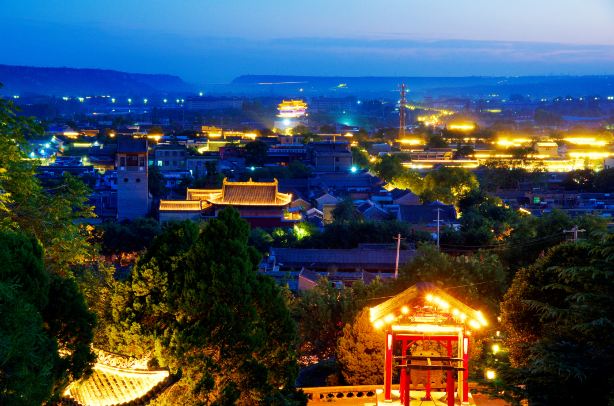
The ancient city of Hancheng was constructed in the Sui Dynasty. It has a history of 1,500 years and preserves the buildings of Tang, Song, Yuan, Ming and Qing. Inside the ancient city, a group of ancient streets from the Ming and Qing Dynasties, a group of ancient buildings, a group of ancient houses in the courtyard and patterns are all well protected. It is one of the six well-protected ancient cities in the Ming and Qing Dynasties. The ancient city is also the place where Hancheng's cultural relics gather. The towering golden pagoda and the ancient temples of the city cluster are amazing.Hancheng · 1.7km from downtown

Houtu Temple
Houtu temple, the ancestral shrine of China, is located by the Yellow River in Miaoqian village, Ronghe town, Wanrong county. With profound cultural heritage, it serves as a global worship center for Chinese descendants and one of the cradles of Chinese civilization. Houtu temple is located east of the Emei ridge and west of the Fenhuang bank, stretching 240 m from north to south and 105 m from east to west, covering an area of 25,268 square meters. The temple complex includes the mountain gate, a tripartite stage, the east and west five-tiger halls, the offering hall, the incense pavilion, the main hall, the autumn wind tower, and the song zhenzong stele corridor. Historical records mention the "sovereign heaven and houtu." From emperor xuanyuan huangdi's "sweeping the ground to build an altar for worshipping houtu" to emperor song zhenzong, eight emperors conducted 24 sacrificial ceremonies here. Emperor han wudi visited hedong eight times, offering sacrifices here seven times and leaving behind the timeless masterpiece "Ode to the autumn wind." The autumn wind tower derives its name from housing emperor han wudi's "Ode to the autumn wind stele," with the existing structure dating back to the ming dynasty. Houtu temple is the largest of its kind in China. In recent years, people from all walks of life across the country (including compatriots from Hong Kong, Macao and Taiwan) and overseas Chinese have been coming in an endless stream to seek their roots and worship Houtu. Especially on the birthday of Houtu holy mother (the 18th day of the third lunar month) and during the temple fair on the 5th day of the tenth lunar month, devout pilgrims, merchants and visitors gather in large numbers, creating a bustling atmosphere.Wanrong · 15.3km from Hancheng

Ancient City of Three Temples
The Ancient City of Three Temples is located in Hancheng, Shaanxi Province. The three temples refer to the Temple of Literature, Dongying Temple and City God Temple. The Three Temples are connected, forming the core attraction of the ancient city of Hancheng. Hancheng Museum is also located here. The three ancient temples are relatively well preserved, and the cultural relics are richly displayed, reflecting the ancient charm of the Hancheng region.Hancheng · 1.7km from downtown

Puzhao Temple
Puzhao Temple is located to the west of the health center in Zancun Town, Hancheng City, Weinan City. It was built in the third year of Yuan Yanyou (1316). It is built at the southern end of the ancient fortress more than 10 meters high, overlooking the surrounding area. It is a landmark building of Hancheng during the Yuan Dynasty. Puzhao Temple, like Sima Qian's tomb, was built on the mountain. Its main building, the Mahavira Hall, dates back to the Yuan Dynasty. The Buddhist niches inside are of high artistic value. The hall houses five colored statues of Sakyamuni Buddha, Manjusri Bodhisattva and Samantabhadra Bodhisattva, and disciples Ananda and Kasyapa, which were sculpted in the third year of the Yuan Dynasty Taiding Period (1326), as well as more than 130 caisson paintings from the Ming and Qing Dynasties. In addition to the Main Hall, there are also the Land God Temple, Guandi Temple, Jialan Hall, Dharma Protector Hall, Guanyin Cave, Zen Temple, etc. The appearance and window shape of the Main Hall look like a red yurt. The Buddha statues in the hall are exquisitely carved with clear lines, and the caisson on the upper part is painted with flowers, birds, insects, fish and figures, which are vivid and lifelike.Hancheng · 9km from downtown

Qiufeng Tower
Qiufeng Tower is located in Wanrong County, Yuncheng City, Shanxi Province, China. It is named after the "Autumn Wind Ode" written by Emperor Wu of the Han Dynasty, Liu Che, when he offered sacrifices to Hou Tu here. It is an ancient building with profound historical and cultural heritage. Built in the Ming Dynasty, Qiufeng Tower attracts many tourists and history lovers with its unique architectural style and long history. This pavilion is located in the heart of Wanrong County and has become one of the local landmarks due to its towering structure and exquisite carvings. The architectural style of Qiufeng Tower incorporates traditional elements from the Ming and Qing Dynasties. The wooden structure is exquisite and the eaves are flying, showing the unique charm of ancient architecture. Qiufeng Tower is not only a treasure of architectural art, but also an important place for cultural activities. Historically, this place was a gathering place for literati and poets, who recited poems and exchanged ideas here. Today, Qiufeng Tower is still a center of cultural exchange, regularly hosting calligraphy exhibitions, traditional concerts and other cultural activities, attracting many cultural lovers to visit.Wanrong · 15.2km from Hancheng

Great Ladder Cliff of The Yellow River
The Yellow River Ladder Cliff is located in Hejin City, Shanxi Province, between Longmen and Shimen of the Yellow River. It faces Shimen to the north, Longmen to the south, the Yellow River to the west, and Luliang to the east. The mountains and rivers are magnificent and the scenery is unique. The core landscape of the Ladder Cliff, the Ladder Cliff, is very old, dating back to the Northern Wei Dynasty, according to relevant records. Although the chisel marks on the wall have experienced wind and rain, they are still clearly visible. It is an ancient zigzag plank road artificially excavated on the edge of the cliff according to the terrain. It consists of 365 steps, with a width of four or five feet and each step is seven or eight inches high. The overall shape of the Ladder Cliff from the air is like carving 365 steps on a vertical stone. The terrain is steep, the scenery is unique, and the craftsmanship is amazing. The red past on the ladder cliff: On December 23, 1938, the Japanese army entrenched in Hejin, with the 7th and 8th regiments attached to the Tengtian Battalion as the backbone, plus puppet troops, totaling 4,000 to 5,000 people, more than 20 cannons, and the air force cooperated to attack the frontier positions of the New Eighth Division East Longmen Mountain and Yumenkou. The officers and soldiers of the New Eighth Division fought bravely and repelled the Japanese attack many times. The Japanese suffered heavy casualties, and the casualties of the officers and soldiers of the New Eighth Division's frontier positions also reached more than 70%. Among them, a reinforced platoon guarding Yunzhong Temple all died heroically. Many frontier positions were lost for a time. On the 30th, Zhu Zhenmin, deputy commander of the New Eighth Division, ordered the 23rd Regiment to cross the mountains and ridges, cross the river from Shijiatan to reinforce, and launch an attack on the Japanese army from the side of Longmen Mountain (Datizi Cliff) to recover all the positions in Longmen Mountain. This battle dealt a heavy blow to the Japanese invaders, killing and wounding more than 200 Japanese soldiers, forcing them to retreat to Hejin and Jieshan. 271 officers and soldiers from Guizhou, including the company commander of the New Eighth Division, were buried together at the foot of Longmen Mountain at the junction of Shaanxi and Shanxi (this place belongs to Hejin County, Shanxi Province). In 1987, the Hejin County Political Consultative Conference built a monument in front of the tomb. The beautiful legend on the ladder cliff: It is said that when Dayu arrived here to control the flood, he encountered an evil dragon blocking him and could not continue the construction. So he built the stone ladder to the sky of the Yellow River ladder cliff, intending to go to heaven to complain to the Jade Emperor. As a result, after the ladder was built, he found that he still could not go to heaven. Then Guanyin Bodhisattva saw it and could not bear the suffering of the people, so he enlightened Dayu to enter heaven, and then met the Jade Emperor. The Jade Emperor sent heavenly soldiers and generals to kill the evil dragon and remove the obstacles to river control. Dayu led the people to fight day and night, and soon chiseled the dragon gate, allowing the endless flood to flow into the sea. Now there is a barefoot print on the rock wall next to the Guanyin Buddha niche on the ladder cliff. Legend has it that this is what Dayu left when he entered heaven. Peach Blossom Valley Peach Blossom Valley, as the name suggests, is named after the peach blossoms that bloom all over the mountains in early spring. The valley is quiet and elegant, with lush vegetation, gurgling streams, waterfalls, and various rock formations. The scenery of each season is unique. In spring, peach blossoms bloom all over the mountains. In summer, the scenery is lush and green, with birds singing and flowers fragrant. In autumn, the intoxicating red leaves are scattered on both sides of the valley like ribbons. In winter, everything is quiet, accumulating strength and waiting for the coming year. If you are lucky, you can catch a snowfall, which is really as if it can cleanse the beauty of the soul. Mingxiu Plank Road (Glass Plank Road) Mingxiu Plank Road: "Ming" means wisdom, "Xiu" means practice, and "Mingxiu" means practice of wisdom. The plank road is made up of 108 pieces of three-layer tempered glass, which is exactly the same as the number of 108 Buddhist beads. We integrate the meaning of 108 Buddhist beads with it, and hope that everyone can be happy and at ease in this practice of life. The glass plank road is about 230 meters long and has a vertical height difference of about 150 meters. It is the best way to reach Taohua Valley. On the way, tourists can experience the Sky Walk while enjoying the Taohua Valley Waterfall.Hejin · 26.7km from Hancheng

Dayu Temple
Located in the north of Zhouyuan Village, Sudong Township, Hancheng City, Dayu Temple is a national key cultural relic protection site. It was founded in the fifth year of Dade in the Yuan Dynasty and rebuilt during the Wanli period of the Ming Dynasty and the Jiaqing period of the Qing Dynasty. Dayu Temple was built to commemorate Xia Yu, a tribal chieftain in ancient times. Legend has it that during the reign of Tang Yao and Yu Shun, a severe flood occurred in the Yellow River Basin, and Shun sent Yu to control the flood. It is said that during the flood control period, Yu "worked hard and worried, lived outside for thirteen years, and dared not enter his home." He used dredging methods to control the flood. Later, he seized Shun's position as tribal chieftain by force and replaced him. When he died, he passed the position to his son Qi, and the "abdication" system was completely broken. Dayu Temple faces south and is located in the north. The central axis building includes the Offering Hall and the Sleeping Hall. The two halls are connected by a roll-roofed rain canopy. There are three groups of brick-based wooden shrines in the main hall, which are divided into 9 rooms by hanging flower columns. Each shrine has a relief sculpture of two dragons playing with pearls. On the shrine table, there are paintings of two dragons playing with pearls or phoenixes facing the sun painted with gilded powder. On the east wall of the hall is a painted mural of Sun Wukong subduing Red Boy, and on the west wall is a painted mural of Guo Ziyi riding alone to meet the Huihe and a celebration banquet. The temple preserves a wooden plaque with the words "Dayu Temple" from the Jiaqing period of the Qing Dynasty and an inscription on the reconstruction of Dayu Temple from the Bailian period of the Ming Dynasty.Hancheng · 3.8km from downtown

Hancheng City God Temple
Hancheng City God Temple is located in the northeast corner of Jincheng District, Hancheng City, Shaanxi Province, covering an area of 15,600 square meters with a building area of 1,576 square meters. The City God Temple is one of the important deities widely worshipped in Chinese religious culture, often represented by heroic figures who made significant contributions to local communities. It serves as a guardian deity of cities in Chinese folk beliefs and Taoism. The temple was first built in 1571 during the Ming Dynasty, expanded in 1577, and has undergone multiple reconstructions since then.Hancheng · 1.5km from downtown
Experiences you can't miss in Hancheng
Featured Day tours in Hancheng
View all Day tours

5.0/5
· 3 reviews· 78 bookedFree cancellation
Instant confirmation
Book now for tomorrow
FromKRW 57,257
5.0/5
· 4 reviews· 25 bookedFree cancellation
Instant confirmation
Book now for tomorrow
FromKRW 63,221
Instant confirmation
Book now for tomorrow
FromKRW 83,364
5.0/5
· 2 reviewsFree cancellation
Instant confirmation
Book now for tomorrow
FromKRW 162,661
5.0/5
· 1 reviewFree cancellation
Book now for tomorrow
FromKRW 424,725
4.0/5
· 1 reviewFree cancellation
Instant confirmation
Book now for tomorrow
FromKRW 59,245
5.0/5
· 2 reviewsFree cancellation
Instant confirmation
Book now for tomorrow
9% off
Limited-time sale
FromKRW 106,999KRW 118,887
More ways to travel from Hancheng
Private Tours in Hancheng
View More Private Tours in Hancheng




Free things to do in Hancheng
Hancheng Ancient City
Hancheng · 1.7km from downtown
Shaanxi History Museum
China · Xi'an
Grand Tang Mall
China · Xi'an
Xi'an Museum
China · Xi'anImmediate access, Book now for today, Cancel anytime
Luoyang Museum
China · Luoyang
Yuxiu Bridge
Hancheng · 2.5km from downtown
Shaanxi Archaeology Museum
China · Xi'an
Baota Mountain
China · Yan'anImmediate access, Book now for today, Cancel anytime
Luoyi Ancient City
China · Luoyang
The Luoyang Museum of Ancient Tombs
China · Luoyang
What travellers say about Hancheng

Anonymous user6 October 2026
4.0
Many courtyard house complexes are nestled in quiet valleys, each building possessing its own unique character. After 6 PM, the staff at the entrances leave, allowing pedestrians free access. Wenxing Pavilion, Qianlou, and Kanjialou are all quite nice. As for Sichuan pepper yogurt, it's best to try it in Hancheng Ancient City; it's available everywhere.
Dang Jia Village
Anonymous user5 October 2026
4.0
This is a great place to learn about historical figures and acquire historical knowledge, inspiring a sense of solemnity and reverence. Although the path is not long, it is not easy to walk, so those with mobility issues should proceed with caution.
Sima Qian Memorial Temple
Anonymous user18 February 2026
5.0
The three temples in the ancient city (Confucian Temple, City God Temple, and Dongying Temple): The Confucian Temple is the largest Confucian temple in Northwest China, with Yuan Dynasty architecture and exquisite stone carvings; the City God Temple is a magnificent ancient building complex.
Hancheng Ancient City
Anonymous user16 June 2026
5.0
Stepping into the Houtu Temple in Jiexiu, the entire Taoist temple complex is a treasure trove of glazed tile roofs, shimmering with iridescent light. The interconnected courtyards are ingeniously laid out, featuring a unique three-section ancient stage and the majestic Sanqing Tower, exuding ancient charm. The Houtu Hall is solemn and dignified, with delicate and vivid brick and tile carvings. Strolling through the courtyards, the craftsmanship of the Ming and Qing dynasty artisans is truly admirable. Every brick and tile embodies the belief in the Earth Mother and the aesthetics of ancient Jinzhong architecture; a quiet contemplation leaves one deeply moved.
Houtu Temple

骑着蜗牛赶绿灯16 January 2026
5.0
As the "best cultural relic site in Guanzhong," it houses original ancient buildings from the Song, Liao, Jin, Yuan, Ming, and Qing dynasties. Highlights include the glazed five-dragon wall, a thousand-year-old cypress tree, and exquisite stone inscriptions. Free from excessive commercialization, it boasts a rich cultural heritage. Immerse yourself in the atmosphere where ancient architecture blends seamlessly with the everyday life of the people.
Ancient City of Three Temples
Anonymous user18 April 2026
5.0
Puzhao Temple, a less-visited tourist attraction, was first built in the Yuan Dynasty and renovated in the Qing Dynasty. The main building, the Mahavira Hall, dates back to the Yuan Dynasty. Hancheng Puzhao Temple is a national cultural relic site hidden deep in the mountains and is well worth a visit. Transportation here is not very convenient; it's best to drive or take a taxi.
Puzhao Temple

山在穷游26 November 2024
5.0
When talking about Qiufeng Tower, everyone must think of Emperor Wu of Han. At that time, Qiufeng Tower left us not only the story of Emperor Wu of Han, but also many well-known stories in Chinese history. Therefore, when you come to Yuncheng, you must visit Qiufeng Tower in Houtu Temple Scenic Area. Although it can't be compared with Feiyun Tower, it is also a beautiful building.
Qiufeng Tower

M24***355 October 2026
4.0
Climb the ladder up, take the elevator down. Definitely don't take the elevator up and go down the stairs! Your legs will go weak! Climbing the ladder isn't as difficult as you might imagine, but you've only climbed about a third of the way; you have to keep going to reach the top. It's worth it! By the way, the prices in the scenic area are very reasonable; items at the top are only one yuan more expensive than usual, which is perfectly acceptable. Also, the scenic area's special performances are really good; the people performing so gracefully at such a height are truly admirable.
Great Ladder Cliff of The Yellow River

宝树堂18 April 2022
5.0
Dayu Temple is located in Zhouyuan Village in the northeast of Hancheng City. Its full name is Dayu Temple. It is a temple dedicated to Xia Yu. Dayu Temple was built to commemorate Xia Yu. The main buildings include two main halls and twelve side rooms. It was first built in the fifth year of Dading in the Yuan Dynasty and was rebuilt in the Ming Dynasty. It is a key cultural relic unit in Hancheng City.
Dayu Temple

M52***8328 February 2025
5.0
Hancheng City God Temple, the City God is a god who guards the city in ancient mythology and legend. It is the lord of a city in the world of gods and ghosts. The City God Temple was first built in the fifth year of the Longqing reign of the Ming Dynasty (1571 AD) and expanded in the fifth year of the Wanli reign of the Ming Dynasty (1577 AD). It is a Taoist temple with four courtyards facing north and south. The main buildings include the glazed nine-dragon screen wall, the east-west archway, the mountain gate, the political and religious square, the Weiming Gate, the Guangjian Hall, the Dexin Hall, the Lingyou Hall and the Hanguang Hall. The architectural style of the City God Temple is unique.
Hancheng City God Temple


