Things to do in Jia County
Explore top experiences
Top 10 attractions in Jia County


Sansuyuan Scenic Area
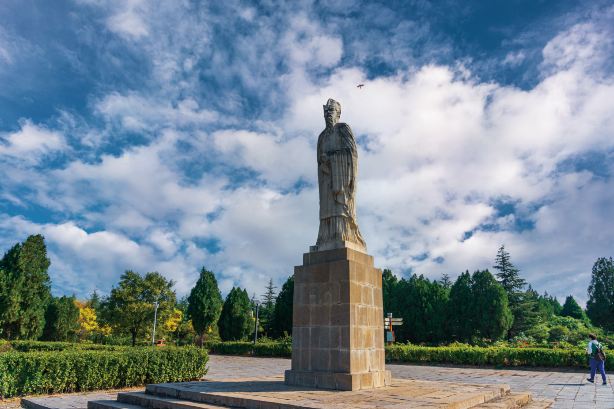
The San Attraction is located at the foot of the "Little Emei" Mountain, about 20 kilometers northwest of Jia County, Pingdingshan City. The remains of the two brothers Su Shi (Su Dongpo) and Su Zhe, two great writers of the Song Dynasty, and the clothes and hats of their father Su Xun are buried here. The Attraction mainly consists of Dongpo Lake, Guangqing Temple, San Su Temple, San Su Memorial Beilin, Dongpo Stele Forest, the statue of Dongpo in middle age, Jinwa Welcoming Guests Road, the tomb of Su Zhongnan and his wife, the Liang Tomb and the San Su Cemetery. Among the Eight Great Masters of Tang and Song Dynasties, three were from the Su family, forming a unique cultural system in the history of Chinese culture - the San Su culture. From ancient times to the present, countless students and celebrities have come here to worship the saints and left many precious masterpieces. There are tombs from the Song Dynasty, archways from the Yuan Dynasty, steles from the Ming Dynasty, tablets from the Qing Dynasty and more than 300 steles representing the high level of contemporary calligraphy art in the Attraction Garden Scenic Area. The whole Attraction faces south and sits in the north. There is a sacred road running through the Attraction. When tourists visit, they can mainly walk along this sacred road. After entering the Attraction, a red stone archway comes into view. The horizontal brow is engraved with four large characters "Qingshan Yuyi". On the back is the "Sacrificial Essay to Mr. Three Su" by Wang Shangxie, a Jinshi in the Ming Dynasty and the Right Governor of Zhejiang. The left and right stone pillars are engraved with the words of Su Shi's "In Prison to Ziyou": "This is a place where the green mountains can bury the bones, and the heavy rain will only make you sad." There are 5 vegetarian rooms on the east side of the stone archway, where celebrities used to eat vegetarian food and bathe when they worshiped the three Su. In the middle is the banquet hall, which was rebuilt in the 47th year of Emperor Kangxi. There are inscriptions from various generations in the hall, and many stone tablets are embedded in the four walls. Behind the banquet hall is the altar, and behind the altar are three tombs: the middle is Su Xun's clothing and hat cenotaph, the east is Su Shi's tomb, and the west is Su Zhe's tomb. There are six tombs in the southwest of the three tombs, which are the tombs of Su Shi's six sons. There are many ancient cypresses in the Attraction, many of which were planted during the Ming and Qing dynasties. Guangqing Temple and the Three Su Temple are located 300 meters southwest of the cemetery, with the temple in front and the temple behind. The Three Su Temple was built during the Zhizheng period of the Yuan Dynasty, and there are colorful statues of the three Su in the temple. There are stone tablets from the Jin, Yuan, Ming and Qing dynasties inside and outside the temple, among which the "Three Su Xiansheng Jiacheng Tu" tablet from the Qing Dynasty is the most prominent. Walking out of the east gate of Guangqing Temple, tourists can reach the "Little Emei" mountain, where there is a statue of Su Shi in his middle age holding a scroll in plain clothes.Jia County · 15.9km from downtown

Shenhou Ancient Town
Shenyu Ancient Town is located 30 kilometers southwest of Yuzhou City. It is the birthplace of the famous Jun porcelain culture at home and abroad. It is the main production area and distribution center of ceramics in northern China. . Shenlong got its name from Jun porcelain and prospered because of ceramics. The word "Shenlong" has been conferred by four emperors and became famous. Jun porcelain culture is an important part and typical representative of Central Plains culture. Shenyu Old Street is commonly known as "Qili Long Street". Since the Tang and Song Dynasties, with the prosperity of the ceramics industry, many wealthy businessmen have purchased fields, built houses, and engaged in business here, and the five villages have gradually been connected together, forming the town of Shenya, which has begun to take shape. It consists of four ancient villages in the south and north. From east to west, there are East Street, West Street, Baiyitang Street, Hongshiqiao Street, Guanyemiao Street and other streets. There are many shops on both sides of the road. The complete ones include Bolingweng Temple, Dengyu Building, Wen Family Courtyard, Bai Family Courtyard, Wang Family Courtyard, Huo Family Courtyard, Miao Family Courtyard, Miao Family Ancestral Hall, etc. There are towers, ancient dwellings, and temples. The monuments witness the prosperity of the town. Walking through the town of Shenga, the ancient streets and the row upon row of old houses seem to bring people back to a distant era. From these buildings, people also witness the glory of the town in the past. "Entering Shenlong Mountain, you can see the ten-mile-long street, seventy-two kilns, fireworks cover the sky, merchants walk everywhere, and every day they make money." At the same time, Shenlong Ancient Town is also the prototype of the TV series "Children of the River" Fengling Village.Yuzhou · 15.9km from Jia County

Linfeng Village
Jia County · 10.3km from downtown

Jia County Confucian Temple
Jia County Confucius Temple, also known as the Temple of King Wenxuan, Confucius Temple, or Fuzi Hall, served as the Confucian school of Jia County and was a temple dedicated to the worship of Confucius by ancient officials, the Confucius family, and all sectors of society in Jia County. The Confucius Temple is an ancient architectural complex with a distinctive Eastern style; it is grand and imposing, with exquisitely carved halls. The temple currently houses well-preserved Qing Dynasty wooden structures, including the Dacheng Hall, Ji Gate, Shrine of Famous Officials, Shrine of Local Worthies, and the east and west corridors.Jia County · 489m from downtown

jia xian san su yuan jing qu - san su ci
Jia County · 16.1km from downtown

Longmen Grottoes
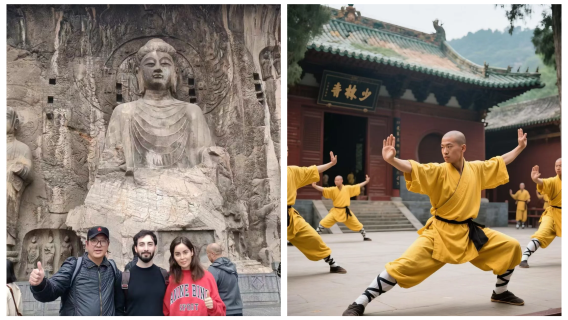
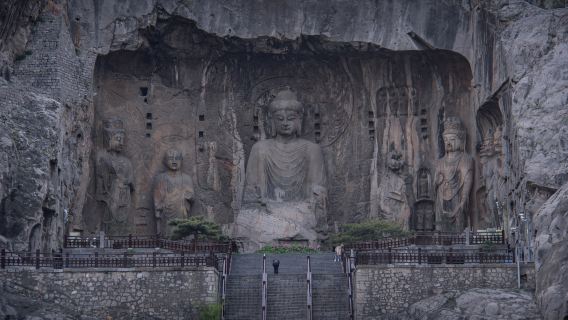
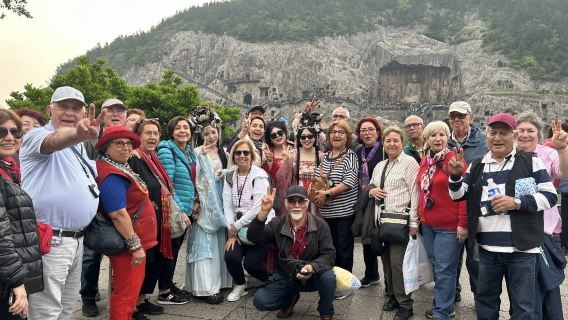
One of the four major grottoes of China and a UNESCO World Heritage Site, the Longmen Grottoes are a trove of 1000 years of Buddhist art treasures. Bounded by the Yi River, the caverns are divided into two sections at East Hill and West Hill. The caverns at East Hill contain mostly Tang dynasty (618-907) works, while the caverns at West Hill were cut out during the Northern, Sui, and Tang dynasties and contain the carvings that are most representative of the site. The Buddha and bodhisattva sculptures that inhabit the caverns are carved into an endless variety of poses and expressions of mercy and kindness, while the caves themselves lend a stately and dignified atmosphere. The artistry of these sculptures is truly a priceless inheritance of Buddhist art.Luoyang · 93.2km from Jia County

Millennium City Park
Millennium City Park is located by the Longting Lake in Kaifeng, a large-scale historical and cultural theme park that faithfully recreates the Northern Song Dynasty's capital based on the famous painting "Along the River During the Qingming Festival" by artist Zhang Zeduan, following the original layout at a 1:1 scale. The park is divided into two sections by the Shuangting Bridge: the southern area recreates the bustling urban life of Bianjing, with taverns, teahouses, pawnshops, and artisan workshops lining the streets, where peddlers with shoulder poles and shouting shop assistants move about; while the northern area features imperial gardens, with lakeside halls and quadrangular courtyards standing by the water. Staff and vendors throughout the park wear Song-style attire, accompanied by ancient music and the rhythmic sounds of bells and drums, creating the illusion of "stepping into a painting and traveling back a thousand years in a single day." The architecture here offers visually striking highlights: the Rainbow Bridge spanning the Bian River replicates the famous bridge from ancient paintings, arching like a rainbow—watching grain barges pass beneath recreates the painting's ambiance. Fuyun Pavilion towers above all other structures with its crimson facade and golden-roofed eaves, offering panoramic garden views. The reconstructed Shangshan Gate mirrors Kaifeng's Northern Song dynasty city gates, standing majestic with resplendent paintings as the garden's most imposing structure. Waterside pavilions like Shuixin Xie, Double Pavilion Bridge, and Nine Dragons Bridge dot the emerald waters in picturesque harmony. The daytime highlight is the scattered live performances throughout the park: "Judge Bao inspecting the Bian River grain transport" unfolds on the water by Rainbow Bridge, "Squire Wang's daughter seeking a husband" brings the embroidered ball tossing matchmaking to the streets, and "Yue Fei unhorsing Prince Xiao Liang" stirs up dust with galloping hooves in the drill ground. Folk performances like cockfighting, stilt walking, cuju (ancient football), and pan drumming are interspersed throughout. Families with children can visit Fun Garden and Great Song Games to try archery, dart throwing, rope climbing, and hoop diving—experiencing every Song dynasty game from a thousand years ago—or dress in period costumes at Square Courtyard to take mock imperial exams. Street-side workshops showcase folk crafts like Bian embroidery, Zhuxian Town woodblock prints, official kiln porcelain, and dough figurines, where visitors can watch artisans at work. The park takes on a different face after nightfall: red lanterns light up one after another, and the streets are ablaze with lights, making it seem like a completely different place from daytime. The large-scale water show "Northern Song Dynasty: Splendid Dreams of Dongjing" is performed on Jinglong Lake. The entire show is connected by eight classic Song Dynasty poems and a scroll of "Along the River During the Qingming Festival," transporting the audience back to Dongjing of the Northern Song Dynasty a thousand years ago. The performance lasts approx. 70 minutes, and many travelers specifically reserve their itinerary for the evening to wait for this show. After the performance, you might as well climb the Shangshan Gate tower to overlook the park scenery and the night view of Kaifeng under the lights. Dining in the park is also convenient: the snack street and night market around the Dongjing food area gather Kaifeng snacks like soup dumplings and mutton pancake, perfect for eating while strolling; for a proper sit-down meal, head to Sunyang Restaurant, a recreation of the "main shop" depicted in paintings, and try traditional Henan dishes such as soup dumplings and carp with noodles.China · Kaifeng

Mount Hua
Mount Hua, formerly known as "Xiyue", is one of the five famous mountains in China. It is located in Huayin City, Shaanxi Province. Huashan is also known as "Taihuashan". It is the birthplace of Chinese civilization. The "Hua" in "Zhonghua" and "Huaxia" comes from Huashan. The words "strange and dangerous" are the essence of Huashan's scenery. "Since ancient times, there has been only one road to Huashan" describes the steepness of Huashan. The Attraction has many thrilling attractions such as Changkong Plank Road, Kitesurfing, Qianchi Chuang, Baichi Gorge, Laojun Ligou, etc., which are carved out on the steep cliffs. Those who visit them in person will be amazed. Huashan Attraction covers a vast area, including the Main Peak Attraction, Xiyue Temple Attraction, Xianyu Attraction, etc. The Main Peak Attraction is the core Attraction of Huashan, including "Huashan One Road" and the five main peaks in the southeast, northwest, and center. Huashan in most people's minds refers to the Main Peak Attraction. Five main peaks The East Peak is about 2,100 meters above sea level and is named for its location in the east. There is a platform on the top of the peak, which is high and dangerous with a wide view. It is a good place to watch the sunrise. It is called Chaoyang Terrace, and the East Peak is also called Chaoyang Peak. The East Peak consists of four peaks, one main peak and three s-ervant peaks. The peak where Chaoyang Terrace is located is higher, the Yunv Peak is in the west, the Shilou Peak is in the east, and the Botai is in the south. There are more than dozens of landscapes on the East Peak. There is a natural stone pattern on the cliff on the side of the East Shilou Peak, which looks like a giant palm print. This is the Huayue Immortal Palm, which is listed as the first of the eight scenic spots in Guanzhong. The story of the giant spirit opening the mountain and guiding the river originated from this. The West Peak is about 2,000 meters above sea level. Because there is a huge rock on the top of the peak that looks like a lotus petal, ancient literati often called it Lotus Peak or Hibiscus Peak. Xu Xiake wrote in his "Diary of Traveling to Mount Taihua": "There is a rock rising on the peak, and there are stone pieces covering it, like a lotus flower." This stone must be referring to it. There are many landscapes on the West Peak, including Cuiyun Palace, Lotus Cave, Giant Spirit Foot, Axe-Split Stone, Sheshen Cliff, etc., and there are many beautiful myths and legends. Among them, the well-known story of Chenxiang splitting the mountain to save his mother is circulated here. The South Peak is over 2,100 meters above sea level and is the highest peak of Huashan. The ancients called it the "Head of Huashan". On one side of the South Peak is a thousand-foot cliff, standing straight like a knife, and below is a deep ravine, which is separated from Sangong Mountain and Sanfeng Mountain. The South Peak consists of one peak and two peaks. The east side is called Songhui Peak, and the west side is Luoyan Peak. The origin of the name of Luoyan Peak is said to be because the migrating wild geese often land here to rest. The North Peak is about 1,600 meters above sea level, with cliffs on all sides, covered with clouds above and connected to the earth veins below. It stands tall and unique, and is also called Yuntai Peak because it looks like a cloud platform. Li Bai of the Tang Dynasty wrote in his poem "A Song of the Cloud Platform of Mount Xiyue to Complimentary Danqiuzi": "Three peaks stand as if about to collapse, and the green cliffs and red valleys are high. The golden essence of the White Emperor mobilizes his vitality, and the stones become lotus flowers and the clouds become platforms." The famous story of "Taking Huashan by Strategy" took place here. There are many landscapes on the mountain, including the Zhenwu Hall, Jiaogong Stone Chamber, Changchun Stone Chamber, and the place where Laojun hung the plow. The Middle Peak is the only way to the other four peaks. It is located in the middle of the East, West and South Peaks. The forests on the peak are lush and green, and the environment is quiet. There is a Taoist temple named Yunu Temple on the top of the peak. It is said that it was the place where Qin Mu Gong's daughter Nong Yu cultivated herself in the Spring and Autumn Period, so it is also called Yunu Peak. Main landscape: There are more than 210 famous Attraction in Huashan. From ancient times to the present, countless literati and poets have left various classic poems here. Skywalk The Changkong Plank Road is located on the east side of the Huashan South Peak. It was built by the master of the Huashan School, Taoist He Zhizhen of the Yuan Dynasty, who wanted to get away from the world and practice Taoism. He built it by inlaying stone piles on the cliffs and paving wooden boards. At the end of the plank road, you can see the "Hezu Cave" where Master He practiced self-cultivation. The road builders chiseled stone holes on the cliffs, wedged stone piles into the holes, and laid wooden boards about 40 cm wide between the stone piles. Visitors must stick to the cliff wall, pull the iron chain with their hands, step on the wooden boards, and move forward slowly sideways. Xiyue Temple Xiyue Temple, also known as Huayue Temple, is a temple where emperors of all dynasties worshipped and offered sacrifices to Shaohao, the Great Emperor of Xiyue. It was first built during the Yuanguang period of Emperor Wu of the Han Dynasty (134-129 BC) at the entrance of Huangshengu (now Huangfuyu) at the foot of Huashan Mountain. It was moved to its current location during the reign of Emperor Huan of the Eastern Han Dynasty (147-167 AD) and renamed today. It was rebuilt many times during the Tang, Song, Ming and Qing dynasties. Canglong Ridge The steps on Canglong Ridge are only 2 feet wide, with deep ravines on both sides, as steep as a knife. The height difference between the ridge and the top is about 500 meters, and the slope is more than 45 degrees. Looking at the green pines and white clouds in the distance and hearing the sound of the wind is dizzying. Jinsuoguan Jinsuoguan is one of the five passes of Huashan Mountain. It is built on a stone archway at the entrance of the three peaks. It is the throat of the Wuyun Peak to the four peaks of East, West, South and Center. There is no way to pass after the pass, so it is also called Tongtianmen. Taoists believe that Huashan is the fairyland of gods. Only after passing Tongtianmen can you enter the fairyland. Therefore, there is a folk song that "after passing Jinsuoguan, there is another world". There has been only one road to Mount Huashan since ancient times "There has been only one road to Mount Hua since ancient times" refers to the "Huashan Valley" hiking trail, which includes various scenic spots along the Huashan hiking trail since ancient times. When connected together, it is what is commonly referred to as "There has been only one road to Mount Hua since ancient times." How to visit Huashan has two mountain gates (entrances): East Gate and West Gate (also known as Huashan Gate). Take the cable car up the mountain and go to the East Gate; if you climb the mountain on foot, enter from the West Gate. Huashan currently has two cable cars, the East and West Lines, which reach the North Peak and the West Peak respectively (please plan the climbing route in advance before purchasing the ticket and purchase the corresponding ticket type, and you cannot change it midway.). Route 1: Hiking route There has been only one road on Mount Huashan since ancient times. It is an ancient mountaineering road with a total length of 12.5 kilometers and 9,567 steps. It takes about 4 hours to hike from Yuquanyuan, through Wuli Pass, Shaluoping (night climbing), Qianchi Chuang, Baichi Gorge, etc. to the North Peak, and then start the tour from the North Peak. Route 2: "Up West and Down West", a mountaineering route suitable for the Seniors and tourists with children This route goes up the West Peak Cableway of Mount Huashan and down the West Peak Cableway, that is, going up from the west and down from the west. The whole route takes a relatively short time, about 4 hours, and is also more energy-saving, making it more friendly to the Seniors and tourists with children. Route 3: "Up West and Down North", a one-day mountaineering route chosen by 80% of tourists This route goes up by cable car from the West Peak of Mount Huashan and down by cable car from the North Peak, that is, going up from the west and down from the north. The entire route is a classic one-day tour route, which takes about 6 hours. You can visit all the attractions without backtracking. Most tourists choose this route because this road almost goes straight down, which is easier and faster than the uphill road. Route 4: "North up and north down", a time-saving, economical and panoramic mountaineering route This route goes up by cable car at the North Peak of Huashan and down by cable car at the North Peak, that is, going up from the north and down from the north. The whole route is a relatively low-cost cable car mountaineering route. If your sightseeing time is limited, you can choose this route and visit the North Peak, which has the Memorial Pavilion, Ear-Crushing Cliff, Canglong Ridge, Huashan Sword Contest Monument, panoramic Huashan and other attractions.China · Huayin

Songshan Shaolin Scenic Area
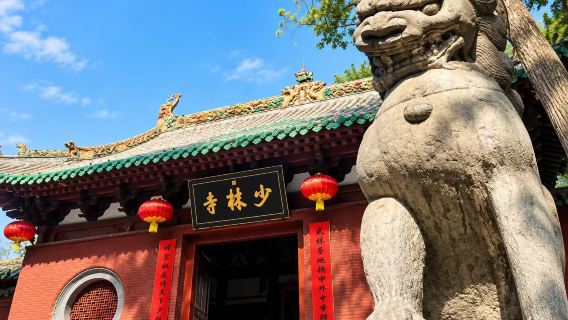
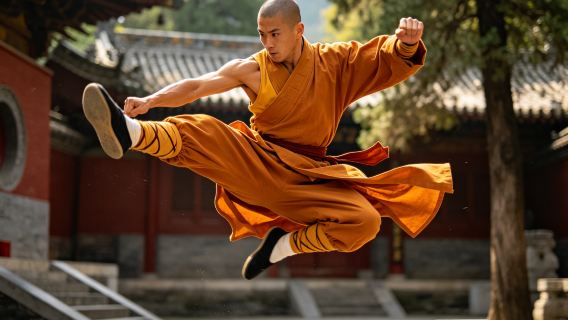
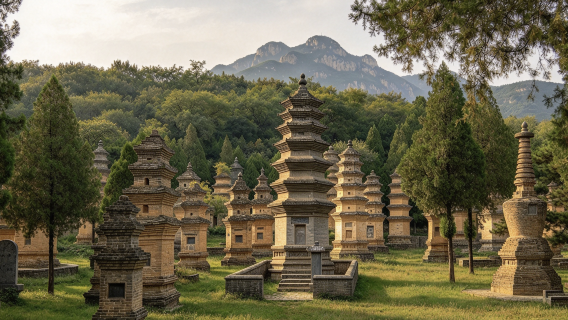
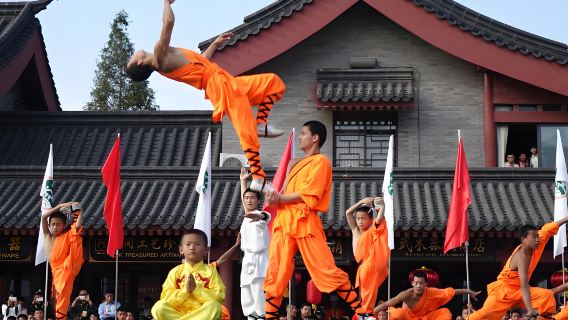
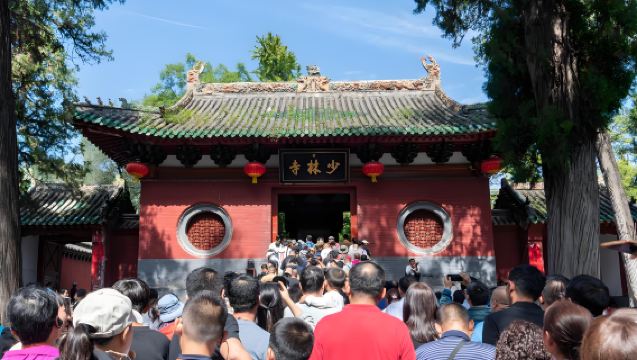
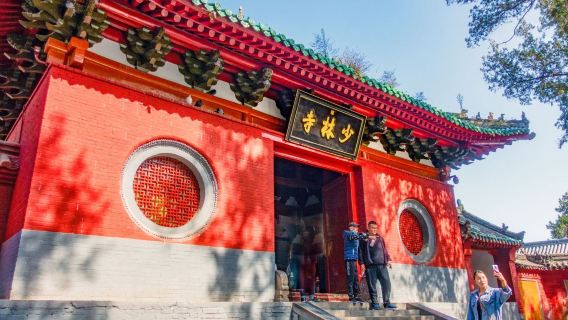
It is said that "all martial arts originate fromShaolinNot only Chinese people who grew up deeply influenced by Shaolin kung fu, but also many international friends visiting Henan will go to see Shaolin temple. It is not only a sacred place for martial arts worldwide, but also the ancestral temple of Zen Buddhism. Striking some classic martial arts poses for photos at Shaolin temple makes the swords and shadows of the martial world seem to flash before your eyes. AboutShaolin TempleTwo keywords 1. The founder of Zen Buddhism The Shaolin Temple is a sacred Buddhist site in China and the ancestral temple of Chan Buddhism. In 527 AD, the renowned Indian monk Bodhidharma (known as the founder of Zen) traveled by sea to southern China, crossed the Yangtze River northward into the Central Plains, and arrived at Shaolin. He meditated and taught dharma in the mountains behind the Shaolin Temple, first advocating the Chan teaching of "mind-to-mind transmission," thereby establishing the temple's revered status as the ancestral home of Chan Buddhism. Nowadays, many visitors come to Shaolin Temple to pray for blessings and peace. The origin of martial arts After the "Thirteen monks with staffs rescued Li Shimin" incident in the early Tang Dynasty, Shaolin Temple became renowned worldwide for its exquisite "Shaolin Kung Fu," and since thenShaolinMonks practicing martial arts has become a common tradition passed down through generations. The Shaolin Temple is the birthplace of Shaolin kung fu, andShaolinThe pai school is a martial arts sect with a wide influence, long history, and numerous boxing styles in the wulin (martial arts world). Since ancient times, it has been regarded as "the foremost martial arts sect in the world" and the supreme authority of martial arts by Chinese people. The Shaolin Temple scenic area - pagoda forest is the burial ground of Shaolin Temple's successive abbots, serene and solemn. You might even catch glimpses of the movie "Shaolin Temple" here. Travel tips What to do? How long to stay? Recommended self-guided tour activities: Half-day tour:Shaolin Temple- Pagoda forest - Chuzu nunnery - Damo cave - Songshan Shaolin scenic area -Songshan Shaolin scenic area - Shaolin temple martial arts hallPerformance The Shaolin Temple complex mainly consists of three parts: the Changzhu Yuan Pagoda Forest, the Chuzu Nunnery, and the Songshan Shaolin attraction - Damo Cave. Most visitors traveling to Shaolin Temple from Luoyang or Zhengzhou choose this route. The layout of Shaolin Temple is typical of Han Chinese Buddhist temples, featuring central axis symmetry. After entering the mountain gate, you can walk straight ahead. The temple is not large, and the visit can be completed within an hour. The Shaolin Temple scenic area - pagoda forest is located approx. 400 m west of Shaolin Temple, serving as the burial ground for the temple's eminent monks throughout history. As the Buddhist saying goes: "Saving one life is better than building a seven-story pagoda." Here, you can learn about the life stories of Shaolin Temple's eminent monks across different dynasties. The Chuzu Temple and Songshan Shaolin attraction - Damo Cave are also near the Shaolin Temple, accessible by walking. The Chuzu Temple was built by people of the Song Dynasty to commemorate Bodhidharma's wall-gazing meditation, while the Songshan Shaolin attraction - Damo Cave is the very place where Patriarch Bodhidharma meditated facing a wall for nine years. 1-day tour:Shaolin Temple-Tallinn-Sanhuangzhai In the morning, follow the half-day tour itinerary to visit Shaolin Temple first, then proceed to the Shaolin Temple attraction - Pagoda Forest. The location is approx. 5 min walking distance from the Shaolin Temple attraction - Pagoda Forest.Shaolin cablewayAfter taking the cable car to Sanhuangzhai station, it takes about 30 minutes to reach the destination on foot.Sanhuangzhai scenic areaPortal. ActivitiesSanhuangzhai scenic areaIt takes at least 3-4 hours to explore the attraction, which features many unique geological views. The Sanhuangzhai cliffside plank walk is a must-see. Walking along the cliffside path with towering cliffs on one side and a sheer drop on the other is both a physical and mental challenge. 2-day tour:Shaolin Temple- Songyang scenic area - Zhongyue scenic area Shaolin Temple andSongyang academy, Mount SongLocated in Dengfeng, visitors with ample time can purchase a combo ticket for all three sites and explore them over two days. On the first day, visitShaolin scenic areaIn the evening, watch the live performance of "Zen Shaolin Music Ceremony", and the next day, head to Songyang, which is far from downtown Dengfeng.Zhongyue scenic area. Where can I see authentic Shaolin kung fu? Nowadays, it is difficult for ordinary visitors to witness the martial arts training of Shaolin monks at Shaolin temple. However, visitors can use the Shaolin temple combo ticket to watch the Shaolin kung fu performance at the Shaolin martial arts hall in Songshan Shaolin scenic area, approx. 700 m east of Shaolin temple. Performance time: The performance time at Songshan Shaolin scenic area - Shaolin temple martial arts hall is subject to the on-site announcement. Each performance lasts 30 minutes. The cost is included in the admission ticket. Where is a good place to stay?There are some farmhouse inns and guesthouses around Shaolin Temple, but the conditions are average. If you're not in a hurry, it's not recommended to stay here. If you need to stay overnight, Dengfeng city center is a good choice, as it offers convenient access to the three major attractions of Songshan Mountain. Shaolin TempleIs vegetarian food available?Since you're visiting Shaolin Temple, don't miss the vegetarian cuisine. The vegetarian restaurant inside Shaolin Temple is called "Huanxidi" and is worth trying. Shaolin story The most stubborn holdout in history: When it comes to stubborn holdouts, they didn't just appear in modern times. As early as the Tang dynasty, the Shaolin Temple emerged as such a case. Emperor Li Yuan of Tang issued an order for its demolition but failed. When Li Shimin came to power, not only was the Shaolin Temple spared from punishment, but it also received generous rewards. Compared to today's holdouts, the Shaolin Temple can be called the most legendary stubborn holdout in history. The origin of the matter was an imperial edict issued by Li Yuan, ordering the demolition of all temples within Henan province, including the Shaolin Temple. After receiving the imperial decree, hundreds of monks at Shaolin Temple refused to comply, standing united and resolute in collective defiance. Li Yuan had no choice, as the Tang dynasty was newly established and could not afford to gain a reputation for cruelty. He tacitly allowed the temple's "retention" but revoked the 4,000 acres of temple land previously granted by the Prince of Qin. Later, when Li Shimin became emperor, he granted Shaolin Temple an additional 4,000 mu of land, permitted the temple to train monk soldiers, lift the prohibition against killing, and consume alcohol and meat. Inside the temple, there is a stele titled "Emperor Taizong of Tang's decree to the Shaolin Temple abbot," which records this historical event. You may want to see it when visiting the Shaolin Temple.Dengfeng · 64.6km from Jia County
Laojun Mountain Scenic Spot
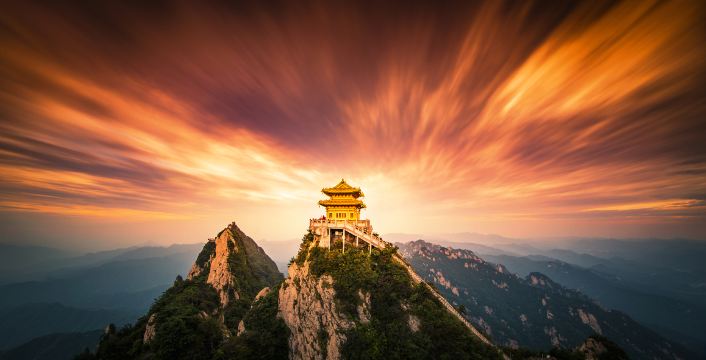
It is said that Laojun Attraction is the place where Li Er (Laozi), the founder of Taoism, practiced in seclusion. During the Northern Wei Dynasty, a temple was built in the mountain to commemorate it. Later, it was named "the famous mountain in the world" and has always been popular. The mountain is lush with trees and picturesque, and mountain springs can be seen everywhere. In the golden autumn, this is the best choice for viewing red leaves in the Souvenir areas. After the rain, Laojun Mountain is surrounded by clouds and mist in each peak, like a fairyland in the sky. The Attraction area is huge and is mainly divided into the main Laojun Mountain Attraction in the center, the Dream Valley Attraction in the west, and the Zhaigou Attraction Area in the east. Generally, tourists will spend a day to visit the main Laojun Mountain Attraction, which is also the most developed area of the entire Attraction. If you go to the top of the mountain, you will also have the opportunity to see the beautiful sea of clouds, sunrise, and sunset. The main Attraction of Laojun Mountain includes Zhongtianmen, Jinding, Laojun Temple, Nantianmen, Yuhuangding and Mazongling. Since its construction in the Northern Wei Dynasty, Laojun Temple has been the center of worship for pilgrims from the Central Plains; the Taoist temple on Yuhuangding enshrines the Jade Emperor and is also a good place to view the scenery in the mountain; Jinding and Mazongling are good places to watch the sunrise and the sea of clouds. Recommended itinerary: Day Trips Most tourists choose to spend a day to visit the main Attraction of Laojun Mountain. Lingguan Hall - the statue of Laojun at the foot of the mountain - Lincu Hall - Zhongtianmen - tree-lined trail - Lying Yunsong - Bodhisattva Hall - Laojun Temple, Jinding - Yuhuangding, and then return along the original route. Tourists can choose to walk the whole way or take a "walk + cable car" tour of Laojun Mountain according to their own conditions. There is the Zhongling Cableway of the Attraction between the Lingguan Temple at the foot of the mountain and the Zhongtian Gate on the mountainside. Take the Zhongling Cableway and then walk from Zhongtian Gate to the top of the mountain, Yuhuang Peak. The road from Zhongtian Gate to the top of the mountain is not very steep and can usually be completed in about an hour. Two-day tour If you have enough time, you can spend two days to visit Laojun Mountain. The general route is: D1: Visit the main Attraction of Laojun Mountain and stay in the mountain that night. D2: From the top of Laojun Mountain, choose to go down the mountain to the Dream Valley in the west or the Zhaigou Attraction in the east, and arrive at the west gate and east gate of the Attraction respectively. In the main Attraction of Laojun Mountain, you can stay near Zhongtianmen on the mountainside and Laojun Temple on the top of the mountain. There are hotels near Zhongtianmen with better accommodation conditions, while the accommodation conditions Souvenir Laojun Temple are relatively poor. If you plan to go to the top of the mountain to watch the sunrise the next morning, you can stay Souvenir Laojun Temple. Compared with the Zhaigou Attraction in the east, the mountain roads in Dream Chasing Valley are smoother, and tourists can choose one of them to go down the mountain according to their preferences. There are many places in the Attraction that can provide Dining services for tourists, but the signboards on some sections of the road in the Attraction are not yet very complete, so tourists need to pay more attention when visiting.China · Luanchuan
Experiences you can't miss in Jia County
Featured Day tours in Jia County
View all Day tours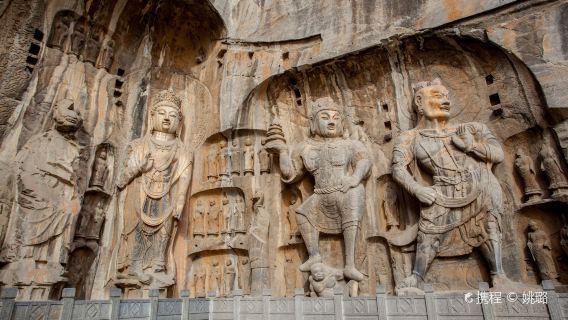
4.4/5
· 25 reviews· 297 bookedInstant confirmation
From₹ 6,538.26
5.0/5
· 13 reviews· 179 bookedFree cancellation
Instant confirmation
From₹ 7,821.39

4.9/5
· 13 reviews· 92 bookedFree cancellation
Instant confirmation
From₹ 7,077.67
4.7/5
· 6 reviews· 95 bookedFree cancellation
Instant confirmation
From₹ 5,233.22
4.8/5
· 13 reviews· 79 bookedFree cancellation
From₹ 13,239.97
4.8/5
· 10 reviews· 44 bookedFree cancellation
Instant confirmation
From₹ 15,757.20
4.4/5
· 5 reviews· 41 bookedFree cancellation
Instant confirmation
From₹ 6,211.35
4.3/5
· 3 reviews· 32 bookedFree cancellation
Instant confirmation
From₹ 5,720.98
Featured Cultural experiences in Jia County
View all Cultural experiences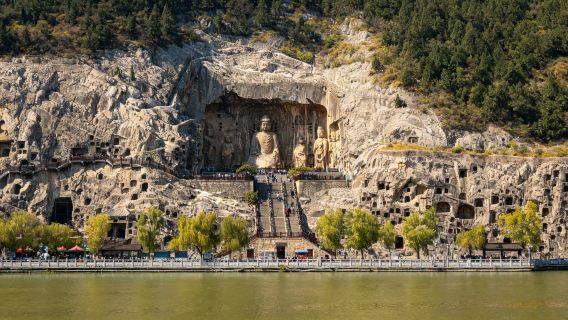
5.0/5
· 1 reviewFree cancellation
Instant confirmation
From₹ 6,211.47

Free cancellation
Instant confirmation
From₹ 3,491.98

5.0/5
· 1 reviewFree cancellation
From₹ 568.83
Free cancellation
Instant confirmation
From₹ 5,375.43
Free cancellation
Instant confirmation
From₹ 4,252.00

Free cancellation
Instant confirmation
Book now for tomorrow
From₹ 3,668.95
Featured Outdoor experiences in Jia County
View all Outdoor experiences
From₹ 6,228.67
5.0/5
· 1 reviewFree cancellation
Instant confirmation
From₹ 11,164.08
5.0/5
· 2 reviewsFree cancellation
Instant confirmation
From₹ 34,669.10

From₹ 5,394.07

Free cancellation
Instant confirmation
From₹ 7,960.33
Free things to do in Jia County
Shenhou Ancient Town
Yuzhou · 15.9km from Jia County
Song Du Huangcheng Cultural Tourism Resort
China · Kaifeng
Luoyang Museum
China · Luoyang
Henan Museum
China · Zhengzhou
Enjoy International Resort
Xinmi · 64.8km from Jia County
Kaifeng Museum
China · Kaifeng
Luoyi Ancient City
China · Luoyang
The Luoyang Museum of Ancient Tombs
China · Luoyang
Shanxi-Shaanxi Guild Hall
Jia County · 1.1km from downtown
What travellers say about Jia County

江山雨过10 July 2026
5.0
It's a relatively niche tourist spot, with few visitors, so you can take your time to explore and appreciate it. I saw a short essay by a Su Shi fan at Su Shi's tomb; it was really well-written. I snapped a picture and uploaded it for comments, hoping more Su Shi fans will see it. I hope "Yunxi" won't mind?
Sansuyuan Scenic Area

Anonymous user22 October 2026
5.0
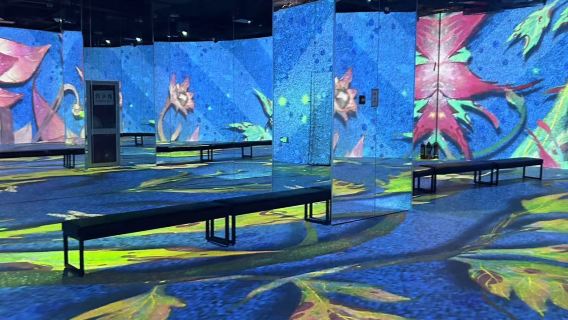
This ticket grants access to three attractions in Shenhou Ancient Town: the Ceramics Bureau, the Bolingweng Temple, and the Guandi Temple. The Ceramics Bureau, with its Ming and Qing dynasty architecture and interior design, is definitely worth seeing, offering a wealth of information. The Bolingweng Temple and Guandi Temple opera stages are unique in their architectural style, serving two functions in one building: the front is the temple gate, and the back is the opera stage. This is the first time I've seen such ancient architecture, showcasing the wisdom and craftsmanship of our ancestors. The People's Cinema's immersive digital light show, offering a breathtaking experience of "myriad colors emerging from the kiln," is also well worth watching.
Shenhou Ancient Town

m392117 October 2021
4.0
Linfeng Village.
You can search on Baidu to learn about its history. I think many residents have moved away.
It’s a pity that Zhu Zhenzhai is not open again.
Linfeng Village

大松树叶子12 June 2020
5.0
The Confucian Temple in Jia County, Henan Province, has preserved the Dacheng Hall, Jimen, Minghuan Temple, Xiangxian Temple, and two wings, all of which are wooden structures from the Qing Dynasty. The building covers an area of 50,000 square meters and has obvious characteristics: it was built a long time ago, is large in scale, and is majestic; it is well preserved; the architectural regulations are based on the essence of the two major architectural complexes of the Confucius Temple and Confucius Mansion in Qufu, Shandong Province, and it is another ancient architectural complex with oriental architectural colors. Among them, the wooden dragon pillars are even more exquisite, because the "Jia County School" of Confucius' descendants is one of the ten major schools in the Confucius Mansion in Qufu. It is now a national key cultural relic.
Jia County Confucian Temple

賢賢君23 October 2026
5.0
Teacher Liang was already waiting for us at the meeting point and thoughtfully provided detailed directions, making it easy for us to find the meeting point. During the tour of Baiyuan/Longmen Grottoes, through professional content, simple explanations, and the aid of pictures, she gave us a different understanding of Bai Juyi and Longmen Grottoes than what we had learned in books. She worked tirelessly for the entire four hours without a break (and even went overtime to explain things to us, tourists from other places, so that we could learn more). At the end, Teacher Liang specifically mentioned that the protection of cultural relics is closely related to the country's national strength. She said that every cave and every Buddha in Longmen Grottoes is telling us, the descendants, stories from thousands of years ago. My wife and I completely agreed. It was truly an honor to have such a good guide.
Longmen Grottoes

_We***1623 October 2026
5.0
Stepping into the painting is like stepping back a thousand years in a single day! The Qingming Riverside Landscape Garden, a Song Dynasty cultural park recreated based on the famous painting "Along the River During the Qingming Festival," offers an immersive experience. The park boasts a rich variety of performances, with "Yue Fei Spears Xiao Liang Wang" being a highly recommended highlight—the equestrian combat is spectacular. The "Great Song Dynasty: A Dream of Bianjing" live-action performance is breathtaking and beautiful. Actors in Song Dynasty costumes are everywhere on the streets, carrying loads, hawking goods, and performing acrobatics, making you feel like you've stepped into a living ancient painting. The streets, alleys, Rainbow Bridge, and Bian River are all faithfully recreated, making it perfect for introducing children to the history of Northern Song Dynasty life. The only downside is the crowds during holidays; arrive early to secure a spot at popular performances. A visit to the garden can easily take up half a day—a must-do when in Kaifeng!
Millennium City Park

Passport & Pilates22 October 2026
5.0
Known as one of the most precipitous mountains in the world, this journey was the test of fear of heights, and stamina.As first time traveler recommend to take the West Cable Car up. If you want to save your knees for the actual peaks, take the cable car up and hike the loops between the summits. It still offers plenty of challenge without destroying your joints on the lower ascent. You will still be able to cover all the 5 peaks. Each peak has its own profound moment and beauty. The terrain are somewhat rugged but well maintained stone paths making it manageable . Also highly recommend to experience the vertical stone staircase. There are a few around Mount Hua . Some are much shorter in length but I would suggest to challenge yourself by going for the hardest climb stairs. The other experience I would recommend is the plank road in the sky. Finally get a pair of gloves unless you don’t mind touching the cold, rough iron chains lining the paths in Mount Hua. Pack light.
Mount Hua
Anonymous user19 October 2026
4.0
We took the Shaolin cable car up to Shuce Cliff, walked a little further, and then turned back after hearing that the Liantian Plank Road was still a long way off. We visited Shaolin Temple and the Pagoda Forest before leaving, saving our energy for Laojun Mountain the next day.
Songshan Shaolin Scenic Area

M29***3721 October 2026
5.0
When the fog dissipates, you can see the shape of the mountain; when the fog is thick, you can feel the soul of the mountain. The most moving thing about Laojun Mountain is never the exposed peaks, but the myriad imaginations hidden in the clouds.
Laojun Mountain Scenic Spot


