Jinzhai

Things to do in Jinzhai

Search attractions or local attractions & tours
Search

Explore top experiences

Top 10 attractions in Jinzhai
View all Attractions
Hongcun Village
No. 1 of Night Attractions in Anhui

Hongcun Village

8.6
4.5/5
50.5k reviews

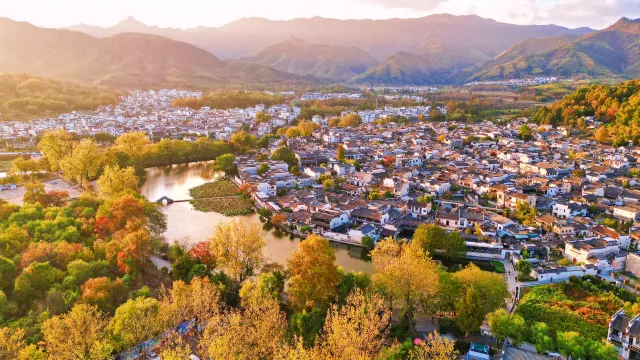
Hongcun Village is a classic Huizhou-style ancient village, renowned as a "village in a Chinese painting." A visit here offers two unmissable experiences: first, the water landscapes shaped by its irrigation system, with Nanhu Lake and Yuezhao Pond as the crown jewels; second, the exquisite "three carvings" of Huizhou architecture—brick, stone, and wood carvings—intricate enough to rival paper-cut art. Here, cultural heritage and natural beauty blend seamlessly into a harmonious whole. The ancient village was first built during the Shaoxing era of the Southern Song dynasty and gradually developed from the Yongle era of the Ming dynasty into a unique "ox-shaped village" layout. The two ancient trees at the village entrance form the "ox horns," the densely packed Ming and Qing Huizhou-style buildings in the village form the "ox body," the four bridges over the stream west of the village form the "ox feet," Yuezhao Pond is the "ox stomach," Nanhu Lake is the "ox belly," and the water channels flowing past every household are the "ox intestines." Sightseeing can begin at Nanhu Lake in the south of the village. Nanhu Lake is a bow-shaped artificial lake dug during the Wanli era of the Ming dynasty, with a broad expanse of water; the Huabridge crossing the lake is where Li Mubai led his horse in the film Crouching Tiger, Hidden Dragon. On the north bank of the lake, Nanhu Academy was formed by merging six original private schools by the lakeside, and its layout is exceptionally spacious. Heading north along the lake's north bank, visitors can also stop by ancient residences such as Jingde Hall and Wang Daxie's Former Residence (Zhenqi Hall). Continuing north leads to Yuezhao Pond at the village center, a half-moon-shaped pond dug during the Yongle era of the Ming dynasty, surrounded by Huizhou-style buildings reflected in its waters—one of the best spots for photography in the ancient village. However, visitors crowd around Yuezhao Pond year-round, so patience is needed to capture an empty shot. At the center of Yuezhao Pond's north bank stands Lexu Hall, also known as the Wang Clan Ancestral Hall, a surviving Ming dynasty building in the village with a simpler style than Qing dynasty architecture. On the western end of Yuezhao Pond's north side is Jingxiu Hall, built during the Qing dynasty. Further north, visitors can tour Chengzhi Hall, the residence of late Qing salt merchant Wang Dinggui. The residence is fully equipped with a study, kitchen, stable, bodyguard room, and servants' quarters, and even includes a "Paishan Pavilion" for playing mahjong; the house has its own pond and well, so water is available without leaving the premises. The exquisite Huizhou three carvings are worth examining closely—some wood carvings are even coated with gold powder, lavish and magnificent. Other ancient buildings in the village worth seeing include Deyi Hall, Shuren Hall, and Taoyuan Residence.

China · Yi County
Niushou Mountain Cultural Tourism Zone
No. 2 of Best Things to Do in Jiangsu

Niushou Mountain Cultural Tourism Zone

8.6
4.7/5
35.7k reviews

Niushou Mountain Cultural Tourism Zone, also known asNiushou Mountain Cultural Tourism Zone, it is named for its two peaks, one in the east and one in the west, which resemble the two horns of an ox's head. Niushou Mountain Cultural Tourism Zone boasts beautiful scenery and has long enjoyed the reputation of "Spring Niushou." In ancient times, it featured such Jinling scenic spots as Niushou Smoke and Mist and Zutang Temple's Resounding Tin Staff, and it also preserves many historical sites, such as the Jiangning section of the ancient fortifications where Yue Fei fought against the Jin, and the Zheng He Cultural Park. Usnisa Palace The Usnisa Palace is themed around the enshrinement of the Buddha's parietal bone relic and is divided into two parts: the large dome and the small dome, symbolizing outer offerings and inner offerings. The Usnisa Palace utilizes the original mine pit to build an underground palace, with six levels below ground and three levels above ground, appearing very solemn and magnificent. The parietal bone relic of Shakyamuni Buddha was enshrined at the Niushou Mountain Cultural Tourism Zone in October 2015. Visitors may go to the Usnisa Palace to pay homage on special Buddhist festivals. For specific times to view the relic, please call the attraction for inquiries. A thousand years of history Niushou Mountain Cultural Tourism Zone is a Buddhist sacred site. The Buddha Cave Temple, built by Sikong Xu Du in the second year of the Tianjian era of the Liang Dynasty (503 AD), was the first temple on Niushou Mountain, and Li Yu, the last ruler of the Southern Tang, renamed it Hongjue Temple. During the Tang Dynasty, Chan Master Farong, hailed as the "Bodhidharma of East China," founded the Niutou Chan School on Niushou Mountain, known in ancient times as "Jiangbiao Niutou." The founding of the Niutou Chan School served as an important bridge in the true transformation of Indian Chan into Chinese Chan! Niushou Mountain Cultural Tourism Zone - Taohua Stream Niushou Mountain Cultural Tourism Zone - Taohua Stream is located at the east entrance of Niushou Mountain Cultural Tourism Zone, with a total area of 14.87 hectares, approximately 220 mu. The peach blossoms selected are 26 varieties suitable for growing in the Nanjing area, making it a new view created by the Niushou Mountain attraction. A small stream winds down from Yinlong Lake, its water babbling, with peach trees planted on both sides. In spring, the buds gradually bloom, and a sea of flowers is intoxicating.

China · Nanjing
Taoyangli Historical and Cultural District
No. 1 of Family-friendly Attractions in Jiangxi

Taoyangli Historical and Cultural District

8.5
4.6/5
12.1k reviews

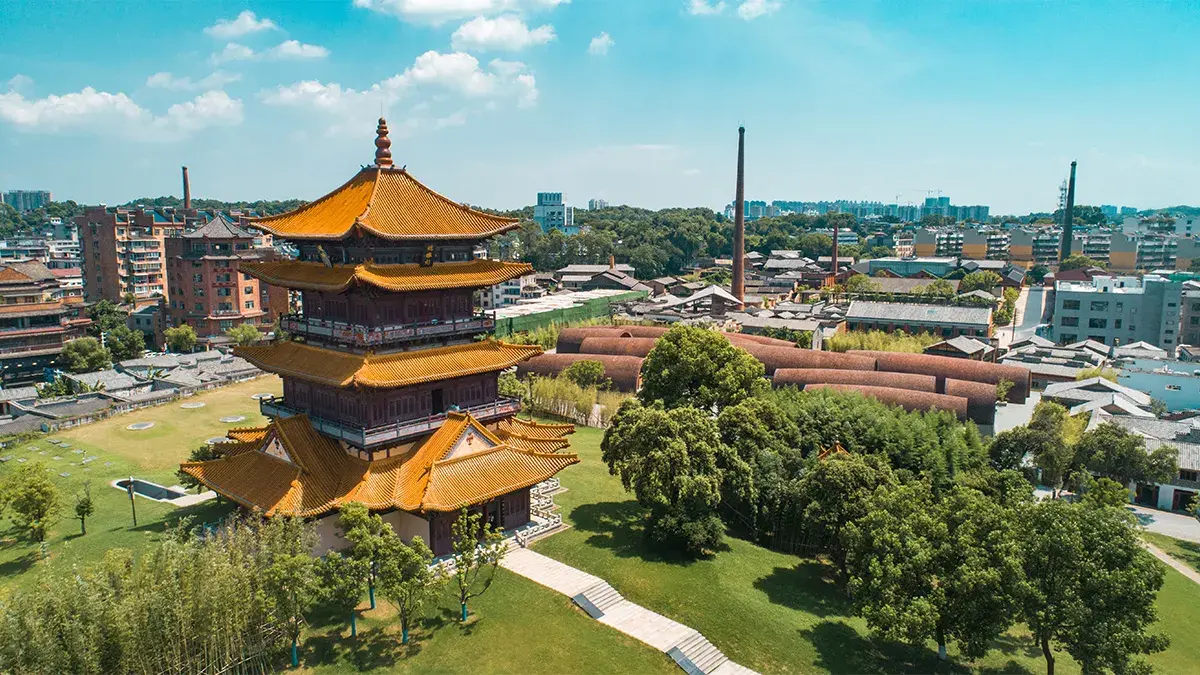
Taoyangli Historical and Cultural District is located in the heart of Jingdezhen's old town, a historic neighborhood that grew around the ruins of the imperial kiln from the Ming and Qing dynasties. The old saying "Taoyang thirteen li, with tens of thousands of households" refers to this area. The imperial porcelain used by the royal families of the Ming and Qing dynasties was exclusively produced by the imperial kiln here, while rejected tribute items were shattered and buried on-site. The layers of underground porcelain fragments share the same origin as the collections in the Palace Museum, making this place often referred to as the key to understanding the porcelain capital. The core attractions of the district are concentrated around the ruins of the Taoyangli Historical and Cultural District and the imperial kiln museum. The ruins of the Taoyangli Historical and Cultural District have now been transformed into an archaeological site park, preserving relics such as kilns and workshops. The Longzhu pavilion, perched atop Zhushan hill, has been the iconic structure of the imperial kiln since the Ming dynasty and later became the symbol of Jingdezhen. The Zhushan hill beneath it was formed by layers of discarded porcelain fragments from imperial kilns throughout history. Nearby, the imperial kiln museum draws inspiration from traditional egg-shaped wood-fired kilns, featuring multiple brick arches arranged in a staggered layout. Many exhibits in the museum are restored from porcelain fragments unearthed at the site, including the Ming dynasty blue-and-white dragon jar—a signature exhibit pieced together from tons of discarded dragon jar fragments. Adjacent to the museum, the Xu family kiln, an old wood-fired kiln, still operates periodic firings. During kiln openings, the gate is wide open, allowing visitors to watch artisans retrieve freshly fired porcelain from saggars. The district also features winding alleyways lined with kiln-brick residences, guild halls, porcelain shops, and remnants of modern ceramic industry. The restored South goods street and Red shop street now host old teahouses, taverns, music bars, and craft workshops where you can observe traditional processes like clay throwing and porcelain painting, with some workshops offering hands-on experiences. It's recommended to set aside half a day for the visit—start with the kiln site and museum, then meander through the streets around Zhongshan north road and Longgang lane, where many historic courtyard houses hidden in deep alleys await patient discovery.

China · Jingdezhen
Hubei Provincial Museum
No. 1 of Family-friendly Attractions in Hubei

Hubei Provincial Museum

8.5
4.9/5
7.9k reviews

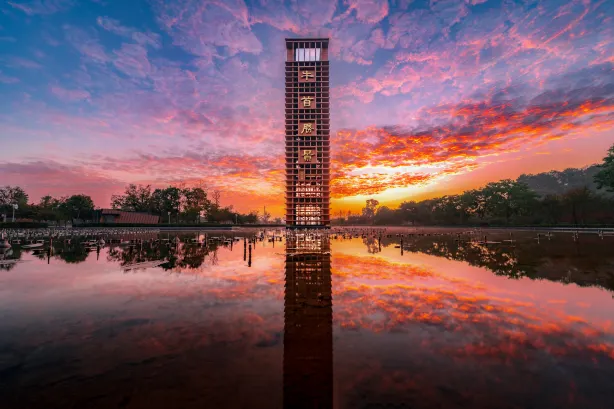
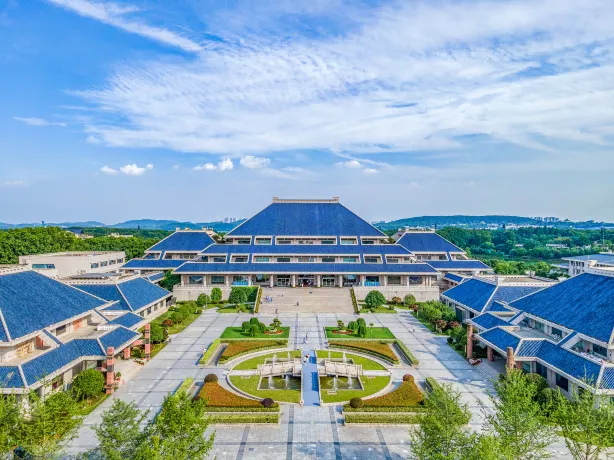
The Hubei Provincial Museum has ten treasures of the museum, including those unearthed from "Tomb of Marquis Yi of Zeng" the Hubei Provincial Museum's Zenghouyi chime bells; the Yue Wang Goujian sword, a masterpiece of the cold weapon era; the fossilized skull of the Yunxian Man dating back 1 million years; and a treasure of Yuan blue-and-white porcelain: the plum vase with the Four Loves design. The museum's regular exhibitions also feature distinctive characteristics of ancient Chu culture and ancient Yangtze River civilization. The Hubei Provincial Museum consists of the comprehensive exhibition hall,Chu culture hall,Chime bell hallIt is composed of multiple pseudo-classical buildings, and the layout reflects the high-platform architectural layout format of ancient Chu architecture, namely "one terrace, one hall" and "multiple terraces forming a group." Unearthed in 1978 at "Tomb of Marquis Yi of Zeng" in the Hubei Provincial Museum - the Zenghouyi chime bells have a wide range and their excavation rewrote the history of world music; the sword of Goujian, King of Yue, a masterpiece of the cold weapon era, is still incomparably sharp to this day, and displayed beside it is the "spear of Fuchai, King of Wu"; the geological age of the Yunxian human skull fossil is approx. 1 million years ago, earlier than the Peking Man skull fossil; the Yuan blue-and-white plum vase with four loves design is an extremely rare masterpiece among Yuan dynasty blue-and-white porcelain. Hubei is located in the middle reaches of the Yangtze River and belonged to the territory of the Chu state during the Spring and Autumn and Warring States periods. The permanent exhibitions at the Hubei Provincial Museum showcase ancient civilizations of southern China that differ from the Yellow River civilization of the north. The museum's current permanent exhibitions include "Yunxian Man: Prehistoric Humans in the Middle Reaches of the Yangtze River," "Qujialing: Prehistoric Culture in the Middle Reaches of the Yangtze River," and "Panlongcheng: Bronze Civilization in the Middle Reaches of the Yangtze River." In addition to viewing cultural relics at the Hubei Provincial Museum, you can also enjoy chime bell performances. In the museum's performance hall, chime bell performances are held from Tuesday to Sunday, and it is closed on Mondays.

China · Wuhan
Qingchuan Pavilion
No. 4 of Best Things to Do in Hubei

Qingchuan Pavilion

8.4
4.7/5
7.7k reviews

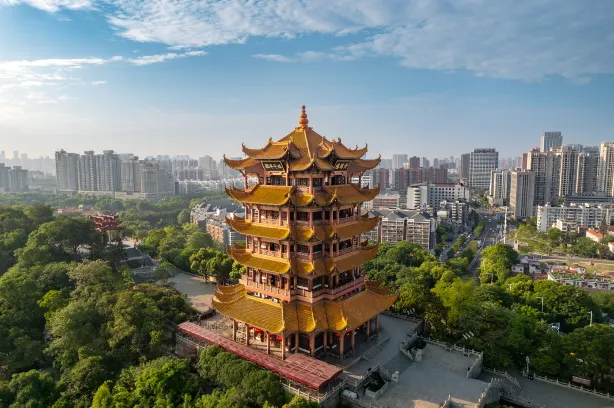
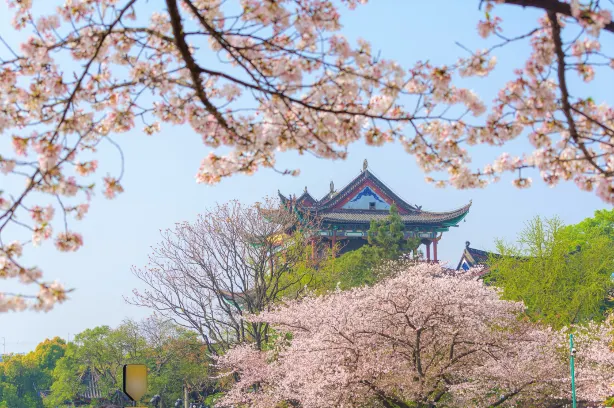
Qingchuan Pavilion stands on Yugong Rock at the eastern foot of Tortoise Hill in Hanyang, facing the Han River to the north and the Yangtze River to the east, gazing across the river at Yellow Crane Tower in Wuchang on the opposite bank. The pavilion's name is taken from the line "the clear river reflects the trees of Hanyang" by the Tang dynasty poet Cui Hao, and it was initiated for construction by Fan Zhizhen, the Ming dynasty prefect of Hanyang. First built during the Jiajing era of the Ming dynasty, it has a history of more than four hundred years. Throughout history, Qingchuan Pavilion was destroyed and rebuilt as many as six or seven times, the last destruction caused by a windstorm; the existing structure was rebuilt in the 1980s following the style of the Guangxu era of the Qing dynasty. Long known as one of the "finest sights of the Three Chu regions" and a "grand vista through the ages," Qingchuan Pavilion echoes Yellow Crane Tower across the river and stands out distinctly along the banks of the Yangtze. The attraction is composed of three main structures—Qingchuan Pavilion, Yuji Xinggong (Yu and Ji Ancestral Hall), and Tiemen Pass—along with auxiliary structures such as the ancient archway, Chubo Pavilion, Chaozong Pavilion, Yu Stele Pavilion, Jingchu Heroic Spirit Stele, and the poetry stele corridor, forming a complex of ancient and pseudo-classical buildings standing by the river. Among them, Yuji Xinggong was first built during the Shaoxing era of the Southern Song dynasty under the original name Yu Wang Temple; during the Tianqi era of the Ming dynasty, it was renamed "Yuji Xinggong" after its worship was changed to Houji and other former sages, and it has been an important site in Wuhan for successive generations to pay homage to Yu the Great. Tiemen Pass was first built during the Three Kingdoms period and has been a strategic location contested by military strategists since ancient times; it was restored in the 1990s. Ascending Qingchuan Pavilion offers a panoramic view of the expansive river scenery where the Yangtze River and the Han River converge. Inside the pavilion, permanent exhibitions such as "Traces of Yu Across the Nine Provinces" and "Historical Paintings of Qingchuan" present Yu the Great culture and the historical heritage of Qingchuan Pavilion from multiple perspectives, ranging from water-control culture to poetry and couplets. The attraction nestles between the hills and the river, with pavilions and terraces scattered in graceful arrangement. The poetry stele corridor preserves inscribed stones bearing verses by literati and poets of successive dynasties, and strolling through it allows visitors to feel the rich historical and cultural atmosphere.

China · Wuhan
Jiuhua Mountain
No. 3 of Best Things to Do in Southern Anhui

Jiuhua Mountain

8.4
4.8/5
29k reviews

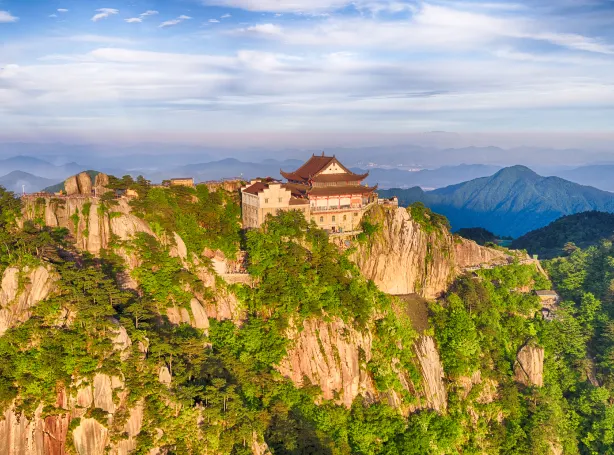
Jiuhua Mountain is located southeast of Chizhou. During the Kaiyuan reign of the Tang Dynasty (719 AD), Prince Jin Qiaojue of the ancient Silla Kingdom (an ancient regime on the Korean Peninsula) came here to practice Buddhism. Because various auspicious signs before and after his death closely resembled those of Ksitigarbha Bodhisattva, he was recognized as an incarnation of Ksitigarbha Bodhisattva and revered as Jin Ksitigarbha. Thus, Jiuhua Mountain became Ksitigarbha Bodhisattva's bodhimanda and, together with Mount Putuo, Mount Wutai, and Emeishan, was listed as one of the Four Sacred Buddhist Mountains. The preserved bodies of eminent monks from various dynasties are a major feature here. Under the perpetually humid climate, the bodies of these monks have been preserved after their passing. Currently, there are five such flesh-body bodhisattvas available for viewing. Jiuhua Street on the mountain is ring-shaped and serves as the core tourist hub of the attraction. Most trips to the various attractions start from Jiuhua Street, and many important temples are also located here. Temples are scattered throughout the mountain, and three key temples are recommended: Baisui Palace, the Hall of the Flesh Body, and Huacheng Temple. Except for Baisui Palace, which is built on a small hill, the latter two are both within the area of Jiuhua Street. To reach Baisui Palace, it takes about half an hour on foot up the mountain, or you can take the cable car. Baisui Palace enshrines the flesh body of the Ming Dynasty monk Wuxia, one of the oldest extant flesh-body bodhisattvas on Jiuhua Mountain, who was imperially conferred the title of "Response Body Bodhisattva." The Hall of the Flesh Body enshrines the flesh body of the Tang Dynasty Jin Dizang; the flesh body is sealed within a pagoda, so visitors cannot directly view the true body, but they may walk clockwise around the pagoda inside the hall. Huacheng Temple is the founding ancestral temple of Jiuhua Mountain and also the site of the Jiuhua Mountain History and Cultural Relics Museum, which houses the "Huayan Blood Sutra," copied by monk Wuxia over twenty-eight years using his own finger blood, a national first-class cultural relic. In addition to the two flesh bodies at Baisui Palace and Roushen Baodian, the other three flesh-body bodhisattvas are: Monk Mingjing of Zhantan Zen Forest, Monk Ciming of Dizang Zen Temple, and Master Renyi, a bhikkhuni, of Tonghui Zen Forest. Master Renyi is a bhikkhuni flesh body that can be visited. These three temples are all located on Jiuhua Street and can be visited in sequence. In the evening, the Qiyuan Zen Temple, the foremost of the four great monasteries, is brightly lit, and many large-scale Buddhist ceremonies are held here. Travelers may observe quietly, but must strictly observe Buddhist etiquette, refraining from loud noise and pointing at will. Travelers on a 1-day tour generally only need to visit the key temples; those with plenty of energy can continue upward from Baisuigong to Dongya Temple, and walk from Roushen Hall to **Shangchan Hall and Xiaotiantai**. Travelers on a 2-day tour can visit temples on the first day and hike up the mountain to enjoy the natural scenery on the second day, with three options: the Tiantai scenic area, the Huatai scenic area, or the ridge traverse from Tiantai to Huatai. Visiting Tiantai or Huatai separately generally takes about half a day; the Tiantai–Huatai traverse is a hiking route with a certain level of intensity, so it is recommended to set aside a full day. Tiantai is located on the south side, with its entrance at Fenghuang Pine south of Jiuhua Street; from Tiantai Temple at the top, you can enjoy the sunrise and sea of clouds and overlook the panoramic view of Jiuhua Street. Huatai is located in the northern part of the attraction, where the natural scenery is more pristine and pure, with exotic peaks and grotesque rocks scattered in varied forms; every May, rhododendrons bloom across the mountains in succession. The entrances to the two scenic areas are far apart, but they are connected by a hiking trail along the ridge. This place is foggy year-round, especially in spring and fall, when clouds and mist shroud the temple, giving it a sense of a Buddhist wonderland. Foggy days are often accompanied by drizzle, so bringing a rain poncho is recommended. In winter, snowy scenery is common in the mountains, but the steps are wet and slippery, so be sure to take anti-slip precautions when climbing.

China · Qingyang
Jinzhai Today's weatherFoggy 4-15℃
Jinzhai weather for the next 2 days11/25: 6-17℃, 11/26: 9-22℃

Free things to do in Jinzhai
What travellers say about Jinzhai

user-avatar
可乐味的柠萌哒啦29 July 2023
5.0
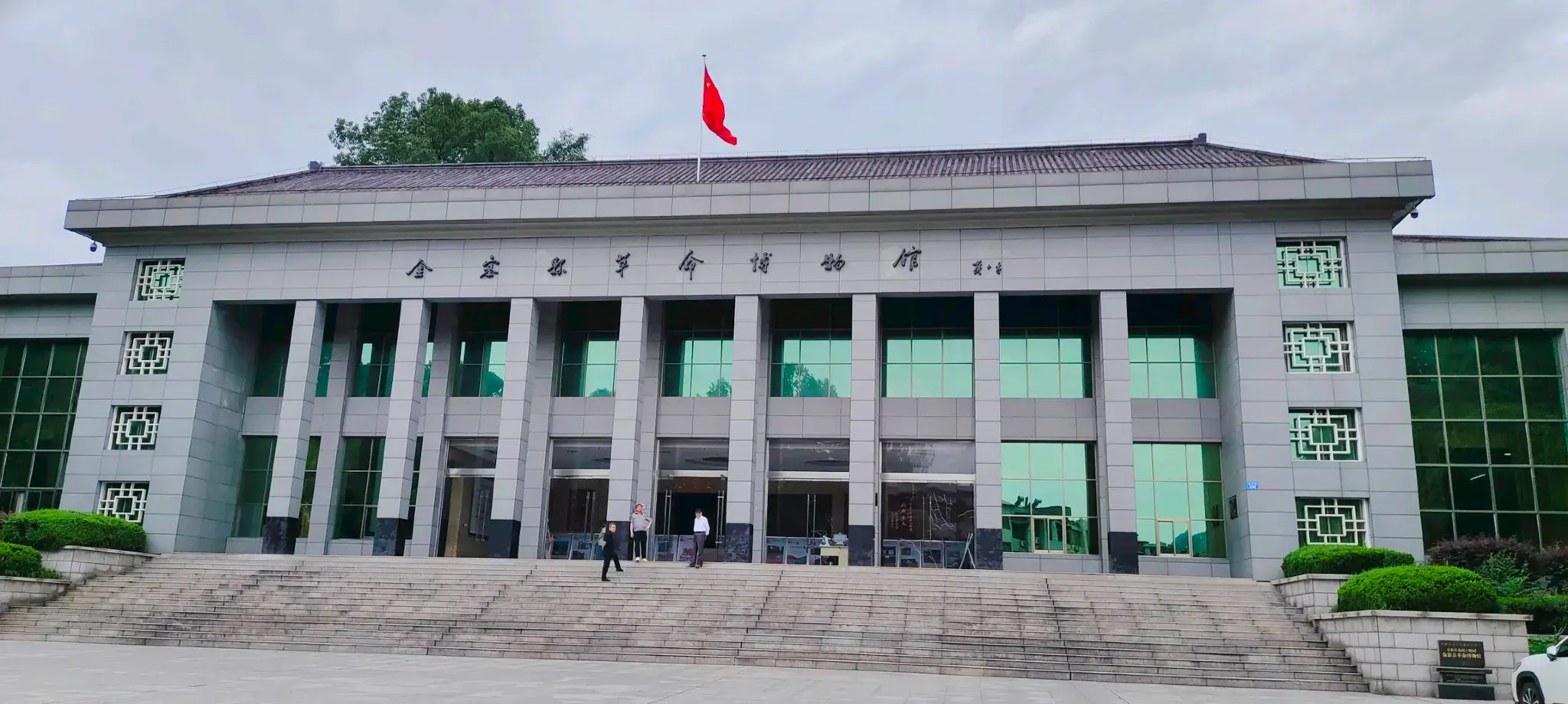
This is a red tourist attraction in Jinzhai County. We also visited Meicun Reservoir. Overall, it's good and worth a visit! [Scenery] Very beautiful, [Interesting] Lots of stories, [Value for money] The memorial hall is free!

Jinzhai County Revolution Museum
user-avatar
VilAnda P24 November 2026
4.0
Had a great experience visiting the Yellow Crane Tower! Definitely buy your tickets in advance—it makes entry completely hassle-free, especially on weekends. It does get very crowded, so expect lots of people, but the views and the landmark itself are well worth it.

Yellow Crane Tower
user-avatar
冷不丁lu22 November 2026
5.0
"You can't see the true face of Mount Lu because you're in the mountain yourself." Mount Lu is definitely worth a visit. You can drive up the mountain, but to see the Three Cascades Spring, you have to go down 2,600 steps. It's worth seeing and a very memorable experience.

Lushan National Park

user-avatar
Trip.cn23 November 2026
4.0
Up close, you can see the Hui-style architecture; in the distance, you can see the mountains surrounding the village. The scenery of southern Anhui is all in Hongcun. Strolling along the stone-paved streets of the ancient village, it feels like you have traveled back to a day hundreds of years ago. It would be even more perfect if there were fewer hawkers and noise.

Hongcun Village

user-avatar
Leanzippy23 November 2026
5.0
Niushou Mountain Cultural Tourism Zone is a massive, peaceful sanctuary in Nanjing that is well worth a visit. The park covers such a large area and offers a relaxing atmosphere away from the busy city. There are several distinct, impressive buildings to explore; from the intricate, modern architecture of the Usnisa Palace to traditional pagodas and quiet mountain temples. Recommended to wear comfortable walking shoes and set aside at least half a day to take everything in at an unhurried pace.

Niushou Mountain Cultural Tourism Zone

user-avatar
Anonymous user23 November 2026
4.0
Unable to get a reservation at the Ceramics Museum, I came here instead. I thought it wouldn't be crowded on a weekday, but it turned out to be packed with students on autumn break. Both the Imperial Kiln Site and the museum are worth seeing.

Taoyangli Historical and Cultural District

user-avatar
大土豆一颗4 October 2026
5.0
The exhibited artifacts were quite good; I've also been to joint exhibitions organized by museums like the Hunan Provincial Museum. The Kremlin artifacts here are well-prepared and thoughtfully designed. However, the souvenir and merchandise section was rather boring. I was thinking of buying a pendant or something, but that saved me some money.

Hubei Provincial Museum

user-avatar
131***6210 November 2026
5.0
The trees of Hanyang stand clearly in the clear sky, and the fragrant grasses grow lush on Parrot Island. When you come to Wuhan, you must visit Qingchuan Pavilion. There aren't many people at night, and there are NPCs to guide you throughout the visit, providing explanations, interactive activities, and even silver notes that can be exchanged for nice little gifts.

Qingchuan Pavilion

user-avatar
darlineliu17 November 2026
5.0
It's a very worthwhile place to visit. The pilgrimage route itself cultivates rational awareness and clears away physical and mental fatigue. Aside from peak season, the off-season from November 15th to January 15th, if you avoid the autumn break for primary and secondary school students (around November 14th-20th), will have fewer tourists and a more pleasant trip.

Jiuhua Mountain

Trip Moments in Jinzhai

Popular cities near Jinzhai

Frequently asked questions

How can I contact Trip.com customer support?

Get help anytime, anywhere within 30 secondsContact customer support

Change and cancellation policies vary by attractions and tours. Please check the product details page for more information.

Ticket prices may vary between weekdays and weekends, as well as during peak and off-peak seasons. When booking with Trip.com, you can also use Trip Coins to get extra savings. For more tips on booking discounted tickets, please visit Trip.com for the latest information.