Jinzhou

Things to do in Jinzhou

Search attractions or local attractions & tours
Search

Explore top experiences

Top 10 attractions in Jinzhou
View all Attractions
Zhengding Ancient City
No. 2 of Night Attractions in Hebei

Zhengding Ancient City

7.6
4.7/5
589 reviews

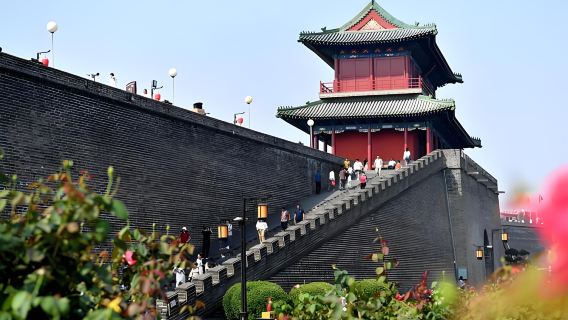
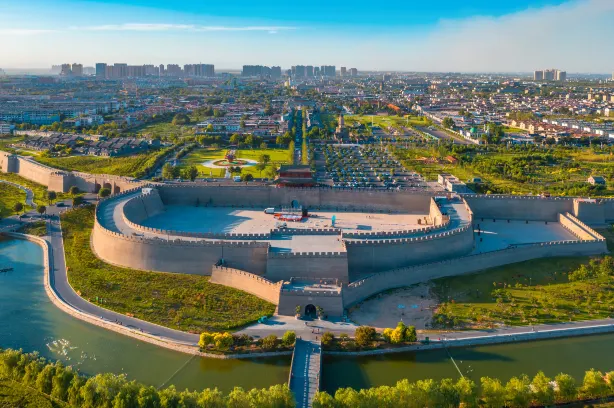
Zhengding Ancient City has a history of more than 1,600 years. The existing city wall is a relic of the Ming Dynasty. It was first built with earth in the Eastern Jin Dynasty and expanded into a brick city in the Ming Dynasty. Historically, it was known together with Baoding and Beijing as one of the "three great towns of the north." The south city gate still bears a stone plaque inscribed with "three passes great town." This is also the hometown of Zhao Zilong, a famous general of the Three Kingdoms period. The city has a dense concentration of historical sites, and Longxing Temple is a representative ancient temple. First built in the sixth year of the Kaihuang era of the Sui Dynasty (586), it was expanded by imperial order of Zhao Kuangyin, Emperor Taizu of Song, and was praised by the architectural historian Liang Sicheng as "the foremost famous temple outside the capital." The temple has many highlights: the Mani Hall has a cruciform plan and is a typical surviving example of Song Dynasty construction techniques; the reclining Guanyin wall sculpture behind the hall was called the "Beauty of the East" by Lu Xun; the revolving sutra repository in the Zhuanlunzang Pavilion is one of China's earliest surviving revolving sutra repositories; the Longzang Temple Stele, whose script evolved from Han clerical script to Tang regular script, was praised by Kang Youwei as "the finest Sui stele"; and the bronze Thousand-Handed and Thousand-Eyed Guanyin enshrined in the pavilion is one of China's earliest surviving large bronze Buddha statues. The ancient city is also home to four distinctive ancient pagodas: the Lingxiao Pagoda of Tianning Temple is a pavilion-style pagoda with a mixed brick-and-wood structure; the Hua Pagoda of Guanghui Temple combines the architectural features of both a vajra-throne pagoda and a flower pagoda; the Xumi Pagoda of Kaiyuan Temple and the Tang Dynasty Bell Tower are arranged symmetrically, reflecting the evolution of Buddhist temple layouts from tower-centered to hall-centered; and the Chengling Pagoda of Linji Temple is the robe-and-bowl relic pagoda of Master Yixuan, founder of the Linji School. The Rongguo Mansion inside the city was built according to the descriptions in "Dream of the Red Chamber," and most scenes of the TV series "Dream of the Red Chamber" were filmed here. The "Ningrong Street" beside the mansion recreates the street scene of the Qing Dynasty. When touring, it is recommended to connect the main attractions along the central axis of the ancient city. Longxing Temple is rich in content, and the architectural structures of the Mani Hall and the Zhuanlunzang Pavilion are worth a closer look; the four pagodas are distributed in different directions within the city and are suitable for visiting one by one on foot; the south city gate is relatively well preserved, and climbing the wall offers a panoramic view of the overall layout of the ancient city.

Zhengding · 42.9km from Jinzhou
The Palace Museum
2026 Global 100 - Best Things to Do

The Palace Museum

10
4.9/5
204.9k reviews

The Forbidden City, also known as the Imperial Palace, was the imperial palace of the Ming and Qing dynasties, and is also the symbol of ancient China. When you are in the majestic and orderly high walls and deep courtyards, you can truly feel its former glory. ▲The long history has left behind large-scale precious buildings and countless cultural relics, which have also become the main attraction of visiting the Forbidden City today. ▲Classic attractions: The Forbidden City Corner Tower is a polygonal building with a convex plane on all four sides. It is located in Dongcheng District, Beijing. The roof has three layers. The upper layer is a hip roof with vertical and horizontal intersections. It is composed of a gable roof with flowing water on two slopes and a hip roof with four slopes. Because there are nine main ridges on this roof, it is called the Nine-ridge Hall. ▲Sundials are divided into two types according to their installation principle: equatorial and horizontal. The sundial installed using the equatorial principle is called an equatorial sundial. The key points of its production are that it must have a time plate, a latitude arc and a gnomon. When operating, the time plate must be parallel to the equatorial plane of the earth, the gnomon must be in the same direction as the earth's axis, and the shadow cast by the gnomon on the gnomon is the desired time. ▲The Treasure House is located in the Ningshou Palace area. It has a rich collection of treasures, including Buddhist supplies, ornaments, daily utensils, and treasures for appreciation. Among them, the red coral lion about 14 cm high, the Dongzhu court beads about 130 cm long, and the gold "Fengtianzhibao" seal are all rare treasures. ▲The Clock and Watch Museum is located in the Fengxian Hall in the palace. Most of the clocks on display are British products, but there are also clocks from other countries such as France and Switzerland. In addition to the timing function, these clocks are decorated with figures, birds, beasts, flowers, etc., which can also make various different movements. They are very delicately made. Among them, the copper-plated gilded writing clock, the copper-plated gilded enamel gourd-top fishing and woodcutting farming clock, and the copper-plated gilded rotating flower running man rhinoceros carrying clock are very rare.

China · Beijing
Universal Beijing Resort
2026 Global 100 - Best Things to Do

Universal Beijing Resort

10
4.6/5
81.8k reviews

Beijing Universal Studios is a highly anticipated theme park destination, including Universal Theme Park, Beijing Universal CityWalk, and two resort hotels. It features brand new selected Attraction and includes popular entertainment facilities and attractions from Universal Theme Parks around the world. ▲Universal Studios Beijing: Blending Chinese cultural elements to create a unique experience, it has seven theme Attraction, 37 rides and entertainment facilities and landmark attractions, 24 performances, 80 Dining and 30 retail stores.  ▲Minion Land: It is a colorful world full of joy! At this moment, these naughty Minions are walking around the streets, ports and city centers, having fun all over the world without restraint! At the same time, Gru is also recruiting soldiers for the Minions Army, so hurry up and sign up at Gru's house! ▲The Wizarding World of Harry Potter™: Here you can leave the ordinary world behind and experience the wonderful rides and endless magical adventures, which will lead you step by step into a thrilling and interesting magical world! ▲Transformers Metrobase: This is a Cybertron-style base, which is transformed by Transformers the size of a city. If you are ready to become an agent, then accept Optimus Prime's recruitment, join the Beijing Nest Force, fight side by side with the Autobots, and fight against the Decepticons to protect the earth! ▲Kung Fu Panda Land of Awesomeness: This is an ancient place like a paradise, and also a legendary place that combines the beauty of nature and craftsmanship. Come here to explore your own Kung Fu! There's also Jurassic World Isla Nublar, Hollywood, and Waterworld waiting for you to explore! ▲The Universal Studios Grand Hotel The Universal Studios Grand Hotel is located at the entrance of Universal Studios Beijing and offers Hollywood-themed accommodation and the privilege of Early Park Admission via the Universal Studios Beijing VIP Experience entrance; NUO Resort Hotel is a 5-minute walk from the entrance. Guests can enjoy a well-equipped fitness center, indoor swimming pool, and spa center (NUO SPA). Guests can also enjoy Early Park Admission via the Universal Studios Beijing VIP Experience entrance. Both hotels combine themed features with high-end facilities to create an immersive vacation experience.

China · Beijing
Badaling Great Wall
2026 Global 100 - Best Things to Do

Badaling Great Wall

10
4.7/5
63.6k reviews

The Badaling Great Wall is a highly representative section of the Ming Great Wall, located in Yanqing, Beijing, north of Juyong Pass. Since ancient times, it has been a strategic military location guarding the northwestern passage to the capital. The pass city is trapezoidal in shape, narrow in the east and wide in the west, with two gates, east and west. The east gate bears the inscription "Juyong Outer Town," and the west gate bears the inscription "Key to the North Gate." Both inscriptions remain clearly legible to this day. Extending north from the pass is the North Wall, along which more than ten watchtowers are distributed; to the south is the South Wall, which has fewer watchtowers. North Tower 8 is the highest point of the entire section, at over 1,000 meters above sea level, and from its top you can overlook the magnificent sweep of the wall winding along the mountain ridges. The North Wall has higher terrain and steeper slopes with open views, and is the main route for most visitors; the South Wall is relatively gentle and less crowded, making it suitable for visitors who want to take photos at a relaxed pace and avoid the crowds. If time permits, walking the South Wall first and then the North Wall is a more leisurely arrangement. Badaling Great Wall is also one of the earlier sections of the wall opened to the public. The top surface of the wall is paved with square bricks, and the widest parts can accommodate five horses walking side by side. Defensive structures such as battlements and arrow holes are well preserved, and walking along it gives a direct sense of the construction standards of Ming Dynasty border defense works. In fall, layers of red leaves on the mountains contrast beautifully with the gray brick wall, making it a season that many photography enthusiasts travel specifically to capture. ▲Travel through 600 years of gilded splendor and encounter the visual shock of crimson red leaves blanketing the mountains ▲nightAs night falls, it winds through the mountains like a brilliant golden dragon, and the ancient city wall illuminated by lights tells of the glory and mystery of a thousand years of history ▲ In winter, the Badaling Great Wall, covered in pristine white snow, winds through the mountains like a silver dragon. The golden light of dawn spills across the wall, painting a tranquil and magnificent picture.

China · Beijing
Longxing Temple
No. 11 of Best Things to Do in Hebei

Longxing Temple

7.1
4.8/5
4.4k reviews

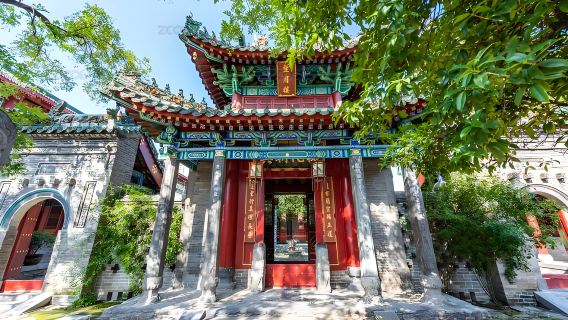
Longxing Temple, also known as the Great Buddha Temple, is one of China's most historically significant Buddhist monasteries with extensive architectural scale and remarkable preservation. This ancient architectural complex holds outstanding historical and cultural value as a monumental religious site. Longxing Temple traces its origins back to 586 AD during the Sui Dynasty, initially named Longcang Temple before being renamed during the Tang Dynasty. In 971 AD under Emperor Taizu of the Northern Song Dynasty, an imperial decree commissioned the casting of a magnificent 42-arm bronze statue of the Thousand-Hand Guanyin Bodhisattva within the temple, accompanied by the construction of the Great Mercy Pavilion. Subsequent expansions formed a Song Dynasty architectural complex centered around this pavilion. The temple underwent repairs and additions during the Jin, Yuan, and Ming Dynasties. Major renovations ordered during the reigns of Kangxi and Qianlong in the Qing Dynasty established its final layout: monastic living quarters in the east, Buddhist ceremonial spaces in the center, and imperial lodging in the west. In 1710, Emperor Kangxi personally inscribed the "Longxing Temple" plaque as a mark of reverence. From the late Qing through the Republic era, social upheaval and warfare led to the temple's decline. After the founding of New China, systematic restoration and preservation efforts by the government gradually restored the temple to its former grandeur. Longxing Temple boasts an expansive scale and diverse architectural styles, stretching approximately 600 meters from north to south and 200 meters from east to west. Its main structures are symmetrically arranged along a central axis, featuring key buildings such as the Heavenly King Hall, Mani Hall, Ordination Platform, Great Mercy Pavilion, Amitabha Hall, Vairocana Hall, and Dragon Soaring Garden from south to north. Visitors can explore along the central axis, with a complete tour typically taking 2–3 hrs. The temple is also known as the "Great Buddha Temple," a name derived from its enshrined 21.3-meter-tall Thousand-Armed and Thousand-Eyed Guanyin statue in the Great Mercy Pavilion. This majestic bronze statue, commissioned by Emperor Zhao Kuangyin during the Northern Song Dynasty, stands as one of China's most monumental ancient copper-cast Buddhist sculptures, earning the temple its nickname and making it a must-see attraction. The Mani Hall is another must-see highlight, featuring a vividly colored seated Avalokitesvara statue on its northern wall. This unique statue combines lifelike realism with divine beauty in its posture and vibrant hues. Lu Xun once praised it as "personifying divinity," earning it the title "Goddess of Eastern Beauty." The hall itself boasts distinct Song Dynasty architecture, with its original structure preserved. Its particularly special bracket set design was hailed by renowned architect Liang Sicheng as a "singular example" of Song-era construction, making it an architectural masterpiece of immense artistic and research value. Beyond these two main attractions, the temple houses other equally precious artifacts and structures. These include the Longxing Temple Ordination Platform in the Ordination Hall, the Northern Song Dynasty revolving sutra cabinet in the Revolving Sutra Cabinet Hall, the 7.4-meter-tall Northern Song wooden Maitreya statue in the Cishi Pavilion, imperial stele inscriptions by Emperors Kangxi and Qianlong in the Imperial Stele Pavilion, and the Sui Dynasty Longcang Temple Stele revered as the "origin of regular script"—all rare historical treasures worth admiring in detail. Additionally, the Dajue Liushi Hall ruins and Longteng Garden offer unique experiences, making them highly recommended stops for visitors.

Zhengding · 42.2km from Jinzhou
Hebei Museum
No. 5 of Family-friendly Attractions in Hebei

Hebei Museum

7.3
4.8/5
1.5k reviews

The Hebei Museum, formerly known as the Hebei Provincial Museum, was established in 1953. It is a provincial-level comprehensive museum of Hebei Province, a national patriotism education demonstration base, and a key museum jointly built by the central and local governments. The Hebei Museum consists of four parts: the main campus, Jianhua campus, Yucai campus, and West Street campus. The main campus is located at the Cultural Plaza in Shijiazhuang and is divided into the south and north areas. The north area was built in 1968, and the south area is a newly expanded area. The buildings of the two areas are harmonious and unified, majestic and magnificent, and constitute a landmark cultural view of Shijiazhuang. The Jianhua campus and Yucai campus serve as cultural relic warehouses, with a total collection of more than 340,000 items. Leveraging the advantages of the cultural relic collections of provincial-level cultural and museum institutions, Hebei Museum selects highlights from Hebei's history and presents 10 permanent exhibitions: "Hebei in the Stone Age," "Shang Dynasty Civilization in Hebei," "Songs of Generosity and Sorrow — Stories of Yan and Zhao," "The Majestic Spirit of the Warring States — Ancient Zhongshan State," "The Swan Song of the Great Han — Mancheng Han Tombs," "Quyang Stone Carvings," "Murals of the Northern Dynasties," "Famous Kilns and Fine Porcelain," "Flames of Resistance — Heroic Hebei," and "'Enjoy Hebei' Intangible Cultural Heritage Reception Hall — Exhibition of Hebei Province's Intangible Cultural Heritage Protection Achievements." Through more than 5,000 exquisite cultural relics (sets) and modern display methods, it chronicles the continuous history of human development in Hebei over the past 2 million years. Hebei Museum also holds numerous temporary exhibitions each year on topics such as history, art, nature, science and technology, current affairs, and folk customs, greatly enriching people's spiritual and cultural life. Over the years, Hebei Museum has made positive contributions in the collection, protection, research, exhibition, publicity and education of cultural relics, as well as domestic and international exchanges. Hebei Museum was rated as a "National Civilized Unit" in 2015 and won the title of "National Innovative Museum" in 2018. With its profound historical and cultural heritage, modern exhibitions, and a clean and comfortable open environment, Hebei Museum warmly welcomes visitors from all directions.

Shijiazhuang · 45.7km from Jinzhou
National Museum of China
2026 Asia 100 - Best Things to Do

National Museum of China

9.5
4.8/5
14.1k reviews

The National Museum of China is located on the east side of Tiananmen Square and was formed by merging the former Museum of Chinese History and the Museum of the Chinese Revolution. The building is one of the ten great structures built for the tenth anniversary of the founding of the People's Republic of China in 1959. The museum holds over 1.4 million items, covering categories such as ancient artifacts, modern and contemporary artifacts, rare books and ancient texts, and artworks, among which the number of Grade One cultural relics is substantial. The three permanent exhibitions are the core of any visit. The "Ancient China" exhibition, located in the basement-level galleries, follows the succession of dynasties and is divided into eight sections from remote antiquity to the Ming and Qing dynasties, displaying heavyweight artifacts such as the painted pottery basin with human-face and fish design, the four-ram zun vessel, the Houmuwu ding, the drum-beating storyteller figurine, and the jade burial suit sewn with gold thread, several of which are listed as cultural relics prohibited from being exhibited abroad; this exhibition is also the most artifact-dense area in the museum and is worth spending time examining closely. The "Road to Rejuvenation" and "Road to Rejuvenation: New Era" exhibitions, located in the northern galleries, review the Chinese nation's journey of rejuvenation since the Opium War of 1840, with exhibits including the oil painting The Founding Ceremony of the Nation and the Shenzhou 5 return capsule, among other landmark artifacts. In addition to the permanent exhibitions, the museum regularly hosts thematic exhibitions on ancient Chinese Buddhist statues, coins, porcelain, and painting and calligraphy, and periodically presents special exhibitions and international exchange exhibitions covering history and culture, archaeological discoveries, and classic fine art. With numerous galleries spread across multiple floors, visitors are advised to plan their route in advance and allow ample time.

China · Beijing
Rong Mansion Scenic Spot
No. 10 of Family-friendly Attractions in Hebei

Rong Mansion Scenic Spot

6.8
4.4/5
3.3k reviews

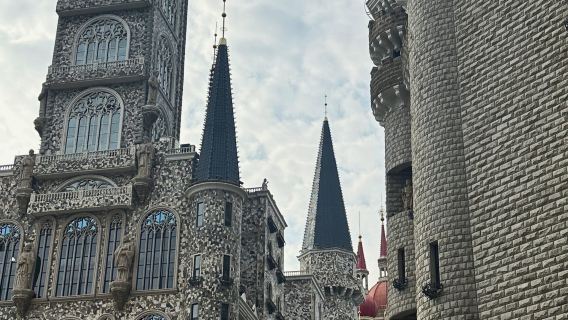
Rong Mansion Scenic Spot in Zhengding was China's first film and television shooting base, built for the 1987 TV series "Dream of the Red Chamber." This ancient-style architectural complex features Ming and Qing dynasty designs, consisting of a mansion and street section. Construction began in December 1984 and opened to the public in July 1986. In 1983, China Central Television (CCTV) planned to produce the grand TV series "Dream of the Red Chamber" and sought local government cooperation to build a temporary outdoor set for Rongguo Mansion. The then Party Secretary of Zhengding County keenly recognized the business opportunity, contacted CCTV, and quickly reached an agreement where Zhengding would provide the land free of charge to construct the full-scale Rongguo Mansion set. In July 1986, after 1 year and 8 months of construction, the Rongguo Mansion attraction was completed, covering 55 acres with an investment exceeding CNY 3.5 million. The completion of Rongguo Mansion significantly boosted Zhengding's tourism industry, pioneering a national model that became known as "China's tourism, the Zhengding model." The Rongguo Mansion is designed and constructed based on the "Rongguo Mansion" depicted in the Chinese classical masterpiece "Dream of the Red Chamber." The main attractions include the Rongguo Mansion scenic area, Ningrong Street scenic area, and the Cao Xueqin Memorial Hall. Covering an area of 37,000 square meters with a building area of 6,400 square meters, the mansion features 212 rooms and 102 corridors. The entire estate is divided into eastern, central, and western sections, each designed as a five-courtyard quadrangle in Ming and Qing architectural styles. The central section serves as Jia Zheng's official courtyard, adorned with solemn imperial-style paintings, while the eastern and western sections are inner residential courtyards featuring vibrant Suzhou-style paintings. The interiors boast elegant floor-standing floral partitions and exquisite Ming and Qing-style furniture. With 23 scenes, 88 character figures, and over 1,600 antiques and calligraphy pieces, the mansion vividly recreates the grandeur of a "household of lavish feasts and a family steeped in poetry and literature." After Rongguo Mansion was completed, the 36-episode TV series "Dream of the Red Chamber" was filmed here for nearly two months, capturing over 2,000 scenes. Key sequences like "Yuanchun's Home Visit" and "Qin Keqing's Funeral" were shot on location. Since then, it has served as the filming site for 200 productions including "The Kangxi Dynasty," "Who Will Dominate," "Hai Tang Yi Jiu," and the child actor version of "Dream of the Red Chamber." Today, it has evolved into a premier attraction integrating film production, tourism, and the promotion of Red Chamber culture.

Zhengding · 42.7km from Jinzhou
Mount Taishan
2026 Asia 100 - Best Things to Do

Mount Taishan

9
4.7/5
62.8k reviews

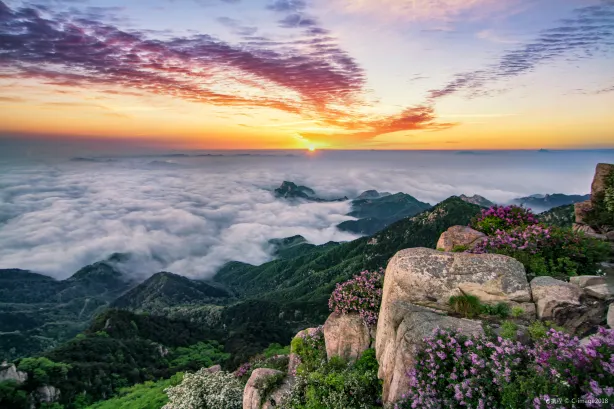
Mount Taishan is centered around Mount Taishan, the first of the Five Great Mountains, with steep and towering peaks, and the views of sunrise and sunset from the summit are breathtaking. Sea of clouds often appear among the mountains, and in winter there are spectacular rime ice views. In addition to natural scenery, the mountain also has numerous historical sites, stone inscriptions, religious temples, and other cultural views, with cliff inscriptions and steles scattered throughout the mountain, which is a major feature of Mount Taishan. Mount Taishan has its own highlights in each of the four seasons: in spring, peach and pear blossoms bloom across the mountains; in summer, the mountaintop is lush green and cool, making it a great summer retreat; in fall, the leaves are a mix of red and yellow, dyeing the layered forests in brilliant colors. There are multiple routes to the summit of Mount Taishan. The hiking trail at the Hongmen entrance is the traditional route opened during Emperor Qin Shi Huang's Fengshan ceremony, consisting mainly of stone steps. Walking from Hongmen to Zhongtianmen, you will pass by numerous attractions along the way, including Wanxian Tower, Doumu Palace, Huima Ridge, and Hutiange. This area is also where stone inscriptions are concentrated. After reaching Zhongtianmen, you can take a cable car or walk to Nantianmen and the summit area, where you can see attractions such as Eighteen Bends, Shengxian Archway, Duisong Mountain, Chaoyang Cave, and Wudafu Pines. The Tianwaicun route is a road leading from Tianwaicun to Zhongtianmen, accessible by tour bus, passing by Heilong Pool, Fanzhi Cliff, and Feng Yuxiang's Tomb. After reaching Zhongtianmen, it merges with the latter half of the Hongmen route. Travelers who prefer not to hike can choose this route. The Tianzhufeng route is relatively steep with few visitors, and is a hiking route often taken by outdoor enthusiasts. It features beautiful mountain scenery, including attractions such as Liyu Back, and at the starting point there is also the large-scale live performance "Chinese Mount Taishan: Grand Ceremony of Fengshan." The Taohuayu route is mostly chosen by travelers when descending the mountain. From Tianjie at the summit, take the ropeway to the mountainside, then transfer to a tour bus down to Taohuayu at the foot of the mountain. Along the way, you can enjoy the Colorful Stone Stream scenic area, where the colorful stone patterns at the bottom of the stream are quite magical. Dongyudao is also a walking hiking route, with attractions such as Qingyang Hall, Hanque Gate, and Dongtianmen along the way. Each route ultimately leads to the Daiding tourist area at the summit. Daiding features the main peak of Mount Taishan, Jade Emperor Peak, the Tianjie Scenic Area, as well as attractions such as Sun Viewing Peak, Daguan Peak, Zhanlu Terrace, Bixia Temple, and Confucius Temple. On clear days at the summit, you can gaze at the Yellow River in the distance and admire the wonder of the "Golden Belt of the Yellow River." The Houshiwu area is rich in varied pines and rocks, and there is a cableway leading to the North Heavenly Gate. Many visitors who want to watch the sunrise choose to climb Mount Taishan at night, usually setting off from the Hongmen route, and it is advisable to depart around 11 pm. This route is well lit at night, and a hike of about seven to eight hours will allow you to reach Sun Viewing Peak or Jade Emperor Peak at the summit before sunrise, which are ideal spots for watching the sunrise.

China · Tai'an

Experiences you can't miss in Jinzhou

Featured Day tours in Jinzhou

View all Day tours
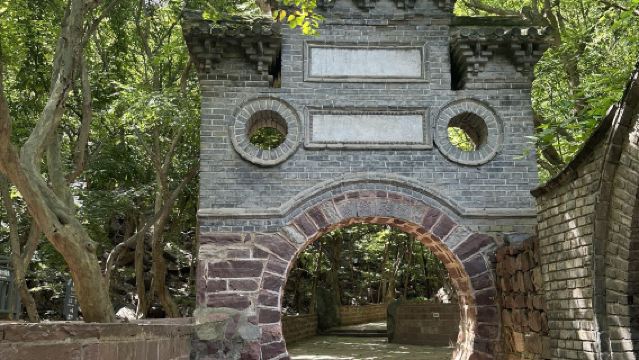
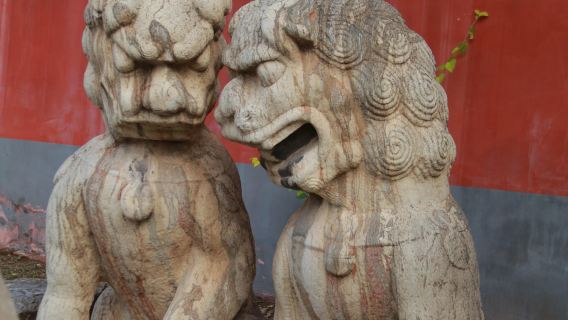
One-day tour of Zhengding Ancient City + Longxing Temple + Rongguo Mansion + Zhaozhou Bridge in Shijiazhuang, Hebei: Chartered car + admission
󱌍
From€34.62
One-day private tour of Zhengding Ancient City + Longxing Temple + Rongguo Mansion + Zhaozhou Bridge in Shijiazhuang, Hebei
󱌍
Duration: 3.8 hrs
English
Free cancellation
Instant confirmation
Book now for tomorrow
From€63.98
Jinzhou Today's weatherClear 0-14℃
Jinzhou weather for the next 2 days11/10: 2-16℃, 11/11: 2-16℃

Free things to do in Jinzhou

What travellers say about Jinzhou

user-avatar
Anonymous user5 October 2026
5.0
This is a Buddhist holy site well worth visiting. The Thousand-Handed and Thousand-Eyed Buddha and the mural of the Reclining Guanyin are historical and artistic treasures that have been preserved intact for future generations to appreciate and understand history! An even greater gain was visiting the memorial hall of Mr. Liang Sicheng, where I learned about the contributions he and Lin Huiyin made to the preservation of historical sites in my country and their transmission in education, so that we, the later generations, can appreciate these historical sites!

Zhengding Ancient City

user-avatar
Anonymous user8 November 2026
5.0
The scholar said that Guide Li led me on a tour of the National Museum of China and the Forbidden City. His guided tour covered most historical facts, as well as many details not found in history textbooks. He shared many interesting anecdotes based on his years of practical experience visiting cultural relics and historical sites throughout various cities. The tour also included interactive elements, making the historical points more memorable. His attentive guidance made it a very good experience.

The Palace Museum

user-avatar
Anonymous user8 November 2026
5.0
The experience is great. The queue times a bit bummer, but expected. Overall solid experience for whole day

Universal Beijing Resort

user-avatar
M60***395 November 2026
5.0
Since I was in Beijing, I had to visit the Great Wall. The scenery there is irreplaceable. Taking the cable car up felt short, but it saved me a lot of energy, allowing me to use it for climbing the Great Wall. 😀 The Great Wall winds its way up and stretches far into the distance, it's truly magnificent. I heard that some sections of the northern route are currently under renovation.

Badaling Great Wall

user-avatar
未未来来8 November 2026
5.0
On the day of Lidong (the beginning of winter) in 2026, the children visited Xinglong Temple in Zhengding Ancient City. Entering this ancient temple gave one a particularly quiet and devout feeling. The ancient temple was serene. The children learned that upon entering, there were four Buddhas facing east, west, south, and north, whose meanings included things like favorable weather, the gods of the east and south. They learned knowledge and also saw the Guanyin statue in reverse posture, understanding the imagery. Whether they learned anything or not, running around in the temple was a form of purification.

Longxing Temple

user-avatar
望雁18 October 2026
5.0
The Hebei Provincial Museum is definitely worth a visit. It boasts a rich and diverse collection of exhibits, arranged scientifically and logically. It also offers a wide variety of cultural and creative products and activities. It's not only suitable for teenagers but also for children.

Hebei Museum

user-avatar
E43***4413 October 2026
5.0
张洋导游讲解的非常好!All visitors should book the national Museum of China trip. It is not easy to book on your own, book through Trip.com and have a guide to share the history with you..

National Museum of China

user-avatar
Anonymous user9 October 2026
4.0
📍Zhengding·Rongguo Mansion|A Dream of Red Mansions Through the Ages, Cao Xueqin Forever I first read *Dream of the Red Chamber* when I was probably only seven or eight years old. My family had a 1972 edition, which my father kept on top of the bookshelf. Kids, the more you forbid them from seeing it, the more curious they become, so I climbed up to the top of the bookshelf and secretly peeked through it, hiding behind piano sheet music. I couldn't recognize all the characters, let alone understand the poems, but I just couldn't put it down. I was obsessed for many years afterward, reading it countless times and devouring many works on *Dream of the Red Chamber* studies. Later, my reading became more diverse, and I gradually put it down. But some things are hard to let go of. For our generation, who wasn't raised on CCTV's *Journey to the West* and *Dream of the Red Chamber*? When I think of Bao and Dai, only Ouyang Fenqiang and Chen Xiaoxu's images come to mind; any other portrayal just doesn't feel right. I've been to the Grand View Garden in Beijing a few times. This time in Zhengding, naturally, I wanted to see Rongguo Mansion at night. This is one of China's earliest film and television shooting bases. In 1983, during the location scouting for the filming of *Dream of the Red Chamber*, Xi Jinping, then Secretary of the Zhengding County Party Committee, strongly advocated for the production team to choose Zhengding as the filming location, transforming what was originally planned as a temporary outdoor set into a permanent building. In 1986, the Rongguo Mansion was completed, and *Dream of the Red Chamber* was filmed there for nearly two months, with approximately 4,000 shots completed there, including key scenes such as "Imperial Concubine's Visit to Her Family" and "Qin Keqing's Funeral." On May 2, 1987, the 36-episode television series *Dream of the Red Chamber* premiered on CCTV. This year, 2026, marks the 40th anniversary of the completion and opening of the Rongguo Mansion. Next year will be the 40th anniversary of the broadcast of the 1987 television series *Dream of the Red Chamber*. Standing here tonight feels like keeping a 40-year promise. Cao Xueqin lived less than fifty years, *Dream of the Red Chamber* was written approximately 270 years ago, the 1987 television series aired nearly 40 years ago, and the Rongguo Mansion was completed 40 years ago. The numbers keep changing. But some things remain the same. Standing before Rongxi Hall, I suddenly recalled the image of myself at eight years old, perched atop the bookshelf, flipping through books. Back then, I couldn't understand the lines, "Full of absurd words, a handful of bitter tears"... Cao Xueqin left posterity a story that will never end. Dream of the Red Chamber will always be read, and there will always be those who push open their doors at night to experience this dream that has lasted for over two hundred years.

Rong Mansion Scenic Spot

user-avatar
Anonymous user7 November 2026
5.0
Sure, not bad. The mountain road was smooth, and the scenery was quite nice. It was very stable. As a standard route, it saved a lot of effort, allowing more energy to climb the Eighteen Bends.

Mount Taishan

user-avatar
Candy Tso7 November 2026
5.0
Liu Jing's explanation was professional and solid, with a profound foundation. She explained things in a clear and detailed manner, taking into account the historical background and highlights. She explained the grotto statues, the history of the Northern Wei Dynasty, and the background of the murals very clearly. There were many details that I would not have noticed on my own. I learned a lot!

Yungang Grottoes

Trip Moments in Jinzhou

Popular cities near Jinzhou

Frequently asked questions

As of 9 November 2026, the reference price for day tours and activities in Jinzhou is around EUR 34.62 – EUR 175.28. Rates vary by duration, group size, transport, tickets, meals, and any special admission requirements. Before you book, please confirm the billing currency and whether the price is quoted per person or per group.

Get help anytime, anywhere within 30 secondsContact customer support

Change and cancellation policies vary by attractions and tours. Please check the product details page for more information.

Ticket prices may vary between weekdays and weekends, as well as during peak and off-peak seasons. When booking with Trip.com, you can also use Trip Coins to get extra savings. For more tips on booking discounted tickets, please visit Trip.com for the latest information.