Jiyuan

Things to do in Jiyuan

Search attractions or local attractions & tours
Search

Explore top experiences

Top 10 attractions in Jiyuan

View all Attractions
Wangwu Mountain Scenic Area
No. 5 of Fall Viewing Attractions in Henan

Wangwu Mountain Scenic Area

5.1
4.8/5
1.4k reviews
Mount Wangwu, located in Jiyuan City, Henan Province, is an ecological and cultural mountain renowned for its multiple honors, including being a UNESCO Global Geopark, a national scenic area, and a national Taihang macaque nature reserve. The scenic area spans a total of 10.49 square kilometers and consists of eight major sections: the Welcome Plaza, Wangwu Old Street, Yangtai Palace, Zhonghua Yugong Village, Yaowang Valley, Geological Museum, Tiantan Sacred Path, and Tiantan Peak. As a mountain-based attraction with exceptional ecological and cultural value, Mount Wangwu seamlessly blends billion-year-old geological wonders with millennia-old cultural heritage. It boasts high-quality tourism resources such as the T-shaped unconformity cliff, the nationally protected Yangtai Palace, and Wangwu Old Street—a nationally recognized nighttime cultural and tourism consumption hub. The mountain is also the birthplace of the Yugong Moves Mountains spirit and one of the roots of Chinese creation mythology. The poet Li Bai once praised Mount Wangwu as "towering peaks and endless waters, a realm of countless wonders." The main peak, Tiantan Peak, stands at 1,715m above sea level and is reputed to be where Xuanyuan Huangdi, the legendary ancestor of the Chinese nation, built an altar to worship heaven. Known as the "Backbone of Taihang" and "Pillar of Heaven," this attraction boasts a remarkable 98% forest coverage and pristine ecological environment, making it an ideal destination to explore geological wonders, immerse in millennia-old cultural heritage, and revel in nature's beauty.Jiyuan · 30.9km from downtown
Jidu Temple

Jidu Temple

3.3
4.4/5
151 reviews
The full name of Jidu Temple is Jidu Beihai Temple. It is located in the birthplace of Jishui River in the northwest of Jiyuan City. The community is known as the "museum" of ancient architecture in the Central Plains. Jidu Temple was built in the second year of Emperor Kaihuang of Sui Dynasty (AD 582), and it was built to worship Jishui God, one of the "Four Dus" gods. The wind of sacrifice has existed since ancient times. In the ancient society dominated by agriculture, production was very low, science was very underdeveloped, people could not explain some natural phenomena, and they randomly came up with some gods of landscapes, shrines, clouds and rain, relationships Grain harvest. Therefore, offering sacrifices to gods is a ceremony of the emperors of all dynasties, and it has complicated procedures and many etiquette. Jishui was originally called the God of Great Ji of Beidu, and was promoted to Duke Qingyuan in the third year of Tianbao of Emperor Xuanzong of the Tang Dynasty (744 AD), and the twelfth year of Zhenyuan of Tang Dynasty (796). After Jidu Temple, Beihai Temple was built. In the seventh year of Xuanhe of Song Huizong (1125 AD), Jidu God was named the King of Qingyuan Zhonghu, and Beihai God was named King of Beiguangze. Since the Sui Dynasty, emperors of successive dynasties sent envoys to visit and held grand ceremonies, which continued until the Qing Dynasty. The Jidu Temple faces the north and faces the south. The overall area layout is in the shape of "A", with a total area of more than 80,000 square meters. The main buildings are arranged on three vertical axes. There is Tianqing Palace in the west. It is not only an ancient sacrificial resort, but also a typical northern classical garden.Jiyuan · 4.9km from downtown
The Luoyang Museum of Ancient Tombs
No. 17 of Best Things to Do in Henan

The Luoyang Museum of Ancient Tombs

7.3
4.7/5
1.2k reviews
The Luoyang Museum of Ancient Tombs is the first museum of ancient tombs in the world. The museum is divided into three major exhibition areas: the tomb area of successive dynasties, the imperial tombs of the Northern Wei dynasty, and the Henan mural gallery. It houses dozens of tomb chambers from various periods of ancient China, all simulated and restored based on their original sites, and displayed in the underground exhibition area according to tomb structure. Visitors can closely observe and understand the internal environment of ancient tombs from multiple perspectives, including tomb chamber architecture, unearthed artifacts, tomb murals, brick carving art, and cultural relics. Burial areas of successive dynasties The burial areas of successive dynasties are located in the eastern part of the museum, divided into above-ground and underground sections, and are a highly distinctive part of the museum that attracts many visitors. The above-ground structure is a group of Han-style buildings, housing exhibition rooms such as the "typical tomb models of the Xia, Shang, and Zhou dynasties" and the "sculpture group of the Han dynasty imperial funeral procession." The underground section features the relocated and restored 25 representative tombs from the Luoyang area, dating from the Western Han dynasty to the Song and Jin periods, with a total of several hundred artifacts on display, as well as a large quantity of murals. The various restored tombs (chambers) in the underground section were all relocated as a whole. The bricks and stones in the tombs were numbered on site by archaeologists before being dismantled, and then reassembled here one by one in their original form. Each tomb chamber is not far from the others, connected by passageways. You can walk through the passages, passing before the tomb chambers of different eras. These chambers, in all their varied forms and distinct architectural styles, reflect one aspect of ancient Chinese architectural art. The tomb chamber also displays replicas of many unearthed artifacts, such as pottery figurines and household vessels from the Northern Wei dynasty, and Tang dynasty sancai ceramics. The tomb chamber also contains epitaphs from the Western Jin, Northern Wei, Tang, and Song dynasties, as well as a rich variety of murals, such as the demon-beating scene, the woman opening the door, and the ascension to immortality, which can be regarded as treasures of ancient painting art. Imperial tombs of the Northern Wei dynasty Located in the western part of The Luoyang Museum of Ancient Tombs. This exhibition area is centered on the "Luoyang Museum of Ancient Tombs - Jingling" of Emperor Xuanwu of Northern Wei, Emperor Shizong, and consists of the relocated and restored tombs of Yuan Xing, Prince Wenxian of Qinghe, and Yuan Cha, Prince of Jiangyang. The burial mound of Luoyang Museum of Ancient Tombs - Jingling is circular, with a rammed earth mound over 20 m high. Visitors can walk down along the passage all the way to the center of the tomb chamber, where a coffin is placed, and there is nothing inside the coffin. The ceiling of Yuan Yi's tomb chamber is painted with an astronomical chart, which contains more than 300 stars. This chart is about 400 years earlier than the "Dunhuang Star Chart" and is precious physical material for the study of ancient Chinese astronomy. Mural gallery The Henan Mural Museum displays authentic tomb murals from multiple dynasties, including the Western Han, Eastern Han, Wei and Jin, Tang and Song, and Jin and Yuan. These murals feature clear images and a wide range of subjects, covering astronomy, geography, human affairs, and deities. The owners of the mural tombs range from emperors, concubines, and high-ranking officials to local minor officials and ordinary commoners.Luoyang · 40.9km from Jiyuan
Longmen Grottoes
2026 Asia 100 - Best Things to Do

Longmen Grottoes

8.9
4.7/5
62.2k reviews
Longmen Grottoes are located in the southern suburbs of Luoyang, Henan Province, on the cliffs along both banks of the Yi River. As one of China's three major grotto art treasures, they were inscribed on the World Cultural Heritage list in 2000. The grottoes were first carved when Emperor Xiaowen of Northern Wei moved the capital to Luoyang, and construction continued through the Eastern Wei, Western Wei, Northern Qi, Sui, and Tang dynasties, with the vast majority of niches and statues left from the Northern Wei and Tang periods. Today, more than 2,000 niches and over 100,000 statues remain, along with a large number of inscriptions and steles, making the site an important representative of Chinese stone carving art. The attraction is divided by the Yi River into two parts: West Hill and East Hill. The West Hill Grottoes are the essence of the site, carved from the Northern Dynasties through the Sui and Tang periods. Famous caves include Guyang Cave, Binyang Cave, Lotus Cave, Wanfo Cave, and Fengxian Temple. The Lushena Buddha at Fengxian Temple stands about 17 m tall, making it one of the larger Buddha statues at Longmen Grottoes. Its face is dignified and serene, with a faint smile, and legend holds that it was modeled on the appearance of Wu Zetian, earning it the name "Oriental Mona Lisa." The inner walls of Wanfo Cave are densely covered with about 15,000 small Buddha statues, each only a few cm tall, neatly arranged and finely crafted. Guyang Cave is the earliest cave carved at Longmen, and its inscription calligraphy is exquisite; the selected "Twenty Masterpieces of Longmen" are representative works of Wei stele calligraphy. Binyang Cave consists of the South, Middle, and North caves and took more than twenty years to complete. Its original reliefs depicting emperors and empresses worshipping the Buddha were looted and lost overseas in the 1930s. In Binyang North Cave, a Buddha statue has a distinctive hand gesture, with the right index and middle fingers raised in a shape resembling the modern "scissors hand," though it is actually a Buddhist mudra, and it once sparked heated discussion online. The East Hill Grottoes are mostly Tang dynasty works and are smaller in scale than those on West Hill, but from the opposite bank visitors can enjoy panoramic views of West Hill from different angles, especially distant views of the Lushena Buddha. The attraction also includes Xiangshan Temple and Bai Juyi Memorial Park (Bai Garden). The Tang dynasty poet Bai Juyi lived in Luoyang in his later years and once praised it, saying, "Of the scenic splendors of Luoyang's surrounding mountains and waters, Longmen ranks first." When visiting, simply follow the route West Hill—East Hill—Xiangshan Temple—Bai Garden, proceeding in one direction without backtracking. The West Hill Grottoes are densely packed with content, so it is advisable to set aside ample time for a closer look; East Hill is quieter and more secluded, suitable for a brief visit and gazing across the river when energy is limited.Luoyang · 58.6km from Jiyuan
Luoyang Museum
2025 Asia 100 - Family-friendly Attractions

Luoyang Museum

8.2
4.7/5
3.8k reviews
Founded in 1958, Luoyang Museum opened to the public on April 16, 2011. It is a comprehensive museum integrating cultural relic collection, exhibition, and public education, with its collection spanning Luoyang's long history as the capital of thirteen dynasties. The main building, resembling a giant cauldron, embodies the meaning of "establishing the capital in Luoyang," and its dignified and imposing facade is a popular backdrop for photos. The museum's large-scale permanent exhibition, "Heluo Civilization," unfolds chronologically from prehistoric times, through the Xia, Shang, and Zhou dynasties, the Han and Wei dynasties, the Sui and Tang dynasties, and the Five Dynasties and Northern Song dynasty, weaving Luoyang's thousands of years of history as a capital city into a complete viewing route. Among the exhibits, the Northern Wei painted pottery figurines of two young women holding hands, affectionately known as "best friend figurines," are particularly eye-catching—two girls side-by-side, their expressions lively, often attracting visitors for photos. The second-floor Treasure Gallery rotates displays of representative artifacts from the collection; the Cao Wei white jade cup and the Northern Wei clay Buddha mask are worth a closer look. The Tang Sancai (three-color glazed pottery) gallery features a rare and powerful black-glazed sancai horse. The Palace Artifacts Gallery displays Qing dynasty palace artifacts transferred from the Forbidden City; a pagoda carved from a single piece of golden nanmu wood adorned with gilded Buddha statues exudes imperial grandeur. The Wang Xiu Peony Art Exhibition brings Luoyang peonies into paintings, creating a contrast between the ruggedness and gentleness of the stone carvings. The visit can begin with the "Heluo Civilization" exhibition and stone carving museum on the first floor, followed by a closer look at the Treasure Gallery, Tang Sancai Gallery, and Palace Relics Gallery on the second floor. The Treasure Gallery exhibits are rotated, so the specific exhibits are subject to availability. A thorough visit usually takes two to three hours, so it is recommended to allow ample time.Luoyang · 49km from Jiyuan
Sui And Tang Dynasties Luoyang City Yingtian Gate Site
No. 9 of Best Things to Do in Henan

Sui And Tang Dynasties Luoyang City Yingtian Gate Site

7.7
4.5/5
4.5k reviews
Yingtianmen is the south gate of Luoyang City Palace City in Sui and Tang Dynasties. It was built in the first year of Daye in Sui Dynasty, that is, in AD 605. It has gone through four periods of Sui, Tang, Five Dynasties and Northern Song Dynasty successively. The Jinbing was burnt and used for 523 years. Yingtianmen was an important place for holding major state celebrations and diplomatic activities at that time. If Yuanzheng, Winter Solstice, Chenle, banquets, pardoning sins, removing the old and clothing the new, when the tributary messengers of all countries, the guests of the four barbarians and other important celebrations, the emperors all came to listen to the government. Similar to the current Beijing Meridian Gate. This city gate has witnessed the prosperity of the dynasty when Emperor Yang Guang of Sui Dynasty entered the Eastern Capital, Emperor Gaozong of Tang Dynasty released King Fuyu of Baekje, the queen ascended the throne and became emperor, and Emperor Xuanzong of Tang received the eighth envoy from Japan to the Tang Dynasty. Every Shangyuan Festival, Yingtianmen Square will also hold a grand Baixi performance. When it is grand, the performance team will stretch from here to the main south gate of Guocheng, which is 4 kilometers away. Yingtianmen has different names in different periods: it was built in the early Sui Dynasty, according to the "Analects of Confucius", "Only the sky is the greatest, only Yao is the rule", taking the meaning of "taking the sky as the rule", so it is called "Zetianmen"; the first year of Tang Shenlong 705 During the reign of Emperor Zhongzong Li Xian of Tang Dynasty, after avoiding Wu, he was honored as "The Great Sage Emperor Zetian" and renamed Yingtianmen. During the Kaiyuan period of Emperor Xuanzong of the Tang Dynasty, this building was renamed Wufeng Building, and Wufeng Building was used until the Five Dynasties and Northern Song Dynasty. At the end of the Northern Song Dynasty, Jinbing invaded the Central Plains, Luoyang became a battlefield and was severely damaged. Jinbing burned down the building. The city of Luoyang in the Sui and Tang Dynasties, which was prosperous for more than 530 years, gradually faded out of people's sight. Yingtianmen is one of the buildings that can show identity and status in the Chinese etiquette system. "Yuan·Henan Chronicle" records: the main gate of the palace city is called Zetianmen, the gate has two views, the upper one is called Ziwei microscopic, the left and right are connected with the ques, and the ques are 120 feet high. Calculated at 29.4 centimeters per foot in the Tang Dynasty, equivalent to about 36 meters today, this magnificent tower is almost twelve or three stories high today. The Tang Dynasty poet Bai Juyi once looked south on Yingtianmen and wrote a poem: "Longmen Cui Dai Mei is opposite, Yishui Golden Line is a line". From Yingtianmen, you can see Longmen Yique, which is 15 kilometers away, showing the majesty of Yingtianmen.Luoyang · 45.2km from Jiyuan

Experiences you can't miss in Jiyuan

Featured Day tours in Jiyuan

View all Day tours
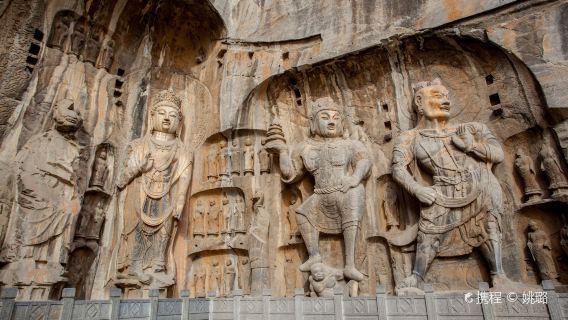
Luoyang  Shaolin Temple and Longmen Grottoes Day Tour(Optional Group Tour)
󱌍
4.4/5
· 26 reviews· 299 booked
Duration: 6 hrs
English
Instant confirmation
FromPLN 271.52
Luoyang Songshan Shaolin Temple + Longmen Grottoes Day Trip including martial arts performance / Small group or English-speaking guide optional
󱌍
5.0/5
· 17 reviews· 200 booked
Duration: 7.7 hrs
English
Free cancellation
Instant confirmation
Book now for tomorrow
59 travellers saved
FromPLN 199.61
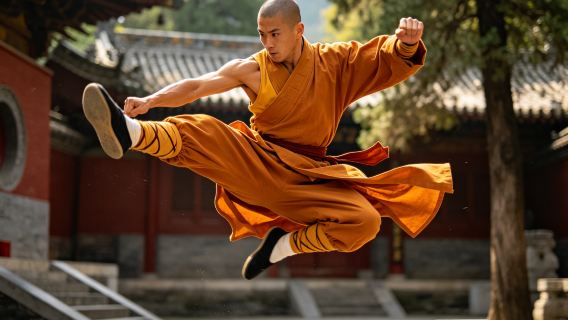
Luoyang Shaolin Temple & Pagoda Forest Day Tour from Luoyang/Zhengzhou | Kung Fu Show Included, Optional Kung Fu Class or English-Speaking Guide
󱌍
4.8/5
· 9 reviews· 107 booked
Duration: 5 hrs
English
Free cancellation
Instant confirmation
Book now for tomorrow
FromPLN 235.04
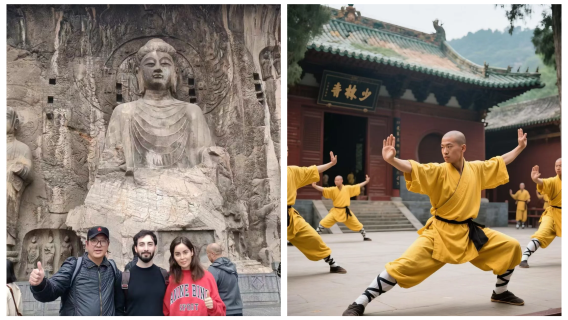
 Luoyang Private Day Tour to Longmen Grottoes & Shaolin Temple
Trip.Select
󱌍
4.9/5
· 13 reviews· 96 booked
Duration: 9 hrs
English
Free cancellation
Instant confirmation
FromPLN 293.92
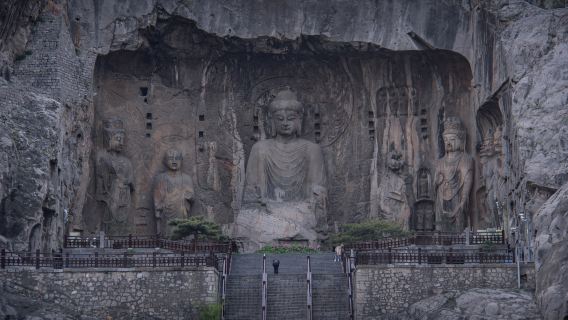
1-Day Tour: Longmen Grottoes, Shaolin Temple & Songyang Academy from Luoyang
Trip.Select
󱌍
4.8/5
· 13 reviews· 73 booked
Duration: 6.6 hrs
English
Free cancellation
FromPLN 549.83
Longmen Grottoes & Shaolin Temple from Luoyang Day Tour (with Kung Fu Show) |CITS × ZANBUS
󱌍
4.8/5
· 12 reviews· 44 booked
Duration: 9 hrs
English
Free cancellation
Instant confirmation
FromPLN 654.36
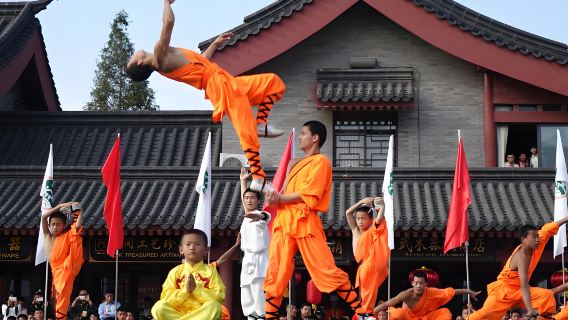
Zhengzhou Departure: Songshan Shaolin Scenic + Martial Arts Hall + Pagoda Forest + Sanhuang Village Group Day Tour
󱌍
4.4/5
· 5 reviews· 42 booked
Duration: 6.6 hrs
English
Free cancellation
Instant confirmation
FromPLN 257.95

Featured Outdoor & sports in Jiyuan

View all Outdoor & sports
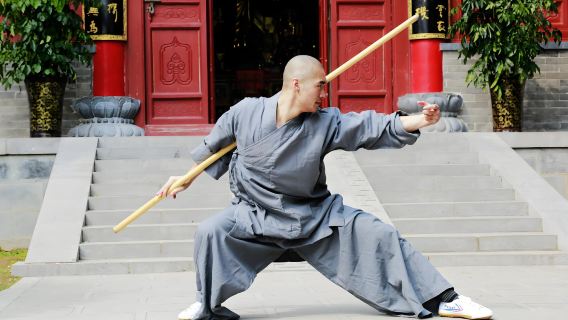
Luoyang Tour to Songshan Shaolin Scenic Including 2-Hour Kung Fu Lesson with Master
󱌍
5.0/5
· 1 review
Duration: 3.5 hrs
English
Free cancellation
Instant confirmation
FromPLN 463.62
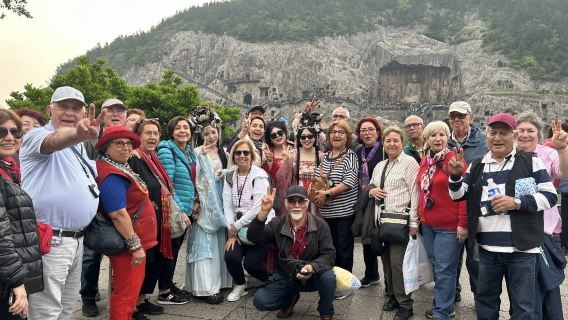
Songshan Shaolin Scenic+Longmen Grottoes1-day Tour
󱌍
Duration: 9.5 hrs
English
Free cancellation
FromPLN 1,615.53
Exclusive Zhengzhou Private Excursion: Shaolin Temple with Kungfu Immersion and Activities
󱌍
5.0/5
· 2 reviews
Duration: 7 hrs
English
Free cancellation
Instant confirmation
FromPLN 1,439.72
Jiyuan Today's weatherClear 7-18℃
Jiyuan weather for the next 2 days11/5: 6-22℃, 11/6: 6-18℃

Free things to do in Jiyuan

What travellers say about Jiyuan

user-avatar
Anonymous user31 August 2026
5.0
Although it's only a 4A-level scenic spot, it's well worth a visit. The clear weather, blue sky and white clouds, combined with the rolling mountains, are truly breathtaking. If you have mobility issues, there are cable cars and ropeways to and from the site, but there's always a section you have to climb yourself. The view from the highest point is truly expansive. The scenic area is also very clean; the toilets have toilet paper and are clean.

Wangwu Mountain Scenic Area

user-avatar
M47***757 October 2025
4.0
The scenery is very good, and the items and entertainment projects in the scenic area are really not expensive. The only thing I want to complain about is the various package tickets. The first time I went there, I couldn’t tell which project was where. There were no clear signs, and the staff’s introduction was not clear. Because I took a few detours, the same entertainment facilities were in different places, and some of them might not be included in the package tickets. My personal suggestion is to buy a basic ticket, and then buy whatever you want to play separately when you get there. It doesn’t cost much more, and at least it saves you trouble. If there are things you don’t want to play, just skip it.

Yellow River Three Gorges Scenic Area

user-avatar
睡恣@M丶22 August 2021
5.0
The mountain is covered with lush vegetation and rich primary and secondary forests, providing good habitats for wild animals. The scenic area is full of towering peaks, deep ravines, cascading waterfalls, and magnificent scenery. In spring, peach blossoms and green willows appear; in the rainy season, the sea of clouds rolls; in the golden autumn, the leaves are red and the cypresses are green; when the snow is white, the hot springs under the peaks bring people the warmth of spring.

Wulongkou Scenic Area

user-avatar
賢賢君25 October 2026
5.0
Teacher Zhou's professional explanations, both in detail and easy to understand, helped us understand the history of Baima Temple and its related Buddhist culture. It was a pity that two halls were under renovation, which we could only consider a minor disappointment, but it will serve as motivation for our next visit.

White Horse Temple

user-avatar
一叶落而天下知秋5 November 2020
5.0
The scenery in Jidu Temple is very beautiful. It is a typical northern ancient garden, an ancient Taoist sacrificial site, and one of the scenic spots in Jiyuan. It is the largest existing ancient building complex in Henan Province and is known as the "museum" of ancient architecture in the Central Plains.

Jidu Temple

user-avatar
Anonymous user3 May 2024
4.0
I didn't have a small bus ticket, and I thought it wasn't far, so I decided to walk in. It was six kilometers, and I took my kids for two hours. It took ten minutes to get down the mountain by scenic bus. I advise everyone to buy a small bus. There are a lot of tadpoles. It's good for children to play in the water and catch tadpoles. The farmhouse is not expensive, and the handmade noodles are only ten yuan.

Xiaogoubei Scenic District

user-avatar
Anonymous user30 October 2026
5.0
Quite an interesting and special museum to visit. I have learned lot of “knowledge” related to the ancient tombs during the 2 hours tour with the guide.

The Luoyang Museum of Ancient Tombs

user-avatar
Nicang3 November 2026
5.0
It is worth visiting. The place is huge but I find the number of visitors huge. It's kinda hard to see the grottoes up cup close. There are other things to see aside from the grottoes like the temple (forgot the name though), river viewing and of course you can also ride the boats with extra charge. Thus, the amount you pay is actually worth it.

Longmen Grottoes

user-avatar
M25***5319 October 2026
5.0
There was a slight unpleasantness with the merchant's customer service when making the reservation, as I had booked a guided tour of the Longmen Grottoes, but the merchant's page description was incorrect and I requested a refund, which they refused. I only got a refund after contacting the platform's customer service. Because of this unpleasant experience, I didn't have high expectations for the tour. However, once inside the museum, Mr. Pei's explanation was truly dedicated, and he was a very kind person; it was clear he genuinely loved the experience. Special praise! 👍 He made up for the merchant's shortcomings! 👍

Luoyang Museum

user-avatar
_TI***ob29 October 2026
4.0
Beautiful place to make photoes and enjoy old Luoyang atmosphere. Recommended to visit at 18 and later to see lights and lanterns. It is necessary to raise up the gates, view is really nice. But be aware a lot of people that want your money to dress you and make photoes. Or may be you will like this experience.

Sui And Tang Dynasties Luoyang City Yingtian Gate Site

Trip Moments in Jiyuan

Popular cities near Jiyuan

Frequently asked questions

When choosing a tour, start with how much time you have and the kind of experience you're looking for. Trending options right now include 1-day tour to Jiyuan Jishui Cultural Tourism Area and Yanqing Temple Pagoda in Henan - Bilingual service available, Luoyang Shaolin Temple and Longmen Grottoes Day Tour(Optional Group Tour), and Luoyang Songshan Shaolin Temple + Longmen Grottoes Day Trip including martial arts performance / Small group or English-speaking guide optional. Check the real-time availability and itinerary before you book.

As of 4 November 2026, the reference price for day tours and activities in Jiyuan is around PLN 199.61 – PLN 678.8. Rates vary by duration, group size, transport, tickets, meals, and any special admission requirements. Before you book, please confirm the billing currency and whether the price is quoted per person or per group.

Get help anytime, anywhere within 30 secondsContact customer support

Change and cancellation policies vary by attractions and tours. Please check the product details page for more information.

Ticket prices may vary between weekdays and weekends, as well as during peak and off-peak seasons. When booking with Trip.com, you can also use Trip Coins to get extra savings. For more tips on booking discounted tickets, please visit Trip.com for the latest information.