
Things to do in Lhasa
Explore top experiences
Top 10 attractions in Lhasa


Potala Palace
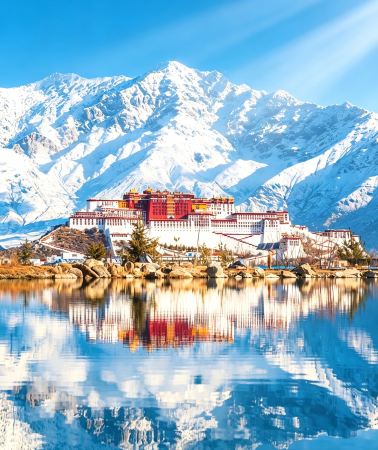
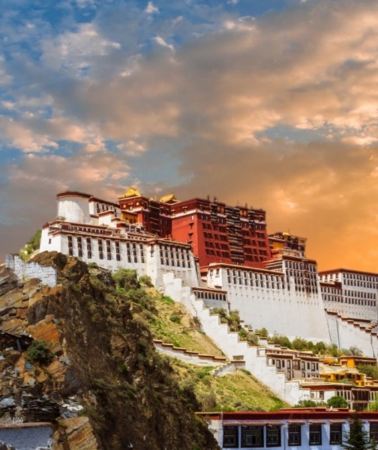
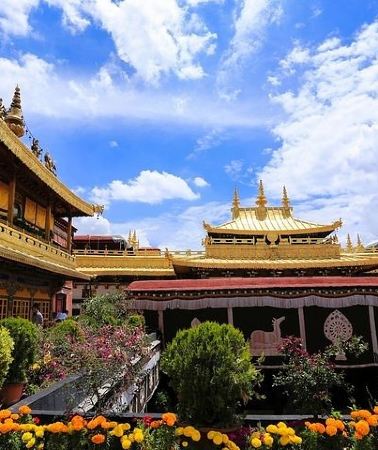
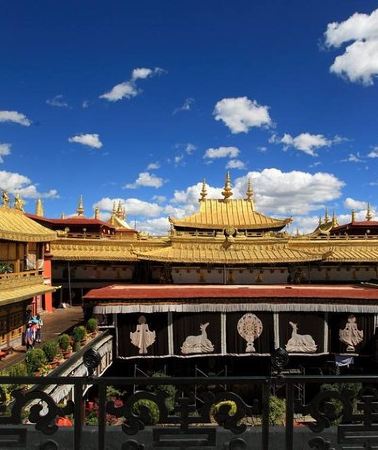
The Potala Palace is the symbol of Xizang and a sacred place in the hearts of all pilgrims! "Potala" is a Sanskrit word, also translated as "Putuo", which originally refers to the residence of Guanyin Bodhisattva. When you come here, you can not only view the large number of historical relics collected in the palace, appreciate the wonderful architectural art of the Tibetan people, but also have a baptism of the soul in that holy atmosphere. The origin of the Potala Palace According to historical records: In the 1930s of the seventh century AD, the 33rd Tibetan King Songtsen Gampo moved the capital to Lhasa and began to build the Potala Palace. Since then, major religious and political ceremonies have been held here, and it has become the ruling center of Xizang integration of politics and religion. The White Palace and the Red Palace The Potala Palace has a distinct Tibetan style and is majestic. It is the existing complete palace-style building complex in Xizang and is known as one of the world's top ten earth buildings. Its main buildings are divided into two parts: the White Palace and the Red Palace. The White Palace is named after its white exterior wall. It is the place where the lamas live and conduct political activities. Because the sun shines all day long, it is called the East and West Sunlight Palaces. The Red Palace is located at the top center of the Potala Palace. Its outer wall is red and it consists of many stupas and various Buddhist temples. Historical relics The Potala Palace houses and preserves a large number of historical relics, including stupas, statues, murals, thangkas, scriptures and books, as well as gold books, jade books, gold seals granted by the emperors of the Ming and Qing dynasties, which show the historical relationship between the Xizang local government and the central government, as well as gold and silver wares, jade wares, porcelain, enamel and handicrafts. Among them, the eight stupas from the fifth generation are eye-catching. They are all magnificent and decorated with a dazzling array of gems, which can be called a palace of art.Lhasa · 219m from downtown

Namtso National Park
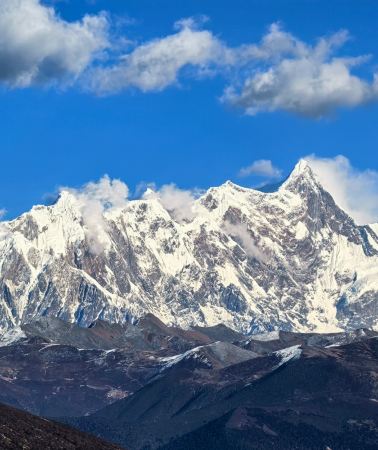
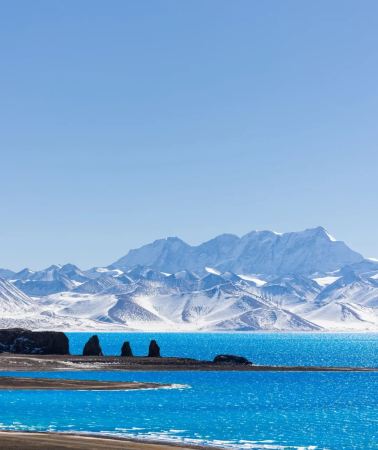
Namtso National Park is located between Damxung County of Lhasa and Baingoin County of Nagqu, situated on the Qinghai-Tibet Plateau known as the "roof of the world." The attraction includes Namtso, the main peak of Nyenchen Tanglha, bird islands on the lake, rock carvings, Yangbajing, and other attractions. The core attraction of the park, Namtso, is one of the three holy lakes and also one of the world's highest-altitude saltwater lakes. Under sunlight, Namtso's lake surface appears sapphire blue, resembling jade fallen from the sky, earning it the title "heavenly lake" and making it a renowned site in Tibetan Buddhism. The lake contains three larger islands, which are rarely disturbed by the outside world and host diverse bird populations, hence called bird islands. To the south of Namtso lies the perpetually snow-capped Nyenchen Tanglha Mountains, while its northern and western sides feature plateau hills and expansive lakeshores. In the folk songs and legends of local herders and hunters, Nyenchen Tanglha and Namtso are not only striking sacred mountains and lakes but also inseparable lovers and spouses. Nyenchen Tanglha appears more majestic against the backdrop of Namtso, while Namtso becomes even more enchanting with the reflection of Nyenchen Tanglha.Damxung · 37.6km from downtown

Namtso
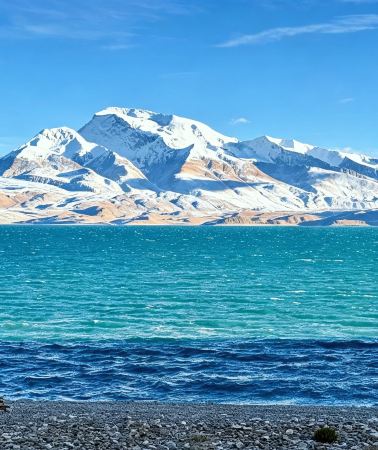
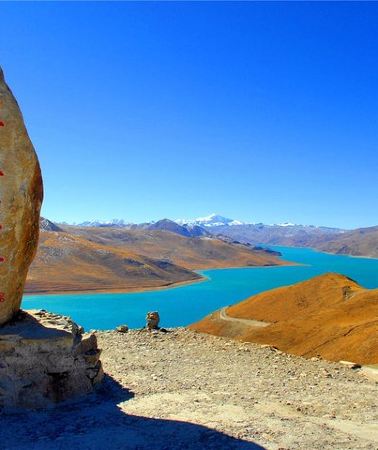
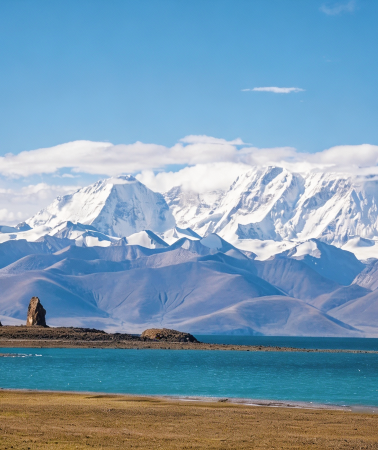
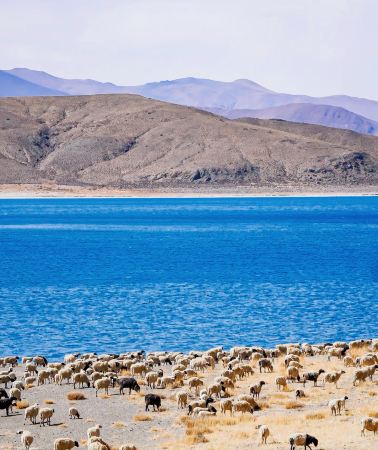
Namtso is located on the northern Xizang plateau north of Lhasa. "Namtso" means "heavenly lake" in Tibetan and is called "Tengri Sea" in Mongolian, both sharing the same meaning. Along with Yamdrok Yumtso and Mapam Yumtso, it is known as one of the three holy lakes of Xizang. With a surface elevation of over 4700 m, it stretches more than 70 km from east to west and covers nearly 2000 km², making it the second largest saltwater lake in Xizang. Its southern shore is backed by the continuous Nyenchen Tanglha snow-capped mountains, whose peaks reflect clearly in the sapphire-blue lake water on calm sunny days. According to local legends, these mountains and Namtso have been companions for millennia, adding a touch of tenderness to the landscape. Lake tour Namtso means "Tengri Sea" in Mongolian and is said to be the sacred site of the Buddhist deity Chakrasamvara, making it a renowned pilgrimage destination in Tibetan Buddhism. During the Year of the Sheep, it is believed that buddhas, bodhisattvas, and protector deities gather at Namtso to hold grand religious ceremonies. If devotees circle the lake and chant scriptures once during this time, it is considered more meritorious than doing so 100,000 times in ordinary years, bringing immeasurable blessings. Thus, during the Year of the Sheep, monastic and lay devotees undertake long journeys to circumambulate the lake. Many pilgrims visit Namtso during the Saga Dawa festival on the 15th day of the fourth month in the Tibetan calendar. 1-day tour Many travel agencies in Lhasa offer 1-day tour packages to Namtso. The typical itinerary involves departing in the morning, arriving after 3-4 hours, spending 2-3 hours exploring, and then returning the same way. If you don't want a private charter, this is the only option available and also the conventional way to visit Namtso. For those who prefer to avoid the crowds, you can arrange a private charter or find a shared transfer in Lhasa city. While the route remains the same, the advantage is greater itinerary flexibility, along with the option to stay overnight by the lakeshore. Leaving Damxung County and crossing the Nagen La Pass at an elevation of 5190 m, one can glimpse the vast sapphire-blue waters in the distance. By the lakeside stand two towering boulders side by side, known as the welcoming stones of Namtso or the husband-and-wife stones. Legend has it they are the gatekeepers of Namtso. It is said they represent the goddess who governs the wealth of northern Xizang's grasslands. Merchants would pray here for her blessing before business trips to ensure prosperity, hence these stones are also called the wealth deity stones. A number of prefabricated houses have been built near Tashi Peninsula, including restaurants and inns. This is where Namtso offers food and stay by the lake. If you come to Namtso by private charter, you can spend a night here. You can enjoy the beautiful sunset at dusk, wake up early to greet the sunrise on Tashi Peninsula, or gaze at the sky by Namtso's lake at midnight, where you can even discern the outline of the Milky Way. The lake area features high altitude, strong winds, and intense UV radiation. Even in midsummer, temperatures can drop to around 10°C in the morning and evening, so packing a thick coat, sunglasses, and sunscreen is advisable. Slow down when moving through mountain passes or along the lakeshore to allow your body time to adjust. Please show respect when observing pilgrims circling the lake or photographing mani stones and prayer flags, and avoid stepping on the mani piles. Most travelers make a round-trip from Lhasa in a single day, but we recommend setting aside a full day and bringing your own snacks and hot water. From June to September, the lakeside grasslands are lush with vegetation and wildflowers, offering exceptionally rich scenery. In winter, the frozen lake and vast landscape create a unique atmosphere, but pay close attention to weather conditions and your physical state before traveling.Damxung · 37.6km from downtown

Barkhor Street
Barkhor Street, also known as Bajiao Street located in Lhasa, Tibet. The street is a well known ancient street representing the culture and folk customs of Tibet. While walking on the street, you can experience what life was like in the past, and experience the food and culture of natives to Lhasa. You can view and learn things from traditional dress, and dances, to traditional meals, to the architecture of the town itself, which has been well preserved throughout the years. Barkhor Street is a must-visit location to experience in Lhasa.Lhasa · 1.1km from downtown

Tibet Museum
The Tibet Museum is located across the road in the east of Norbulingka in Lhasa City. It is the first museum with modern functions in Tibet. There are many precious cultural relics in the museum, showing the splendid culture and long history of the unique charm of the Tibetan nation. The museum is divided into three floors, the first floor is a tourist souvenir shop, the second floor is a Tibetan history exhibition, and the third floor is special exhibitions and temporary exhibitions such as thangkas, animals and plants, and jade. The exhibition hall of the museum consists of four major parts: prehistoric culture, indivisible history, culture and art, and folk culture. Each exhibition hall displays a wealth of treasures in the collection, such as statues of Buddha and Bodhisattva in various textures and shapes, handwritten Tibetan classics dipped in gold powder, silver powder, coral powder, etc. Jade sticks used in rituals, colorful thangkas, various musical instruments and instruments, handicrafts with distinctive national characteristics, pottery with unique styles, etc., from Tibetan history, culture, art, religion, folk customs, etc. It shows the audience the splendid culture and long history of the Tibetan people's unique charm. The prehistoric culture exhibition hall displays the stone chips, stone cores and other Paleolithic tools of daily life excavated in northern Tibet in the early days, as well as stone adzes, stone axes, stone chisels and stone clusters, bone cones, bones unearthed in Qamdo in the late Neolithic Age. The needles and various red, grey and black pottery utensils completely reproduce several representative eras before Tibet entered a civilized society: the Paleolithic, Neolithic, Bronze Age and Iron Age. The inseparable history exhibition hall intuitively reveals that Tibet has been an important and inseparable part of China since ancient times through some precious historical materials. The two exhibition halls of culture and art and folk culture vividly show the audience the long history and splendid culture of Tibet with exquisite Buddhist statues, thangkas, pottery, scriptures and other precious cultural relics. A must-see in all the collections of the Fifth Golden Seal is the Fifth Golden Seal. At that time, Ngawang Lobsang Gyatso went to Beijing for pilgrimage in order to obtain the support of the central government of the Qing Dynasty, and he was bestowed upon him after the fifth Ngawang Lhasang Gyatso was enshrined in Shunzhi. The golden seal is made of pure gold and weighs 8.5 kilograms. The seals are written in Han, Tibetan, Manchu and Mongolian. In addition, there is also a legend that Princess Wencheng drew a "witch map" thangka about the terrain of the Tibetan area. In the picture, a witch is lying on her back. There are temples built in twelve important parts of her body, such as the joints and the heart. The Jokhang Temple is located at the heart of the witch, which has a profound meaning. Audio guides are available in the museum and can be rented for free at the gate. Entering the exhibition hall, in front of different exhibits, you can hear the explanations of the exhibits in four languages including Tibetan, Chinese, Japanese and English. For the protection of cultural relics, the museum stipulates that photography is not allowed in the exhibition hall, please follow the regulations.Lhasa · 1.9km from downtown

Norbulingka
Norbulingka is a palace and surrounding park in Lhasa, Tibet, which has a lot of relics and treasures remained. As a huge and exquisite park of Tibet, there are more than 300 rooms in it. Norbulingka has a beautiful scenery surrounded by various types and numbers of plants and flowers, which is like a wondering place of the earth.Lhasa · 2.5km from downtown

Sichuan-Tibet Highway
川藏公路Construction began in the 1950s, and it splits into north and south lines around Xinduqiao Town. This highway generally runs from east to west along the 30th parallel north, crossing the Hengduan Mountains and the Qinghai-Tibet Plateau. The route spans over 2,000 km and requires crossing high mountain passes over 4,000 meters in altitude, such as Zheduo Mountain, Gao'ersi Mountain, Jianziwan Mountain, and Kazila Mountain, as well as crossing major rivers such as the Dadu River, Jinsha River, Lancang River, and Nujiang. The characteristic of this route is the close integration of the road with the natural plateau environment. Along the way, you will constantly cross mountain passes and travel through river valleys and canyons, with views of diverse landscapes such as snow-capped mountains, grasslands, forests, and rivers, which change significantly. Some sections of the road wind around the mountains, and as the altitude changes, the surrounding vegetation and terrain shift accordingly, giving the entire road a strong sense of spatial variation.Maizhokunggar · 7.4km from downtown

Namtso Tashi Peninsula
The Zhaxi Peninsula, also known as the Auspicious Love Island, is located in Dangxiong County, Xizang. It is the largest peninsula in Namtso and an important tourist attraction for visiting Namtso. The Zhaxi Peninsula is located at the southeast end of Namtso Lake and extends northward into the lake. It is a peninsula of about 10 square kilometers made of limestone. In the middle is a small hill several dozen meters high. At the north end, there are countless stone pillars and strange stone peaks. There are also natural stone bridges connecting the peaks. Because it has been eroded by the water of the lake for a long time, there are many quiet caves on the island, which are full of stalactites, forming a unique karst landform. Such a strange and colorful landform on Zhaxi Island is a wonder. Zhaxi Peninsula is the most concentrated place for religious activities in Namtso. There is Zhaxi Temple on the peninsula (Zhaxi means auspicious in Tibetan), which is still filled with incense and morning bells. There is a large cave beside the circumambulation road of the peninsula, called the Lotus Cave. It is said that there is a naturally formed Lotus Pagoda in the cave. Along the circumambulation path of the peninsula to the lake, the first thing you see is the welcoming stone on the roadside. Countless banners as long as the welcoming stone of the Zhaxi Peninsula float down from the top of the mountain, decorating the huge stone with colorful colors. The welcoming stone is two pieces of dissolved stone, also known as the husband and wife stone, and is the door god of Namtso.Damxung · 39.2km from downtown

Lhasa River
The Lhasa River, called Jiqu in Tibetan, originates from the southern foot of the Nyainqentanglha Mountain, flows southwest through Lhasa City, and then joins the Brahmaputra River in Qushui County. The lower river valley is relatively open and is the main farming area in Tibet. Lhasa River is the mother river of Lhasa City and has a great influence on the development of Lhasa. In 633 AD, after the Tubo monarch Songtsan Gampo unified the Tibetan tribes, he moved the capital to the Lhasa River Valley, and the Lhasa River Basin developed along with it, gradually becoming the central area of economy, culture, transportation and religion in the Tibetan Plateau. The Lhasa River Basin is about 551 kilometers long from east to west, with a drainage area of 32,471 square kilometers. It is the largest tributary of the Yarlung Zangbo River Basin. The climate here is mild, the terrain is flat, the soil is thick, the water source is abundant, and the soil quality is good. The basin is rich in plateau animals, plants and geothermal resources, making it one of the main grain producing areas in Tibet. You may not be able to spend so long with the Lhasa River like the locals, but in the evening, you can take a walk by the river near Xianzu Island and Tibet University, and enjoy the beauty of the sunset touching the horizon. What's even better is that there are many restaurants nearby, so you don't have to worry about food and clothing at all.Lhasa · 14.2km from downtown

Dra Shi Monastery
Zaki Temple is located on Zaki Road in the northern suburb of Lhasa. It is the only temple of wealth in Tibet. Although the temple is small, the incense is very prosperous. The temple is the deity of the Auspicious Heavenly Mother-Zakiram Buddha Hall, with strong incense, monks with cultivation bases anointing the guests with blessings and precious gifts. Dharma protectors in the world still have a relationship with all living beings, so many times they will transform into human figures and come into contact with all living beings. Goddess Zaki belongs to such gods and is particularly effective. Many Tibetans and Han people come here every Wednesday to worship Buddha. The main god of Zaki Temple is addicted to alcohol, so people who come to Zaki Temple to worship will not only bring Hada and Sangzhi, but also white wine or highland barley wine.Lhasa · 3.4km from downtown
Free things to do in Lhasa
Potala Palace
Lhasa · 219m from downtownNamtso National Park
Damxung · 37.6km from downtownNamtso
Damxung · 37.6km from downtownBarkhor Street
Lhasa · 1.1km from downtownTibet Museum
Lhasa · 1.9km from downtownNorbulingka
Lhasa · 2.5km from downtownSichuan-Tibet Highway
Maizhokunggar · 7.4km from downtownNamtso Tashi Peninsula
Damxung · 39.2km from downtownLhasa River
Lhasa · 14.2km from downtownDra Shi Monastery
Lhasa · 3.4km from downtown
More ways to travel from Lhasa
Private Tours in Lhasa
View More Private Tours in Lhasa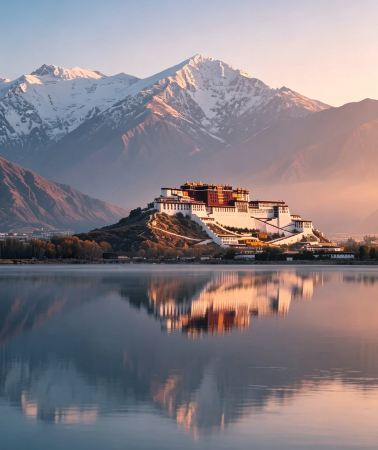


Group Tours in Lhasa
View More Group Tours in Lhasa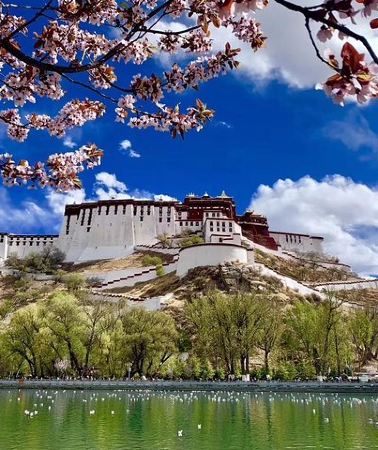

What travellers say about Lhasa

M29***0330 September 2026
5.0
Our tour guide, Mr. Cheng, was very handsome, gave a very detailed explanation, and had excellent service. If you have the chance, you must experience the charm of the Potala Palace. Highly recommended! 👍👍👍
Potala Palace

M22***0916 October 2025
5.0
You can't drive in, you can only take the scenic area's sightseeing bus. This is necessary to protect the ecological environment, so support it!
The lake is huge, with varying shades of blue from shallow to deep. There are many birds around the lake, and it's truly beautiful. A must-see when you're in Lhasa.
Namtso National Park

Anonymous user9 October 2026
5.0
Absolutely beautiful.
The shuttle bus ride takes over half an hour and is quite large.
There's so much trash on the mountain!!! It's not the scenic area's fault. People can bring oxygen cylinders up, so why can't they bring empty ones down?!
Namtso

Michelle Okano Anzanello26 September 2023
4.0
Barkor Street where you can buy souvenirs for a fair price. On weekends you will find many locals on their way to Jokhang Temple. If you want some Western food, I’m this street also has a KFC and Pizza Hut.
Barkhor Street

cat litter boxes2 August 2026
5.0
The Tibet Museum boasts a rich and precious collection, comprehensively showcasing the long history and unique folk culture of the Tibetan Plateau. Thangka paintings, gold and silver artifacts, and Buddhist relics are particularly noteworthy, and the exhibition halls are clearly and easily understood. Admission is free, but advance reservations are required. It's an ideal place to learn about Tibet before your actual trip, making for a fulfilling and meaningful experience.
Tibet Museum
Anonymous user16 August 2025
5.0
While Norbulingka lacked the stunning blue skies and white clouds, the moist air made mainland tourists feel more relaxed. Our Tibetan guide, Jiazhen, provided a very detailed explanation, which was a welcome change from a cursory visit. There's also a small zoo within the park, which was a delight for the children.
Norbulingka

安迪珠宝1 April 2025
5.0
The scenery of the Sichuan-Tibet Highway is very beautiful. You can go for fun if you pass through Kangding, or go to Bomi and Nyingchi to see the peach blossoms, or go to Basu to see Dongda Mountain. The only difference is that the altitude is a bit high, so you have to take care of your health.
Sichuan-Tibet Highway

vivienvivien20 May 2022
5.0
To appreciate Namtso, you must go to Zhaxi Peninsula. Only by climbing to the top of Zhaxi Peninsula can you see the beautiful curved shoreline of Namtso Lake. Zhaxi Peninsula is located at the southeast end of Namtso Lake, extending northward into the lake. It is a peninsula of about 10 square kilometers composed of limestone.
Namtso Tashi Peninsula

妙珍8815 December 2025
5.0
The valley carved out by the Lhasa River is one of the important birthplaces of Tibetan culture and the earliest settlement of Tibetan people. It has a relatively low altitude and beautiful natural scenery along the way.
Lhasa River

YoYo_D1l9r9b18 June 2025
5.0
扎基寺,一个充满神秘与宁静的地方。在这里,你可以感受到一种宁静的力量,让人不由自主地放松下来。这里的建筑风格独特,充满着历史的气息。无论是来此求神拜佛,还是仅仅为了感受这里独特的氛围,扎基寺都是一个值得一去的地方。
Dra Shi Monastery


