Minle

Things to do in Minle

Search attractions or local attractions & tours
Search

Explore top experiences

Top 10 attractions in Minle

View all Attractions
Mati Grottoes Tourism Area
No. 20 of Best Things to Do in Gansu-Qinghai Area

Mati Grottoes Tourism Area

7.3
4.6/5
2.7k reviews

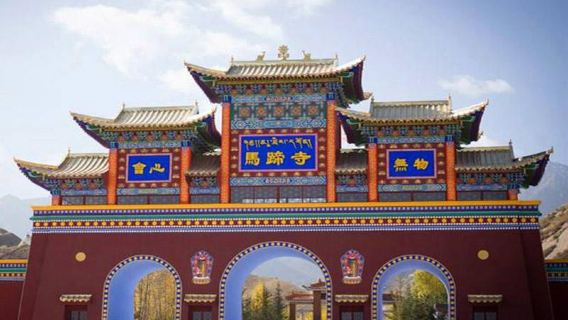
The Mati Grottoes Tourism Area is located at the foot of the Qilian Mountains in Sunan Yugur Autonomous County, Zhangye. This grotto temple complex was first built during the Northern Liang period of the Sixteen Kingdoms and continued to be carved for over a thousand years. It was renamed Puguang Temple during the Yongle era of the Ming Dynasty and was historically renowned alongside the Mogao Caves in Dunhuang and the Yulin Caves in Guazhou as a major center of Buddhist art along the Hexi Corridor. The grotto complex consists of Shengguo Temple, Puguang Temple, the Thousand Buddha Caves, Jinta Temple, and the Upper, Middle, and Lower Guanyin Caves, with over 70 surviving cave niches. Early on, Han Buddhism flourished here, while Tibetan Buddhism gradually rose after the Yuan Dynasty. The coexistence of Han-style halls and Tibetan Buddhist temples on the same mountain is a distinctive feature that sets this grotto complex apart from most others. Legend has it that a heavenly horse left its hoofprint here, giving the mountain and temple their names. The deep hoofprint can still be seen on a bluestone slab in the Mati Hall today. The "Thirty-three heavens" grotto is the iconic view here: over 20 caves across seven tiers are carved into the steep red sandstone cliff in a pagoda-like formation, with halls and pavilions suspended layer by layer. All passageways are hewn into the rock—some so narrow and steep that only one person can pass at a time, requiring visitors to climb on hands and knees along zigzagging stone steps and wooden ladders. From the upper caves, one can overlook the river valley and grasslands at the foot of the Qilian Mountains. The grand Tibetan Buddha Hall, also called the Standing Buddha Hall, extends over 30 m deep, with niches densely lining its encircling corridor, most housing statues from the Yuan Dynasty. The Thousand Buddha Cave, an earlier-excavated section of the complex, preserves intact stone sculptures of one Buddha flanked by two disciples, while nearby cliffs feature extensive relief carvings of stone pagoda forests. The attraction stretches several km deep, with the main route connecting several areas including the "Thirty-three heavens" grottoes, King Gesar's hall and the Thousand Buddha caves, which are some distance apart. Taking the shuttle bus within the attraction will save energy, and walking through the main grotto areas generally takes approx. three hrs. King Gesar's hall features statues depicting the heroic tales of the Tibetan epic figure King Gesar, which can be viewed along the way. It's worth noting that many of the early statues and murals in the grottoes have suffered damage over time, and some of what we see today are later restorations. Rather than fixating on the original millennium-old artworks, it's better to focus on the experience of climbing the cliffside grottoes themselves, along with the Qilian snow-capped mountains, pastoral grasslands and rich Yugur ethnic culture.

Sunan · 35.1km from Minle
Zhangye Colorful Danxia Scenic Spot
No. 7 of Best Things to Do in Northwestern District of China

Zhangye Colorful Danxia Scenic Spot

8.7
4.7/5
36.3k reviews

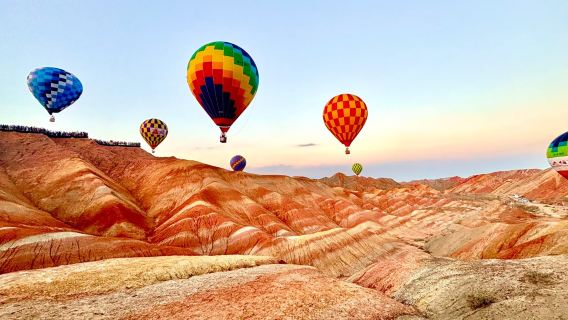
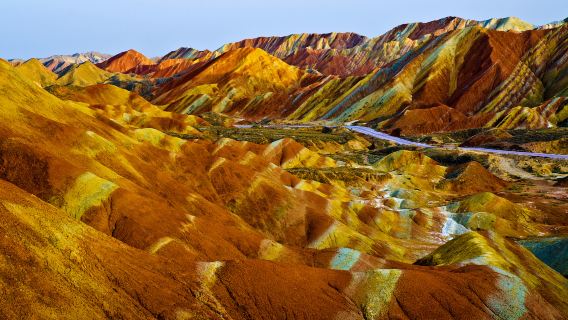
Zhangye Colorful Danxia Scenic Spot is located in Linze and Sunan counties at the northern foot of Qilian Mountain. The attraction is 40 km east of Zhangye city and 20 km north of Linze county. Covering a total area of 50 sq km with 4 sq km accessible to visitors, it's currently recognized as a UNESCO Global Geopark and a national 5A-level tourist attraction. The attraction features seven viewing spots, including Colorful Cloud Sea, Colorful Fairyland, Colorful Splendor, Colorful Rainbow Glow, Crouching Tiger Gorge, Colorful Ao River, and Wanxiang Earth Forest Valley, along with over 30 scenic views such as Dragon Playing with Fire (colorful hills), Monkey Gazing at the Sea, Turtle Asking the Sky, Golden Toad Seeking the Way, Giant Scallop, Colorful Screen, Sleeping Beauty, and Crouching Tiger. It is a highly integrated area of colorful hills and Danxia landforms. The colorful hills amaze visitors with their vibrant hues, intricate layered patterns, majestic scale, and breathtaking vistas. The Danxia landform area of Wanxiang Earth Forest Valley features towering peaks resembling a forest, with a harmonious yet dramatic arrangement of sparse and dense formations. These extraordinary shapes, carved by nature's artistry, combine grandeur, peril, wonder, elegance, and serenity in one spectacular landscape. After being promoted to a national 5A-level attraction and global geopark, Zhangye Colorful Danxia Scenic Spot aims to become an international travel destination. By deeply exploring and optimizing regional cultural resources, the scenic spot will leverage its unique tourism assets and cultural heritage to transform into a western China-based international resort with scientific research appeal. Centered around colorful hills and Danxia landforms, it highlights the aesthetic and scientific value of geological resources while prioritizing their protection and development. The composite attraction primarily offers geological sightseeing and recreation, complemented by cultural experiences, folk customs, and leisure vacations.

Zhangye · 86km from Minle
Zhangye Giant Buddha Temple
No. 10 of Best Things to Do in Gansu

Zhangye Giant Buddha Temple

7.4
4.7/5
5.3k reviews

The Zhangye Giant Buddha Temple is located in the urban area of Zhangye. It was first built during the Yong'an era of the Western Xia Dynasty and has a history of over 900 years. The temple is renowned for housing one of China's largest indoor clay reclining Buddha statues, along with other distinctive ancient structures such as the earthen pagoda and the Shanxi Guild Hall, which are open for visits. Exhibitions inside the temple help travelers understand Buddhist art and the history of the Zhangye Giant Buddha Temple. As one of Zhangye's iconic attractions, it is a must-see for visitors to the city. The current site of the temple is not large, with a depth of approx. 200 m and a width of approx. 100 m. Visitors can enter from the western square and explore on foot. The main buildings open for visits, from west to east, include the Giant Buddha Hall, the Hall of Ten Thousand Saints (now the Buddhist Art Exhibition Hall), the Scripture Hall (now the Buddhist Texts Exhibition Hall), the earthen pagoda, and the Shanxi Guild Hall. A complete tour takes approx. 1–2 hrs. The Giant Buddha Hall is the temple's most significant structure and the highlight for travelers. It features one of China's largest indoor clay reclining Buddha statues, depicting the Nirvana of Sakyamuni. The statue measures 34.5 m in length and 7.5 m in shoulder width—so massive that a single finger can accommodate a lying person, and one ear can seat 10 people side by side. The hall also houses statues of the Ten Great Disciples and the Eighteen Arhats, along with exquisite murals depicting Journey to the West and the Classic of Mountains and Seas. The Hall of Ten Thousand Saints and the Scripture Hall, located in the central area, now serve as exhibition spaces for Buddhist art and texts, displaying sculptures, grotto statues, scriptures, and other artifacts. Notable among these is a collection of over 6,000 Buddhist scriptures personally bestowed by Emperor Yingzong of the Ming Dynasty, many written in pure gold, which are the temple's prized treasures. The earthen pagoda, standing over 30 m tall, is east of the Giant Buddha Hall. Its two-tiered base features four small pagodas on each level, adorned with exquisite carvings and housing solemn Buddha statues. The Shanxi Guild Hall, situated northeast of the temple complex, was originally a merchant guild hall during the Qing Dynasty. This typical northwestern residential courtyard features ancient architecture with intricately carved beams and painted pillars, exuding rustic elegance.

Zhangye · 63.6km from Minle
Qinghai Tibetan Culture Museum
No. 2 of Best Things to Do in Qinghai

Qinghai Tibetan Culture Museum

8.2
4.8/5
10.3k reviews

Qinghai Tibetan Culture MuseumIt is a comprehensive museum themed on Tibetan medicine culture and featuring Tibetan culture.Qinghai Tibetan Culture Museum(also known as Qinghai Tibetan Culture Museum) is located in Xining, the capital of Qinghai Province in the eastern part of the Qinghai-Tibet Plateau. It officially opened in September 2006. The museum has basically formed a "one museum with two halls" layout, featuring 16 exhibition halls including the Silk Road and Tibetan civilization, the grand view of Chinese Tibetan art painting, and the history of Tibetan medicine.Qinghai Tibetan Culture MuseumThe collection is rich, historic, and diverse, possessing high historical, scientific, and artistic value. The museum houses the Guinness World Record-holding thangka masterpiece, "The Grand Thangka of Tibetan Culture and Art," which is 618 m long. It was planned by renowned thangka master Zongzhe Lajie and completed by 400 painters over four years. Its content encompasses the Tibetan understanding of the universe, the formation of the Qinghai-Tibet Plateau, history, religion, medicine, culture, art, and folklore. With its intricate details and brilliant colors, it is a magnificent sight and can be called an encyclopedia of Tibetan culture, hailed as a "contemporary national treasure." Through four major series—ancient books and documents, Tibetan medical thangkas, ancient Tibetan medical instruments, and Tibetan material specimens—the museum comprehensively displays the long history, profound theoretical system, clinical practice, and unique preparation techniques of Tibetan medicine, with four ancient books included in the National Catalogue of Precious Ancient Books. The Silk Road and Qinghai-Tibet Civilization exhibition hall uses history as its temporal dimension and the vast plateau landscape as its geographical dimension. Through thousands of precious cultural relics such as silk, gold and silver ware, and coffin paintings, it highlights Tibetan cultural elements and showcases the origin, inheritance, rise, and prosperity of the Qinghai-Tibet Plateau civilization throughout the long river of history. The Tibetan carpet exhibition hall is one of the largest exhibitions of ancient carpets in China, displaying more than 400 Tibetan carpet artifacts from different periods and eras, featuring magnificent patterns, intense colors, and unique ethnic styles and local characteristics. At the same time, there are also Tibetan-style architectural exhibition halls, Tibetan calligraphy art exhibition halls, as well as temporary exhibition halls, multimedia screening rooms, academic lecture halls, and cultural relic storage rooms, providing strong capabilities for inheritance, protection, and research, as well as conditions for cultural exchange.Qinghai Tibetan Culture MuseumIt will continuously improve the level of cultural relic preservation, exhibition design, scientific research, and management operations, becoming a platform for promoting ethnic unity and social development, a broad stage for cultural dissemination and academic exchange, a research center for cultural relic protection and Tibetan studies, and an exhibition center for treasured literature and collections, showcasing the splendid civilization and culture of the Tibetan Plateau to the world.

China · Xining
Kumbum Monastery
No. 3 of Best Things to Do in Qinghai

Kumbum Monastery

8.2
4.7/5
18.7k reviews

Kumbum Monastery is one of the important monasteries of the Gelug (Yellow Hat) sect of Tibetan Buddhism and the birthplace of Tsongkhapa, the founder of the Yellow Hat sect. The monastery features magnificent architecture, abundant treasures, and a strong religious atmosphere, making it one of the more popular travel destinations in Xining. Overview of the visit It has distinct differences in architectural layout compared to Han Chinese Buddhist temples in inland China: the complex here is not symmetrically arranged along a central axis. The monastery is an ancient architectural complex composed of numerous halls, scripture halls, stupas, and colleges, with each sutra hall, main hall, and stupa irregularly distributed on a small hill. Travelers can explore the site in a relatively free manner rather than following a straight path along a central axis. The Great Golden Roof Hall of Kumbum Monastery is the center of the entire architectural complex. It is said that Master Tsongkhapa was born here, and when he was born, his umbilical cord blood dripped on this spot, from which a bodhi tree grew. Later, a stupa was built around the tree, and a monastery was constructed, hence the name. Believers hold that this tree and stupa are the embodiment of the master. The three unique features of the attraction: butter sculptures, murals, and appliqué embroidery. Butter sculptures are made by mixing butter with various pigments to mold and carve into figures of Buddhas, people, flowers, birds, animals, and pavilions. Travelers can admire exquisite butter sculptures at the butter sculpture hall inside the temple (located far from the main gate). Vibrant centuries-old murals can be appreciated in the main halls, corridors, and front galleries of the temple. Appliqué embroidery involves cutting colored satin into desired shapes, such as Buddha figures or animals, stuffing them with wool or cotton, and embroidering them onto cloth hangings. In the temple's great sutra hall, two rare large appliqué embroidery pieces—"Sixteen Arhats Displaying Divine Powers" and "Eight Immortals Crossing the Sea"—hang on either side. The four major religious festivals (based on the lunar calendar): 1. Cham dance (14th day of the first month) and butter sculpture exhibition (15th day of the first month); 2. Cham dance (14th day of the fourth month), Buddha unveiling, and Cham dance (15th day of the fourth month); 3. Buddha unveiling, Cham dance (6th day of the sixth month), and golden Buddha procession (8th day of the sixth month); 4. Full-day Buddha unveiling (22nd day of the ninth month) and Cham dance (23rd day of the ninth month). During these festivals, activities like Buddha unveiling and ritual dances take place, attracting large crowds of devotees and travelers, creating a lively atmosphere.

China · Xining

Experiences you can't miss in Minle

Featured Day tours in Minle

View all Day tours
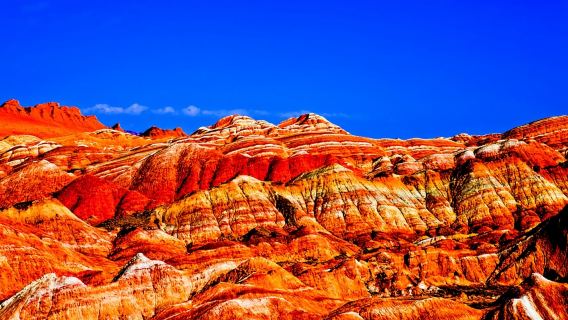
*Winter Special* Zhangye Colorful Danxia Scenic Spot & Pingshan Lake Grand Canyon One-Day Tour
󱌍
4.8/5
· 13 reviews· 99 booked
Duration: 8 hrs
English
Free cancellation
Instant confirmation
Book now for tomorrow
FromAU$100.49
[Winter Special] Zhangye Colorful Danxia & Mati Temple One-Day Tour | Explore Geology and Encounter Buddhist Caves
󱌍
4.4/5
· 10 reviews· 84 booked
Duration: 7 hrs
English
Free cancellation
Instant confirmation
Book now for tomorrow
FromAU$92.45
Hotel Pickup & Drop-off | Zhangye Two Scenic Spots Day Tour | Pingshanhu Grand Canyon + Zhangye Rainbow Danxia | Pure Sightseeing
󱌍
5.0/5
· 2 reviews· 45 booked
Duration: 7.8 hrs
English
Free cancellation
Book now for tomorrow
FromAU$52.84
Zhangye Private Day Tour: Pingshan Lake Grand Canyon & Zhangye Colorful Danxia Scenic Spot
󱌍
5.0/5
· 1 review· 39 booked
Duration: 6.5 hrs
English
Free cancellation
Instant confirmation
Book now for tomorrow
FromAU$67.83
Zhangye Mati Temple half-day tour (Buddhist chants hidden in sheer cliffs, a half-day exploration of the millennia-old secret realm beneath the Qilian Mountains)
󱌍
FromAU$62.31
Zhangye Colorful Danxia Scenic Spot + Mati Temple 1-day Tour (Private Tour)
󱌍
Duration: 8 hrs
English
Free cancellation
Instant confirmation
FromAU$115.57
Zhangye Danxia and Pingshan Lake Grand Canyon Chartered tour
󱌍
5.0/5
· 1 review
Duration: 6 hrs
English
Free cancellation
Instant confirmation
Book now for tomorrow
9% off
Limited-time sale
FromAU$106.06AU$117.84
Minle Today's weatherClear -7-2℃
Minle weather for the next 2 days11/17: -13--4℃, 11/18: -10-1℃

Free things to do in Minle

What travellers say about Minle

user-avatar
_We***908 November 2026
5.0
Thank goodness the weather was perfect; it snowed the day before we went. The mountain scenery, the snowscape, and the grottoes blended together beautifully. The scale of the grottoes exceeded our expectations. We didn't have time to climb the Thousand Buddha Temple later. I'll definitely come back next time! ✅ The climb itself was a process of spiritual practice, and the beautiful scenery along the way cleansed my soul. A place I must visit in this lifetime.

Mati Grottoes Tourism Area

user-avatar
swqqxyy25 July 2025
5.0
July and August are very beautiful, with rape flowers in full bloom. Scenery: Very beautiful

Biandukou Seven-Color Flower Sea

user-avatar
_GG***9215 November 2026
5.0
The layers, colours and formations of Zhangye Danxia are the result of millions of years of natural geological processes, creating a landscape that almost doesn’t look real.Visiting in late autumn has its perks too. The temperatures may be freezing, but the quieter season means fewer crowds and a more peaceful experience taking it all in.

Zhangye Colorful Danxia Scenic Spot

user-avatar
Anonymous user11 November 2026
5.0
The salt flats are beautiful and vast, but it was cloudy when I went, which affected my photography. Fortunately, the sun came out for a while later, making it much brighter. Shoe covers are available for rent, which was quite convenient. It's a great place to relax and unwind; if I had more time, I would have enjoyed it more thoroughly.

Chaka Salt Lake

user-avatar
nature-volunteer10 October 2026
5.0
I was fortunate enough to encounter autumn snow in Qilian County, and the mountains of Zhuoer Mountain were blanketed in silver. Shepherds grazed their sheep on the mountaintop meadows, and the view from the observation deck was exceptionally magnificent. Transportation: Take a bus from Xining to Qilian County, then a taxi to Zhuoer Mountain Scenic Area. During the off-season, the scenic area shuttle bus is not running; you can ask the driver to take you directly to the visitor center. There are sightseeing buses within the scenic area that go directly to the summit platform. Dining: Limited options during the off-season; you'll need to find your own food. Delivery services are limited and do not deliver to guesthouses near the scenic area. Seeing the snow-capped mountains, forests, meadows, and Danxia landforms made the trip worthwhile!

Zhuoer Mountain Scenic Area

user-avatar
M22***5011 November 2026
5.0
On our second day in Zhangye, we visited the Giant Buddha Temple. We hired a guide who explained the temple's history, architecture, and collections, which we found very worthwhile. The temple itself isn't large, but it's clean, tidy, and well-managed. 👍

Zhangye Giant Buddha Temple

user-avatar
Anonymous user14 November 2026
5.0
I never expected to spend two hours just looking at the Thangka paintings on the fourth floor 🥲 The beauty and awe are truly beyond what can be captured in photos. The costumes on the second floor were a dazzling array. I basically spent three hours in the South Hall, and I was too tired to walk around the North Hall, so I only managed an hour.

Qinghai Tibetan Culture Museum

user-avatar
Anonymous user10 November 2026
5.0
Beautiful site. Wonderful attractions. There are buses bringing you to the scenic points.

Sanshisan Tian Grottoes

user-avatar
柠檬_travel3 August 2020
5.0
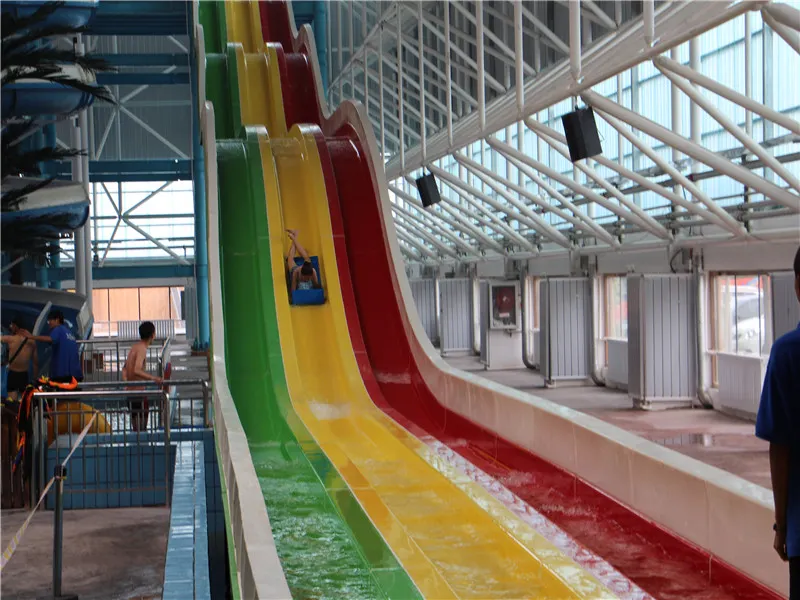
It is worth a visit. The entertainment is fun and exciting, especially the big trumpet slide, which is worth a try. It is also very cost-effective and the service is very thoughtful! The experience is very good, interesting and fun, the scenery is good, and it is worth recommending.

Fangzhou Hot Spring Water World

user-avatar
Anonymous user13 November 2026
5.0
Kumbum Monastery is a must-see attraction in Xining, and many people who travel the Qinghai-Gansu Grand Loop make it their first stop. When I visited, one area of ​​the monastery was under renovation, but it didn't prevent me from seeing the key sights. A thorough visit might take several hours, as you can't walk too fast at high altitudes.

Kumbum Monastery

Trip Moments in Minle

Popular cities near Minle

Frequently asked questions

What are the recommended tours and excursions in Minle?

When choosing a tour, start with how much time you have and the kind of experience you're looking for. Trending options right now include *Winter Special* Zhangye Colorful Danxia Scenic Spot & Pingshan Lake Grand Canyon One-Day Tour, [Winter Special] Zhangye Colorful Danxia & Mati Temple One-Day Tour | Explore Geology and Encounter Buddhist Caves, and Hotel Pickup & Drop-off | Zhangye Two Scenic Spots Day Tour | Pingshanhu Grand Canyon + Zhangye Rainbow Danxia | Pure Sightseeing. Check the real-time availability and itinerary before you book.

As of 16 November 2026, the reference price for day tours and activities in Minle is around AUD 37.37 – AUD 115.57. Rates vary by duration, group size, transport, tickets, meals, and any special admission requirements. Before you book, please confirm the billing currency and whether the price is quoted per person or per group.

Get help anytime, anywhere within 30 secondsContact customer support

Change and cancellation policies vary by attractions and tours. Please check the product details page for more information.

Ticket prices may vary between weekdays and weekends, as well as during peak and off-peak seasons. When booking with Trip.com, you can also use Trip Coins to get extra savings. For more tips on booking discounted tickets, please visit Trip.com for the latest information.