
Things to do in Nanjiang
Explore top experiences
Top 10 attractions in Nanjiang


Shaanxi History Museum
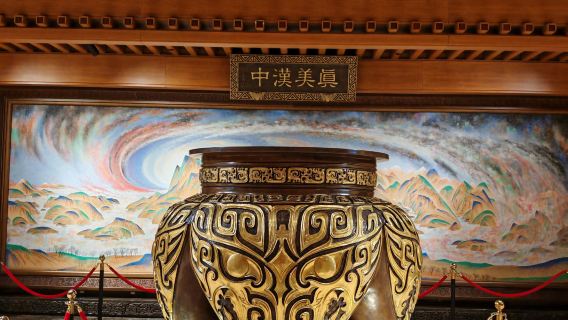
History background: Shaanxi History Museum is located in the northwest of the Dayan Pagoda in Xi'an. It is one of the landmark attractions of Xi'an. The museum was planned in 1983, started in the summer of 1986, and officially opened on June 20, 1991. It was named Shaanxi History Museum. In 2016, Shaanxi History Museum was selected as "China's 20th Century Architectural Heritage" by the Chinese Cultural Relics Society and the Chinese Architectural Society. Museum Features: Shaanxi History Museum is a large modern museum, and its completion marks a new milestone in the development of China's museum industry. This museum is a Tang-style building complex with a "central hall and four corner towers". The main and secondary buildings are well-organized, the heights are staggered, and the momentum is solemn. It integrates national traditions, local characteristics and the spirit of the times. The museum covers an area of 65,000 square meters, and houses more than 380,000 cultural relics ranging from simple stone tools used in the initial stage of ancient humans to various artifacts in social life before 1840, covering a time span of more than one million years. The cultural relics are not only numerous and diverse, but also of high quality and wide value. The collections in the museum are dazzling and exquisite. It is an art hall that showcases the history and culture of Shaanxi and ancient Chinese civilization, and is known as the "Pearl of the Ancient Capital, the Treasure House of China." There are many treasures in the museum, including bronzes from the Shang and Zhou dynasties, pottery figurines from various dynasties, gold and silver utensils from the Han and Tang dynasties, and murals from Tang tombs. Most of them are treasures from the prosperous periods of the Han and Tang dynasties, and some of them are fine items that are prohibited from leaving the country. Collection treasures: There are three exhibition halls in the center of the museum. The first exhibition hall displays cultural relics from the prehistoric civilization of Lantian ape-man 1.15 million years ago to the Qin Dynasty; the second exhibition hall displays cultural relics from the Han Dynasty and the Wei, Jin, Southern and Northern Dynasties; and the third exhibition hall is mainly cultural relics from the prosperous Tang Dynasty. Each exhibition hall has its own treasure. There are special exhibition halls on the east and west sides of the central hall. On the west side, there is a "Special Exhibition of Tang Dynasty Treasures (Treasure Hall, Cultural Relics Unearthed in Hejiacun)", where many fine gold and silver wares from the heyday of the Tang Dynasty were transferred to be exhibited. On the east side, there is a "Treasures of Tang Dynasty Murals Exhibition", which exhibits a number of authentic Tang Dynasty tomb murals. The tripod The tripod is placed in the first exhibition hall at the entrance of the museum, and it can be said to be the treasure of the first exhibition hall. The replica is placed here, and the original is kept in the warehouse. Inscription on the outer wall: The inscription "All under heaven is the king's land; all the people are the king's subjects" reflects the land ownership system in the Western Zhou Dynasty. There are four lines of inscriptions with 28 characters on the inner wall of the Yi Ding. The general meaning is: In early August of a certain year, Wang Jiang took back the land originally given to Shi Lu and gave it to Yi, who then made this tripod to commemorate it. Queen's Seal: One of the treasures worth seeing in the second exhibition hall is the jade seal of the empress of the Han Dynasty, which is displayed separately. The seal is made of Xinjiang Hetian mutton-fat jade and is engraved with a Chihu, symbolizing royal power. Three-color camel figurines carrying music: This world-famous tri-color camel figurine carrying music is located in the third exhibition hall of Shaanxi History Museum. Its overall appearance and color are well preserved. There are seven men sitting on the camel's back, holding different musical instruments in their hands. Among them, the figurine holding the clapboard is listening attentively, as if intoxicated by the wonderful music. The woman in the middle is performing, and the camel opens its mouth wide and looks up to the sky, as if it is also singing with its master. Gold-inlaid animal head agate cup: This cultural relic, located in the special exhibition "Tang Dynasty Relics Special Exhibition", is one of the first 64 national treasures listed by the State Administration of Cultural Heritage that are never allowed to be exhibited abroad. There are also many other treasures such as black-glazed oil-drip bowls, green-glazed porcelain pots with handles, gilded silver bamboo-joint copper incense burners, gold bowls with mandarin duck and lotus petal patterns, and so on.China · Xi'an

Grand Tang Mall
Grand Tang Mall is a large-scale Tang-style architectural pedestrian street in Xi'an's Qujiang New District, built around the Giant Wild Goose Pagoda. It stretches from the Xuanzang Square at the foot of the pagoda in the north to the Tang City Wall Ruins Park in the south, connected by a approx. 1500 m central axis view boulevard running north-south. The boulevard itself resembles an open-air sculpture gallery, featuring themed sculptures arranged sequentially from north to south: Buddhist culture of the Tang Dynasty, Tang heroes, the Zhenguan era governance, Empress Wu's procession, and the Kaiyuan heyday. Statues of eminent monks like Xuanzang and Jianzhen stand at the front, followed by Tang luminaries such as Li Bai, Wu Daozi, Sun Simiao, and Lu Yu in the middle section, with ceremonial processions of Emperor Taizong, Empress Wu Zetian, and Emperor Xuanzong concluding the display. Walking through this boulevard is akin to reading a three-dimensional history of the Tang Dynasty. The block connects three themed squares from north to south—Xuanzang square, Zhenguan square and Kaiyuan square—with Tang-style pavilions lining both sides. Among them are four cultural venues: Xi'an concert hall, Shaanxi grand theater, Xi'an art museum and Qujiang cinema. Enjoying concerts, visiting exhibitions and shopping for photos can all be arranged along the same route. By day, admire the architecture and sculptures, but the real highlight of this street comes after nightfall—when the lights come on, the Tang-style pavilions glow with radiant colors, and the entire street seems to recreate the splendor of the Tang Dynasty. The area features year-round immersive street performances: a "Tumbler Girl" in Tang attire leans in to hold hands with travelers as she spins; Fang Xuanling and Du Ruhui from the "Secret Box of the Tang Dynasty" appear, posing riddles and bantering, with clever answers from selected travelers drawing cheers from the crowd; Hu Xuan dances and Tang-era music performances compete in a colorful parade; and actors dressed as the "Poet Immortal" may challenge you to a verse duel at any moment—strolling around, you might stumble upon a performance. This place gathers trending attractions, highlighting dazzling colors, fantasy, and a tech vibe. Through large-scale installations, it creates a stylish and dynamic interactive experience center, offering a sought-after photo spot for trendy young crowds. In the family-friendly tech zone, scene-based displays and hands-on actions spark children's imagination and creativity, combining play with skill development and experiential gains—making it an ideal destination for family-friendly fun.China · Xi'an

Xi'an Museum
Xi'an Museum is a modern comprehensive museum built upon the cultural relic protection site—the ruins of the Tang Dynasty Jianfu Temple and its iconic structure, the Small Wild Goose Pagoda. It integrates cultural relic collection and protection, academic research, exhibition and display, social education, and garden leisure. Its core area is the location of the original Tang Dynasty royal temple, Jianfu Temple, while the precious and striking historical relic existing within the temple—the Small Wild Goose Pagoda—has become the museum's unique landmark and soul. Therefore, the Jianfu Temple ruins and the Small Wild Goose Pagoda are not only the foundation and core carrier for the establishment of Xi'an Museum, but also important outdoor historical exhibition areas and focal points for visitors. The main building of the museum is located on the north side of the ancient temple ruins. The three elements (ancient temple ruins, ancient pagoda, and modern museum building) are organically integrated, jointly forming a unique cultural space that combines "museum, pagoda, temple, and garden," vividly showcasing the historical context of Xi'an from ancient times to the present. Xi'an Museum officially opened to the public on May 18, 2007. Its establishment aims to comprehensively showcase the glorious history and splendid culture of Xi'an (ancient Chang'an) as the capital of thirteen dynasties, filling the gap of a comprehensive museum of Xi'an's urban history. Collection highlights: The museum houses over 100,000 precious cultural relics from various historical periods of Xi'an. The collection spans from prehistoric times to the Ming and Qing dynasties, with particular emphasis on artifacts from the prosperous dynasties of Zhou, Qin, Han, and Tang, including bronze ware, jade articles, gold and silverware, ceramics, murals, stone steles, epitaphs, and Buddhist statues, systematically reflecting the political, economic, cultural, social life, and foreign exchanges of the ancient capital Chang'an. Main exhibition: The permanent exhibition "Ancient capital Xi'an" takes the urban development history of Xi'an as the main thread, showcasing the evolution and achievements of Xi'an as a capital (Zhou Fenghao, Qin Xianyang, Han Chang'an, Sui-Tang Chang'an) and a prefectural city (Song, Yuan, Ming, and Qing dynasties) through a large number of precious cultural relics, models, charts, and multimedia means. Unique environment: The museum's greatest feature lies in its surroundings. Travelers can not only visit modern exhibition halls but also stroll through the expansive heritage park encompassing the Small Wild Goose Pagoda, the ancient architectural complex of Jianfu Temple (including structures like the Ming dynasty bell tower housing a Jin dynasty ancient bell), an ancient stone sculpture art exhibition area, and garden views—experiencing the charm of the millennia-old capital at its historical site. The view of "morning bells at the Wild Goose Pagoda" is particularly renowned. Functional positioning: The museum is not only an important center for cultural relic collection, research, and display, but also an urban cultural park where citizens can relax, entertain, and immerse themselves in history and culture, undertaking significant social education and cultural exchange functions.China · Xi'an

Langzhong Ancient City
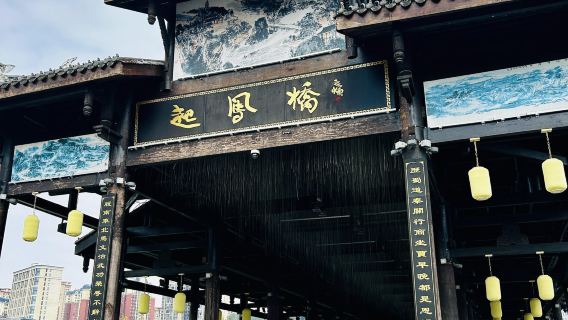
Langzhong Ancient Town is located along the bank of the Jialing River in Nanchong and is one of China's four major ancient towns. Its more than 2000 years of history are well-preserved, and the town has an extremely unique layout. The famous general Zhang Fei of the Three Kingdoms Period once garrisoned at Langzhong for 7 years. In Langzhong, you can stroll the ancient lanes, visit the Zhang Fei Temple, look out across the whole town from Jinping Mountain, and enjoy the leisurely pace of local life. The folk customs here are rich and varied. The on-site performance of the show Langyuan Xianjing includes many folk performances and is worth watching. A lot of fun activities are available during the Spring Festival period.China · Langzhong

Shaanxi Archaeology Museum
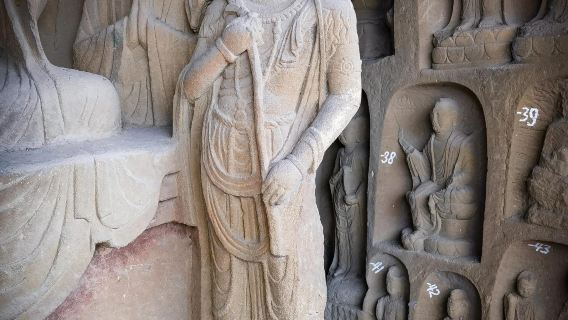
The permanent exhibition of the Shaanxi Archaeological Museum is themed on "Archaeological Sacred Land Huazhang Shaanxi", which is divided into four chapters: "Archaeological History", "Cultural Genealogy", "Archaeological Discovery" and "Cultural Preservation Technology".China · Xi'an

Qingmuchuan Ancient Town
Picturesque Qingmuchuan Ancient Town has a long history. The Qiang and Han people intermingled and lived peaceably together here. The area gradually prospered during the Ming dynasty, and most of the residences here were built during the Ming and Qing dynasties (1368-1912). A river cuts through the ancient town, and the people here live a carefree and leisurely life. The town's Wei Family Mansion was built during the Republican Era (1912-1949), and the Qu, Wei, Zhao, and Tu ancestral halls were built during the Ming and Qing dynasties.China · Ningqiang

Duanqu Park
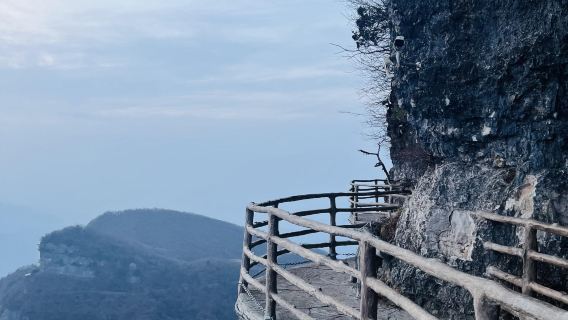
Duanqu Park in Guangwu Mountain Attraction is located three miles northeast of Nanjiang County. During the Sichuan orogeny in the late Jurassic period of the Mesozoic era over 100 million years ago, the imbalance between centripetal and centrifugal forces created this fission landform known as Duanqu. The three parallel gullies—Front, Middle, and Rear—stretch over ten li, all shrouded within a vast sea of forests. Here, the gullies crisscross with interconnected tunnels, adorned with bizarre rocks resembling human figures, animals, and mythical creatures, carved by nature's artistry into countless forms. Vines and creepers weave through the landscape, immersing visitors in a stone ocean akin to a sculptural masterpiece. As a natural fortress, Duanqu was fortified by its inhabitants to fend off invaders. Massive defensive structures like the "Square Fortress" and "Sanchun Fortress" were built (legend has it that after Zheng Ziming was killed by Zhao Kuangyin in the early Northern Song Dynasty, his wife, Tao Sanchun, sought refuge with her sworn brother Gao Huaide, the governor of Jizhou. Here, she trained troops, erected walls, and assisted Gao in governing Jizhou). These mountain strongholds were strategically positioned, with well-designed gates leveraging the rugged terrain and underground caves. The fortresses stood broad and imposing above, while hidden tunnels sprawled below, allowing residents to live and work outside by day and retreat into the caves at night or during emergencies. Some fortresses were perched on sheer cliffs, accessible only by a single treacherous path—truly a case of "one man guarding the pass, ten thousand cannot breach it." The Middle Gully features two front gates at its head, creating a layered defense—fortresses within fortresses, each step a stronghold, making it easy to defend yet hard to attack. At its core, near the "Sanchun Fortress," lies a large meadow spanning hundreds of square meters. Connected to the fortress gate on the east, its other three sides were fortified with stone walls and three stone gates leading to other strongholds. Historical records suggest this was Duanqu's political, military, and cultural hub for gatherings and military drills. In the late 1970s and early 1980s, primitive grinding sites and fossils were discovered in Duanqu, alongside a trove of Neolithic artifacts—stone hoes, axes, and pottery shards—offering glimpses into ancient human activity. In 1995, Duanqu was developed into a tourist destination with the establishment of a park, transforming it into a comprehensive cultural and recreational hub for sightseeing, relaxation, wellness, entertainment, educational research, and revolutionary tradition education. After nearly three years of construction, the garden has taken shape, featuring winding stone paths, intersecting canals, elegant pavilions, and charming bridges that attract visitors.Nanjiang · 2.9km from downtown

Xi'an Muslim Quarter
Huimin Street is an old Muslim neighborhood with a history dating back centuries ago. It has a distinct Muslim culture and a vibrant food culture, making it a paradise for food lovers. Huimin Street is not just a single street. It is a collective name for the whole Muslim District. It consists of Beiyuan Gate, North Guangji Street, Xiyangshi and Dapiyuan Street. It is also known as “Muslim Quarter” and “Fang Shang”. The district also houses a number of old local restaurants: Jia San Soup Buns and Lao Mi Jia Soaked Bread etc. You can also eat almost all of Xi'an delicacies here: various kebabs, bread and mutton soup, soup buns, spicy goat trotters, and cold skin noodles etc.China · Xi'an

Guangtou Mountain
Guangtou Mountain is located within Micaoshan Town, Wangcang County, Guangyuan City, Sichuan Province. It is situated at the southern foot of the Micaoshan National Nature Reserve and serves as the boundary mountain between Micaoshan Town and Yanhe Town, with its main peak at an altitude of approx. 2276.4 m. The mountain terrain here is majestic, resembling a lotus leaf, and towers into the clouds. The mountain is rich in wild flora and fauna, with dense pine and fir forests and towering ancient trees. It is a state-owned forest area and also a provincial forest park. This place offers scenery in all four seasons: enjoy azaleas in spring and red leaves in the fall. From April to May each year, nearly 10,000 mu of alpine azaleas bloom in succession, with trees reaching heights of 6–7 m. Red, white, pink, and purple flowers cover the mountains, as brilliant as colorful clouds. In late fall, the mountains are covered in colorful forests like an overturned palette, with red maples, boxwoods, and green pines intertwined and reflecting each other, and the forest is dyed in layers. It is a premier destination for fall foliage viewing in northern Sichuan. Standing at the summit, you can overlook the entire Yanjing River Grand Canyon and gaze at the rolling mountains and surging sea of clouds. It is a great place for hiking, photography, and getting close to nature.Wangcang · 44.3km from Nanjiang

Tielubacun
Nanjiang · 40.8km from downtown
Experiences you can't miss in Nanjiang
Featured Day tours in Nanjiang
View all Day tours
Free things to do in Nanjiang
Shaanxi History Museum
China · Xi'anGrand Tang Mall
China · Xi'anXi'an Museum
China · Xi'anImmediate access, Book now for today, Cancel anytimeLangzhong Ancient City
China · LangzhongShaanxi Archaeology Museum
China · Xi'anQingmuchuan Ancient Town
China · NingqiangDuanqu Park
Nanjiang · 2.9km from downtownXi'an Muslim Quarter
China · Xi'anGuangtou Mountain
Wangcang · 44.3km from NanjiangTielubacun
Nanjiang · 40.8km from downtown
More ways to travel from Nanjiang
What travellers say about Nanjiang

GH97060815 October 2026
5.0
Knowing that tickets to the Shaanxi History Museum are hard to get, I tried signing up for a guided tour. I was surprised by how reliable the service was from a large platform. The guide, Zhang Xiaojing, sent me the important information and meeting point the day before. He was also there early the next day to wait for everyone. Thanks to Xiaojing, the explanations were excellent, covering the most famous treasures and unique exhibits in Halls 1, 2, and 4 very clearly.
Shaanxi History Museum

呦未来可期15 October 2026
5.0
Take a stroll through the Tang Dynasty Never-Sleeping City on a pleasant autumn evening. The evening breeze is cool, the lights are dazzling, and the atmosphere of the Tang Dynasty is palpable. Street performances are everywhere, and tourists come and go, creating a lively scene. No need to plan a route; just wander around and explore as you please. Immersed in this world of lights, feeling the warmth of everyday life and ancient charm, this is what small satisfactions in ordinary days are all about. Chang'an's autumn nights are as bright as ever.
Grand Tang Mall

E34***9717 October 2026
5.0
The Xi'an Museum at the Small Wild Goose Pagoda was less crowded than the Shaanxi History Museum, but its collection was also very rich. The guide, Xiao Li, explained everything in great detail; although it's repetitive work every day, she didn't do it half-heartedly. 👍
Xi'an Museum

睡醒_等困9 October 2026
5.0
For a family-friendly itinerary combined with educational purposes, I recommend entering directly from the West Gate and proceeding to Zhang Fei Temple, Zhongtian Tower, and the Imperial Examination Hall.
The time is limited. I joined a guided tour for both Zhang Fei Temple and the Imperial Examination Hall, and it was very rewarding.
Langzhong Ancient City

M27***t36 October 2026
5.0
Teacher Tangtang's teaching is really excellent! 🤩🤩 I learned a lot from her throughout the course. She reminded me of my high school Chinese teacher, someone incredibly knowledgeable! ✌︎' ֊'🥳🥳🥳 In short, I really enjoyed it! 🥰🥰🥰
Shaanxi Archaeology Museum

爬山🐯13 September 2026
4.0
Qingmuchuan Ancient Town is located at the junction of Shaanxi, Sichuan and Gansu provinces. The ancient buildings are well preserved. Must-see attractions include the Wei Family Residence, Rongshengkui, and the opium den. You must also stroll along Huilongchang Old Street and climb Huilong Pavilion to overlook the entire ancient town.
Qingmuchuan Ancient Town

M25***1212 November 2019
5.0
It's very beautiful. It's very lively during holidays, especially the children like to ride on the big windmill.
Duanqu Park

acyeveryday5 June 2026
5.0
Add this to your itinerary if you're visting Xi'an! I have been to the quarter 3 times. Walk along the main path of the quarter BUT make sure you also walk down the narrow alleyways! There are LOTS of shops and food stalls you don't want to miss. Open 24/7 too so make sure you visit!
Xi'an Muslim Quarter
M10***062 November 2024
2.0
I don't want to go there a second time. Although it's free, the scenic area is poorly managed and parking for self-driving cars is very expensive.
Guangtou Mountain


