
Things to do in Ningde
Explore top experiences
Top 10 attractions in Ningde


Taimu Mountain
The natural scenery of Taimu Mountain Scenic Area can be summarized in four words: "mountains," "sea," "rivers," and "islands." Taimu Mountain is a UNESCO Global Geopark, a national scenic area, a 5A-level tourist attraction, and a national natural heritage site. Located on the coast of the East China Sea, legend has it that immortals from the East Sea gather here annually, earning it the reputation as the "Fairy Capital on the Sea." It is renowned for its four unique features: perilous peaks, peculiar rocks, secluded caves, and mystical mist. "The clouds traverse the perilous cliffs" is a vivid depiction of the extraordinary peaks of Taimu Mountain. The mountain is dotted with 54 peaks, including the Nine Carp Facing Heaven Peak and the Eighteen Arhats Peak, which rise steeply and majestically, forming a breathtaking geological gallery. The remarkable rocks of Taimu Mountain are all lifelike and exquisitely crafted. Over 360 awe-inspiring rock formations, such as the Couple Peak, Immortal Sawing Board, and Golden Turtle Climbing the Wall, make visitors feel as if they've stepped into a sculpture art exhibition hall. No wonder ancient poets wrote, "No ordinary stones exist in Taimu, each seems divinely carved, revealing boundless wonders as one's heart desires." Beneath the towering peaks lies a network of over 100 granite caves resembling an underground labyrinth. Large caves contain smaller ones, interconnected in a complex web of winding passages that create a rare geological wonder among the world's famous mountains. This breathtaking granite cave system astonishes visitors with its intricate maze-like formations. Ascend to the peak and gaze at the East China Sea, where mountains enhance the vastness of the sea, and the sea adds grandeur to the mountains. Sometimes, sea fog surges and billows, while at other times, thousands of sails dot the boundless blue waves, ever-changing and unpredictable, as if entering a fairyland that makes one linger. Additionally, the attraction has developed a "via ferrata" climbing project. The Taimu Mountain via ferrata project features four climbing routes of varying difficulty to meet the needs of different groups, ensuring everyone has a blast. Taimu Mountain's sea area is nearly 10 times larger than its land territory, featuring a winding and undulating coastline. At the foot of Taimu Mountain lies the Qingchuan Seaside attraction, where over 30 km of coastline is dotted with numerous golden, soft, and pristine beaches. Among them, Niulanggang Beach stands out with its flat, clean surface, surrounded by lush green mountains and uniquely shaped rock formations, making it a perfect seaside destination for family trips, vacations, and leisure travel. At Niulanggang, you can listen to the symphony of waves and rocks. Meanwhile, Xiaobailu Seaside Resort offers wide beaches with soft sand, gentle slopes, and calm waves, blending fishing culture...Fuding · 23.6km from downtown

Dayushan Island
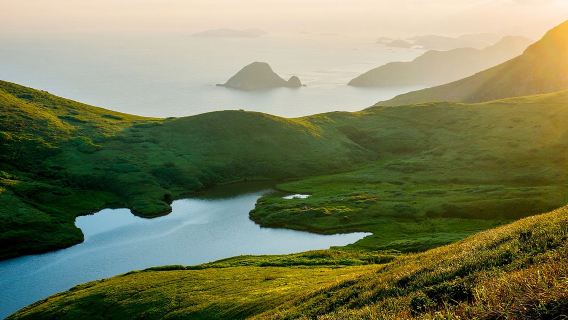
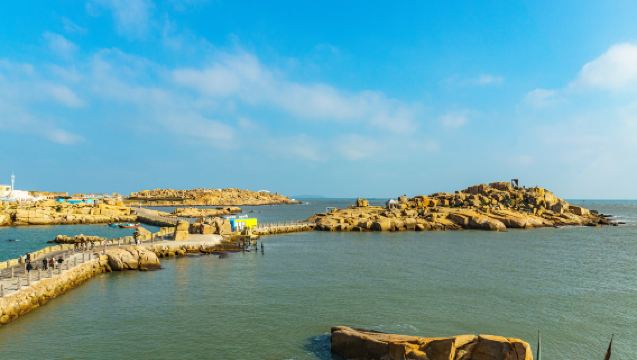
Dayushan Island is located in the southeastern waters of Fuding. It has preserved its tranquility and original form due to the fact that it is not known by many outsiders. The island is uninhabited, so visitors must walk or rent a car. The coast is eroded by seawater and reveals the bare bedrock and reefs. The sea-eroded landscape is very prominent. The island's vegetation is very dense, inhabiting tens of thousands of migratory birds.Fuding · 44.4km from downtown

Dongbi
Dongbi Village is located in the south of the central part of Sansha Peninsula, Xiapu County, Ningde City, Fujian Province, 28 kilometers away from Xiapu City. The villages are stacked on top of each other, and you can see the natural scenery of the green mountains and blue seas when you open the windows. When you go out, you will find the winding slate lanes, which are clean and comfortable. The east wall is backed by mountains and faces the sea and has a wide field of vision, making it an excellent place to watch and photograph the sunset.Xiapu · 18.7km from downtown

Baishuiyang Scenic Area
Baishuiyang Scenic Area is famous for its crystal-clear river water. The water is ankle deep throughout the river's course. At one point the river flows downhill, creating a 100 meter long natural slide. Visitors are attracted by the green mountainous landscape and clear water.Pingnan · 21.3km from downtown

Sishuang Islands
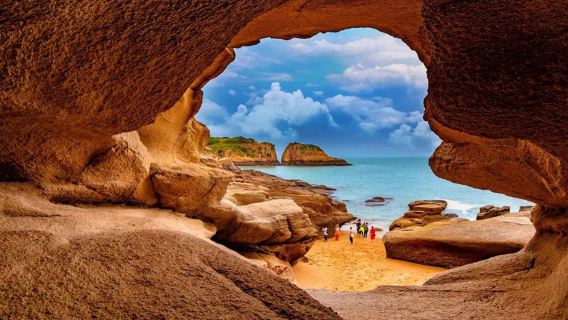
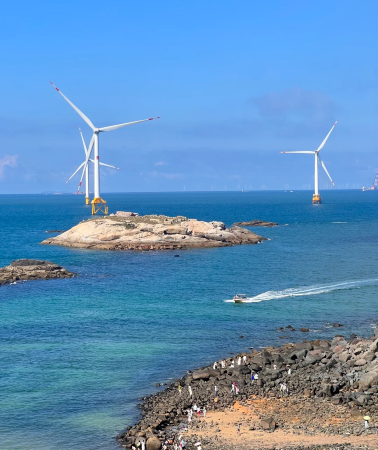
The Sishuang Islands, located in the southeastern waters of Xiapu County, Ningde City, Fujian Province, are approx. 35 km from the mainland and represent the easternmost islands of the Taiwan Strait. The archipelago consists of 18 islands, including North Silu, South Silu, East Silu, and West Silu, along with 17 reefs, covering a total area of approx. 4 km². Renowned for their unique volcanic rock formations, steep sea cliffs, and pristine island scenery, the islands are celebrated as a "paradise on the sea" and the "fourth pole of the earth." The Sishuang Islands feature a unique geological structure, primarily composed of volcanic and granite rocks. Long-term wave erosion has created rich marine landforms such as sea caves, sea arches, and pebble beaches. With an excellent ecological environment, the islands serve as an important habitat for the Chinese crested tern, earning Hongshuang Island the nickname "Bird Island." The main island, Beishuang Island, retains a strong fishing village charm and quaint stone houses, along with numerous military relics from the cross-strait conflict era, including air-raid shelters and watchtowers. As an emerging island destination, the Silu Islands attract numerous photography enthusiasts and outdoor adventurers with their pristine natural views, crystal-clear waters, and abundant fishing resources.Xiapu · 40.4km from downtown

Yang Jiaxi
Yang Jiaxi is located in the town of Yacheng in Xiapu County. A sight worth mentioning is the “Banyan King,” which has lived more than 800 years. The trunk is hollow and has 7 enormous holes, each able to accommodate several people within. When the morning sun pierces the woods, the mottled tree shadows create a dreamlike atmosphere under the twinkling of light and shadow.Xiapu · 21.9km from downtown

Beiqi Mudflat
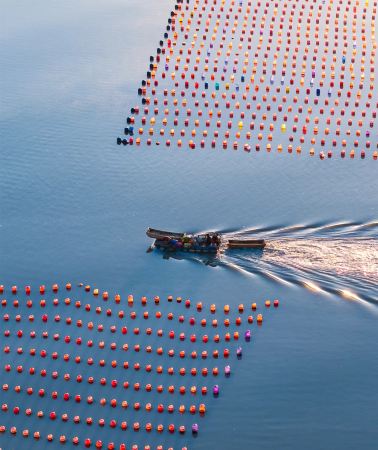
Beiqi Mudflat is one of the classic photography spots in Xiapu. Its appeal lies not in blue seas and sandy beaches, but in the tapestry of the mudflats painted by the tides and fishing activities: during the seaweed farming season, bamboo poles are inserted across the mudflats to create square net frames, spreading from near to far and weaving the entire bay into a giant net. After the tide recedes, the mudflat surface reveals tiger-stripe patterns, and when the tide rises, fishing boats weave between the shadows of the poles, merging with the distant mountains and islands. It is famous for its sunrise view. The moment the sun rises from the sea, the mudflats are bathed in a golden glow, and the purple-black and purplish-brown strips on the seaweed nets, along with the silhouettes of fishermen working on the nets, are outlined by the morning light. If the sunrise coincides with low tide or slack tide, the textures of the mudflats and the reflections on the water surface are particularly clear. The seaweed season generally lasts from late fall to the beginning of the following year, with neatly arranged bamboo pole arrays and bustling scenes of labor. At the turn of spring and summer, you can see the busy scenes of the kelp harvest. Bring a telephoto lens to better capture the sense of depth created by the compressed lines of the bamboo poles.Xiapu · 5.9km from downtown

Longtan Ancient Town
Longtan Ancient Town is located in Pingnan. The ancient town features many stilt houses and a large number of Ming and Qing dynasty buildings, while the stone-paved streets within the town stretch for 3 km, giving it a rustic and weathered charm.Pingnan · 17.6km from downtown

Yuanyangxi
At present, the Mandarin Duck Creek Scenic Area is a rare protection area for mandarin ducks in China. Hundreds of thousands of mandarin ducks fly from the north to live through winter in every autumn. The Mandarin Duck Creek Scenic Area is categorized as Baishuiyang, the Mandarin Duck Creek, Cha Creek, Shuizhuyang, Kao Creak and the Mandarin Duck Lake. The Mandarin Duck Creek Scenic Area centers on the Mandarin Duck Creek, featuring wild mandarin ducks, macaques and rare plants. It integrates the landscape of creeks, waterfalls, peaks, rocks and caves. It is a comprehensive scenic area hard to come by.Pingnan · 20.6km from downtown

Xiapu Dajing Sand Beach
Xiapu Dajing Sand Beach is a leisure attraction featuring natural coastal scenery and abundant water activities, located along the coastline, attracting numerous visitors to enjoy the sunshine and waves. With its long stretch of fine sandy beach, it's an ideal destination for relaxation and connecting with nature. Visitors can stroll along the beach, feel the gentle sea breeze, or bask in the sun to enjoy the tranquility and comfort of the seaside. For those who love water activities, Xiapu Dajing Sand Beach offers various options including surfing, windsurfing, and kayaking, allowing people to unleash their energy in the waves. In addition, the beach is well-equipped with leisure and dining areas, allowing visitors to enjoy delicious seafood while admiring the stunning sea views. For families, the children's play area on the beach provides a safe and fun environment for kids to play freely on the sand. Xiapu Dajing Sand Beach regularly hosts beach music festivals and cultural activities, offering visitors a rich entertainment experience. These activities not only enhance the beach's vibrancy but also create unforgettable memories for visitors' journeys. Whether seeking relaxation or passionate about water sports, visitors can enjoy a diverse vacation experience at Xiapu Dajing Sand Beach. With its natural beauty and abundant activities, visitors can spend a fulfilling and delightful time here.Xiapu · 23.4km from downtown
Experiences you can't miss in Ningde
Featured Day tours in Ningde
View all Day tours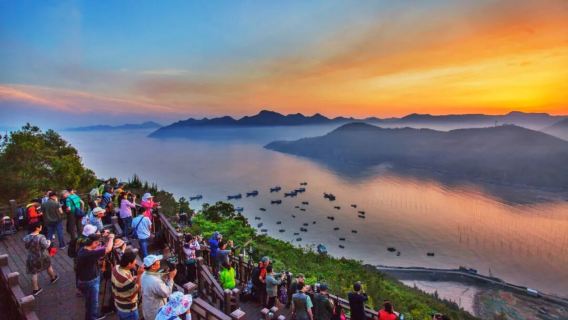
From₹ 8,870.29
Free cancellation
Instant confirmation
From₹ 18,436.00


Free cancellation
Instant confirmation
Book now for tomorrow
From₹ 21,260.29
![Fuzhou Three Lanes And Seven Alleys + Shangxia Hang + Yantai Mountain 1-day tour [8-person pure play group or private chartered tour]](https://ak-d.tripcdn.com/images/0354n12000o7hyko21EAF_C_568_320.jpg?_fr=wc)

4.9/5
· 56 reviews· 117 bookedFree cancellation
Instant confirmation
98.2% of travelers recommend
From₹ 21,998.30

From₹ 24,978.72
Featured Cultural experiences in Ningde
View all Cultural experiences
From₹ 4,084.28

From₹ 1,944.37

From₹ 3,519.73
![[Fuzhou] "THE GLORY BELONGS TO FOOCHOW ARSENAL" Performance Ticket (Light Show Depicting Arsenal Legends + Sound Effects Recreating Historical Scenes + Interactive Shipbuilding Experience + Immersive Journey Through Time)](https://ak-d.tripcdn.com/images/0356812000rqprcrs1709_C_568_320.png?_fr=wc)
From₹ 27,417.24

Featured Outdoor experiences in Ningde
View all Outdoor experiences
Free cancellation
Instant confirmation
Book now for tomorrow
From₹ 3,803.58
Free cancellation
Instant confirmation
Book now for tomorrow
From₹ 14,980.92
![Fuzhou Departure Qida Village + Qigguanding Private Charter Day Tour [Downtown Hotel Pickup]](https://ak-d.tripcdn.com/images/0350t12000seyviliC465_C_568_320.jpg?_fr=wc)
Free cancellation
Instant confirmation
Book now for tomorrow
From₹ 14,980.92
Free cancellation
Instant confirmation
Book now for tomorrow
9% off
Limited-time sale
From₹ 3,065.58₹ 3,406.19
![Fuzhou Ancient Mine of Shoushan Stones + Rixi canyon canyoning experience 1-day tour [view waterfalls + outdoor adventure]](https://ak-d.tripcdn.com/images/0350812000tvssf48EA6B_C_568_320.jpg?_fr=wc)
Free cancellation
Instant confirmation
Book now for tomorrow
From₹ 26,681.81
Free things to do in Ningde
Taimu Mountain
Fuding · 23.6km from downtownImmediate access, Book now for today, Cancel anytimeDayushan Island
Fuding · 44.4km from downtownDongbi
Xiapu · 18.7km from downtownBaishuiyang Scenic Area
Pingnan · 21.3km from downtownSishuang Islands
Xiapu · 40.4km from downtownYang Jiaxi
Xiapu · 21.9km from downtownImmediate access, Book now for today, Cancel anytimeBeiqi Mudflat
Xiapu · 5.9km from downtownLongtan Ancient Town
Pingnan · 17.6km from downtownYuanyangxi
Pingnan · 20.6km from downtownImmediate access, Book now for today, Cancel anytimeXiapu Dajing Sand Beach
Xiapu · 23.4km from downtown
More ways to travel from Ningde
Private Tours in Ningde
View More Private Tours in Ningde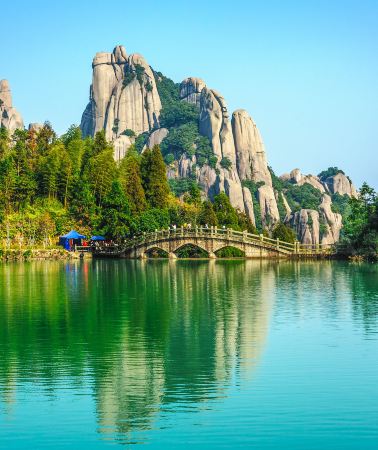




Group Tours in Ningde
View More Group Tours in Ningde


What travellers say about Ningde

笑笑老爸7 October 2026
5.0
Half a day is enough. You can choose to visit Niulanggang Seaside Park nearby. If you want to go to Yushan Island, it is more cost-effective to buy a combined ticket. Yipianwa and Jigerendong are good experiences. The seaside boardwalk is nothing special. Overall, it is okay.
Taimu Mountain

菠萝7211 October 2026
5.0
It's worth a visit, given the azure sea and sky, and the lush vegetation. However, the ferry departs at 9:30 AM, and you arrive on the island close to 11:00 AM, by which time the sun is blazing. If you want to explore at a leisurely pace after hiking, you'll miss the 2:00 PM ferry. Time is a bit tight; I actually think the best time to visit is from afternoon to evening.
Dayushan Island

M85***457 August 2025
5.0
Shijianhai's popular staircase: Navigate to "Shijianhai." Next door, the staircase extends to the seaside, perfect for photos.
Dongbi's popular path: Navigate to "Three Cups and a Half Coffee." This path is artistic and refreshing, lined with unique shops and B&Bs.
Liuyun Temple: Navigate to "Liuyun Temple." This temple boasts a unique ocean view and architectural style, offering a tranquil atmosphere and breathtaking mountain and sea views.
Dongbi

Anonymous user27 August 2026
5.0
Pingnan is truly a wonderful place. Yuanyangxi and Baishuiyang were both rated 5A-level scenic spots. The former offers stunning mountain and water views, while the latter provides opportunities for hiking and water activities, allowing you to fully enjoy the beauty of nature.
Yuanyangxi is a bit further from Shuangxi Town than Baishuiyang. It's a large canyon, and wandering through it, you can truly appreciate the charm of nature.
The initial entrance to the scenic area is at the top of the canyon. Be sure to visit the viewing platform; it offers a panoramic view of Yuanyangxi, making the extra few hundred meters worthwhile. Then, follow the mountain path down to the valley floor. Here, you'll find numerous streams and waterfalls, as well as cliffs and uniquely shaped rocks—a continuous stream of beautiful scenery.
My last stop was Baizhangji-Shuiliandong (Water Curtain Cave). The waterfall cascades down from the mountaintop, crashing into the pool below, creating a truly enchanting scene. I took a shortcut here, taking the mountain elevator directly to the top. The walk to the exit is only a few hundred meters, but the elevator ascends 120 meters, saving me over a thousand steps and conserving energy for the rest of the trip.
Baishuiyang Scenic Area

骑着蜗牛赶绿灯14 August 2026
5.0
Rare red rock islands in China, with clear and layered seawater, few people, pristine environment, and no overdevelopment. Excellent for hiking, watching the sunset, and aerial photography. Limited facilities make it more suitable for a short day trip to the island.
Sishuang Islands

Shin泡泡9 April 2025
5.0
Last month I came to Yangjia Creek in Xiapu, Ningde. It is a picturesque place. As soon as I entered the scenic area, I was attracted by the scenery in front of me. Walking along the stream, the water is clear and the streamside is full of green water plants. Occasionally, you can see a few small fish playing in the water. The ancient road by the stream is paved with bluestone, and it seems that you can hear the echo of history when you step on it.
The most amazing thing is Rongfeng Park, where there are the northernmost ancient banyan trees in the world. One of them, the "Banyan King", is more than 800 years old, with a trunk circumference of 12.6 meters, a crown diameter of 51 meters, and a height of 30 meters. The trunk is hollow with 7 holes, which can accommodate several people. The branches and leaves of these ancient banyan trees are intertwined, forming a natural green barrier. Next to the ancient banyan tree is a maple forest. In late autumn, the red leaves are like fire, which contrasts with the emerald green of the ancient banyan tree, which is beautiful.
Take a bamboo raft down the river, the stream gently pats the raft, and the scenery on both sides unfolds like a picture scroll. The green mountains in the distance are rolling, and the stream nearby is sparkling, making people feel as if they are in a fairyland. The beauty of Yangjia Creek lies not only in its natural scenery, but also in its profound historical and cultural heritage. It carries the heavy history of Yang Wenguang, a famous general of the Northern Song Dynasty, pacifying the Eighteen Caves of the Southern Barbarians and leaving Yang's soldiers to garrison. There are also many cliff carvings from past dynasties, which allow people to appreciate the beauty while feeling the weight of history.
Yangjia Creek is really a place worth visiting again and again. It has both natural wonders and profound cultural heritage, which makes people linger.
Yang Jiaxi

不知道哇.25 August 2025
5.0
Beiqi Tidal Flats: A Visual Feast of Sunset and Tidal Flats. This is a photographer's paradise. As the first rays of sunlight hit, the mudflats transform into a natural canvas, a dreamlike interplay of light and shadow. As the tide recedes, the mysterious tiger-skin texture of the beach contrasts beautifully with the distant mountains and fishing boats, creating a breathtaking scene with every step. We recommend waking up early to enjoy the wild joy of collecting shellfish on the mudflats, where every snap is a masterpiece! The only drawback: As the number of tourists increases, it's recommended to avoid peak hours. Overall, this is a must-see hidden gem in eastern Fujian!
Beiqi Mudflat

博😘😘肖3 April 2026
5.0
The transformation began the moment I arrived. There were no long ticket lines or tour guide megaphones. An old man, fanning himself with a palm leaf fan, sat on the threshold of a teahouse. Seeing me holding my phone, he struck up a conversation in his slightly salty Mandarin: "Teacher, feel free to wander around, don't get lost." This unintentional warmth instantly dispelled any sense of unfamiliarity. At the "Zhang Ji Fatty Intestine Noodles" stall, the proprietress, hearing I was from Shanghai, deliberately skimped on the chili, saying with a smile, "Try it first, add more if you need more." An uncle waiting for a guokui (a type of flatbread) nearby casually chimed in, "Exactly, why rush here? Look at that water, it flows slower than everyone else's." A joke revealed the secret of this place: everything here, including time, was set to a relaxed pace. Asking for directions yielded a "navigation" complete with personal memories; queuing was uneventful, as if everyone adhered to an unspoken agreement: "No infighting here." This pervasive, warm, and casual kindness is a unique quality that no other landscape can replicate.
A Spatial Journey: An Immersive Misunderstanding of "Jiangnan in Sichuan"
The scenery of Longtan Water Town is a beautiful "spatial misunderstanding." At first glance, small bridges over flowing water, white walls and black tiles, awning boats gliding on the green silk-like water, tea flags fluttering in the breeze—it's almost like Jiangnan. But upon closer inspection, the rough carvings on the covered bridges tell tales of western Sichuan; the sounds emanating from the teahouses are the crisp clinking of teacup lids and the boisterous laughter of storytellers, not the soft Wu dialect.
I rented an awning boat, and the boatwoman was a talkative older woman. With the gentle patter of the oars, she didn't need to recite a guide's script, simply pointing casually: "In the morning, when the mist shrouds it, it's like an ink painting. At night, when the lanterns are lit, it has a completely different feel." Reaching the bridge arch, she deliberately slowed down: "The echo here is beautiful; try shouting." A soft shout resonated between the water and stones, ethereal and clear. This isn't just sightseeing; it's immersing yourself in a dynamic, audible scroll painting of "Jiangnan in Sichuan."
After disembarking and wandering through alleyways, a spacious square reveals a living culture. In an intangible cultural heritage workshop, an old craftsman uses warm syrup as ink to instantly "paint" a phoenix spreading its wings on a stone slab, filling the air with a sweet aroma. Next door, tie-dyed blue and white fabrics bloom uniquely like ice cracks under the sunlight. Here, the "scenery" is meant to be heard (the sound of oars, laughter), smelled (the aroma of tea, sugar), and touched (by trying it yourself). It blends the form of Jiangnan with the soul of Western Sichuan, creating a languid and poetic "hybrid style" that feels perfectly harmonious.
Longtan Ancient Town

幸福鸟196622 June 2026
5.0
Wander through the secluded Yuanyangxi Scenic Area, where verdant mountains rise one after another, waterfalls cascade down, and suspended walkways weave between cliffs. The tranquil waters nurture life, and a stroll accompanied by mountain springs and gentle breezes allows you to unwind in the natural forest, finding healing and comfort.
Yuanyangxi

大眼世界3 March 2022
5.0
Many friends say that Xiapu has beautiful mudflats, but no nice beaches. In fact, they don't know that there are beaches in many places in Xiapu, such as the beach near Dajing Castle. Although the sand is not as fine as in Hainan and other places, there are not many people. If you encounter good weather, it is a good choice to play here for a day and a night. Now there are many good homestays nearby.
Xiapu Dajing Sand Beach


