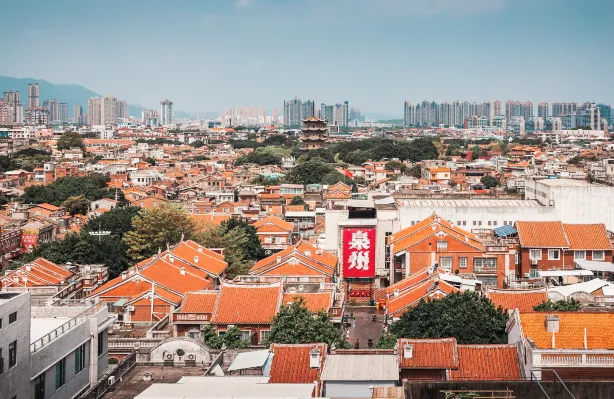
Xianyou

Things to do in Xianyou

Search attractions or local attractions & tours
Search

Explore top experiences

Top 10 attractions in Xianyou

View all Attractions
Wanjia International Hot Spring Resort
No. 20 of Hot Springs Attractions in Fujian

Wanjia International Hot Spring Resort

3.1
4.2/5
13 reviews

The Xianyou Wanjia Hot Spring Resort project covers an area of ​​253 mu and has a total construction area of ​​about 57,900 square meters. It is a hot spring tourism project created by Fujian Wanjia Hotel Management Group. The resort is developed around the core goals of "hot spring bathing, ecological landscape, healing and health care, Fujian cuisine". It will be a landscape and humanities complex ecological leisure tourism area with the theme of Fujian style, integrating hot spring culture, ecological vacation, health care, food culture, outdoor development and water entertainment. A 4A-star hot spring resort hotel and a 4A-level hot spring park will be built. The supporting facilities include guest rooms, Dining, hot springs, SPA clubs, children's playgrounds, national standard indoor swimming pools, KTV entertainment, etc. The hot spring park has 60 large and small pools with different styles, functions and shapes, including health care pools with added materials, fish therapy pools, original pools, irregular outdoor constant temperature hot spring swimming pools, SPA hydrotherapy impact pools, children's pools, children's paddling pools, etc. There are also leisure tea restaurants and rest areas. There are slate warm baths and dry and wet steaming function rooms, health care clubs, and water park facilities, including indoor national standard constant temperature swimming pools, outdoor water entertainment facilities, and water outdoor expansion facilities. The hotel has two banquet halls, each of which can accommodate 500-600 people and can hold various large-scale banquets. The hotel has 25 RTV boxes of different sizes. The hotel lobby has a rest area and a main desk, with dozens of commercial shops on both sides. The hotel tea restaurant can accommodate 150 people for dinner at the same time, mainly providing breakfast, Afternoon Tea, etc. The hotel KTV is located on the negative 1st floor, with a total of 20 rooms of different styles and sizes.

Xianyou · 3.8km from downtown
Quanzhou Kaiyuan Temple
No. 1 of Global Traveller-Picked Attractions in Quanzhou

Quanzhou Kaiyuan Temple

7.7
4.7/5
2.4k reviews

Kaiyuan Temple is located in QuanzhouWest Street, Licheng DistrictBuilt in the second year of the Chuigong era during the reign of Empress Wu Zetian of the Tang Dynasty, it has a history of over 1,300 years. It is an important cultural relic along the southeastern coast of China and one of the larger-scale Buddhist temples in Fujian Province. The attractions of the monastery are arranged along the central axisWorship pavilion, the Baiting, the main hall of Kaiyuan Temple, the Sangpeng historic site, the Kaiyuan Temple's Sweet Dew Ordination Platform, the scripture depository, etc.Also,, as well as the stone pagodas on the east and west sides and the east and west corridors. Quanzhou Kaiyuan Temple - The heavenly king hall, also the mountain gate of the temple, was built in 1925. The stone pillars are slightly thinner at the top and bottom, thicker in the middle, shaped like a shuttle, reflecting the Tang dynasty stone pillar style. A wooden couplet hangs on the stone pillars, reading "This place is called the land of Buddha, where every street is filled with saints." It was composed by Zhu Xi, a great Neo-Confucian scholar of the Southern Song dynasty, and written by the modern eminent monk Hongyi. Crossing the mountain gate brings you toWorship pavilionStanding here, you can see the east and west pagodas rising from the ground and the spacious, bright east and west corridors symmetrically arranged on both sides. The east and west pagodas are among the more famous attractions in the area. The east pagoda is called "Zhenguo Pagoda (East Pagoda)," while the west pagoda is named "Renshou Pagoda." Standing over 40 m tall, they are one of the tallest pairs of stone pagodas in China and serve as landmarks and symbols of the ancient city of Quanzhou. Worship pavilionIn front, there is a large stone courtyard where officials and commoners from ancient and modern times gather for activities, becoming particularly lively during events. On both sides of the stone courtyard stand eight large banyan trees, beneath which are arranged 11 ancient sutra pillars and small stupas from the Tang, Song, and Ming dynasties in various styles, as well as two stone tortoises. Then there is the main structure, the Mahavira Hall of Kaiyuan Temple. The Mahavira Hall of Kaiyuan Temple also has an elegant name, "Hundred-Pillar Hall." Originally, the hall was planned to have one hundred pillars, but later, to accommodate the placement of Buddha statues and create space for Buddhist activities, the beams were extended, and the number of pillars was reduced, resulting in the "Hundred-Pillar Hall" with 86 pillars.

Quanzhou · 51km from Xianyou
South Shaolin Temple
No. 6 of Family-friendly Attractions in Fujian

South Shaolin Temple

7.6
4.7/5
676 reviews

First built during the Longshuo era and abandoned in the Tianyou era. According to Cai Yongjian's "Xishan magazine" from the Qing Dynasty, which cited the Tang Dynasty's "Minzhong records," before the first year of Longshuo in the Tang Dynasty (661 AD), "Zhikong entered Minzhong and built the Shaolin Temple at the foot of Qingyuan Mountain, consisting of thirteen courtyards." "The Shaolin Temple had thirteen sections, surrounded by walls three zhang high, with vast fields and lush forests." "Beside the celestial altar stood the Shaolin Temple, where Zen master Zhikong met with Governor Wang at the celestial altar." Zhikong (styled Daoguang) was one of the thirteen staff-wielding monks from the Songshan Shaolin Temple renowned for saving the Tang emperor. His arrival in Min marked the beginning of martial monks in Fujian, and he trained twelve disciples—some capable of capturing tigers or lifting massive cauldrons, others skilled in wielding heavy crossbows, mastering chain hammers, or moving with extraordinary speed... The "Minzhong records" also states: In the first year of the Tang Tianyou era (907), "the Shaolin Temple rebelled against Wang Shenzhi's allegiance to the Liang Dynasty and was destroyed." Shi Mengshuo of the Southern Song Dynasty wrote in his "Donglu poetry collection": "The Shaolin Temple was built in Qingyuan, with ten grand gates and towering walls; a hundred acres of fields across three ridges, where a thousand monks practiced martial arts to rebel against the Wang regime." The "Wang regime" refers to the Min King Wang Shenzhi. Wang Shenzhi's destruction of the South Shaolin Temple in Quanzhou marks its first destruction. Prospered during the Taiping Xingguo era and declined during the Zhiyuan era The "Xishan magazine" records that in the sixth year of the Taiping Xingguo era of the Northern Song Dynasty (981 AD), an imperial decree was issued to rebuild the South Shaolin Temple in Quanzhou. This marked the second revival of the South Shaolin Temple in Quanzhou. Liu Changyan of the Northern Song Dynasty wrote in his poem: "The legacy of Qingyuan was built during the Xingguo era, the Shaolin spirit pervades throughout southern Quanzhou." "Xingguo" refers to the reign era of Emperor Taizong of Song, Taiping Xingguo (976–983). A copy of the Zhang family genealogy preserved in Donghu village, Dongqiao town, Hui'an county, states: "Shizhi, styled Fayi, renowned for stone carving, his craftsmanship was unparalleled, such as the stone lions in front of the Shaolin Temple in Quanzhou..." Zhang Shizhi was the younger brother of Zhang Shixun, a figure from the Song Dynasty, indicating his involvement in carving the stone lions at the entrance of the Shaolin Temple in Quanzhou during the Song Dynasty. Northern Song Dynasty records document that the South Shaolin Temple originally comprised a mountain gate, Mahavira Hall, dharma hall, Bodhidharma ancestral hall, thirteen halls, arhat hall, xuannü hall, scripture repository, heavenly king hall, Guanyin hall, Ksitigarbha hall and other supporting facilities, covering 400 mu of land. During the 2002 reconstruction of the heavenly king hall, over 40 stone temple components were excavated underground, including 1 pagoda base, 1 pagoda cover, 7 finials resembling those of Yinggeng Pagoda at Chengtian Temple, 4 stone caps, 4 column bases, 6 stone pillars, and notably 20 intact mortise stones measuring 1 m in diameter - all testifying to the temple's grand architectural scale. Numerous roof tiles and covers were also unearthed. Experts speculate these components likely belonged to the Quanzhou South Shaolin Temple's structures during the Tang and Song dynasties. During the peak periods of the Tang and Song dynasties, the temple housed thousands of martial monks. The "Xishan magazine · general records" also records: "In the first year of the Song Jingyan era (Yuan Dynasty's Zhiyuan 13th year, 1276), a thousand monks from the Qingyuan Shaolin Temple rebelled against Pu Shougeng's surrender to the Yuan Dynasty. The abbot of the Shaolin Temple, Yuan Miao... commonly known as Zhao Mengliang... (Yuan troops) pursued them to the Shaolin Temple... The vanguard, Qi Wotunsi, known for his cruelty, ordered an assault on the Shaolin Temple, provoking the fury of the thousand monks. Amidst the clash of swords, each monk fought like ten, leaving Yuan soldiers' corpses strewn across the east of Qingyuan city, with bones littering the fields. When Suodu arrived, he ordered arrows to be shot, killing most of the thousand monks, with only a hundred surviving... The survivors fled to Dehua (Daiyun Temple)." This marks the second destruction of the South Shaolin Temple in Quanzhou. In the mid-Ming dynasty, Li Sen (born in 1398), a wealthy philanthropist from Anxi, funded the purchase of large tracts of wasteland on Dongyue Mountain to establish charitable burial grounds for the free interment of remains by Quanzhou residents. These burial sites appear to have been the same wastelands where the Shaolin Temple was destroyed after its thousand monks resisted the Yuan dynasty in the late Southern Song period. Prospered during the Hongwu era and declined during the Qianlong era The "Xishan magazine" records: In the tenth year of the Hongwu era of the Ming Dynasty (1377 AD), Faben of the Xuanmiao Temple (a Shaolin monk who fled to Dehua after the resistance of a thousand monks against the Yuan Dynasty in the late Song period, aged 135) persuaded the local official Huang Zhongli to "petition the court for imperial approval to rebuild the Shaolin Temple." The monks then spread martial arts throughout southern Quanzhou. This marked the third revival of the South Shaolin Temple in Quanzhou. The Annals of Jinjiang County, Volume 69, from the Daoguang era of the Qing Dynasty records: "The South Shaolin Temple is located by the East Lake outside Renfeng... It was rebuilt in the 10th year of the Xuande era (1435) during the Ming Dynasty, but later fell into disrepair. Monks restored one-tenth of its original site and also enshrined County Magistrate Peng Guoguang, as Peng had helped monks reclaim temple lands." In the book "Records of Shaolin warrior monks" by master Deqian of the Shaolin Temple on Mount Song (published by Beijing Sports University Press, 1988), it is stated: "According to the 'Internal Chronicles of Shaolin Temple,' monk Yuanran possessed extraordinary martial arts skills and was commended by Emperor Jiajing of the Ming Dynasty (reigned 1522-1566). His eminent disciple, master Yuekong, was ordered to lead over 30 warrior monks who had proven their skills to Quanzhou, Fujian, to suppress Japanese pirates and establish merits. There, they built the South Shaolin Temple, where he became the abbot." This confirms that the "Internal Chronicles of Shaolin Temple" from the northern Shaolin Temple clearly records the existence of a South Shaolin Temple in Quanzhou during the Ming Dynasty, while the claim of it being newly built is a misconception. To this day, southern Fujian still circulates stories of northern Shaolin warrior monks suppressing Japanese pirates. During the Qianlong era of the Qing Dynasty, Emperor Qianlong toured southern China and feared that the warrior monks of the South Shaolin Temple might collude with the remnants of Zheng Chenggong (see "Quanzhou biographical records: Zheng Chenggong"). "In the fall of the 28th year of Qianlong's reign (1763), an imperial decree ordered the burning of the Shaolin Temple... From then on, no one dared to rebuild it." Some temple monks took refuge at Yipian Temple in Nan'an. This marks the third destruction of the South Shaolin Temple in Quanzhou. After the burning of Shaolin Temple, the monk Zhishan sought refuge among the people, continuing to recruit Shaolin disciples to oppose the Qing dynasty and restore the Ming. Zhishan, Hong Xiguan, and their disciples spread to Guangdong, further developing Southern Shaolin boxing, which produced the Southern Shaolin boxing champion Wong Fei-hung. Later, Wong Fei-hung's disciples brought the art to Hong Kong and spread it as far as the United States.

Quanzhou · 49.8km from Xianyou
Longhua Temple

Longhua Temple

2.7
4.4/5
56 reviews

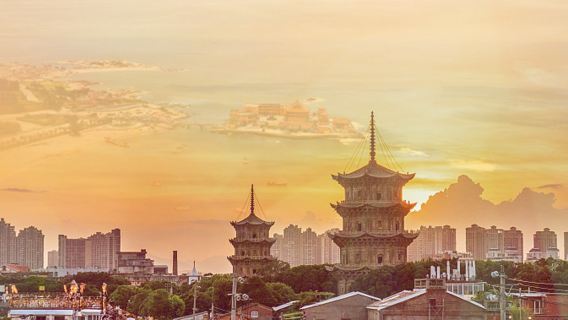
Longhua Temple was first built in the third year of Chuigong in Tang Dynasty (687), and was given the name "Longhua Wanshou Temple" in the early year of Tang Xuanzong's high school (847). During the reign of Song Tiansheng, Renzong ordered the monk Xuejing of Longhua Temple to preach in Beijing. After returning to the temple, the scale of the building was expanded. From Song Shaoxing years to Yuan to Shun years, Longhua Temple was destroyed and rebuilt several times. By Yuanzhen period of Yuan Dynasty, Longhua Temple had become the largest jungle in Xianyou County, governing 11 courtyards and 77 nunneries. At that time, there were more than 1,000 monks and nuns in the county, and Longhua Temple had nearly 500 monks. From the end of the Yuan Dynasty to the Ming and Qing dynasties, the Longhua Temple rose and fell for four times. Especially in the 43rd year of Jiajing in the Ming Dynasty, Japanese pirates invaded, temples were destroyed and monks scattered, and it was desolate. It was rebuilt during the Wanli period of the Ming Dynasty and the Shunzhi and Kangxi years of the Qing Dynasty. Later, the Longhua Temple was abandoned several times. From the late 1880s to the early 1990s (1988-1992), the overseas monk Shi Guangjing donated 550,000 yuan to rebuild Longhua Temple, which has now been completely renovated and has become the residence of the Buddhist Association in Xianyou County. The Longhua Twin Pagodas are on both sides of the front of Longhua Temple. According to "Longhua Temple Chronicles", during the Daguan period of the Northern Song Dynasty, Guo Yong, a native of Yi, donated to build the East Pagoda for his mother's 70th birthday, and prayed for his mother's 80th birthday to build the West Pagoda. After ten years, Guo Yong donated to build the West Pagoda. . Therefore, the Longhua Twin Pagodas stand in front of Longhua Temple, with a history of more than 890 years, nearly a hundred years earlier than the East and West Pagodas of Kaiyuan Temple in Quanzhou. The twin-tower building is an octagonal five-story hollow stone structure with a height of 44.8 meters. The base of the tower is the Xumi seat, which is supported by the stone-carved Lishi King Kong. There are stone-carved general guards on the east and west sides of the bottom floor. Each floor has four doors and four niches, and the positions are exchanged layer by layer. to the top of the tower. The eaves of the tower are all made of stone strips and are wavy; each tower edge is facing the wave peak of the tower eaves, which resembles the eaves of an ancient building, which is extremely spectacular. Climbing to the top of the tower, looking at the Longhua Plain, you can see that the good places are adjacent to each other, the cottages are close by, the streams and canals are white, and the green trees are continuous. There is a scene of a water town in the south of the Yangtze River. Whenever the sun sets in the evening, the twin towers are covered with gold, and the shadows of the towers accompany the smoke from the farmhouse on Longhua Street.

Xianyou · 4.2km from downtown

Experiences you can't miss in Xianyou

Featured Day tours in Xianyou

View all Day tours
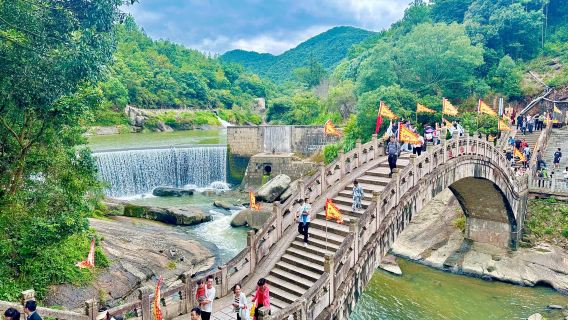
Quanzhou world heritage 1-day tour | South Shaolin Temple + Luoyang Bridge + Kaiyuan Temple + Xunpu flower hairpin | In-depth guide
Trip.Select
󱌍
4.6/5
· 46 reviews· 362 booked
Duration: 8.1 hrs
English
Free cancellation
Instant confirmation
Book now for tomorrow
300 travellers saved
10% off
Limited-time sale
From£80.08£88.98
Private Day Tour from Xiamen to Anxi County's Qingshuiyan and Tea Capital in Quanzhou
󱌍
Duration: 4 hrs
English
Free cancellation
Instant confirmation
Book now for tomorrow
From£50.45
Xiamen to Quanzhou Kaiyuan Temple Qingjing Mosque, Maritime Museum 1-Day Tour
󱌍
From£44.55
Xiamen Private Day Tour To Meizhou Island Southern Shaolin Temple
󱌍
Duration: 4 hrs
English
Free cancellation
Instant confirmation
Book now for tomorrow
From£70.62
Quanzhou Day Tour: Luoyang Bridge, Wulin Ancient Village, Luojia Temple & Xunpu Village Group Tour
Trip.Select
󱌍
Duration: 4.6 hrs
English
Free cancellation
Instant confirmation
Book now for tomorrow
From£26.21
Putian Meizhou Island 1-day tour | Mazu Ancestral Temple + Mazu Cultural Park + historic site visit | Cultural guide
󱌍
5.0/5
· 1 review
Duration: 12.8 hrs
English
Free cancellation
Instant confirmation
Book now for tomorrow
9% off
Limited-time sale
From£179.21£199.12
Xiamen to Quanzhou Private 1-Day Tour Kaiyuan temple West Street
󱌍
Duration: 5.5 hrs
English
Free cancellation
Instant confirmation
Book now for tomorrow
From£56.34

Featured Outdoor & sports in Xianyou

View all Outdoor & sports
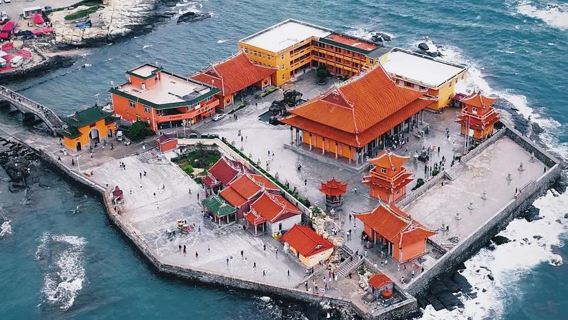
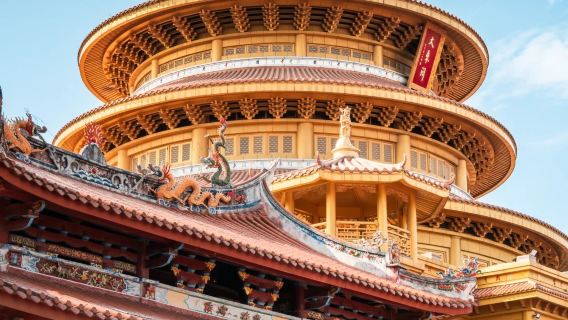
Quanzhou exclusive 1-day tour | Jinjiang Wulin Traditional Village · Luojia Temple · Golden Coast · Little Weihai | Private car with guide
󱌍
5.0/5
· 2 reviews
Duration: 6.5 hrs
English
Free cancellation
Instant confirmation
Book now for tomorrow
9% off
Limited-time sale
From£151.15£167.94
Quanzhou Hui'an 1-day tour | Luoyang Bridge + Xiaozuo Windmill Island + Little Altai Grassland | Pure fun with no shopping
󱌍
10% off
Limited-time sale
From£118.07£131.19
Moon Bay + Qingshan Bay + Chongwu Ancient Town 1-day tour | In-depth experience of Hui'an women's costumes and stone carving intangible cultural heritage
󱌍
10% off
Limited-time sale
From£136.31£151.46
Quanzhou 1-day tour | Xunpu Village · Jinjiang Wulin Traditional Village · Luojia Temple · Golden Coast | High cost-performance pure sightseeing
󱌍
5.0/5
· 2 reviews· 77 booked
Duration: 8.1 hrs
English
Free cancellation
Instant confirmation
Book now for tomorrow
90 travellers saved
9% off
Limited-time sale
From£90.11£100.12
Quanzhou day tour to Xunpu Village, Luojia Temple, Golden Coast and Wulin ancient village with private car
󱌍
Duration: 3.8 hrs
English
Free cancellation
Instant confirmation
Book now for tomorrow
From£86.62
Putian: Tracing Mazu culture on Meizhou Island|Ancestral Temple, Tianfei Hometown, and Origin Museum
󱌍
From£83.15

Featured Spa & wellness in Xianyou

View all Spa & wellness
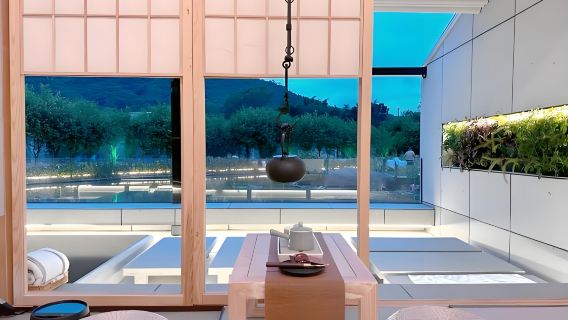
Relaxing hot spring experience at Tangli hot spring in Xiamen | Featuring private bathing rooms and Japanese zen-style spaces
󱌍
From£15.35
Xiamen Tangli hot spring resort half-day tour: Experience unique Japanese-style bathing rooms [Private car + tickets]
󱌍
Duration: 3 hrs
English
Free cancellation
Instant confirmation
Book now for tomorrow
From£44.29
Xiamen JinSuiYuan hot spring resort half-day tour: Leisure getaway [Private car + tickets]
󱌍
Duration: 3 hrs
English
Free cancellation
Instant confirmation
Book now for tomorrow
From£38.65
Xiamen Shengzhixiang hot spring resort half-day tour | Top choice for leisure trips [Private car + tickets]
󱌍
Duration: 2.5 hrs
English
Free cancellation
Instant confirmation
Book now for tomorrow
From£40.36
[Hot spring getaway] Xiamen Shengzhixiang hot spring resort: A leisure experience of nature and hot springs
󱌍
Duration: 3 hrs
English
Free cancellation
Instant confirmation
Book now for tomorrow
From£20.05
Xianyou Today's weatherOvercast 19-24℃
Xianyou weather for the next 2 days11/7: 20-23℃, 11/8: 18-29℃

Free things to do in Xianyou

What travellers say about Xianyou

user-avatar
M51***337 October 2026
5.0
Xianyou wasn't originally on our itinerary, but due to a typhoon, Meizhou Island was closed, so we took a taxi to Jiuli Lake instead. This unexpected turn of events added a highlight to our trip. We first entered the park, walking along a flat path for about half an hour, then slowly descended the mountain. There were quite a few steps, but the deafening roar of the waterfall made it all worthwhile. The waterfall was huge, with a rapid current, likely due to recent heavy rains and the high water season, making it incredibly beautiful. The second half was more strenuous, involving another climb. The steps were countless, making it extremely tiring. One spot featured a rock formation resembling the Titanic, perfect for photos. The park was very quiet, making for a comfortable walk with fresh air. Just as we were about to leave, a light drizzle started. We bought a 10 yuan return shuttle bus ticket and drove a short distance back to the main gate because we were too exhausted to walk any further. Getting a taxi from Putian city center was easy, taking about 40-50 minutes, but the return trip was a headache – it was difficult to find a ride. We waited for almost an hour before taking a bus down the mountain, and then finally managed to hail a taxi back to the city. Overall, the scenery is highly recommended.

Jiuli Lake Scenic Spot

user-avatar
人生若只如初见AA5 September 2019
4.0
[Scenery] Hongshan Village is most famous not for its waterfalls but for its rapeseed fields. Every year when the rapeseed flowers bloom, the place is crowded with tourists. The rapeseed fields and nearby villages form a harmonious spring painting. The waterfall is at the end of the village and is not very big. [Fun] The nearby villagers will carry their own vegetables and sell them. In recent years, they have also held long table flower field banquets, which is quite interesting. [Value for money] No tickets are required

Hong Mountain Waterfall

user-avatar
JJ7723 June 2022
4.0
Caixi Rock is famous for its beautiful mountains and clear waters, strange rocks and steep cliffs, deep valleys and secluded caves. It is the first of the four major scenic spots in Xianyou. There are more than 120 panoramic views of Caixi Rock, with beautiful and colorful scenery, including the towering stone walls that seem to be cut by an axe, the thunderous waterfalls with rainbows hanging in the air and flying beads and jade splashing, the majestic and majestic northwest gate of heaven, the steep rocks and infinite scenery of the southeast ladder, the winding paths leading to secluded and pleasant natural caves, and the winding streams shaded by trees and gurgling water.

Caixi Rock

user-avatar
首席监理7 January 2022
4.0
Xianshuiyang is located in the upper reaches of Jiuxianxi, a tributary of the Minjiang River, at the junction of Xianyou County and Dehua County in Putian City, Fujian Province. It is more than 871 meters above sea level. After geological investigation, it was preliminarily confirmed as a rare shallow water square in the world. It is composed of a whole piece of brown flat stone skin, extending 615 meters along the stream. The stone surface is as smooth as a grindstone, without any gravel, and the stream bed is flat. In addition, the stream flows slowly and the water depth is less than half a meter, making it like a natural water pedestrian street, which can be called a wonder of the waters in central Fujian. Xianshuiyang is located in Caoyang natural village, Fengshan Village, Xiyuan Township, Xianyou County, Putian City, Fujian Province, with an altitude of more than 871 meters. It extends to Daxi, Caoyang natural village to Jiuxianxi Xiwei Reservoir in the east, Daxi in the west, Jiuzuo Temple and Fengding Village in the south, and Jiuxianxi Xiwei Reservoir in the north, with a planned control area of ​​0.6 square kilometers. After geological investigation, it was initially confirmed that it is a rare shallow water square in the world. It is composed of a whole piece of brown flat stone skin, extending 615 meters along the stream, like a natural water pedestrian street, with a developable area of ​​more than 150,000 square meters. It is a flat bedrock stream bed comparable to Baishuiyang. The stone surface is as smooth as a whetstone, clean and free of gravel; the water is evenly distributed on the rocky riverbed, only reaching the ankles. The clear water is shining under the sun, which is amazing. It is indeed a fairyland on earth, so it is called "Xianshuiyang".

Xianshuiyang

user-avatar
山魂海韵0512 September 2023
5.0
I have been to Jiulong Valley several times. The supporting facilities are getting better and better, but the parking lot is not good. It is not possible to park when there are too many people. The scenic area inside is now much more complete. It can be traveled by individuals or with the whole family. There are many activities in it. If you are willing to spend money, you can try them. Some are not bad. As the lower Jiuli, although the scenery is not as beautiful as the upper Jiuli, it is not bad. It is not expensive to see the scenery, plus the entertainment, the cost performance is poor. It may be better to join a group! But overall it is still good!

Jiulong Valley Scenic Area

user-avatar
M45***8724 December 2021
5.0
This hot spring is really great. When the weather is good, the sky is clear and the air is fresh, the breeze is gentle, and the sky is the same color, which makes you feel relaxed and happy. The waiter has a strong sense of service. I give a thumbs up to the front desk 666

Wanjia International Hot Spring Resort

user-avatar
M42***654 November 2026
5.0
The entire climb takes about 4-5 hours. We climbed more than halfway up, but we were getting tired and didn't finish. The scenery at the top is beautiful, offering a panoramic view of Quanzhou.

Qingyuan Mountain

user-avatar
菁菁 者莪23 July 2026
5.0
Kaiyuan Temple, a thousand-year-old temple, boasts imposing twin pagodas and towering banyan trees, offering a tranquil escape from the bustling city. Just a wall away lies West Street, a vibrant hub of activity, with its exquisitely carved ancient buildings that blend the diverse cultures of the Maritime Silk Road, making it a worthwhile destination to savor and appreciate the rich heritage of Quanzhou.

Quanzhou Kaiyuan Temple

user-avatar
M31***9218 October 2026
5.0
It was quite a show. Even though the performance conflicted with my schedule, I still made time to see it. Chinese martial arts, starting from a young age, has a long history and is very meaningful. Quanzhou is truly a wonderful place, blessed with beautiful scenery and talented people. Due to time constraints, I didn't have a chance to properly see the other sights of Shaolin Temple. I'll definitely visit again next time.

South Shaolin Temple

user-avatar
天生一对地造一双25 March 2021
4.0
Longhua Temple in Xianyou is accessible by bus, so it is convenient for independent tourists. It is a free scenic spot, and there are two or three hours of rest at noon, and it is closed. In addition to the regular halls, there are two towers on the left and right, and there are some statues of people in the arches of the towers. There is a Buddhist school at the innermost part of the temple, which is not open to the public. There are some courtyards on both sides that are under renovation, and I believe they will be more beautiful in the future.

Longhua Temple

Trip Moments in Xianyou

Popular cities near Xianyou

Frequently asked questions

When choosing a tour, start with how much time you have and the kind of experience you're looking for. Trending options right now include Putian Jiuli Lake + South Shaolin Temple Site + Xinghua Ancient City 1-day tour with bilingual service (admission ticket not included), Quanzhou world heritage 1-day tour | South Shaolin Temple + Luoyang Bridge + Kaiyuan Temple + Xunpu flower hairpin | In-depth guide, and Private Day Tour from Xiamen to Anxi County's Qingshuiyan and Tea Capital in Quanzhou. Check the real-time availability and itinerary before you book.

As of 6 November 2026, the reference price for day tours and activities in Xianyou is around GBP 26.21 – GBP 179.21. Rates vary by duration, group size, transport, tickets, meals, and any special admission requirements. Before you book, please confirm the billing currency and whether the price is quoted per person or per group.

Get help anytime, anywhere within 30 secondsContact customer support

Change and cancellation policies vary by attractions and tours. Please check the product details page for more information.

Ticket prices may vary between weekdays and weekends, as well as during peak and off-peak seasons. When booking with Trip.com, you can also use Trip Coins to get extra savings. For more tips on booking discounted tickets, please visit Trip.com for the latest information.