Xinfeng

Things to do in Xinfeng

Search attractions or local attractions & tours
Search

Explore top experiences

Top 10 attractions in Xinfeng

View all Attractions
Fujian Tulou Yongding Scenic Area
No. 11 of Night Attractions in Fujian

Fujian Tulou Yongding Scenic Area

7.4
4.5/5
4.7k reviews

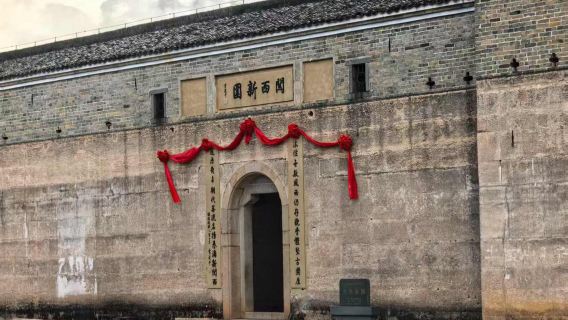
Fujian Tulou Yongding Scenic Area includes Fujian Tulou Prince Scenic Area, Fujian Tulou King Scenic Area, Chuxi Tulou Ancient Village Scenic Area, Zhongchuan Ancient Village and other Tulou groups. Fujian Tulou Prince Scenic Area is a world cultural heritage site and a national AAAAA-level tourist attraction. It is a unique Tulou village and is known as China's beautiful countryside. There are more than 120 earth buildings of different shapes in existence, among which the representative ones are Zhencheng Building, the "Prince of Earth Buildings" that combines Chinese and Western styles, and Kuiju, a palace-style earth building known as the "Little Potala Palace". The classic five-phoenix-style earth building - Fuyu Building, the small round earth building with a meter of meter - Rusheng Building, etc. are all the best among many earth buildings. There are a variety of experience projects in the scenic area, such as rammed earth buildings, Shiban music, string puppets, and Hakka wedding performances. Location: Hongkeng Village, Hukeng Town, Yongding District, Longyan City, Fujian Province. Fujian Tulou King Scenic Area is a world cultural heritage site located in Gaotou Township, Yongding District. The landmark building in the scenic area, Chengqi Building, was built during the Chongzhen period of the Ming Dynasty. It is famous for its large number of rings and large scale. At its peak, more than 800 people lived there. In 1981, it was included in the Chinese Scenic Spots Dictionary and won the title of "King of Earth Buildings". It competes with Chinese famous places such as the Temple of Heaven in Beijing and the Mogao Grottoes in Dunhuang. It is a Hakka earth building that attracted the attention of architectural experts earlier. The Fujian residential stamps issued by the Ministry of Posts and Telecommunications of China in 1986 used Chengqi Tower as the pattern. In addition to Chengqi Tower in the scenic area, there are also Parkview Tower, Shize Tower and Wuyun Tower, which are all included in the World Heritage List. Location: Gaobei Village, Gaotou Township, Yongding District, Longyan City, Fujian Province. Chuxi Tulou Ancient Village Scenic Spot is a world cultural heritage site. It is a majestic group of tulou in Fujian, with 5 round buildings and 31 square buildings. The scenic spot is not only large in scale, but also has the characteristics of "concentration, beauty, ancientness, specialness, and well-known". It is a tourist destination for cultural and leisure experience. "Jiqing Building", a national key cultural relic protection unit, is a round earth building with a long history and special structure among Fujian earth buildings. Not a single iron nail was used in the construction of the entire building. The 72 stairs and the nearly 2-meter-thick raw earth wall have experienced more than 600 years of wind, frost, snow and rain. Location: Chuxi Village, Xiayang Town, Yongding District, Longyan City, Fujian Province. The ancient village of Zhongchuan has created what historians and writers call the incredible "Zhongchuan cultural phenomenon", and is known as "the best hometown of overseas Chinese in the world" and "a family of civil and military families". This is the former residence of Mr. Hu Wenhu, the famous patriotic overseas Chinese leader and king of snake oil. . The representative buildings in the scenic area include the Hu Wenhu Memorial Hall - Hubao Villa, the most beautiful pagoda in western Fujian - Hubao Pagoda, the Hakka treasure - Hu Family Temple, Hu Wenhu's former residence, as well as the Fuzi Tower shaped like the word "Fu" and other wonders of earth buildings. Location: Zhongchuan Village, Xiayang Town, Yongding District, Longyan City, Fujian Province.

China · Longyan
Qili Ancient Town
No. 18 of Family-friendly Attractions in Jiangxi

Qili Ancient Town

6
4.4/5
646 reviews

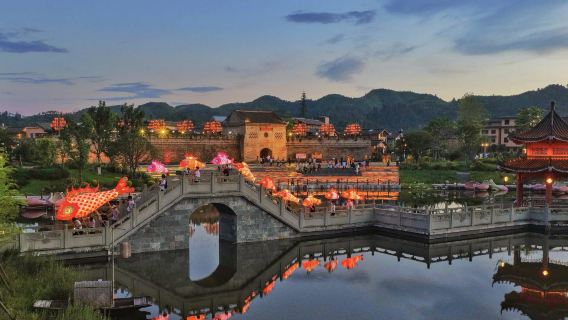
Qili Ancient Town Resort covers an area of ​​1,571.93 acres. It restores the ancient town texture of "one vertical, three horizontal and eighteen alleys" of the historical block. With the theme of "the first town of the thousand-mile Ganjiang River", it is divided into four functional areas: ancient town resort, hotel convention and exhibition area, leisure and commercial area, and ruins park area. It has a rare national style boutique pet park in Jiangxi, an international brand five-star hotel in southern Jiangxi, 1 urban riverside leisure and commercial street, 3 night tours and night shows, and 5 theme hotels, forming a balanced development of urban functions and recreational functions, enriching the tourists' travel experience. Qili Ancient Town Resort emphasizes the dual-wheel drive of cultural inheritance and industrial innovation, relying on the four cultural essences of "porcelain kiln, drumstick transportation, temple fair, and Hakka", to promote the in-depth night tour experience of the integration of IP matrix and Qili stories. It allows tourists to fully appreciate the rich cultural heritage of southern Jiangxi and the unique history and culture of Qili, including visiting famous historical sites, experiencing workshops, folk culture performances, tasting special food and various styles of theme resort hotels, etc., to achieve the tourism goal of "visiting Ganzhou and staying in Qili".

Ganzhou · 51.9km from Xinfeng
Queshi Scenic Spot
No. 2 of Best Things to Do in Shantou

Queshi Scenic Spot

7.3
4.5/5
677 reviews

Queshi scenic area is located in Haojiang District on the south bank of the inner bay of Shantou, facing the old city across the sea. The character "Que" originally means "stone mountain". The mountain is covered with granite, which has been weathered over a long period of time, forming a continuous range of stone egg-shaped hills. Strange peaks, secluded valleys, and bizarre rocks are framed together with the bay scenery, and mountains, sea, rocks, and caves make up a beautiful landscape. The attraction consists of six sections: Xiaoshi, Tashan, Yanfeng, Xianglushan, Bijiashan, and Su'an. Among them, Tashan and Yanfeng are more developed and are the main destinations for most tourists. The attraction is divided into six attractions, namely Xiaoshi attraction, Queshi Tashan attraction, Yanfeng attraction, Xianglu Mountain, Bijia Mountain attraction, and Su'an attraction. Among them, Xianglu attraction and Bijia Mountain attraction are currently under development. You can choose to visit the remaining four attractions based on your preference, with Queshi Tashan attraction and Yanfeng attraction being the main highlights. This is because Queshi Tashan attraction is relatively more developed, while Yanfeng attraction is another well-developed attraction, which is comparatively larger—about three times the size of Queshi Tashan attraction—and notably features the natural scenery of Dream Valley. Tashan mountain is renowned for its secluded rock caves and cliff inscriptions, with attractions like Shuilian cave, Taohua stream, and Liudan pavilion scattered across its slopes. Its highlight is Chuihong cave—a series of interconnected caverns naturally formed by stacked granite boulders, where large and small rocks cluster chaotically along the ceilings and walls like a stone corridor. Visitors crawl through the cave and emerge halfway up the mountain; further up lies Piaoran pavilion at Tashan's summit. This two-story, six-pillared pavilion offers panoramic views of Shantou's inner bay and the city skyline opposite, making it perpetually popular. The quieter Mengou pavilion lies not far along the hiking trail. Visitors can choose the cable car or slide for ascent/descent, or hike the entire route. The least strenuous option is taking the cable car up and descending through Chuihong cave's rocky passage. The Flame peak area is much more open than Ta mountain, with its signature attraction being Dream valley: in the 1920s, writer Xiao Qian fell in love with a Chaoshan girl in Queshi and later wrote the novel "Dream valley" based on this experience. The valley features lush trees and serene streams, offering a different kind of rustic charm beyond rock and sea views. The attraction also preserves Western-style old buildings from the port-opening era, such as the former British consulate and Queshi church. After admiring the mountains and sea, these colonial-era structures present another unique aspect that distinguishes Queshi from ordinary mountain-sea attractions. To the left, a 5-minute walk leads to Chuihong Cave. This naturally formed granite cave complex features stacked boulders of varying sizes along its ceiling and walls, creating a stone corridor. Climbing through the cave is akin to ascending a mountain, as the exit actually nears the summit. Not far from Chui Hong Cave is the mountaintop viewing platform Piao Ran Pavilion, where you can overlook the panoramic view of Shantou, but this spot tends to be crowded. The Meng Ou Pavilion on the western side is quieter, and the distance between the two can be covered in approx. 10 mins on foot. After visiting, you can choose to take the slideway down the mountain.

China · Shantou
Lianzhou underground river
No. 2 of Best Things to Do in Qingyuan

Lianzhou underground river

7.2
4.8/5
7.2k reviews

Lianzhou underground river is located 26 km northeast of the ancient city of Lianzhou, nestled in the towering mountains at the junction of Guangdong, Guangxi and Hunan provinces. It is a giant natural limestone cave typical of subtropical karst landforms. Renowned for its mysterious and magnificent stalactites and subterranean rivers, it is hailed as the premier underground river in Guangdong. The attraction features both land and water routes - the land route showcases the cave formations while the water route explores the underground river. With its grand scale, spectacular views and unique combination of features, the Lianzhou underground river is considered a marvel of Lingnan region. Celebrated writer Qin Mu described it as "a mysterious and magnificent underground river". Its distinctive characteristics include caves within caves, rivers within caves, bridges within caves and waterfalls within caves. The Lianzhou underground river lies hidden in a karst cave halfway up the high mountain, covering an area of 100,000 m² with 60,000 m² accessible for visitors. The upper two levels feature spectacular sights like the 30 m-high sky-piercing pillar and the immortal field square that can accommodate 10,000 people. The third level consists of a winding underground river where water quietly flows into the cave's depths. The cave presents an extraordinary landscape with endless mountain-water vistas, towering cliffs, and naturally formed majestic openings that create a profound sense of discovering a hidden world - arguably surpassing even the seven-star attraction. With year-round temperatures maintained at 18-22°C, humidity at 96-98%, oxygen levels as high as 21.4-21.6%, and carbon dioxide content merely 0.01-0.019%, the cave offers fresh air, warm winters and cool summers, making it an ideal sanctuary for tourism and summer retreats. The cave features countless stalactites of diverse shapes and dazzling colors, with the tour area divided into three levels. The upper and middle levels are land layers with tall, spacious halls and solid rock walls, presenting magnificent scenes like "waterfalls," "mountain forests," "secluded valleys," "pastoral fields," and "Yao villages," where flowers bloom in competition and birds soar amid drifting clouds. The lower level is an underground river meandering 1,500 m from north to south, passing through three beautiful gorges and beneath four mountain peaks. The river is 1.6-10 m wide and 1-7 m deep, with breathtaking scenery along both banks, including the cave treasures "Golden rooster heralds the dawn" and "Flying elephant crosses the river," as well as the two-in-one spectacle "Longevity star" in the underground river. There are also nearly 100 natural wonders formed by stone pillars, stone curtains, stalagmites, stone lotus roots, and stone flowers, such as "Flying waterfall and strange rocks" and "Flower and bird divine pavilion." Every natural wonder leaves visitors in awe, making them reluctant to leave. Lianzhou underground river offers free guide services, and viewing the stone formations with the guide's explanation makes it more fascinating. After walking through the land layer, visitors can board a cruise boat, with each boat accommodating approx. 18 people. The small boat travels along the underground river through winding and narrow passages, where stalactites overhead are within reach. Along the way, you'll pass through three gorges: banana gorge, lotus gorge, and Lianzhou underground river-dragon gate gorge. The stalactite formations on both banks, illuminated by lights, create a breathtaking sight. Visitors often get wet from water droplets falling from the dome, unlike overdeveloped caves that have dried up and lost their vitality. Product type: Land layer tour + cruise. The Lianzhou underground river attraction operates on a single-ticket system for the cave. The standard tour duration is approximately 1.5 to 2 hours (may extend during peak season and holidays). The itinerary includes walking through the land layer and taking a cruise along the underground river. The cruise lasts about 10-15 minutes, and the entire cave tour takes approx. 1.5 hours.

China · Lianzhou
Tianluokeng Tulou Cluster
No. 1 of Fall Viewing Attractions in Zhangzhou

Tianluokeng Tulou Cluster

7
4.5/5
4.1k reviews

The Tianluokeng Tulou Cluster is nestled among the mountains of Nanjing, Fujian, and is the iconic architectural complex of Fujian tulou, often referred to as the "calling card" of Fujian tulou. It consists of five three-story tulou buildings: the square Buyun Building at the center, surrounded by the round Zhenchang, Ruiyun, and Hechang Buildings, and the oval Wenchang Building. This layout, with one square building at the center and four round ones encircling it, resembles a dining table setup, earning it the playful nickname "Four Dishes and One Soup." It has also been the ancestral home of the Hakka Huang clan since the Qing Dynasty until its final form in the 1960s. There are two unmissable perspectives to appreciate these tulou clusters: from the hillside viewing platform overlooking five earthen buildings resembling a blooming plum blossom amidst terraced fields—their rammed-earth walls turn golden in the evening light, perfect for photography; or from the valley floor after descending the winding road, where the stepped tulou complex appears to emerge dramatically from the mountainside, often likened by travelers to a "Potala Palace." The shifting roadside views alternately reveal square and round structures in ever-changing compositions. The tulou still houses the Huang family today, with laundry drying in the courtyard, chickens and ducks strolling through the alleys, and cooking smoke rising behind the yellow walls—a living tableau of Hakka life. The central Buyun building, constructed during the Qing dynasty, bears the name "Buyun" (ascending to the clouds), embodying the clan's hope for their descendants to excel in studies and official careers. Stepping inside and gazing up at the tiered wooden corridors, one can truly experience the spatial layout of communal living.

China · Nanjing County
Millennium Yaozhai
No. 18 of Night Attractions in Guangdong

Millennium Yaozhai

7
4.7/5
9.8k reviews

Millennium Yaozhai is a national 4A-level tourist attraction, located at the front of the Wan Mountain Facing the King in Liannan, Qingyuan, at an altitude of 808 meters. The ancient village is built along the mountain, with layered houses, and has a history of over 1,400 years. It is not only renowned as the "first Yao village in the world" but also the hometown of the classic musical piece "Yao dance music." The attraction is situated in a karst landscape, surrounded by peaks and clusters of mountains. From a high vantage point, visitors can enjoy a panoramic view of the ancient village dwellings, thousands of acres of terraced fields, and the continuous mountain ranges, making it an ideal spot for sunrise and sunset viewing. The attraction boasts a rich intangible cultural heritage, including three national-level intangible cultural heritage items: the Yao song hall, the Yao long drum dance, and Yao wedding customs. Additionally, Pai Yao folk songs, Yao embroidery, and Yao silver-making techniques are listed as provincial-level intangible cultural heritage. The village preserves historical sites such as the Yao king's house and the Yao elders' meeting hall, offering a complete display of the thousand-year-old Pai Yao cultural traditions. Recommended things to do Enter through the ancient village gate, stroll along its historic streets, explore the historical sites of the Yao village, climb to enjoy the karst peak forest scenery, and watch captivating Yao ethnic song and dance performances. If time permits, we recommend witnessing the sunrise over the Yao village for an immersive experience of the mountain's dawn and dusk beauty. The attraction's core highlights include the nighttime torch parade and bonfire party.(Ticket required)The parade winds through the terraced fields, with flickering torches dotting the landscape. Upon reaching the Yao Dance Music Square, a grand bonfire party begins, featuring traditional Yao songs and dances, fire-breathing stunts, and interactive bamboo pole dancing. Join the lively celebration around the roaring bonfire for an immersive experience of the vibrant Yao ethnic nighttime festivities. The recommended duration is no less than 2 hours. Outdoor activities will be canceled in case of extreme weather such as heavy rain, subject to the attraction's on-site arrangements. ▲Millennium Yaozhai's tiered and staggered Paiyao ancient architecture ▲Karst peak forest with sunrise and sunset views ▲Torch parade ▲Bonfire party, an immersive experience of Yao ethnic customs ▲Night view of Yao village

China · Liannan

Experiences you can't miss in Xinfeng

Featured Day tours in Xinfeng

View all Day tours

Xinfeng Today's weatherClear 9-17℃
Xinfeng weather for the next 2 days11/10: 9-16℃, 11/11: 10-20℃

Free things to do in Xinfeng

What travellers say about Xinfeng

user-avatar
M30***1423 October 2026
5.0
The evening activities are great now, avoiding the daytime sun. My 3-year-old is having a blast in the non-motorized play area. My 8-year-old is incredibly excited by the "Eagle Soaring in the Sky" activity.

Ganzhou Fantawild Glorious Orient Park

user-avatar
Lilyyaoyao22 October 2026
5.0
These are very distinctive Hakka residences, quite large. Historically, they were large, round or square earthen buildings where Hakka people, migrating from the north, lived together as family units. They are architecturally unique, taking into account functions such as water access and defense, and represent traditional architectural culture. Worth seeing.

Fujian Tulou Yongding Scenic Area

user-avatar
FrankV4 November 2026
5.0
The environment is beautiful; it's a renovated old town with ample space, and they're constantly expanding the guest rooms, but there aren't actually that many tourists. The highlight is the riverside walkway lined with ancient banyan trees, with over a dozen old wharves and enormous banyan trees on both sides. However, the most popular area is actually the zoo. The food and beverage options within the scenic area need improvement; there isn't even a milk tea shop, making it difficult for tourists to find a drink. There's significant room for improvement.

Qili Ancient Town

user-avatar
_zx***8230 September 2026
5.0
Taking this cable car is a major attraction in the Queshi Scenic Area. The staff at the stations are very responsible, and the cable car operates safely and hygienically. Climbing to the top of Tashan Mountain and getting a bird's-eye view of Shantou is a very pleasant experience.

Queshi Scenic Spot

user-avatar
gzf***dr8 November 2026
5.0
While the caves may not be as large as those in Guizhou, Guangxi, and Hunan, the underground river tour is the biggest feature and the best experience here.

Lianzhou underground river

user-avatar
Anonymous user23 October 2026
5.0
The scenery here is beautiful and worth visiting. However, the route instructions in the itinerary are not detailed enough, making it inconvenient for independent travelers with cars. I especially suggest adding benches for tourists to rest and wait at the area where you can watch the fishermen cast their nets.

Xiaodongjiang Scenic Spot

user-avatar
Anonymous user2 August 2026
5.0
Four dishes and one soup, truly living up to the name. From above, it looks like a standard four dishes and one soup; but on site, each dish is unique and wonderful, with round, square, and oval shapes, organically combining different styles, fully demonstrating the superb wisdom of people in the past.

Tianluokeng Tulou Cluster

user-avatar
hylxz1 November 2026
4.0
The namesake of Danxia landforms, a World Natural Heritage site, boasts stunning red rock peaks and forests perfect for photos. Sunrise and sunset are the highlights, with the sunset at Ximeizhai and sunrise at Elder Peak offering breathtaking atmosphere. However, the area has many steps and significant elevation changes, making it a challenging hiking destination.

Danxiashan UNESCO Global Geopark

user-avatar
水果师傅2 November 2026
5.0
I drove here specifically to visit the thousand-year-old Yao village. The village is built on a mountain, with many steps, so climbing it was a bit tiring. The stilted houses are layered one after another, and the view of the surrounding mountains from the top is excellent, making for great photos.

Millennium Yaozhai

user-avatar
Icometoofast20 October 2026
5.0
I visited Mingyue Mountain after hearing so much about it, and the overall experience was fantastic! The mountains and forests are lush and verdant, with beautiful scenery at every turn. The Qingyun Plank Road offers expansive views, allowing you to gaze at the rolling mountains and take great photos. The mountain temperature is pleasant, making it a perfect escape from the summer heat. The park's signage is clear, the service is excellent, and the itinerary is well-planned. After exploring Mingyue Mountain, a soak in the selenium-rich hot springs completes the experience, offering both health and relaxation. This route in Yichun is ideal for a short getaway.

Mount Mingyue

Trip Moments in Xinfeng

Popular cities near Xinfeng

Frequently asked questions

What are the recommended tours and excursions in Xinfeng?

When choosing a tour, start with how much time you have and the kind of experience you're looking for. Trending options right now include 1-day tour to Yangcun Yan Yiwei + Nanyue Wudang Mountain in Ganzhou, Jiangxi with Chinese and English service, Autumn ginkgo viewing · Shaoguan Nanxiong 1-day tour [Maozifeng + Zhuji Ancient Lane + Meiguan Ancient Post Road + Sanying Pagoda], and Shaoguan National Forest Park + Maozifeng + Meiguan Ancient Post Road Day Tour with Chinese and English Services. Check the real-time availability and itinerary before you book.

As of 9 November 2026, the reference price for day tours and activities in Xinfeng is around SAR 55.1 – SAR 1,085.97. Rates vary by duration, group size, transport, tickets, meals, and any special admission requirements. Before you book, please confirm the billing currency and whether the price is quoted per person or per group.

Get help anytime, anywhere within 30 secondsContact customer support

Change and cancellation policies vary by attractions and tours. Please check the product details page for more information.

Ticket prices may vary between weekdays and weekends, as well as during peak and off-peak seasons. When booking with Trip.com, you can also use Trip Coins to get extra savings. For more tips on booking discounted tickets, please visit Trip.com for the latest information.