Things to do in Zhijiang
Explore top experiences
Top 10 attractions in Zhijiang


The Three Gorges Dam Tourism Area
The Three Gorges Dam Tourism Area is located in the Xiling Gorge section of the Yangtze River in Yichang, Hubei. It is a scenic attraction built around the Three Gorges hydro project, covering over ten square kilometers. Currently, it offers travelers three viewing spots: Tanzi Ridge, the 185 viewing platform, and the river closure memorial park. The dam crest itself is not open to travelers, so visits primarily revolve around these three attractions. Tanzi Ridge is the highest accessible point in the dam area, named for its jar-shaped summit viewing platform resembling an overturned jar. It also served as the survey site for the dam's initial location selection. From the ridge top, visitors can overlook the Three Gorges Project in its entirety—the dam, power station, and twin five-level ship locks are all visible. The five lock chambers cascade down the mountainside, earning the nickname "Fourth Gorge of the Yangtze." The park displays engineering artifacts like ancient riverbed stones, river closure rocks, and foundation stones from the dam site, complemented by model exhibits that help visitors intuitively understand the origins and development of this mega-project. The 185 observation platform is located on the left bank of the dam. It gets its name from sharing the same elevation of 185 m as the dam crest. Standing on the platform feels like being atop the dam: on one side, the dam and vertical ship lift are within close reach, offering a chance to witness ships "riding the elevator" over the dam; on the other side lies the vast, tranquil reservoir upstream. The stark contrast between the stillness above and the dynamism below the dam is striking. The closure memorial park is situated on the right bank downstream of the dam, preserving artifacts like tetrahedral closure stones and large loading machinery used during the construction. It's an ideal spot to view the dam's full frontal grandeur. During flood seasons when the dam releases water, torrents rush out from the deep outlets, creating towering mist and thunderous echoes that reverberate through the valley—a truly awe-inspiring spectacle. The three attractions are far apart, and the scenic area provides shuttle buses for transportation. It is recommended to reserve half a day to visit them in order.Yichang · 82.5km from Zhijiang

Orange Isle Scenic Area
Orange Isle Scenic Area is a narrow sandbar lying across the heart of the Xiang River in Changsha, stretching approx. five km. It faces Yuelu Mountain to the west and borders Changsha's old city to the east, surrounded by water on all sides. Named after the abundant orange trees planted on the isle, it was historically called Shuiluzhou. Formed by river alluvium, this sandbar has existed for over a millennium, where the "River and sky in evening snow" scenery was once among the Eight Views of Xiaoxiang. In 1925, the poem "Spring in a pleasure garden - Changsha" was composed here, with its iconic line "Alone I stand in the biting fall, watching the Xiang River flow north past Orange Isle's head," which made this riverine landmark widely renowned. The highlights of the visit are concentrated at the islet's head: A granite art sculpture over 30 m tall, modeled after the 1925 youth image, stands facing the river as Changsha's highly recognizable landmark. Nearby, the Questioning Heaven Platform extends toward the river center, where leaning on the railing reveals the mighty Xiang River flowing northward, with Yuelu Mountain and the city skylines on both banks facing each other across the water. The Songju Pavilion, white marble poetry stele, and the 200-year-old ancient phoenix tree at the islet head are all in this area. Heading north from the islet head, a hundred-acre orange orchard bears golden fruits in fall, while bamboo groves, peach orchards, plum gardens, and osmanthus groves take turns showcasing seasonal flora. The historic Zhuzhang Ferry (where Zhu Xi and Zhang Shi once crossed the Xiang River for lectures) and the Huxiang Culture Exhibition Hall are scattered along the way. At the islet's tail, the reconstructed Jiangshen Temple and Gongji Tower area was precisely where ancients admired the "River and sky in evening snow" scenery. The island is long and narrow, making round-trip walks quite tiring. A sightseeing train is available for transportation, with multiple stops along the way for hopping on and off. Travelers with limited time are advised to head straight to the island's tip to see the sculpture and river views, then stroll leisurely along the riverside path. At dusk, watching the sunset over the Xiang River and seeing the lights gradually illuminate both shores from the island's tip is especially worth setting aside time for.China · Changsha

Hunan Museum
Hunan Museum has a rich collection of cultural relics, especially of those from the Mawangdui Han Dynasty Tombs. The Mawangdui Han Dynasty Tombs Exhibition is a permanent exhibit at Hunan Museum. It features thin-as-cicada-wing plain yarn garments, undamaged printed cotton gowns, all kinds of exquisite embroidery, brightly painted lacquer wares, delicate and detailed paintings, and so on.China · Changsha

Yangtze River Three Gorges
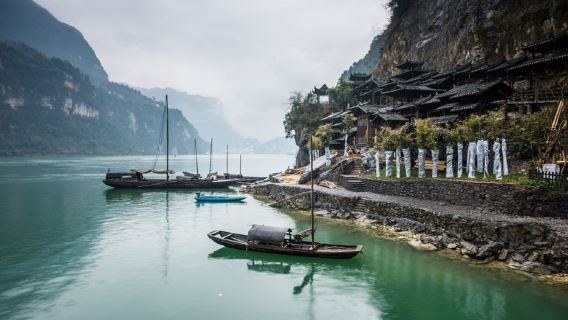
The Yangtze River Three Gorges is a grand canyon formed by the Yangtze cutting through the Wushan Mountains. It stretches nearly 200 km from White Emperor City in Fengjie, Chongqing, in the west to Nanjin Pass in Yichang, Hubei, in the east, connecting three gorges—Qutang, Wuxia, and Xiling—from west to east. This stretch of river has served as a vital waterway between Ba and Chu since ancient times. Li Bai's verse "Departing at dawn from White Emperor City veiled in colorful clouds" depicts the eastbound journey from the gorge entrance, while Du Fu left his famous line "The endless Yangtze rolls on and on" in Fengjie. Each gorge has distinct characteristics, often summarized as "majestic Qutang, graceful Wuxia, and perilous Xiling." Qutang Gorge spans only about 8 km but is renowned for its sheer cliffs. At Kuimen, its entrance, the river abruptly narrows to less than 100 m between knife-cut bluffs—a scene featured on the back of China's fifth series CNY 10 banknote. Ancient plank road holes and Wind Box Gorge's hanging coffins remain visible on the cliffs. Wuxia Gorge extends over 40 km like a winding gallery, with the Twelve Peaks lining its banks. Goddess Peak stands elegantly photogenic in morning mist. Xiling Gorge was once notorious for rapids, but the Three Gorges Dam has transformed its upper reaches into a "high gorge with placid waters." Riverside landmarks like White Emperor City and Huangling Temple are worth visiting. Cruising is the best way to experience the gorges. Long-distance ships sail downstream, while short round-trip boats shuttle through key sections. Watching peaks drift by from the deck offers a more immersive perspective than shore viewing. Morning mist often creates ideal conditions for photographing Kuimen and Goddess Peak. Cliffside plank road relics and inscriptions may flash by during the cruise—keep an eye out to avoid missing them.Yichang · 57.9km from Zhijiang

Jingzhou Museum
As a local museum, the collection of Jingzhou Museum is not poor and has distinct local characteristics. In Jingzhou Museum, you can see various jade ornaments of prehistoric craftsmanship; silk from the Warring States Period; the sword of King Yue and the spear of King Fuchai of Wu, which are shining with cold light and look like new; and colorful and exquisitely crafted lacquerware from the Warring States Period, Qin and Han Dynasties. The museum also houses the world's earliest mathematical monograph "Arithmetic Book" and Xiao He's "Two-Year Law" and other bamboo slips from the early Han Dynasty; the treasure of the town is: the "Western Han Male Corpse", which has been preserved for a long time and is relatively well preserved so far. The cultural relics exhibition of Jingzhou Museum is divided into two exhibition areas: the front yard and the back yard. The exhibition building in the front yard is the basic exhibition. That is, representative cultural relics are selected in the order of historical development, showing the history of civilization development in Jingzhou from the Neolithic Age to the Qin and Han Dynasties. There are two special exhibitions: "Jianghan Plain Primitive Culture Exhibition" and "Jianghan Plain Chu-Han Culture Exhibition". The treasure hall in the backyard exhibition area has three special exhibitions. The special exhibition "Han Tomb No. 168 in Fenghuang Mountain, Jingzhou" displays the treasure of the town: a male corpse of the Western Han Dynasty unearthed in the ancient capital of Chu, Jinan City in 1975, as well as his coffin and burial objects. According to the written records unearthed in the tomb, the deceased was buried in the 13th year of Emperor Wen of the Han Dynasty (167 BC), earlier than the female corpse in the Mawangdui Han Tomb in Changsha. The male corpse has been buried underground for more than 2,000 years without decay, which is rare in the world. The "one coffin and two coffins" that contained the male corpse are well preserved. The large coffin chamber and two sets of coffins indicate the noble status of the owner. The exhibition also displays hundreds of burial objects, including two items with unique styles, long preservation and still intact to this day: linen skirt and linen shoes, which are extremely precious. The cultural relics in the collection of Jingzhou Museum are sometimes exhibited in a "reincarnation" way, so you may not be able to see all the treasures in the collection at once. The museum provides the service of renting an Guide, the rental fee is 20 yuan/piece, and it is recommended to rent one when visiting.Jingzhou · 41km from Zhijiang

Hubei Provincial Museum
The Hubei Museum is composed of three antique buildings, including a comprehensive exhibition hall, a Chu Culture Hall, and a bell museum. The layout reflects the ancient Chu architectural concept of "One Hall" and "Multiple Stations". The Hubei Museum boasts four treasures: the Zeng Houyi Chime Bells unearthed in the Tomb of Marquis Yi of Zeng; the exquisite workmanship of the cold weapon era, the King of Yue's Sword of Goujian, the 1 million year-old Xunxian Man Skull Fossil, and the White and Blue Porcelain Plum Vase.China · Wuhan

Qingchuan Pavilion
Qingchuan Pavilion is located on Hanyang's Tortoise Mountain and faces the Yangtze River, across the river from the Yellow Crane Tower. Qingchuan Pavilion was built in the Ming Dynasty and was named after the Tang Dynasty poet Cui Wei. The pavilion as it exists today was rebuilt in the 1980s according to historical photos. The scenic area consists of three main buildings: Qingchuan Pavilion, Wuhan Dayu's Palace, and Tiemenguan. There are also a number of other attractions such as various stone tablets and monuments, decorated archways, and cloisters, all rich in classical Chinese charm. It is very pleasant to climb up to the pavilion, feel the wind from the river, and enjoy the view of the river. The classical architecture and the greenery here complement each other perfectly, and the beautiful scenery has caused this to become a popular spot for wedding pictures in Wuhan.China · Wuhan

Mount Yuelu
Mount Yuelu stands on the west bank of the Xiang River and is a landmark mountain in Changsha. At its foot lies the Yuelu Academy, founded during the Northern Song Dynasty, a millennium-old institution sharing the mountain's name. Ascending from here leads to Qingfeng Gorge, where the Aiwan Pavilion, named after Du Mu's poetic line "I stop my carriage to admire the maple woods at dusk," is surrounded by maple trees. Midway up the mountain, the ancient Lushan Temple, established in the Western Jin Dynasty over 1,700 years ago, features a lush six-dynasty-era podocarpus tree in front of its sutra repository. At the summit stands the Yunlu Palace, a Taoist temple built during the Ming Dynasty, offering panoramic views of the Xiang River and Changsha's urban area. The mountain's historical sites extend further, with the Yu King Stele, Python Cave, and Changsha Battle Memorial Stele scattered along its trails. Modern figures such as Huang Xing, Cai E, and Chen Tianhua are also buried here, making the mountain a condensed repository of profound modern history. Most cultural attractions are concentrated near the south gate, where you can visit major historic sites in sequence from Yuelu Academy to Aiwan Pavilion. For those preferring not to hike, a cableway station near the east gate allows easy ascent, eliminating most uphill climbing. With an elevation of about 300 m and well-developed trails, reaching the summit on foot is manageable. Ancient trees like Jin dynasty podocarps, Tang dynasty ginkgos, Song-Yuan era camphor trees, and Ming-Qing maple-chestnuts line the paths, making the entire mountain resemble a natural botanical museum. In late fall when maple leaves turn red across the slopes, it becomes an ideal time for hiking. Allocate half a day to leisurely photograph Aiwan Pavilion and the mountaintop viewpoints.China · Changsha

Jingzhou Ancient City
Yu the Great divided the land into nine regions, marking the beginning of Jingzhou. Jingzhou Ancient City, exceptionally well-preserved, is among China's first 24 nationally recognized historical and cultural cities. It stands as the largest and most intact ancient city in southern China. Jingzhou Ancient City is a national AAAA-level tourist attraction, featuring well-preserved ancient city walls that are designated as a key cultural relic under state protection. With a history dating back over 2,800 years, Jingzhou's city walls represent China's longest continuously standing ancient fortifications (over 1,800 years) spanning the most dynasties (15). These remarkable walls evolved from earthen structures to primarily brick construction with supplementary rammed earth sections. The existing city walls were rebuilt in the third year of the Shunzhi reign of the Qing Dynasty (1646 AD) on the Ming Dynasty foundation, constructed with glutinous rice-lime mortar for joint filling and featuring an integrated structure of brick and earthen walls for mutual support. Jingzhou Ancient City features an irregular oval-shaped wall, stretching 3.75 km east-west and 1.2 km north-south, covering an area of 4.5 sq km with a perimeter of 11.28 km. The wall averages 8.83m in height, with 4,567 battlements, 26 artillery platforms, and 5 troop-hiding tunnels. The historic site boasts 6 ancient gates and 2 gate towers (Binyang Tower at East Gate and Chaozong Tower at Great North Gate). The city is structured in three layers: an outer moat, a middle brick wall, and an inner earthen wall. The moat spans approx. 13,000m, with a width of 30–250m and an average depth of 4m, connecting to Taihu Lake in the west and the Yangtze River in the east while linking to the ancient canal. Built during the Ming Dynasty with stone foundations and brick walls reinforced by sticky rice-lime mortar to prevent subsidence and flooding, the wall's defensive system—including barbicans, watchtowers, barracks, artillery platforms, hidden tunnels, and double gates—made it nearly impregnable, earning its reputation as "Ironclad Jingzhou." Jingzhou Ancient City Night Tour - Jingzhou Ancient City Light Show The light show at Jingzhou Ancient City's East Gate uses flowing water as its stage, ancient walls as its screen, and lights as its medium to showcase the city's unique brand and cultural essence. Under the glow of lights, iconic landmarks like the ancient city walls, Binyang Tower, Golden Phoenix Soaring, Nine Dragon Pillars, and Qu Yuan Statue come alive in radiant splendor. Divided into four chapters - Heaven, Earth, Humanity, and Harmony - each scene tells a story of Jingzhou's cultural heritage and tourism highlights. Through a perfect blend of sound, light, and technology, accompanied by nighttime boat tours, this spectacular show opens a new chapter in the ancient city's night tourism experience. Painted pleasure boat cruise Board the Jingzhou cruise boat to explore the ancient moat and scenic riverside views of Jingzhou Ancient City. The moat was ingeniously created by connecting natural lakes, featuring expansive waters and winding banks that preserve the original lakes' natural beauty. Lush greenery and thriving vegetation along the shores highlight the charm of Hubei's water towns. During the cruise, you'll enjoy sights such as the Jingzhou ancient city walls, the Binyang Tower at Dadong Gate, the Nine Dragons Bridge in Jingzhou Ancient City, the Golden Phoenix city emblem, the Moonlight Bridge, the Qu Yuan statue, the wetland park—Moonlight Park, and Xiaobei Gate. City Loop Travel Services Experience the city tour service that circles the ancient city, covering approx. 13 km. This immersive journey through Jingzhou Ancient City allows you to explore its history, culture, and traditions from multiple perspectives—both inside and outside the walls. Along the way, admire the natural beauty of the moat and touch the weathered grandeur of Jingzhou's ancient walls, bearing witness to a thousand years of history. City sightseeing route: Starting at Binyang Tower (first stop) > Moonlight Bridge > Yuan'an Gate (Small North Gate) > New North Gate > Gongji Gate (Great North Gate) > Anlan Gate (West Gate) > New South Gate > Nanji Gate (Old South Gate) > Guandi Temple > Gong'an Gate (last stop). Boarding and alighting are only permitted at Binyang Tower and Guandi Temple—no stops along the way. Departure time: 8:00 AM to 4:20 PM (Fixed departure time slots every 30 min or when full)Jingzhou · 42.8km from Zhijiang

Li Zijian Art Museum
Li Zijian Art Museum is located on the bank of Xiangjiang River in the Yanghu Wetland Park area of Changsha City. It is a large-scale modern public art museum in China and abroad, which was solely invested and founded by Li Zijian and Dan Hui. The construction started in December 2014 and was completed and opened on October 1, 2016. At the same time, Li Zijian Art Museum has the reputation of "the world's largest individual artist art museum". Introduction to artist Li Zijian: Li Zijian is a famous American painter and the director of Li Zijian Art Museum. Born in Shaoyang, Hunan in 1954, he graduated from the Oil Painting Department of Guangzhou Academy of Fine Arts in 1982 and moved to Los Angeles, USA in 1988. Over the past 20 years, he has held 72 large-scale global tour solo exhibitions in 30 countries and regions on six continents. He has independently and at his own expense promoted the universal values of "humanity and love" and spread the spirit of Chinese culture through realistic oil painting art tours, and has gained international reputation and attracted attention in the art world. In March 2018, he was awarded the Gold Medal of the Knight of the Order of Literature (Arts) of the United Nations Global Philanthropy Alliance in Paris, France. In 2006, he was awarded the "Special Contribution Medal for International Peace" at the International Peace Forum. In 2005, he was awarded the European Byzantine "Knight of the Order of St. John" in Belgium and was knighted. In October 2016, painter Li Zijian and his wife invested in the construction of the "Artist's Personal Art Museum" - Li Zijian Art Museum in Changsha, Hunan, and he served as the lifelong director.China · Changsha
Experiences you can't miss in Zhijiang
Featured Day tours in Zhijiang
View all Day tours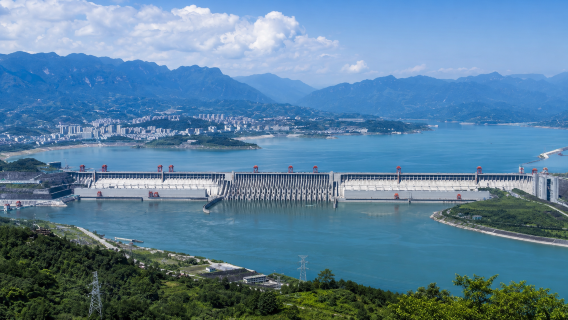
Free cancellation
Instant confirmation
Book now for tomorrow
FromIDR 1,421,622
FromIDR 6,918,919

FromIDR 6,378,379
FromIDR 6,378,379
FromIDR 6,432,433

Free cancellation
Book now for tomorrow
FromIDR 3,918,919
FromIDR 6,972,973
More ways to travel from Zhijiang
Group Tours in Zhijiang
View More Group Tours in Zhijiang


Free things to do in Zhijiang
The Three Gorges Dam Tourism Area
Yichang · 82.5km from ZhijiangOrange Isle Scenic Area
China · ChangshaHunan Museum
China · ChangshaYangtze River Three Gorges
Yichang · 57.9km from ZhijiangJingzhou Museum
Jingzhou · 41km from ZhijiangHubei Provincial Museum
China · WuhanImmediate access, Book now for today, Cancel anytimeQingchuan Pavilion
China · WuhanImmediate access, Book now for today, Cancel anytimeMount Yuelu
China · ChangshaJingzhou Ancient City
Jingzhou · 42.8km from ZhijiangLi Zijian Art Museum
China · Changsha
What travellers say about Zhijiang

E11***958 October 2026
5.0
The tour takes approximately 3.5 hours. From the visitor transfer center, take a sightseeing bus to Tanziling. After descending Tanziling, proceed to the 185 Park, where you can take an electric cart or walk. From the 185 Park, take a sightseeing bus to the Interception Memorial Park. Finally, take a sightseeing bus to the Miniature Landscape Park (the park's exit), concluding the tour.
The Three Gorges Dam Tourism Area

Anonymous user8 October 2026
5.0
There were no assigned seats, so you could sit anywhere. We spent most of our time on the third deck enjoying the view and taking photos. Although it was very hot outside, there was a breeze on both sides of the deck, so it wasn't too bad. There were karaoke machines and vendors selling snacks and drinks on both the second and third decks. The air conditioning on the second deck was very strong. We arrived at the pier half an hour early, and there was already a queue.
Orange Isle Scenic Area
Anonymous user9 October 2026
5.0
Since we couldn't book through the official website, we chose this option. Entry was smooth, and the guide even led us into a classroom for a brief explanation before the tour. The explanation was very detailed and thorough. Even with many people inside, the guide repeatedly checked the number of people and led the group. Overall, they were very dedicated and responsible, and we learned a lot from the guide – definitely worth the visit.
Hunan Museum

191***3230 April 2026
5.0
The scenery was beautiful, especially after the rain, like walking through a painting; the tour guide at the Three Gorges Dam was beautiful, had a lovely voice, and provided thorough explanations; the young man who accompanied us was professional, dedicated, and provided detailed explanations and made excellent arrangements! Highly recommended!
Yangtze River Three Gorges

M36***688 October 2026
5.0
The museum is relatively well-preserved, and the guide's explanations were incredibly vivid and engaging—it was fantastic! I especially remembered the only male wet-body exhibit in the country, which was remarkably well-preserved and all original pieces… hahaha. It was much bigger during the National Day holiday; I'd like to come again next time when it's less crowded…
Jingzhou Museum

大土豆一颗4 October 2026
5.0
The exhibited artifacts were quite good; I've also been to joint exhibitions organized by museums like the Hunan Provincial Museum. The Kremlin artifacts here are well-prepared and thoughtfully designed. However, the souvenir and merchandise section was rather boring. I was thinking of buying a pendant or something, but that saved me some money.
Hubei Provincial Museum

沅大王30 September 2026
5.0
The scenic area is filled with the fragrance of osmanthus blossoms. From the top, you can enjoy panoramic views of the Yangtze River Bridge and the Yellow Crane Tower. At the very top, watching the ships on the Yangtze and the cars and trains on the bridge, with the breeze blowing, is very pleasant, and it's not too crowded. The scenic area isn't large; a leisurely hour is about right to appreciate the scenery.
Qingchuan Pavilion and Guishan Scenic Area are directly connected by the Iron Gate Pass, which leads to the West Gate of Guishan. Climbing the mountain and enjoying the breeze and osmanthus fragrance is a wonderful experience.
Qingchuan Pavilion

118***585 October 2026
5.0
During the National Day holiday, the crowds were immense. Our tour guide, Xiao Xiang, led us along the way, providing lively and engaging explanations that saved us from taking unnecessary detours and greatly improved efficiency. He also clearly outlined the key locations.
Mount Yuelu

M10***0910 October 2026
4.0
Jingzhou is a famous city from the Three Kingdoms period. My child was very interested in the city after hearing about the Romance of the Three Kingdoms, especially wanting to see Guan Yu. It is said that the Guan Yu Temple is the original site of Guan Yu's residence. The place inside is not big, but the incense is very strong. We even tried to use the Green Dragon Crescent Blade. We used all our strength but it didn't budge. It must weigh more than 82 jin (41 catties). It is a good place to bring children to learn about history.
Jingzhou Ancient City

wan***ng19 October 2026
4.0
The surrounding environment is great; the park outside is definitely worth spending some time in. The museum itself has a fairly extensive collection. We rented a guided tour with the artists themselves, where you can hear their creative thoughts and background—it was quite interesting. However, sometimes the "sensing" function wasn't very effective; while standing in front of one painting, I'd sense the explanation of another, which could waste a bit of time. The gift shop has some nice designs; perhaps they could expand the selection. Overall, it's still worthwhile!
Li Zijian Art Museum


