Share to
Shanxi
Taiyuan
2025Vinegar-making Experiences in Taiyuan|trip.com
Vinegar-making Experiences in Taiyuan
3.3

No. 1 of Activities in Taiyuan
Introduction Vinegar-making Experiences in Taiyuan
IntroductionSome information may have been translated by Google Translate
Shanxi is one of the important birthplaces of Chinese vinegar culture, especially Taiyuan's vinegar culture. As early as the Warring States Period, Shanxi began to brew vinegar, and Taiyuan, as the location of the ancient city of Jinyang, has a long history of vinegar brewing. Shanxi old vinegar is famous at home and abroad for its unique brewing process and mellow taste, and is known as the "No. 1 vinegar in the world."
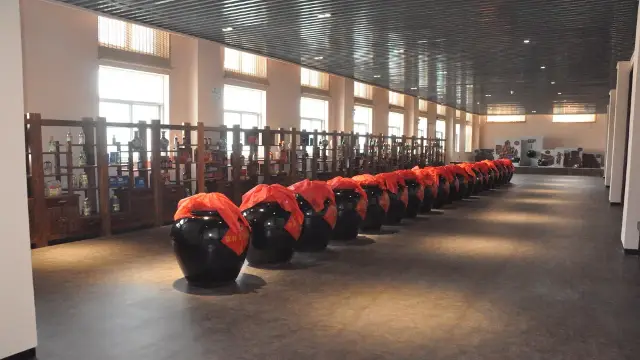
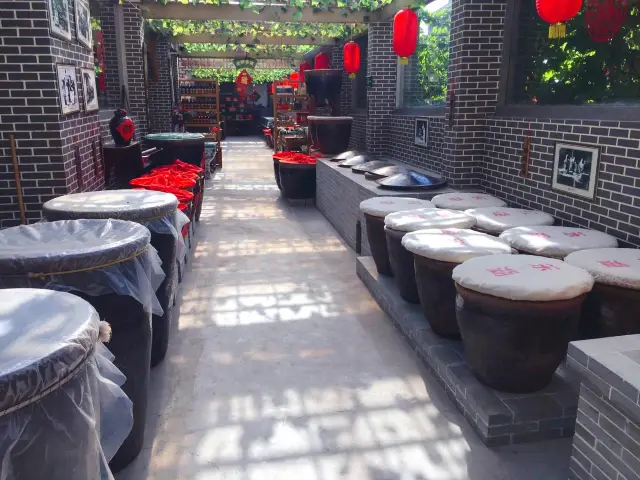
Donghu Vinegar Garden is recommended as a vinegar culture experience location. It is the first corporate and factory museum in Shanxi Province that dynamically displays the traditional and modern old vinegar production process and the historical and cultural connotation of old vinegar. Its predecessor was the famous Meiheju Vinegar Workshop in the Ming and Qing Dynasties, which carries a thousand-year brewing history.
Here, tourists can watch the vinegar brewing process up close and understand the steps of vinegar raw material selection, fermentation, distillation, aging, etc. In addition, there is a vinegar tasting session, where tourists can taste old vinegar of different years and feel its unique flavor.
Trip Moments Vinegar-making Experiences in Taiyuan
Vinegar-making Experiences in Taiyuan Trip Moments

On the Road, Heart at Mehood (Taiyuan Jinyang Street Branch)
Choosing the right hotel during a trip is like finding a warm harbor. My stay at Mehood Hotel exceeded my expectations with its warmth. Mehood Hotel is located at Exit A of Jinyang Street Metro Station, surrounded by a bustling commercial area with office buildings, North America N1, Guojin Center, and Maternity and Child Hospital. It's also convenient to go to the Red Lantern Stadium for concerts, with a shuttle bus from Longxing Street Metro Station directly to the south gate of the stadium. The moment I stepped into the hotel lobby, I was captivated by its elegant and grand decor. Soft lighting from simple spotlights and exquisite decorative items everywhere showcased quality and taste. The front desk staff were warm and professional, efficiently handling check-in procedures with sincere smiles, making me feel like a spring breeze. There was also a thoughtful butler offering tea, towels, and luggage assistance, providing super nice service. The room was spacious and bright, arranged to be cozy and comfortable. The soft bed felt like a cloud, making one fall into a sweet dream as soon as they lay down. The family room was larger than usual, with a 2m*2m bed and a 1*1.3m bed. The room's facilities were comprehensive, from high-speed stable wireless network to thoughtfully prepared toiletries, every detail was meticulously considered. It takes about 20 minutes from Taiyuan South Station to the hotel, and around 25 minutes during peak hours. From Wusu Airport to the hotel, it takes about 30 minutes. As for the restaurant, breakfast is on the first floor, with a standard Chinese-style breakfast that tastes very good, including Taiyuan's local specialty, Da Lu Mian. The restaurant offers free self-service afternoon tea during the day, where you can leisurely enjoy tea and fruits in the afternoon, feeling the pleasant time. There's also a late-night bowl of noodles available at 10 PM, satisfying your cravings. The hotel's pricing and positioning are quite reasonable. During holidays, the hotel offers discounts, with family rooms around 380 RMB and other room types around 300 RMB. It's super worth it, with free bottled water on every floor, free fruit snacks at the front desk, and different treats every day. Moreover, the hotel's service is top-notch. The staff always appear promptly when needed, whether it's for travel information or solving unexpected issues, they provide patient and detailed assistance. My stay at Mehood Hotel made me truly feel what it means to be a valued guest. I would not hesitate to recommend this hotel to my friends and look forward to my next visit to experience this warmth and beauty again.

Taiyuan China Coal Museum|Complete Guide
🔔Introduction: Shanxi Museum is located in Wanbailin District, Taiyuan. It is a national first-class museum and a collection center for historical relics, specimens, documents, and materials of the coal industry in China. ---- 📷Visitor Guide: ✅Ticket price: 60 yuan, no reservation required. ✅Opening hours: 9:00-17:30 (last entry at 16:30). ✅Recommended visit duration: 1-2 hours. ✅The museum has seven exhibition halls and a simulated mine: 🌟Seven exhibition halls: 🌈Coal Formation Hall, Coal and Humanity Hall, Coal Development Technology Hall, Contemporary Chinese Coal Industry Hall, Coal Art Hall, Coal Literature Hall, Sino-Foreign Exchange Hall. 🌈Through fossils, specimens, and geological materials, it reveals that coal comes from plants and restores the Jurassic forest landscape from hundreds of millions of years ago. 🌈It showcases from multiple angles the "Ancient Coal Development and Utilization", "Coal and the Modern Industrial Revolution", "Coal and Modern Life", "Advances in Coal Development Technology", and "Coal and the Future World". 🌟4D Cinema: In just six minutes, travel through billions of years of time and space, experiencing the Jurassic survival environment and various natural scenes in a three-dimensional way, feeling the process of coal formation amidst thrills and entertainment. Tips❗️Only the first row of seats has motion effects. 🌟Simulated Mine: 🌈Located on the underground floor, it is the largest underground simulated mine in Asia. The tour route is 800 meters long. You can wear a miner's hat with a headlamp, enter the underground mine tunnel like a real miner, take a small train, and witness the coal mining process firsthand, which is very impressive. 🌈The mine mainly has eight major scenes: Ancient Coal Kiln, Transportation Main Road, Modern Coal Tunnel, Blasting Workface, Geological Tunnel, Mechanized Tunneling Workface, Film Screening Area, Mechanized Coal Mining Workface. ---- 📍Address: No. 2, Yingze West Street, Wanbailin District, Taiyuan. ---- 🚗Transportation: Bus routes 813, 863, 868, get off at Yingze Bridge West Station.

China's No.1 vinegar.
Donghu Vinegar Garden is located in the Shanxi Mature Vinegar Group Co., Ltd. at No.26, Madaopo, Xinghualing District, Taiyuan City. It was developed from the "Meiheju" vinegar workshop, which was founded in the first year of Hongwu in the Ming Dynasty (1368). It is the original creator of Shanxi mature vinegar. The traditional brewing technique of more than 600 years has been rated as a "national intangible cultural heritage" by the Ministry of Culture of the State Council. The "Donghu Vinegar Garden", which is based on the culture of Shanxi mature vinegar, is the only vinegar culture tourism park in China. You can learn about the past and present of Shanxi mature vinegar, the production process and health effects. You can visit it when you travel to Taiyuan.

Taiyuan | A very business-oriented InterContinental
Stay here when visiting Taiyuan, the hotel location is quite good. There are many weddings during the period, there is a parking lot, and staying at the hotel is free of charge. Points redemption, Diamond Ambassador, strictly enforce the policy to upgrade to a higher room type upon arrival, no further upgrades when renewing ambassadorship. Concierge service is online, and check-in was very fast as it coincided with the staff shift change, with virtually no communication. The room is standard, with a business style, and the decoration style is not outstanding among InterContinental hotels. Breakfast is rich in carbohydrates, with oily meat available, and you can grab a bowl of noodles to make your own oily meat mixed noodles, which tastes quite good. The gym is not crowded and is well-equipped. It belongs to a typical business hotel, with many business travelers, and the surroundings are very convenient, with many shopping malls and restaurants.

The theme hotel "Follow Wukong to Shanxi" is here.
Another wave of black mythology has made our Shanxi popular again. The 5,000-year-old Shanxi has finally waited for you all. However, Shanxi tourism has been silent for many years. There are not many high-end characteristic hotels and homestays to choose from. Where to stay after arrival, as a local editor in Shanxi, I must arrange for you all. Datong Tongshe Waji Meisu (Huayan Temple Store) The newly opened Tongshe Waji Meisu in Datong is quite popular recently, because of its location, the gate is the thousand-year-old ancient temple Huayan Temple, and the lobby window view is amazing! The next Datong will have high-end Anlu, Kaiyue Zhenxuan, and Jixiashan. Taiyuan Maoye JW Marriott Hotel Taiyuan 2024 just opened JW Marriott, the opening time is just right, the hotel is in the core area of Taiyuan, the business district and attractions are very convenient to reach, you can overlook the style of this ancient capital of the Nine Dynasties in the city's high altitude, the luxury experience of Longcheng can't miss Marriott! In addition, Taiyuan Sheraton Hotel, Taiyuan InterContinental Hotel, and Taiyuan Kempinski Hotel, which are located in the core location of Taiyuan, can also be selected!

🇨🇳 • 《晋祠公园》(周) This park and its buildings
🇨🇳 • 《晋祠公园》(周) This park and its buildings is the “Museum of Chinese Constructions” throughout history, from 周 to 清. A Sublime place.
4

Taiyuan/Hidden Gem Hotel, Meifan Wanli, Dream Trip
Guys, this hotel in Taiyuan is amazing! I have to tell you about Meifan Wanli Hotel (Taiyuan Changzhi Road Wangfujing Store). As soon as I walked in, the lobby was grand and cozy, and the staff were as friendly as family, making me feel at home instantly. The room was ridiculously large, decorated like a five-star hotel, and every corner was so exquisite that I wanted to take pictures. The bed was as soft as cotton candy, and as soon as I lay down, I felt like I was floating, and my tired body instantly relaxed. When I opened the window, I could see the night view of Taiyuan, and the soundproofing was so good that it was like living in a cave, and it was so quiet at night that I could hear a pin drop. The bathroom was as clean as new, and the toiletries were complete and of good quality. What impressed me the most was their breakfast, which was as varied as a buffet, with a mix of Chinese and Western food, and even my picky stomach was conquered. The location was also great, right next to Wangfujing on Changzhi Road, making it very convenient for shopping and dining. The experience at this hotel was simply perfect! If you come to Taiyuan and don't stay at this hotel for a night, you're really missing out! Trust me, you'll love it!

One-day itinerary for Taiyuan Museum!
Hey guys, today I'm going to tell you about my one-day trip to Taiyuan Museum. It was amazing! I can only say that this cultural trip was a great experience. 📍Address: Just navigate to "Taiyuan Museum" and you'll get there. 🎫Tickets: Free! But you have to make a reservation on the official WeChat account in advance, don't forget this step. I arrived at around 10 am, and as soon as I got close to the museum, I was amazed by the magnificent architecture, a perfect blend of modernity and history, with a high-end and classy feel. After entering the museum, I went straight to the temporary exhibition hall on the first floor. There was a special exhibition of cultural relics at the time, with a dazzling array of exquisite bronzes, ceramics, and paintings. I stood in front of a uniquely shaped bronze for a long time, the patterns on it were so exquisite that they seemed to tell an ancient story, and I felt like I was connected to history. After leaving the temporary exhibition hall, I went to the historical and cultural exhibition hall on the second floor. Here, the history of Taiyuan is clearly displayed in chronological order. From ancient relics to modern development, there are cultural relics, models, and multimedia displays. Seeing the restored models of ancient Taiyuan City, I instantly imagined the life scenes of ancient people, as if I had traveled through time and met them. If you're tired, don't worry, there are rest areas in the museum, and you can also go to the observation deck on the top floor to overlook the scenery of the Fen River, enjoy the breeze and the view, and recharge your eyes and body. In the afternoon, I continued to visit the folk exhibition hall on the third floor, which was so interesting! There are various folk handicrafts, traditional costumes, and customs on display, full of life. The colorful paper-cut works, each cut with the people's love and blessings for life, are so heartfelt. Don't forget to take photos! The spiral staircase in the museum is a great place to take photos, with good lighting and angles, and any photo you take will look like a masterpiece. You can also take photos in front of the display cases, with precious cultural relics as the background, the photos will have both cultural connotations and a high-end feel. After visiting the museum, it was around 4 pm, so I went to a nearby food street to look for food. I had a bowl of authentic Taiyuan Tounao, which had a unique taste, and although it might not be to everyone's taste at first, the more you eat it, the more delicious it becomes. Paired with Shaomai, it was so satisfying that all my fatigue was gone. Guys, this trip to Taiyuan Museum was not only educational but also gave me a bunch of beautiful photos, it was totally worth it! If you have time, you must come and experience the unique charm of the intertwining of history and modernity.

Praised highly by Dong Yuhui, just how beautiful is Jinci Temple!
Jinci Temple boasts a long history of nearly 3,000 years and is the largest existing ancient garden-style temple complex in China👍. Since its establishment during the Western Zhou Dynasty, it has undergone numerous renovations and expansions through various dynasties, bearing countless historical memories. Strolling through the temple, you can admire the magnificent Shengmu Hall, a masterpiece of Song Dynasty architecture, with its grand and majestic structure and lifelike dragon wood carvings on the eaves and columns😲. There is also the unique Fish Pond Flying Bridge, the earliest existing water-land interchange bridge in China. Here, ancient trees tower into the sky, and pavilions and ponds are scattered harmoniously, making you feel as if you are in the water towns of Jiangnan, earning it the nickname 'Little Jiangnan of Shanxi'😜. Moreover, Jinci Temple is a great place to escape the summer heat, with its pleasant climate and cool mountain breeze🍃. At Jinci Temple, you can both appreciate the vicissitudes of history and enjoy a moment of tranquility and comfort. It is definitely worth a visit!💖 Come and experience the unique charm of Jinci Temple!

Shuangta Temple, Shanxi
Shuangta Temple, also known as Yongzuo Temple, is a famous Buddhist temple located in Haozhuang Village, Haozhuang Town, Yingze District, Taiyuan City, Shanxi Province. It was built during the Wanli period of the Ming Dynasty (1573–1620) and is named after the two towering ancient pagodas in the temple. It is known as the "Jinyang Wonder" and is a landmark building in Taiyuan. Shuangta Temple is built on a mountain, facing north, and consists of a temple, a pagoda courtyard, and a stele gallery courtyard. The main buildings of the temple include the mountain gate, the east and west wing rooms of the front courtyard, the second gate, the third gate, and the Daxiong Hall, the Zen Hall, and the Abbot's Room in the back courtyard. The pagoda courtyard has two pagodas, a hall, and a back hall. The Daxiong Hall is two stories high and rectangular in shape, with five rooms on the lower floor. Inside the hall, there are statues of Sakyamuni Buddha, Amitabha Buddha, and Medicine Buddha. The upper floor is the Three Saints Hall, originally named Guanyin Pavilion, with three rooms. The brick carvings on the ceiling are ingeniously and beautifully designed. The exterior of the hall imitates wooden structures, with brick columns, beams, brackets, and eaves, and the eaves are relatively short. The interior of the hall is entirely made of brick arches, without beams, so it is also called the Beamless Hall. The twin pagodas of Shuangta Temple are its core attraction. Both pagodas are octagonal and have 13 stories, about 54.7 meters high, and are built in a brick pavilion style, imitating wooden structures. The two pagodas are 60 meters apart, resembling twin sisters, and complement each other. The west pagoda (Wenfeng Pagoda) was built slightly earlier than the east pagoda (Relic Pagoda), and they each have their own unique styles and decorations, showcasing the artistic style of brick architecture in the Ming Dynasty. In addition to its architectural art, Shuangta Temple is also known for its rich cultural connotations. The temple houses more than 260 steles by famous calligraphers from various dynasties, including the "Baoxian Hall Collection of Ancient Calligraphy" from the Ming Dynasty and the "Ancient Baoxian Hall Calligraphy" from the Qing Dynasty. The temple also has over 6,000 peony plants, including the "Zixiaxian" peony from the Ming Dynasty, which is extremely precious. Shuangta Temple is not only a religious sanctuary but also an important place for studying Ming Dynasty architecture and calligraphy. It attracts a large number of tourists and scholars every year. On May 25, 2006, Yongzuo Temple was announced as a national key cultural relic protection unit by the State Council of the People's Republic of China.

2024 Trip to Mount Wutai
🚗🚗🚗Travel Itinerary: Day1: Mount Wutai Jingzhai Yunju (Wuye Temple Shuxiang Temple Store) Day2: Mount Wutai->Nanshan Temple->Mount Wutai Jingzhai Yunju (Wuye Temple Shuxiang Temple Store) Day3: Shuxiang Temple->Wuye Temple->Zhenhai Temple->Longquan Temple->Jinge Temple->Taiyuan Longcheng Street Hilton Garden Inn Day4:

Being controlled by this cute bronze for more than 10 minutes
Cultural Relic Card Name of the Relic: Mo (mò) Zun (Picture-) Era: Western Zhou Dynasty Excavation Site: Tomb No. 2158, Peng (péng) State Cemetery, Jiang County, Yuncheng City Collection Location: Shanxi Bronze Museum (Bronze Branch of Shanxi Museum) The mo is distributed in Southeast Asia and South America, with a pig-like body, short tail, oval ears, and a short retractable nose. If you have ever seen this animal in a zoo, you will find that these two adorable mos in front of you are truly lifelike. These two mo zun are tri-composite cast wine vessels, with a lid on the back and a bird-shaped knob on top. The body of the mo is decorated with horizontal scale patterns, the hip and tail parts are adorned with eye cloud patterns and cloud patterns, and the outer sides of the front and hind limbs are each decorated with a kui (kuí) dragon pattern. Cultural Relic Card Name of the Relic: Rabbit Zun (Picture-) Era: Western Zhou Dynasty Excavation Site: Tomb No. 8, Zhao Jin Marquis Cemetery, Quwo County, Linfen City Collection Location: Shanxi Bronze Museum (Bronze Branch of Shanxi Museum) The rabbit's shape is vivid, showing a crouching posture, with eyes fixed forward and ears pressed tightly against the body, as if ready to move at any moment. The sides of the abdomen have circular raised patterns, consisting of fire patterns, oblique angle thunder patterns, and hook-linked thunder patterns from the inside out. This rabbit zun is also a wine vessel, with a hollow belly and a rounded rectangular opening on the back, perfectly fitting with a matching lid that has a ring-shaped knob. Knowledge Extension Cloud patterns are typical decorations on bronze ware, commonly used as ground patterns (background for main motifs) on animal limbs and contours during the Shang and Western Zhou periods, forming multi-layered structures. Cloud patterns are composed of forked or continuous curving lines, with circular continuous curves called cloud patterns and square continuous curves called thunder patterns, which are deformed cloud patterns. Jin-style bronze ware features a variety of cloud patterns, including hook-linked cloud patterns, scroll cloud patterns, oblique angle cloud patterns, triangular cloud patterns, and deformed cloud patterns, all rich in decorative beauty. Taotie patterns, also known as beast face patterns, are abstract decorative motifs combining various animal features, popular from the Shang to early Western Zhou periods, declining in the mid-Western Zhou, and reappearing frequently in late Spring and Autumn period Jin-style bronze ware, often depicted with a mouth holding a kui dragon or kui phoenix. Scale patterns are composed of the scales on the bodies of dragons or snakes, arranged in continuous, overlapping, or parallel styles, popular in the mid to late Western Zhou period.
More Recommendations
More Recommendations
Popular Types of Attractions in Taiyuan
Historical attractions | Nature and wildlife | Natural scenery | Mountain climbing | Beaches and shores | Sightseeing tours | Night view | Boat tour | Cultural institutions | Museums | Themed exhibition halls | Science & technology museums | Parks | Amusement parks | Ice and snow parks | Film and television bases | Outdoor activities | Exhibitions & events | Performances | Exhibitions | Concerts | Leisure activities | Farms and pastures | Camping and campsites | Spa/massage | Water sports | Skybound experiences | Paragliding | Flight experiences | Skydiving
Popular Restaurants in Taiyuan
LiuWei Zhai (LiuXiang) | LIN XAING ZHAI RESTAURANT | SHANXI HOTEL·Restaurant | 山西潇河新城万达锦华酒店·北岸全日餐厅 | Shun liu'er | 杨记灌肠(食品街店) | Qing He Yuan | JIN YANG GU SHI | JIN WEI ER | THE FOOD GALLERY OF BINGZHOU | XING HUA TANG | 太原面食店(解放路店) | Bingcui Restaurant | SHAN XI GUILD HALL | LAO TAI YUAN KITCHEN | JIN WEI COURT | DI FU JIA YAN | HAI DE LAO HUO GUO QIN XIAN BEI JIE DIAN | Hao GangGang YangZaGe Dian (LiuXiang) | PING RIVER TASTE | YIN XIANG GE | Laocu Restaurant | 鼓楼羊杂割(双塔西街店) | JIN YUN LOU DA JIU DIAN | Always Cantonese Chinese Restaurant | 御·高级日料(湖滨店) | 金泽锦绣老北京新火锅(南内环店) | LAO TAI YUAN KITCHEN | LI WAI YUAN | 火焰山 涮锅 烤肉一体式自助餐厅(柳巷贵都店)
Recommended Attractions at Popular Destinations
Popular Attractions in Bangkok | Popular Attractions in Manila | Popular Attractions in Tokyo | Popular Attractions in Taipei | Popular Attractions in Hong Kong | Popular Attractions in Seoul | Popular Attractions in Kuala Lumpur | Popular Attractions in Los Angeles | Popular Attractions in Shanghai | Popular Attractions in New York | Popular Attractions in Shenzhen | Popular Attractions in Osaka | Popular Attractions in Singapore | Popular Attractions in London | Popular Attractions in Guangzhou | Popular Attractions in San Francisco | Popular Attractions in Beijing | Popular Attractions in Macau | Popular Attractions in Bali | Popular Attractions in Jakarta | Popular Attractions in Paris | Popular Attractions in Ho Chi Minh City | Popular Attractions in Istanbul | Popular Attractions in Phuket | Popular Attractions in Chicago | Popular Attractions in Seattle | Popular Attractions in Toronto | Popular Attractions in Orlando | Popular Attractions in Cebu | Popular Attractions in Chiang Mai
Popular Ranked Lists
Top 20 Best Things to Do in Geneva | Top 50 Best Things to Do in Budapest | Top 50 Best Things to Do in Sapporo | Top 50 Must-Visit Restaurants in Dalat | Top 50 Must-Visit Restaurants in Zhengzhou | Top 50 Luxury Hotels near Carmignano | Top 20 Best Things to Do in George Town | Top 50 Luxury Hotels near Sichon | Top 50 Best Things to Do in Venice | Top 10 Best Things to Do in Naha | Popular Premium Hotels in East Sussex | Popular Premium Hotels in Exeter | Top 50 Must-Visit Restaurants in Huzhou | Top 10 Local Restaurants in Lushan Global Geopark | Top 50 Must-Visit Restaurants in Birmingham | Top 50 Must-Visit Restaurants in Shanghai | Top 50 Must-Visit Restaurants in Urumqi | Top 50 Best Things to Do in Kyoto | Top 10 Best Things to Do in Phnom Penh | Popular Premium Hotels in Bedford | Top 50 Must-Visit Restaurants in Shangrao | Top 50 Must-Visit Restaurants in Hat Yai | Top 50 Must-Visit Restaurants in Liuzhou | Top 50 Must-Visit Restaurants in Chiang Mai | Popular Premium Hotels in Kemerovo | Top 50 Must-Visit Restaurants in Jiaxing | Top 50 Best Things to Do in Melbourne | Top 50 Best Things to Do in Istanbul | Top 20 Luxury Hotels near Binh Son | Popular Premium Hotels in Yangyang
Popular Trip Moments
Ancient Greek Sculpture Exhibition | Taiyuan · Jinci Dongyue Temple | Have you ever seen a bracket set where a big dragon spits out a small dragon? | Winter at Jin Temple with Cats as Companions | 6-Day Custom Tour in Taiyuan, Save This Guide Fast | Special Forces March Across Hebei, Shanxi, and Beijing: A Record of the Journey | 2025 Taiyuan Christmas Check-in Guide Collection (Continuously Updated…) | Shanxi Museum|Take a look at the museum's treasures | Elegance, truly elegance (with a guide to the Shanxi Museum) | Late November in Taiyuan | You thought you encountered a "phoenix"?? | Basic on the outside, extraordinary on the inside — Shanxi Bronze Museum | A One-Day Itinerary Sharing in Fenyang | Stayed 3 nights in a row in Taiyuan! The best choice was definitely this hidden gem of a hotel!!! | A Must-Stay Hotel Next to Liuxiang | New Exhibition: Exquisite Porcelain at Shanxi Museum | Taiyuan | Journey Through the Northern Qi Mural Museum | Welcome to explore LiuLiu City Resort Hotel | The Taiyuan Ice and Snow Christmas Tree is stunning | Yuncheng Travel Guide | Shanxi | Travel Through a Thousand Years and Encounter the Northern Capital of the Tang Dynasty in the Ancient City Camp | A Magical Adventure in the Ice and Snow World | Taiyuan · Jinci Sharira Shengsheng Pagoda | An Outstanding Example of Qing Dynasty Brick Pagodas | Jin Soul Travels Through 3000 Years | Special forces, step back! This is the right way to explore Shanxi | A must-try list of local delicacies in Taiyuan – these are absolutely amazing! | Treasures of Shanxi, Shanxi Museum | The cultural heritage of Shanxi: Jinci Museum in Taiyuan | Seeking tranquility in Jinci Park, Taiyuan | Autumn Limited-Time Hantian Beautiful Inn | The wind at Jinyang Lake blows away all the emo~
More Things To Do in Taiyuan
Taiyuan Travel Photography[Driver and director + travel photography + aerial photography of wedding photos and micro-film + makeup and Clothes & Accessories+ itinerary customization + free negatives] | Taiyuan Travel Photography[Driver and director + makeup and clothing + itinerary customization + aerial micro-film + free negatives + no limit on the number of people] | Wutai Mountain private charter service + Shanxi self-guided tour customized itinerary service | Taiyuan Travel Photography[Wedding photo micro-movie aerial photography/wedding follow-up photography/makeup and clothing/charter tour guide customization] | Xinzhou Wutai Mountain + Dailuoding + Pusa Ding (Bodhisattva Top) + Guanghua Temple|Taiyuan 1-day tour with transfer and English service | Xinzhou Wutai Mountain + Fanxian Mountain + Shifangtang Temple + Tayuan Temple one-day tour English service available | China Shanxi Province's interpreter Guide, local guide, explanation, private charter , Pick-up and drop-off/photographer, business escort, medical treatment escort, travel guide, travel interpreter customization | Shanxi Province Tour: Chinese/English/French/Russian and Other Language Guides/Interpreters/Local Escorts|Business/Exhibition Translation • City Walk • Attraction Tours • In-Park Commentary | Taiyuan, Shanxi: Tour Guides/Interpreters/Local Guides in Chinese, English, French, Russian and Other Languages|Business/Exhibition Translation • City Walk • Attraction Tours • In-Park Commentary | Depart from Taiyuan, Shanxi, to Mount Wutai 1-Day Chinese Group Tour | Taiyuan multilingual guide services, private charter, customized travel planning, business accompaniment, and professional photography documentation. | Linfen Quwo multilingual guide services, private charter, customized travel planning, business accompaniment, and professional photography documentation. | 1-day private guided tour from Taiyuan to Pingyao Ancient City and The Qiao Family Courtyard | Departing from Taiyuan: Private Car Tour to Wutai Mountain | One-day private charter to Pingyao Ancient Town and Qiao Family Courtyard from Taiyuan | Departing from Taiyuan: One-day private car tour to Yanmen Pass and Xinzhou Ancient City | Jinci Temple + Shanxi Museum + Liu Xiang | Mainland China 5G eSIM | Day Pass/Total Data Package | ChatGPT Available | 24-Hour Billing | 1-30 Days | QR Code | Asia (12 countries) | 4G/5G eSIM | Total Package | 365-day validity | 24H Billing | Real-Name Verification Required for Hong Kong & Taiwan | QR code | Yaliaojia Greater China Card | Mainland China/Hong Kong/Macau/Taiwan | Phone number included | App registration available|Receive SMS|365 days | No real-name required for inland use | Mainland China/Hong Kong/Macao/Taiwan | 5G eSIM | Day Pass/Total Package | 24H | 1-30 days | QR code | Asia 8 countries 4G/5G eSIM | DayPass/Total | 1-30 days | QR code | Yangquan Travel Photography[Wedding photo micro-movie aerial photography/wedding follow-up photography/makeup and clothing/charter tour guide customization] | Xinzhou Travel Photography[Driver and director + makeup and clothing + itinerary customization + aerial micro-film + free negatives + no limit on the number of people] | Orange World eSIM | 4G/LTE | 1GB-20GB total for 30 days | 24-hour billing | QR code | Half-Day Private Walking Tour of Pingyao Ancient City | Shuozhou Shanyin multilingual guide services, private charter, customized travel planning, business accompaniment, and professional photography documentation. | [China Mainland] eSIM | SIM to China | 8GB 8days 4G high speed | Fenyang Trip Moments[Taifu Temple/Wenfeng Tower photography services including aerial, appointment, companion, wedding, and portrait photography with multilingual translation and local photographer guides] | Dingxiang Trip Moments[Yan Xishan/Fenghuang Mountain photography services including wedding, portrait, micro-film, documentary, aerial photography, with guide and travel photography services]