
Top picks for Beijing Day tours
Discover 529 Day tours in Beijing on Trip.com, updated March 7, 2026, with experiences lasting from 1 to 14 hours. Find the perfect adventure for your day!
From THB 224.33 per person, with an average total of THB 1,785.83. Choose the option that suits your plan.
With 75.443k verified reviews, Day tours Beijing boast an average rating of 4.9.
This week's most popular Day tours: "A one-day tour of the Palace Museum in Beijing [Pre-sale for Chinese New Year, including admission | Detailed lectures by a scholar | Gift of precious artifacts]", with 26.065k reviews and a 4.9 rating.
Now on Trip.com: "Budget Day Tour: Forbidden City, Temple of Heaven, Tiananmen Square and Summer Palace", a 14-hour adventure in Beijing!
The next available day tour departs on March 8, 2026. Book now to secure your spot!
Beijing Day tours usually take about 14 hours — perfect for a relaxed, immersive experience!
100% of Beijing Day tours now offer English-speaking guides
March is the perfect time to visit Beijing! Choose from Day tours available day tours, including seasonal favorites like A one-day tour of the Palace Museum in Beijing [Pre-sale for Chinese New Year, including admission | Detailed lectures by a scholar | Gift of precious artifacts].
Your trip, worry-free! All day tours are run by licensed suppliers with verified reviews, and many include free cancellation before departure.
529 results for Beijing Day tours
 Exclusive Beijing tour ONLY for foreign guests from all over the world!Free cancellationDuration: 14.2 hrs4.9/5Excellent· 14 reviews· 86 bookedFromTHB 2,547.33
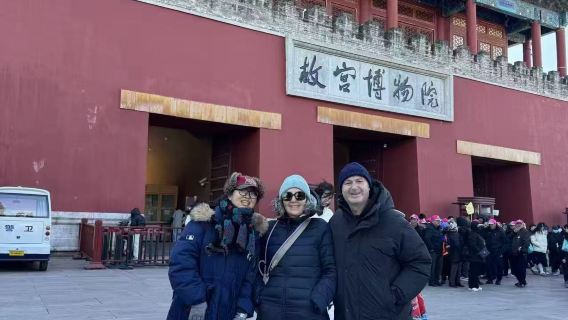 1. A highly efficient one-day itinerary, ensuring no regrets about visiting three major tourist attractions.Free cancellationDuration: 8.1 hrs5.0/5Excellent· 2 reviews· 26 bookedSave 149.59FromTHB 2,842.24THB 2,991.83
![[4-Hour Unlimited Fun] Badaling Great Wall Day Trip [Private Charter Available ◆ Small Group Pickup and Drop-off]](https://ak-d.tripcdn.com/images/0353n12000recwv5z6C55_C_568_320.png?_fr=wc) Trip.Select
Trip.Select 98% of travelers recommendInstant confirmationDuration: 7 hrs4.9/5Excellent· 21.6k reviews· 87k bookedFromTHB 512.49
 Trip.Select96.7% of travelers recommendFree cancellationDuration: 5.7 hrs4.8/5Very good· 363 reviews· 4.9k booked5% offLimited-time saleFromTHB 824.60THB 868
 Trip.Select37 consecutive positive reviewsFree cancellationBook now for todayDuration: 4.8 hrs4.8/5Very good· 1k reviews· 10.6k booked25% offLimited-time saleFromTHB 900.32THB 1,200.43
![A one-day tour of the Palace Museum in Beijing [Pre-sale for Chinese New Year, including admission | Detailed lectures by a scholar | Gift of precious artifacts]](https://ak-d.tripcdn.com/images/0102h1200087d62rxDD6F_C_568_320.jpg?_fr=wc) Trip.Select98.9% of travelers recommendFree cancellationDuration: 7.4 hrs4.9/5Excellent· 26.1k reviews· 64.6k bookedFromTHB 1,375.88
Trip.Select98.9% of travelers recommendFree cancellationDuration: 7.4 hrs4.9/5Excellent· 26.1k reviews· 64.6k bookedFromTHB 1,375.88 1. [Flexible Travel] Choose from a variety of private tours. 2. [Professional Guidance] Experienced tour guides provide in-depth explanations, allowing you to hear stories rather than just legends. 3. [Immersive Experience] Multilingual guides (Chinese/English, etc.) are available for seamless communication, allowing you to live like a local.Free cancellationInstant confirmationDuration: 7 hrs4.3/5Good· 3 reviews5% offLimited-time saleFromTHB 2,052.73THB 2,160.77
 Trip.Select100 consecutive positive reviewsFree cancellationDuration: 3.8 hrs4.9/5Excellent· 205 reviews· 2.6k booked15% offLimited-time saleFromTHB 1,020.36THB 1,200.43
 Trip.Select99.2% of travelers recommendFree cancellationDuration: 7.5 hrs4.9/5Excellent· 125 reviews· 1.1k bookedFromTHB 1,098.86
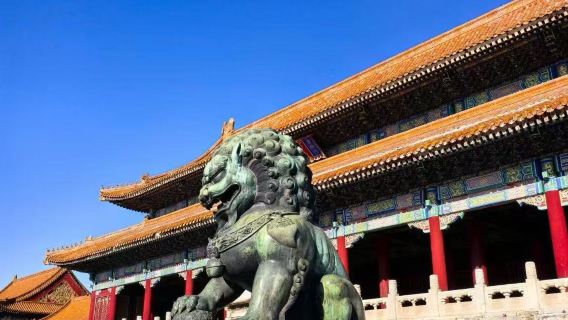 Trip.Select39 consecutive positive reviewsFree cancellationDuration: 4.1 hrs4.9/5Excellent· 39 reviews· 227 bookedSave 84.95FromTHB 1,614.12THB 1,699.07
![Mutianyu Great Wall + Summer Palace Day Trip [Departs daily at 7:30 AM] Return trip ends at Bird's Nest](https://ak-d.tripcdn.com/images/0352c12000o5jb50eDF26_C_568_320.jpg?_fr=wc) Trip.Select51 consecutive positive reviewsDuration: 10.3 hrs4.8/5Very good· 330 reviews· 4.1k booked10% offLimited-time saleFromTHB 706.41THB 784.9
Trip.Select51 consecutive positive reviewsDuration: 10.3 hrs4.8/5Very good· 330 reviews· 4.1k booked10% offLimited-time saleFromTHB 706.41THB 784.9 Trip.Select33 consecutive positive reviewsFree cancellationDuration: 5.5 hrs4.9/5Excellent· 56 reviews· 298 booked5% offLimited-time saleFromTHB 5,175.68THB 5,448.09
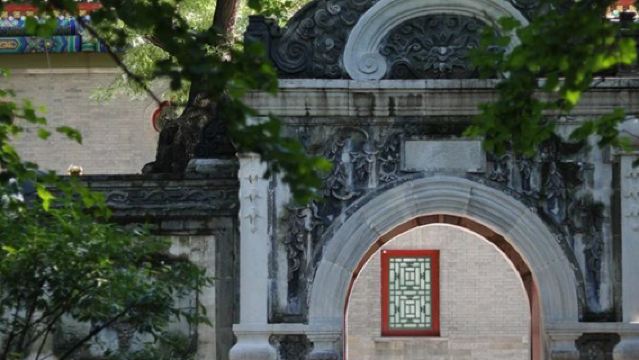 Trip.Select24 consecutive positive reviewsFree cancellationDuration: 3 hrs5.0/5Excellent· 24 reviews· 45 booked9% offLimited-time saleFromTHB 1,030.53THB 1,145.03
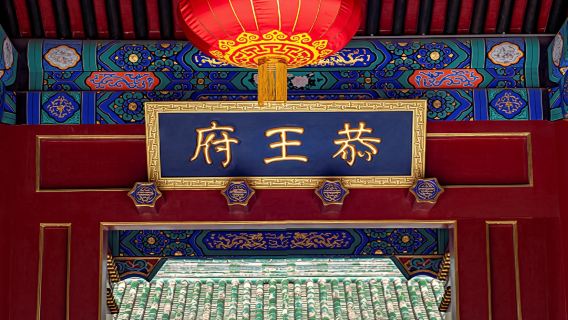 Trip.Select26 consecutive positive reviewsFree cancellationDuration: 4 hrs4.9/5Excellent· 56 reviews· 235 booked5% offLimited-time saleFromTHB 1,131.64THB 1,191.2
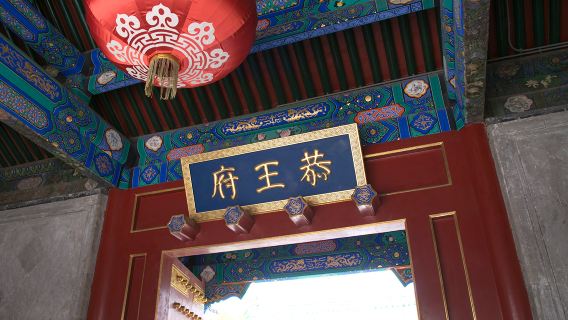 Trip.Select100 consecutive positive reviewsFree cancellationBook now for todayDuration: 5.3 hrs4.9/5Excellent· 4.5k reviews· 26.4k booked5% offLimited-time saleFromTHB 1,175.50THB 1,237.37
 Trip.Select[Parent-Child Study Tour] Explore and experience the charm of the Forbidden City from a child's perspective, where architecture and artifacts "communicate" with young minds.Free cancellationDuration: 5.5 hrs4.8/5Very good· 6 reviews5% offLimited-time saleFromTHB 5,175.68THB 5,448.09
![Beijing Tiananmen Square + The Palace Museum + Mutianyu Great Wall 1-day tour [Family VIP Group]](https://ak-d.tripcdn.com/images//0580u12000qbccoezED2E_C_568_320.jpg?_fr=wc) Trip.Select94.4% of travelers recommendFree cancellationDuration: 7.4 hrs4.8/5Very good· 161 reviews· 281 bookedFromTHB 8,716.94
Trip.Select94.4% of travelers recommendFree cancellationDuration: 7.4 hrs4.8/5Very good· 161 reviews· 281 bookedFromTHB 8,716.94![Beijing The Palace Museum 1-Day Tour [Including Admission Ticket/English Guided Tour/Option for Private Group]](https://ak-d.tripcdn.com/images/0355t12000o1a75ieCF69_C_568_320.jpg?_fr=wc) Trip.Select25 consecutive positive reviewsFree cancellationDuration: 3.4 hrs4.9/5Excellent· 113 reviews· 917 bookedFromTHB 498.64
Trip.Select25 consecutive positive reviewsFree cancellationDuration: 3.4 hrs4.9/5Excellent· 113 reviews· 917 bookedFromTHB 498.64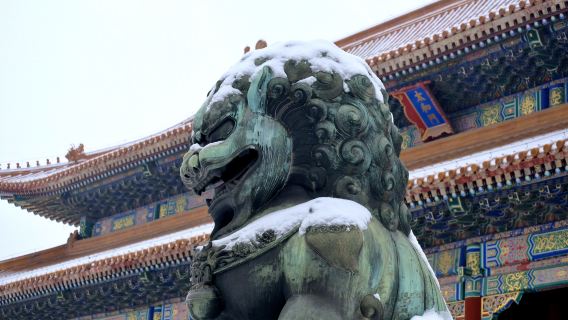 Trip.Select92.8% of travelers recommendFree cancellationDuration: 4.1 hrs4.7/5Very good· 97 reviews· 479 booked10% offLimited-time saleFromTHB 864.30THB 960.34
 Trip.SelectBrand guide's professional commentary, guide's clear articulationFree cancellationBook now for todayDuration: 6.1 hrs5.0/5Excellent· 14 reviews· 70 booked5% offLimited-time saleFromTHB 13,070.78THB 13,758.72
 Trip.SelectExplore four iconic landmarks in one day, spanning from The Zhengyangmen Gate to Jingshan Park, unlocking the essence of the ancient capital's central axis in a single tripFree cancellationDuration: 4.9 hrs5.0/5Excellent· 1 review· 36 booked5% offLimited-time saleFromTHB 1,043.91THB 1,098.86
 Trip.Select97.1% of travelers recommendFree cancellationDuration: 5.7 hrs4.9/5Excellent· 1.5k reviews· 10.9k booked10% offLimited-time saleFromTHB 781.20THB 868
 Trip.Select94% of travelers recommendFree cancellationInstant confirmationDuration: 9.9 hrs4.7/5Very good· 285 reviews· 3.7k bookedFromTHB 544.81
 Trip.Select100 consecutive positive reviewsFree cancellationInstant confirmationDuration: 10.2 hrs4.9/5Excellent· 369 reviews· 4.4k booked30% offLimited-time saleFromTHB 646.38THB 923.41
 Trip.Select32 consecutive positive reviewsFree cancellationInstant confirmationBook now for todayDuration: 7.6 hrs4.9/5Excellent· 43 reviews· 401 booked5% offLimited-time saleFromTHB 1,613.30THB 1,698.22
 Trip.Select22 consecutive positive reviewsFree cancellationInstant confirmationBook now for todayDuration: 9 hrs4.9/5Excellent· 5.5k reviews· 18.8k booked5% offLimited-time saleFromTHB 526.34THB 554.05
 Trip.Select97.8% of travelers recommendFree cancellationInstant confirmationDuration: 11.5 hrs4.8/5Very good· 137 reviews· 1.7k booked20% offLimited-time saleFromTHB 738.72THB 923.41
![Mutianyu Great Wall Day Trip [ZANBUS - Daily departures at 8/9/10 AM]](https://ak-d.tripcdn.com/images/0354r12000rab3sh3AB7D_C_568_320.jpg?_fr=wc) Trip.Select99.5% of travelers recommendDuration: 8.4 hrs4.9/5Excellent· 6.2k reviews· 25k booked5% offLimited-time saleFromTHB 502.93THB 529.41
Trip.Select99.5% of travelers recommendDuration: 8.4 hrs4.9/5Excellent· 6.2k reviews· 25k booked5% offLimited-time saleFromTHB 502.93THB 529.41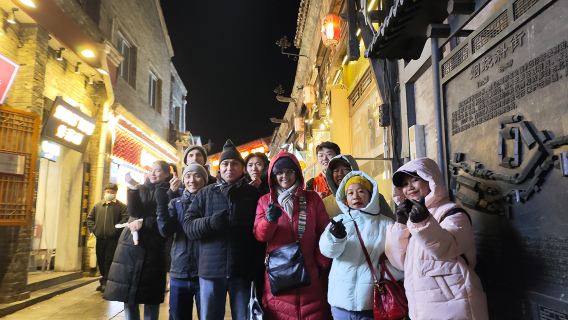 Trip.Select43 consecutive positive reviewsFree cancellationInstant confirmationBook now for todayDuration: 3 hrs4.9/5Excellent· 54 reviews· 627 bookedFromTHB 224.33
![Mutianyu Great Wall Day Trip [Bus service from 7 AM to 12 PM + 5-hour sightseeing tour + no shopping]](https://ak-d.tripcdn.com/images/0355w12000o20mq5xAB8E_C_568_320.png?_fr=wc) Trip.Select99.2% of travelers recommendFree cancellationInstant confirmationDuration: 8.6 hrs4.9/5Excellent· 4.1k reviews· 27k booked20% offLimited-time saleFromTHB 423.52THB 529.41
Trip.Select99.2% of travelers recommendFree cancellationInstant confirmationDuration: 8.6 hrs4.9/5Excellent· 4.1k reviews· 27k booked20% offLimited-time saleFromTHB 423.52THB 529.41 Trip.Select30 consecutive positive reviewsDuration: 8 hrs4.9/5Excellent· 584 reviews· 3.4k booked5% offLimited-time saleFromTHB 596.71THB 628.12
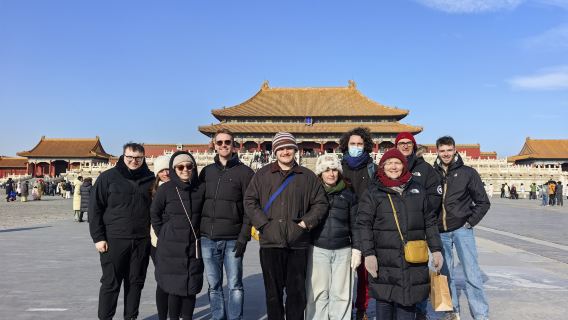 Trip.Select57 consecutive positive reviewsFree cancellationDuration: 4 hrs4.9/5Excellent· 68 reviews· 468 booked10% offLimited-time saleFromTHB 1,067.49THB 1,186.1
 Trip.Select67 consecutive positive reviewsFree cancellationInstant confirmationDuration: 10 hrs4.8/5Very good· 91 reviews· 1.4k bookedFromTHB 816.55
![One-day combined tour of Badaling Great Wall, Summer Palace, and Old Summer Palace [Pick-up service available/Private tour options]](https://ak-d.tripcdn.com/images//0582e12000rgw5czlD730_C_568_320.jpg?_fr=wc) Trip.Select97.2% of travelers recommendFree cancellationInstant confirmationDuration: 9.4 hrs4.9/5Excellent· 951 reviews· 5k bookedFromTHB 2,234.29
Trip.Select97.2% of travelers recommendFree cancellationInstant confirmationDuration: 9.4 hrs4.9/5Excellent· 951 reviews· 5k bookedFromTHB 2,234.29![1-day tour to BEIJING W TOWN + Great Wall At Simatai [Optional private tour, watch musical fountains]](https://ak-d.tripcdn.com/images/0354s12000p6h83tt1084_C_568_320.jpg?_fr=wc) Trip.Select96.1% of travelers recommendFree cancellationInstant confirmationDuration: 11 hrs4.8/5Very good· 154 reviews· 1.9k bookedFromTHB 816.55
Trip.Select96.1% of travelers recommendFree cancellationInstant confirmationDuration: 11 hrs4.8/5Very good· 154 reviews· 1.9k bookedFromTHB 816.55 Trip.Select26 consecutive positive reviewsFree cancellationInstant confirmationDuration: 8.2 hrs4.9/5Excellent· 314 reviews· 395 booked20% offLimited-time saleFromTHB 423.52THB 529.41
Explore top experiences
See what other travellers love, based on ratings and bookings
Frequently asked questions about Beijing Day tours
How many Day tours are available in Beijing on Trip.com?
What are the best Day tours in Beijing?
What are the top-rated Day tours in Beijing?
What are the recommended itineraries in Beijing?
How can I contact Trip.com customer support?
Can I change or cancel my booking?
How can I get discounted prices?
Trip.com Picks
Popular Beijing Tours
Best Beijing Experiences
Popular Products
Popular activities
More Popular Destinations
Reviews/Trip Moments


About






of the year 2025
Site Operator: Trip.com Travel Singapore Pte. Ltd.