Things to do in Heyang
Explore top experiences
Top 10 attractions in Heyang

Qiachuan Scenic Area
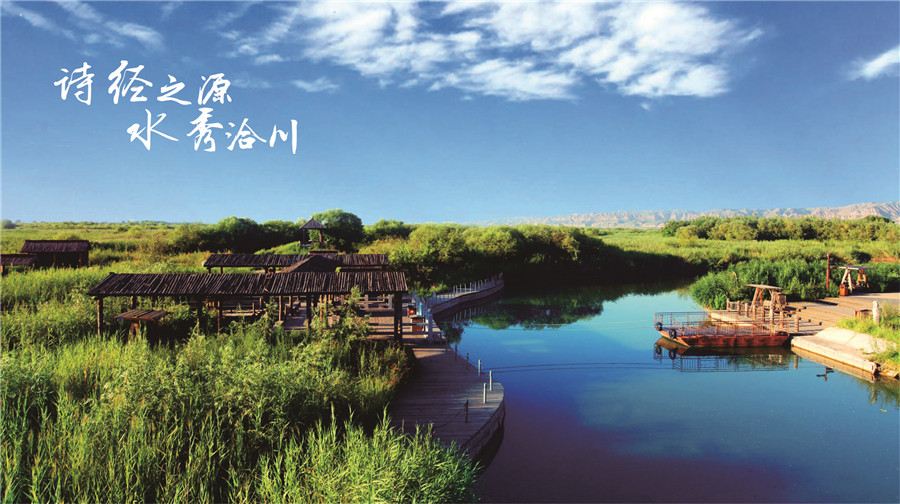
Qiachuan Scenic Area is located in Heyang County, Weinan City. It is a large riverside hot spring in the Yellow River Basin. The scenery here is very beautiful, complete with chirping birds and fragrant flowers, and there are also lush green mountains and hot springs. Qichuan Scenic Area covers several attractions such as Virgin Spring, Xiayang River, Yellow River Soul, and Fu Mountain. There are more than 100 kinds of nationally protected animals to be found here, including the white swan, red-crowned crane, black stork, and giant bustard. Inside the scenic area, visitors can also ride in a speedboat, amble along in a slower-moving boat, or ride a horse through the reeds.Heyang · 19.9km from downtown


Emperor Qinshihuang's Mausoleum Site Museum
Emperor Qinshihuang's Mausoleum Site Museum, also known as the Terracotta Army, is located about 1.5 kilometers east of the Mausoleum of the First Qin Emperor and forms part of the extensive necropolis. There were more than a thousand terracotta soldiers unearthed here, each with a different facial expression. Standing before the massive underground army, you will feel the extraordinary might of the Qin Emperor that enabled him to unify six warring states two thousand years ago. The Qin Emperor Ying Zheng began building the mausoleum for himself at the age of 13. Nearly 720000 men and 38 years were required to complete this vast project.China · Xi'an

Sima Qian Memorial Temple
Sima Qian Ancestral Hall is located on the cliff of Hankangpo in Nanzhichuan Town, Hancheng City. It was built in the Yongjia of the Western Jin Dynasty for 4 years and is now a national key cultural relic protection.Ascend to the summit, you can look east to the Yellow River, Xiqiao Liangshan, south to the ancient Wei Great Wall, and north to Zhishui.Hancheng · 28.4km from Heyang

Guanque Tower
A national AAAA-level tourist attraction and one of the top ten attractions in Shanxi Province, Guanque Tower is located on the eastern bank of the Yellow River west of Puzhou Ancient City in Yongji, Shanxi. Alongside the Yellow Crane Tower in Wuhan, Hubei; Yueyang Tower in Yueyang, Hunan; and Tengwang Pavilion in Nanchang, Jiangxi, it is renowned as one of China's four great historical and cultural towers. Originally built during the Northern Zhou Dynasty (557–571 AD) by military commander Yuwen Hu as a defensive watchtower, the tower earned its name from the storks that frequently perched on its structure. The Tang Dynasty poet Wang Zhihuan's celebrated poem "On the Stork Tower" ("The sun along the mountain bows; The Yellow River seawards flows. You will enjoy a grander sight; If you climb to a greater height.") has become an enduring masterpiece, widely known both domestically and internationally. After standing for over 700 years through the Tang and Song dynasties, the tower was destroyed during warfare in the early Yuan Dynasty (1222 AD). The reconstructed Guanque Tower follows Tang-style architecture, featuring four eaves externally with three visible tiers, while internally comprising six floors. With a total height of 73.9m, it epitomizes the grandeur of the Tang era. Ascending Guanque Tower not only offers breathtaking panoramic views but also immerses visitors in the brilliance of China's 5,000-year civilization.Yongji · 45.8km from Heyang

Shaanxi History Museum
History background: Shaanxi History Museum is located in the northwest of the Dayan Pagoda in Xi'an. It is one of the landmark attractions of Xi'an. The museum was planned in 1983, started in the summer of 1986, and officially opened on June 20, 1991. It was named Shaanxi History Museum. In 2016, Shaanxi History Museum was selected as "China's 20th Century Architectural Heritage" by the Chinese Cultural Relics Society and the Chinese Architectural Society. Museum Features: Shaanxi History Museum is a large modern museum, and its completion marks a new milestone in the development of China's museum industry. This museum is a Tang-style building complex with a "central hall and four corner towers". The main and secondary buildings are well-organized, the heights are staggered, and the momentum is solemn. It integrates national traditions, local characteristics and the spirit of the times. The museum covers an area of 65,000 square meters, and houses more than 380,000 cultural relics ranging from simple stone tools used in the initial stage of ancient humans to various artifacts in social life before 1840, covering a time span of more than one million years. The cultural relics are not only numerous and diverse, but also of high quality and wide value. The collections in the museum are dazzling and exquisite. It is an art hall that showcases the history and culture of Shaanxi and ancient Chinese civilization, and is known as the "Pearl of the Ancient Capital, the Treasure House of China." There are many treasures in the museum, including bronzes from the Shang and Zhou dynasties, pottery figurines from various dynasties, gold and silver utensils from the Han and Tang dynasties, and murals from Tang tombs. Most of them are treasures from the prosperous periods of the Han and Tang dynasties, and some of them are fine items that are prohibited from leaving the country. Collection treasures: There are three exhibition halls in the center of the museum. The first exhibition hall displays cultural relics from the prehistoric civilization of Lantian ape-man 1.15 million years ago to the Qin Dynasty; the second exhibition hall displays cultural relics from the Han Dynasty and the Wei, Jin, Southern and Northern Dynasties; and the third exhibition hall is mainly cultural relics from the prosperous Tang Dynasty. Each exhibition hall has its own treasure. There are special exhibition halls on the east and west sides of the central hall. On the west side, there is a "Special Exhibition of Tang Dynasty Treasures (Treasure Hall, Cultural Relics Unearthed in Hejiacun)", where many fine gold and silver wares from the heyday of the Tang Dynasty were transferred to be exhibited. On the east side, there is a "Treasures of Tang Dynasty Murals Exhibition", which exhibits a number of authentic Tang Dynasty tomb murals. The tripod The tripod is placed in the first exhibition hall at the entrance of the museum, and it can be said to be the treasure of the first exhibition hall. The replica is placed here, and the original is kept in the warehouse. Inscription on the outer wall: The inscription "All under heaven is the king's land; all the people are the king's subjects" reflects the land ownership system in the Western Zhou Dynasty. There are four lines of inscriptions with 28 characters on the inner wall of the Yi Ding. The general meaning is: In early August of a certain year, Wang Jiang took back the land originally given to Shi Lu and gave it to Yi, who then made this tripod to commemorate it. Queen's Seal: One of the treasures worth seeing in the second exhibition hall is the jade seal of the empress of the Han Dynasty, which is displayed separately. The seal is made of Xinjiang Hetian mutton-fat jade and is engraved with a Chihu, symbolizing royal power. Three-color camel figurines carrying music: This world-famous tri-color camel figurine carrying music is located in the third exhibition hall of Shaanxi History Museum. Its overall appearance and color are well preserved. There are seven men sitting on the camel's back, holding different musical instruments in their hands. Among them, the figurine holding the clapboard is listening attentively, as if intoxicated by the wonderful music. The woman in the middle is performing, and the camel opens its mouth wide and looks up to the sky, as if it is also singing with its master. Gold-inlaid animal head agate cup: This cultural relic, located in the special exhibition "Tang Dynasty Relics Special Exhibition", is one of the first 64 national treasures listed by the State Administration of Cultural Heritage that are never allowed to be exhibited abroad. There are also many other treasures such as black-glazed oil-drip bowls, green-glazed porcelain pots with handles, gilded silver bamboo-joint copper incense burners, gold bowls with mandarin duck and lotus petal patterns, and so on.China · Xi'an

Houtu Temple
Houtu temple, the ancestral shrine of China, is located by the Yellow River in Miaoqian village, Ronghe town, Wanrong county. With profound cultural heritage, it serves as a global worship center for Chinese descendants and one of the cradles of Chinese civilization. Houtu temple is located east of the Emei ridge and west of the Fenhuang bank, stretching 240 m from north to south and 105 m from east to west, covering an area of 25,268 square meters. The temple complex includes the mountain gate, a tripartite stage, the east and west five-tiger halls, the offering hall, the incense pavilion, the main hall, the autumn wind tower, and the song zhenzong stele corridor. Historical records mention the "sovereign heaven and houtu." From emperor xuanyuan huangdi's "sweeping the ground to build an altar for worshipping houtu" to emperor song zhenzong, eight emperors conducted 24 sacrificial ceremonies here. Emperor han wudi visited hedong eight times, offering sacrifices here seven times and leaving behind the timeless masterpiece "Ode to the autumn wind." The autumn wind tower derives its name from housing emperor han wudi's "Ode to the autumn wind stele," with the existing structure dating back to the ming dynasty. Houtu temple is the largest of its kind in China. In recent years, people from all walks of life across the country (including compatriots from Hong Kong, Macao and Taiwan) and overseas Chinese have been coming in an endless stream to seek their roots and worship Houtu. Especially on the birthday of Houtu holy mother (the 18th day of the third lunar month) and during the temple fair on the 5th day of the tenth lunar month, devout pilgrims, merchants and visitors gather in large numbers, creating a bustling atmosphere.Wanrong · 32.5km from Heyang

Virgin Spring
Virgin Spring is located in the central part of the Chuan scenic area. Legend has it that Tai Si, the consort of King Wen of the Western Zhou Dynasty, often bathed here before her marriage, hence the name "Virgin Spring." The spring is a natural hot spring with water temperature consistently maintained at 31°C. Visitors bathing in the spring experience the sand moving with the bubbling water, creating a sensation like silk brushing against the skin, known as a "sand wave bath." Visitors can enjoy boating through the reed marshes, speedboating tours, and hot spring bathing.Heyang · 21.1km from downtown

Mount Hua
Mount Hua, formerly known as "Xiyue", is one of the five famous mountains in China. It is located in Huayin City, Shaanxi Province. Huashan is also known as "Taihuashan". It is the birthplace of Chinese civilization. The "Hua" in "Zhonghua" and "Huaxia" comes from Huashan. The words "strange and dangerous" are the essence of Huashan's scenery. "Since ancient times, there has been only one road to Huashan" describes the steepness of Huashan. The Attraction has many thrilling attractions such as Changkong Plank Road, Kitesurfing, Qianchi Chuang, Baichi Gorge, Laojun Ligou, etc., which are carved out on the steep cliffs. Those who visit them in person will be amazed. Huashan Attraction covers a vast area, including the Main Peak Attraction, Xiyue Temple Attraction, Xianyu Attraction, etc. The Main Peak Attraction is the core Attraction of Huashan, including "Huashan One Road" and the five main peaks in the southeast, northwest, and center. Huashan in most people's minds refers to the Main Peak Attraction. Five main peaks The East Peak is about 2,100 meters above sea level and is named for its location in the east. There is a platform on the top of the peak, which is high and dangerous with a wide view. It is a good place to watch the sunrise. It is called Chaoyang Terrace, and the East Peak is also called Chaoyang Peak. The East Peak consists of four peaks, one main peak and three s-ervant peaks. The peak where Chaoyang Terrace is located is higher, the Yunv Peak is in the west, the Shilou Peak is in the east, and the Botai is in the south. There are more than dozens of landscapes on the East Peak. There is a natural stone pattern on the cliff on the side of the East Shilou Peak, which looks like a giant palm print. This is the Huayue Immortal Palm, which is listed as the first of the eight scenic spots in Guanzhong. The story of the giant spirit opening the mountain and guiding the river originated from this. The West Peak is about 2,000 meters above sea level. Because there is a huge rock on the top of the peak that looks like a lotus petal, ancient literati often called it Lotus Peak or Hibiscus Peak. Xu Xiake wrote in his "Diary of Traveling to Mount Taihua": "There is a rock rising on the peak, and there are stone pieces covering it, like a lotus flower." This stone must be referring to it. There are many landscapes on the West Peak, including Cuiyun Palace, Lotus Cave, Giant Spirit Foot, Axe-Split Stone, Sheshen Cliff, etc., and there are many beautiful myths and legends. Among them, the well-known story of Chenxiang splitting the mountain to save his mother is circulated here. The South Peak is over 2,100 meters above sea level and is the highest peak of Huashan. The ancients called it the "Head of Huashan". On one side of the South Peak is a thousand-foot cliff, standing straight like a knife, and below is a deep ravine, which is separated from Sangong Mountain and Sanfeng Mountain. The South Peak consists of one peak and two peaks. The east side is called Songhui Peak, and the west side is Luoyan Peak. The origin of the name of Luoyan Peak is said to be because the migrating wild geese often land here to rest. The North Peak is about 1,600 meters above sea level, with cliffs on all sides, covered with clouds above and connected to the earth veins below. It stands tall and unique, and is also called Yuntai Peak because it looks like a cloud platform. Li Bai of the Tang Dynasty wrote in his poem "A Song of the Cloud Platform of Mount Xiyue to Complimentary Danqiuzi": "Three peaks stand as if about to collapse, and the green cliffs and red valleys are high. The golden essence of the White Emperor mobilizes his vitality, and the stones become lotus flowers and the clouds become platforms." The famous story of "Taking Huashan by Strategy" took place here. There are many landscapes on the mountain, including the Zhenwu Hall, Jiaogong Stone Chamber, Changchun Stone Chamber, and the place where Laojun hung the plow. The Middle Peak is the only way to the other four peaks. It is located in the middle of the East, West and South Peaks. The forests on the peak are lush and green, and the environment is quiet. There is a Taoist temple named Yunu Temple on the top of the peak. It is said that it was the place where Qin Mu Gong's daughter Nong Yu cultivated herself in the Spring and Autumn Period, so it is also called Yunu Peak. Main landscape: There are more than 210 famous Attraction in Huashan. From ancient times to the present, countless literati and poets have left various classic poems here. Skywalk The Changkong Plank Road is located on the east side of the Huashan South Peak. It was built by the master of the Huashan School, Taoist He Zhizhen of the Yuan Dynasty, who wanted to get away from the world and practice Taoism. He built it by inlaying stone piles on the cliffs and paving wooden boards. At the end of the plank road, you can see the "Hezu Cave" where Master He practiced self-cultivation. The road builders chiseled stone holes on the cliffs, wedged stone piles into the holes, and laid wooden boards about 40 cm wide between the stone piles. Visitors must stick to the cliff wall, pull the iron chain with their hands, step on the wooden boards, and move forward slowly sideways. Xiyue Temple Xiyue Temple, also known as Huayue Temple, is a temple where emperors of all dynasties worshipped and offered sacrifices to Shaohao, the Great Emperor of Xiyue. It was first built during the Yuanguang period of Emperor Wu of the Han Dynasty (134-129 BC) at the entrance of Huangshengu (now Huangfuyu) at the foot of Huashan Mountain. It was moved to its current location during the reign of Emperor Huan of the Eastern Han Dynasty (147-167 AD) and renamed today. It was rebuilt many times during the Tang, Song, Ming and Qing dynasties. Canglong Ridge The steps on Canglong Ridge are only 2 feet wide, with deep ravines on both sides, as steep as a knife. The height difference between the ridge and the top is about 500 meters, and the slope is more than 45 degrees. Looking at the green pines and white clouds in the distance and hearing the sound of the wind is dizzying. Jinsuoguan Jinsuoguan is one of the five passes of Huashan Mountain. It is built on a stone archway at the entrance of the three peaks. It is the throat of the Wuyun Peak to the four peaks of East, West, South and Center. There is no way to pass after the pass, so it is also called Tongtianmen. Taoists believe that Huashan is the fairyland of gods. Only after passing Tongtianmen can you enter the fairyland. Therefore, there is a folk song that "after passing Jinsuoguan, there is another world". There has been only one road to Mount Huashan since ancient times "There has been only one road to Mount Hua since ancient times" refers to the "Huashan Valley" hiking trail, which includes various scenic spots along the Huashan hiking trail since ancient times. When connected together, it is what is commonly referred to as "There has been only one road to Mount Hua since ancient times." How to visit Huashan has two mountain gates (entrances): East Gate and West Gate (also known as Huashan Gate). Take the cable car up the mountain and go to the East Gate; if you climb the mountain on foot, enter from the West Gate. Huashan currently has two cable cars, the East and West Lines, which reach the North Peak and the West Peak respectively (please plan the climbing route in advance before purchasing the ticket and purchase the corresponding ticket type, and you cannot change it midway.). Route 1: Hiking route There has been only one road on Mount Huashan since ancient times. It is an ancient mountaineering road with a total length of 12.5 kilometers and 9,567 steps. It takes about 4 hours to hike from Yuquanyuan, through Wuli Pass, Shaluoping (night climbing), Qianchi Chuang, Baichi Gorge, etc. to the North Peak, and then start the tour from the North Peak. Route 2: "Up West and Down West", a mountaineering route suitable for the Seniors and tourists with children This route goes up the West Peak Cableway of Mount Huashan and down the West Peak Cableway, that is, going up from the west and down from the west. The whole route takes a relatively short time, about 4 hours, and is also more energy-saving, making it more friendly to the Seniors and tourists with children. Route 3: "Up West and Down North", a one-day mountaineering route chosen by 80% of tourists This route goes up by cable car from the West Peak of Mount Huashan and down by cable car from the North Peak, that is, going up from the west and down from the north. The entire route is a classic one-day tour route, which takes about 6 hours. You can visit all the attractions without backtracking. Most tourists choose this route because this road almost goes straight down, which is easier and faster than the uphill road. Route 4: "North up and north down", a time-saving, economical and panoramic mountaineering route This route goes up by cable car at the North Peak of Huashan and down by cable car at the North Peak, that is, going up from the north and down from the north. The whole route is a relatively low-cost cable car mountaineering route. If your sightseeing time is limited, you can choose this route and visit the North Peak, which has the Memorial Pavilion, Ear-Crushing Cliff, Canglong Ridge, Huashan Sword Contest Monument, panoramic Huashan and other attractions.Huayin · 83.3km from Heyang

Longmen Grottoes
One of the four major grottoes of China and a UNESCO World Heritage Site, the Longmen Grottoes are a trove of 1000 years of Buddhist art treasures. Bounded by the Yi River, the caverns are divided into two sections at East Hill and West Hill. The caverns at East Hill contain mostly Tang dynasty (618-907) works, while the caverns at West Hill were cut out during the Northern, Sui, and Tang dynasties and contain the carvings that are most representative of the site. The Buddha and bodhisattva sculptures that inhabit the caverns are carved into an endless variety of poses and expressions of mercy and kindness, while the caves themselves lend a stately and dignified atmosphere. The artistry of these sculptures is truly a priceless inheritance of Buddhist art.China · Luoyang

Xi'an City Wall
Xi'an City Wall is a landmark of this ancient city. The city walls that we see now were built in the early years of the Ming dynasty and they are now more than 600 years old. The walls were built on the foundations of the imperial city of the Tang Dynasty and they are formed together with a series of defensive installments such as moats and turrets. At present, Xi'an City Wall can be accessed by many city gates. Visitors can choose the nearest one to them. The South Gate is the visitor entrance of Xi'an City and is also the city gate with more tourists. Cycling on the ancient walls is a good experience. Riding on the wall overlooking the ancient capital of the thirteenth dynasty, you will have a feeling of travelling through time.China · Xi'an
Experiences you can't miss in Heyang
Featured Day tours in Heyang
View all Day tours
4.8/5
· 134 reviews· 447 bookedFree cancellation
Instant confirmation
Book now for tomorrow
21 consecutive positive reviews
FromRUB 6,913.74

4.8/5
· 38 reviews· 264 bookedFree cancellation
Instant confirmation
Book now for tomorrow
21 consecutive positive reviews
FromRUB 6,913.74

4.3/5
· 32 reviews· 285 bookedInstant confirmation
Book now for tomorrow
74 travellers saved
FromRUB 9,113.01

4.2/5
· 20 reviews· 132 bookedFree cancellation
Instant confirmation
Book now for tomorrow
FromRUB 8,284.55

5.0/5
· 1 review· 126 bookedFree cancellation
23 bookings in 7 days
FromRUB 5,941.68
4.4/5
· 5 reviews· 76 bookedFree cancellation
Instant confirmation
Book now for tomorrow
FromRUB 7,318.02

5.0/5
· 23 reviews· 71 bookedFree cancellation
Instant confirmation
Book now for tomorrow
23 consecutive positive reviews
10% off
Limited-time sale
FromRUB 14,861.48RUB 16,512.76

4.7/5
· 3 reviews· 61 bookedInstant confirmation
Book now for tomorrow
FromRUB 6,627.64
Free things to do in Heyang


What travellers say about Heyang

骑着蜗牛赶绿灯17 January 2026
5.0
With its vast reed marshes and rich cultural heritage from the Book of Songs, the Virgin Spring sand bath, the Yellow River sunset, and the ancient architecture of Fushan, this place offers stunning views. In autumn and winter, visitors can observe migratory birds and soak in warm springs. The fusion of nature and culture is incredibly therapeutic.
Qiachuan Scenic Area

_TI***j022 October 2026
5.0
Incredible sight and truly impressive cultural heritage site. Highly recommend!
Emperor Qinshihuang's Mausoleum Site Museum

Anonymous user5 October 2026
4.0
This is a great place to learn about historical figures and acquire historical knowledge, inspiring a sense of solemnity and reverence. Although the path is not long, it is not easy to walk, so those with mobility issues should proceed with caution.
Sima Qian Memorial Temple

M52***9011 October 2026
5.0
I hadn't originally planned to visit the Stork Tower, as it's a reconstruction completed in 2002. However, I came across a travelogue about climbing it, and perhaps the focus for modern people isn't so much on whether it's an ancient building, but rather on Wang Zhihuan's famous line, "To see a thousand miles further, climb one more story." When you reach the top and gaze into the distance—the Yellow River, the Zhongtiao Mountains, the blue sky and white clouds overhead, the wind blowing from Fengling Ferry—don't we feel the same sentiment as Wang Zhihuan back then?
Sometimes, even a simple visit can lead to unexpected experiences. The scenic area has set up signature boards for each province, autonomous region, municipality, and region. Surprisingly, this tourist experience made the friendship between Qin and Jin (Shaanxi and Shaanxi) more tangible. The board for Shaanxi Province has already been replaced twice, as it's become too densely packed with signatures from friends from neighboring Shaanxi. The scenic area simply put up a sign at the very front of the signature corridor that reads "Qin People Gather!" It looks like it'll be full soon too.
Guanque Tower

賢賢君21 October 2026
5.0
Teacher Guo's explanations were very detailed, his language was vivid and his organization was clear and logical. He also used many online images to help us better understand the cultural relics. Listening to him was not tiring and we could remember the information.
Shaanxi History Museum
Anonymous user16 June 2026
5.0
Stepping into the Houtu Temple in Jiexiu, the entire Taoist temple complex is a treasure trove of glazed tile roofs, shimmering with iridescent light. The interconnected courtyards are ingeniously laid out, featuring a unique three-section ancient stage and the majestic Sanqing Tower, exuding ancient charm. The Houtu Hall is solemn and dignified, with delicate and vivid brick and tile carvings. Strolling through the courtyards, the craftsmanship of the Ming and Qing dynasty artisans is truly admirable. Every brick and tile embodies the belief in the Earth Mother and the aesthetics of ancient Jinzhong architecture; a quiet contemplation leaves one deeply moved.
Houtu Temple

疯子爱溜达2 October 2024
4.0
The spring water is clear, and children are playing. It is fun to look straight ahead.
Virgin Spring

KY120 October 2026
5.0
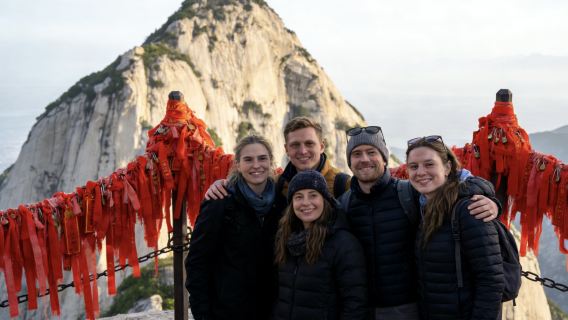
ไม่ค่อยเจอรีวิวเลย แต่อยากแนะนำทุกคนให้มาค่ะ จองผ่านทริปง่ายมาก ถ้าโรงแรมอยู่บนเส้นทางที่รถผ่านก่อนไปจุดรวมรับทุกคน รถจะมารับถึงหน้าโรงแรมเลย แนะนำว่าให้สมัครวีแชทและใส่ไอดีในที่อยู่โรงแรม ไกด์จะติดต่อเราผ่านวีแชทค่ะ ถ้าจองเป็นภาษาจีนไกด์จะพูดแต่จีน และจะมีคนจีนรวมอยู่ในทริปด้วย จะนั่งไปพร้อมๆกันแต่ตอนเดินขึ้นเขาจะเดินกันเองไปตามเส้นทางที่ตัวเองเลือก ต้องลงเขาช่วง 4-6โมง ไม่งั้นจะกลับมาถึงเมืองดึกไปค่ะ ไกด์ดูแลดีมากๆ มีเตรียมถุงมือและเชือกแดงให้ไปผูกบนเขาด้วย รวมถึงคอยให้คำแนะนำทั้งที่เที่ยวในซีอาน และข้อควรระวังบนเขาค่ะ
Mount Hua

Kieran W22 October 2026
5.0
You definitely need at least half a day for this place. It’s amazing! So much to see and everything is fascinating. Wonderful experience!
Longmen Grottoes
Anonymous user22 October 2026
4.0
I went up in the off-season after dark. The walk from Yongning Gate to Hanguang Gate was okay, and you could even cycle in the dark.
The city wall was quite dark, and the nearby advertising light bulbs were too bright and glaring. The city management should really do something about it.
The Hanguang Gate Museum was quite nice, but there was a strange smell at night.
Xi'an City Wall


