Jingning

Things to do in Jingning

Search attractions or local attractions & tours
Search

Explore top experiences

Top 10 attractions in Jingning
View all Attractions
Shapotou Scenic Area
No. 1 of Best Things to Do in Ningxia

Shapotou Scenic Area

8.4
4.8/5
39.3k reviews

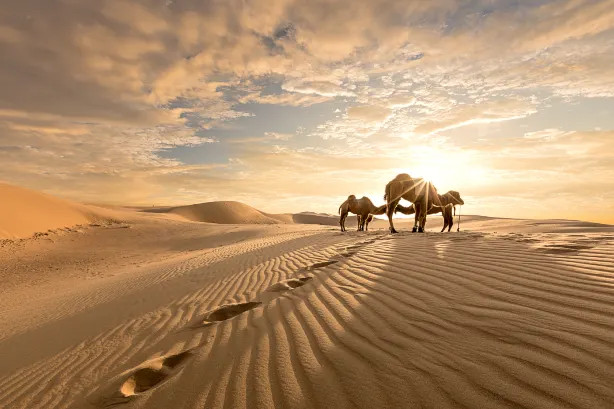
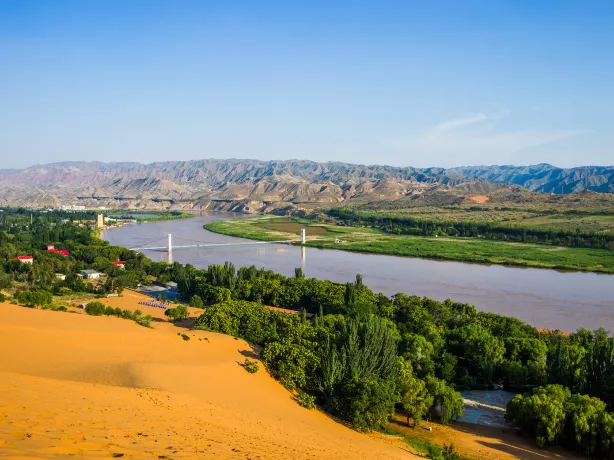
The scenic spot is located 16 kilometers west of Zhongwei City, Ningxia, on the southeastern edge of the Tengger Desert. The scenic spot has successively won honors such as "the first batch of national 5A-level tourist attractions", "the top 500 global environmental protection units", and "the first batch of national tourism standardization demonstration units". The three major cultural elements of the scenic area include the "Yellow River Culture" based on the intangible cultural heritage sheepskin rafts, the "Desert Culture" based on straw grids and Desert Legend Park, and the "Starry Sky Culture" based on the Desert Star Hotel. The tourism resources of these three elements have created a unique and magnificent landscape of "sunset over the long river and starry sky in the desert". The "six major ways to play" are highly praised and loved by tourists. Among them, the Yellow River projects include sheepskin rafting, Huangtengda, Yellow River speedboat, drift boat, passionate sandboarding and high-altitude bungee jumping, etc. The desert projects include Desert Camel, Desert Flying (Stepping into the Blue Clouds), and Sand Sea. Surfing, etc., starry sky projects include stargazing lectures, meteor feasts, sand therapy experiences, star cakes and other special products. In addition, there are also privately customized products for hiking, desert expansion, and educational and entertaining study experiences. The scenic area not only has diverse cultural elements and fun project experiences, but also multi-level accommodation experiences waiting for you: the butler-style Diamond Hotel, the quiet Desert Star Hotel for stargazing, the quiet Yellow River Courtyard in the bustling city, and finally the economical and affordable business-style Tourist Service Center Hotel and other differentiated tourist accommodations for you to choose from.

China · Zhongwei
Lanzhou Danxia Geological Park
No. 1 of Family-friendly Attractions in Gansu

Lanzhou Danxia Geological Park

8.1
4.5/5
3.7k reviews

Lanzhou Danxia Geological Park is a key cultural tourism project in Gansu Province and a comprehensive cultural tourism initiative prioritized by the Lanzhou Municipal Committee and Government. Located by the Yellow River, the park is just 13 km from downtown Lanzhou and 30 km from Lanzhou Zhongchuan International Airport, making it one of the closest Danxia landform clusters to a major urban center in China. With a total planned area of 400 sq km and a core visiting area of 25 sq km in its first phase, it ranks among the largest discovered landscapes of its kind in the country. The park primarily features red mountain bay formations, along with spectacular Danxia cliffs, isolated peaks, secluded valleys, narrow gorges, and balancing rocks. Its colorful mountains set against winding waterways create a masterpiece of Danxia landform scenery. The attraction features seven viewing platforms showcasing the Danxia landforms: Silk Road Glow, Silk Road Eagle, Flying Apsaras Exploration, Nine-Colored Danxia, Danxia Reflecting Sky, Emerald Peaks Rippling Sky, and Danxia Summit Scenic View. It also includes the Ancient Silk Road Gateway, Shajing Tribe Cultural Square, Desert Bells Scenic Boulevard, and a 2,550m Danxia boardwalk viewing area. As a key cultural tourism project in the province, Lanzhou Danxia Geological Park adheres to the principles of "ecological protection, green development, preserving original features, and moderate development." Leveraging Lanzhou's unique resource advantages and focusing on the domestic tourism market, it aims to cultivate new growth drivers for Lanzhou's cultural tourism industry and establish a new highland for cultural tourism in the city.

China · Yongdeng
From 20.41 AZN
Zha Ga Na
No. 1 of Night Attractions in Gansu

Zha Ga Na

7.7
4.3/5
4.3k reviews

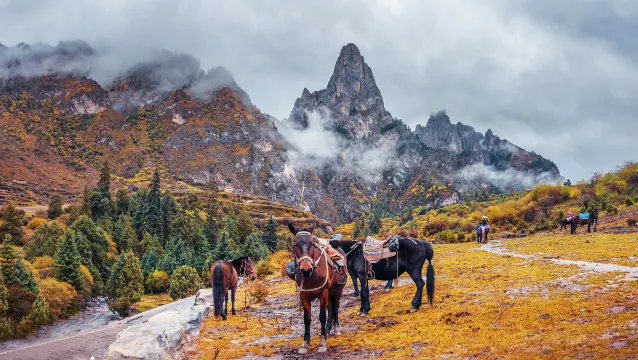
Zha Ga Na, also known as Zha Ga La, is located in Yiwa Town, Diebu County, Gannan Tibetan Autonomous Prefecture. In Tibetan, the name means "stone box." Surrounding limestone cliffs enclose the area like natural city walls, and Tibetan-style wooden houses are arranged in tiers along the slopes, forming a unique stone-city Tibetan village view. In the 1920s, the Austrian-American botanist and explorer Joseph Rock visited and stayed here many times, marveling that it resembled "the birthplace of Adam and Eve." Zha Ga Na consists of four natural villages arranged sequentially from bottom to top—Dongwa Village, Yeri Village, Dari Village, and Daiba Village—connected by a winding road. At the entrance of Dongwa Village at the foot of the mountain stands a massive rock known as the Great Stone Gate, and the small hillside beside it is a vantage point for capturing low-angle panoramic shots of the village built along the mountain. At the higher elevation of the village sits Lasang Temple, a Gelug Tibetan Buddhist monastery originally built during the Shunzhi era of the Qing Dynasty, with its assembly hall and Guanyin Hall nestled among the rocky peaks. Following the road upward to Yeri Village, Tibetan villagers can often be seen working in the open highland barley fields nearby, and the village also has a "Rock's Cabin" homestay where visitors can stay. Continuing upward past Dari Village, there is a viewing platform with an expansive field of view that overlooks the entire village and the full face of the cliff behind it—the ancient wooden roofs and earthen-wall buildings are clearly layered within the surrounding precipices, making it an ideal spot for panoramic photography. In the early morning, clouds and mist often swirl among the cliffs, while at night the sky is filled with brilliant stars—two of the most recognizable natural scenes here. A walk of about one hour up the mountain behind Dongwa Village leads to a hilltop temple, and the Tibetan-style houses passed along the way retain traditional mortise-and-tenon wooden structures. There is another hiking route of about two days behind the mountain leading to stone forests and alpine lakes, with pristine scenery along the way, suitable for outdoor enthusiasts; it requires one night of camping, and you can rent a horse in the village and hire a groom to guide the way.

China · Diebu
Gansu Provincial Museum
No. 2 of Family-friendly Attractions in Gansu

Gansu Provincial Museum

7.6
4.6/5
4k reviews

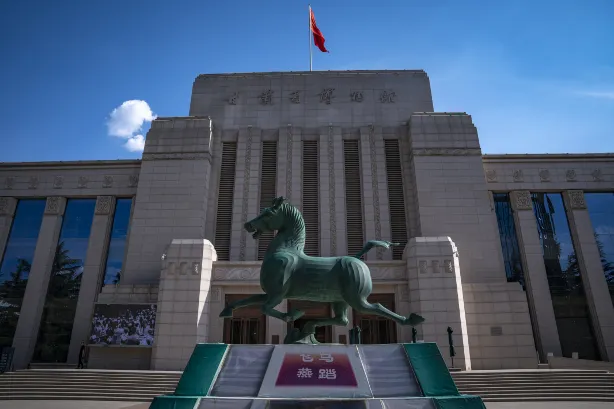
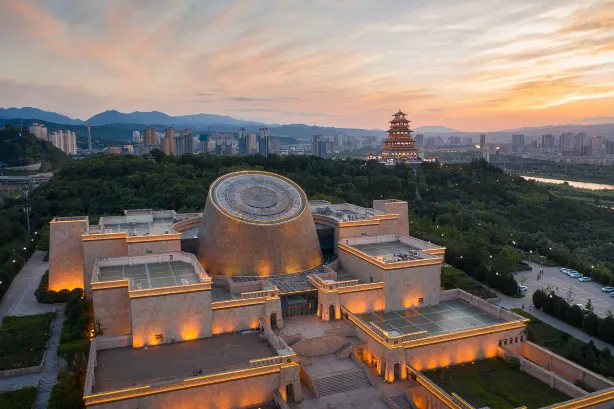
Gansu Provincial Museum is a large comprehensive museum centered on the civilization of the Silk Road. Located at a strategic point along the Silk Road and a convergence zone of Han and Tibetan cultures, its collections embody the diverse characteristics of the Central Plains, Western Regions, and the Tibetan Plateau. The three treasured artifacts—the Galloping Bronze Horse, the mural brick of a courier, and the painted pottery vase with a human-head-shaped mouth—serve as iconic representations of the museum. The museum has three floors, featuring permanent exhibitions on themes such as the civilization of the Silk Road, Buddhist art of Gansu, painted pottery of Gansu, paleontological fossils, and revolutionary Gansu. The Silk Road civilization exhibition on the second floor is the museum's centerpiece: the bronze galloping horse unearthed in 1969 from the Leitai Han tomb in Wuwei is displayed here. The horse has three hooves in the air and one stepping on a flying bird, standing steadily on a single hoof. Its image is now the symbol of Chinese tourism. In the same hall, the mural brick depicting a courier from the Wei-Jin tombs in Jiayuguan shows a messenger galloping on horseback, notably without a mouth, symbolizing the need for couriers to "keep their mouths shut." This pattern was later adopted as the emblem of China Post. The exhibition also features a procession of chariots and horses excavated from the same tomb as the bronze horse, along with Han and Tang dynasty silk textiles, gold and silver artifacts, making the prosperity of Silk Road trade vividly tangible. The Buddhist art exhibition hall on the third floor features replicas of caves from the Mogao Grottoes and Maijishan Grottoes, alongside statues, ritual objects, white pagodas, and prayer wheels from both Han and Tibetan Buddhism. Stepping into the hall feels like entering a temple, and this harmonious blend of Han and Tibetan styles is rarely seen elsewhere. On the same floor, the painted pottery exhibition showcases ceramics from cultures such as Dadiwan, Yangshao, and Majiayao, with intricate and fluid patterns like spiral and sawtooth designs. Among them, the painted pottery bottle with a human-head-shaped spout unearthed at Dadiwan in Qin'an, which integrates facial sculpture with the pottery vessel, is a highly popular exhibit. If you're interested in natural history, the paleontological fossils exhibition hall features the impressive skeleton of the Yellow River ancient elephant unearthed in Heshui, and the dinosaur fossils and reconstructed models are also popular with children. The revolutionary Gansu exhibition hall showcases historical artifacts and materials from periods such as the Nanliang base area and the Shaan-Gan-Ning border region, narrating the modern history of this land. The museum houses a large quantity of exhibits, and even a quick tour would take half a day. It's recommended to start with the Silk Road exhibition on the second floor, then proceed to the third floor for Buddhist art and painted pottery, following a logical route. In the exhibition halls, you can scan to listen to the audio guide, and at certain times, volunteers also provide guided explanations.

China · Lanzhou
Free attraction
Kongtong Mountain
No. 5 of Fall Viewing Attractions in Gansu

Kongtong Mountain

6.8
4.5/5
2.7k reviews

Kongtong Mountain has a long history and rich cultural connotations. It is the holy place where the ancestor of humanities, Xuanyuan Huangdi, climbed the mountain and asked questions. According to legend, Emperor Xuanyuan visited the western frontier after his achievements and personally visited Kongtong Mountain to ask Guangchengzi, who lived in seclusion in Kongtong Mountain, for advice on how to govern the country and maintain health. Kongtong became famous forever. Kongtong is the cradle of religion where the three religions unite and respect and prosper together. According to Taoist classics, the predecessor of Laozi, the founder of Taoism, was Guangchengzi who practiced in Kongtong, and Guangchengzi was the teacher of the Yellow Emperor. Therefore, Kongtong Mountain is known as "the first Taoist mountain in the world." In addition, Buddhism and Confucianism have made great progress in Kongtong Mountain. Kongtong Mountain is the birthplace of the Kongtong School, the five major martial arts schools in China. Kongtong martial arts is one of the five major martial arts schools along with Shaolin, Wudang, Emei and Kunlun. Kongtong martial arts is closely connected with Taoist culture. It is mysterious and strange, with unique characteristics. It is a wonder of Chinese martial arts. Kongtong Mountain belongs to the Danxia landform in high-altitude areas, which has extremely high scientific research value and extremely beautiful natural scenery. The ancients commented that "Kongtong's mountains and rivers are the best in Guansai", and another commented that "it has the majesty of the mountains in the north and the beauty of the mountains in the south." Kongtong Mountain is one of the country's first batch of 5A-level tourist attractions, a national geological park, one of the "50 Places Worth Visiting for Foreigners in China", and one of the first batch of "Chinese Tourism Culture Demonstration Sites". It is a natural kingdom of animals and plants, with various species of animals and plants. There are more than 1,300 species, and the forest coverage rate reaches more than 90%.

Pingliang · 72.1km from Jingning
52% offFrom 14.54 AZN
Qingmuchuan Ancient Town
No. 10 of Night Attractions in Shaanxi

Qingmuchuan Ancient Town

7.3
4.5/5
758 reviews

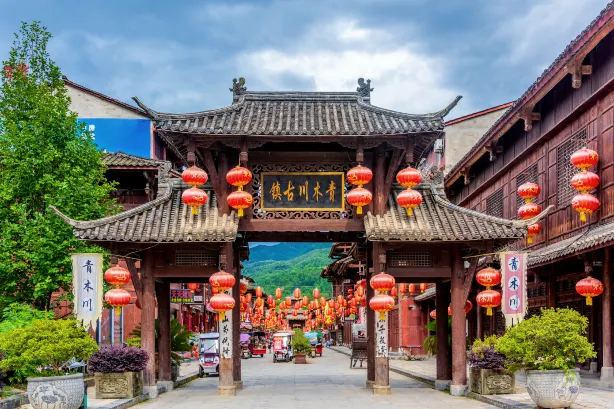
Qingmuchuan Ancient Town boasts picturesque scenery, pristine ecology, and simple folk customs. The ancient town has a long history; in ancient times, it was an area where Qiang and Han people lived together, and it gradually prospered during the Ming Dynasty, with most residences built during the Ming and Qing dynasties. Today, the ancient town retains large clusters of ancient streets, ancestral halls, plank roads, and traditional dwellings, and has been listed as a national key cultural relic protection unit. Here, the river runs through the town, and people go about their various tasks at a leisurely pace, enjoying a free and easy life. Huilongchang Old Street was built during the Chenghua period of the Ming Dynasty. The street is 800 m long and 4 m wide, and has largely retained its ancient appearance. The Wei Family Courtyard was built by Wei Futang, a well-known gentleman of the time. Three sections of the Wei Family Courtyard remain, along with a middle school he advocated establishing, all well preserved. There are also ancestral halls built during the Ming and Qing dynasties for the Qu, Wei, Zhao, and Tu families, as well as erected steles with inscriptions. Five km from the old street lies an ancient commercial trade route from the Ming and Qing dynasties leading to Sichuan and Gansu. It stretches 60 km, following the river upward, with paths cut into the cliffs, making the route very steep and dangerous. The 2008 Wenchuan earthquake caused parts of the ridges and walls of the Wei family residence to crack and collapse. The Huilongchang old street, built during the Ming Chenghua period and over 800 m long, was also damaged, and many old houses had collapsed. Because aftershocks continued in Qingmuchuan Ancient Town, the preservation condition of these historic sites was concerning, but they were fully restored after the earthquake, and their appearance has returned to its original state.

China · Ningqiang
Free attraction
Maijishan Scenic Area
No. 11 of Fall Viewing Attractions in Gansu

Maijishan Scenic Area

7.2
4.5/5
1.8k reviews

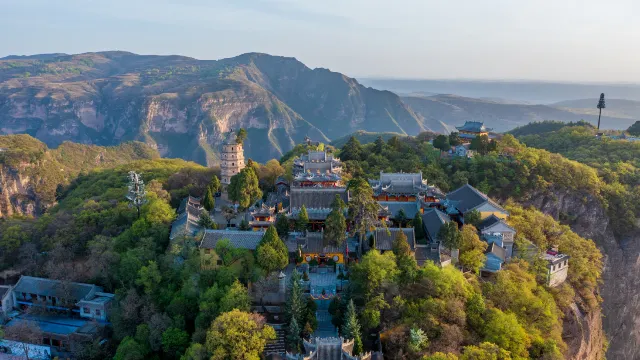
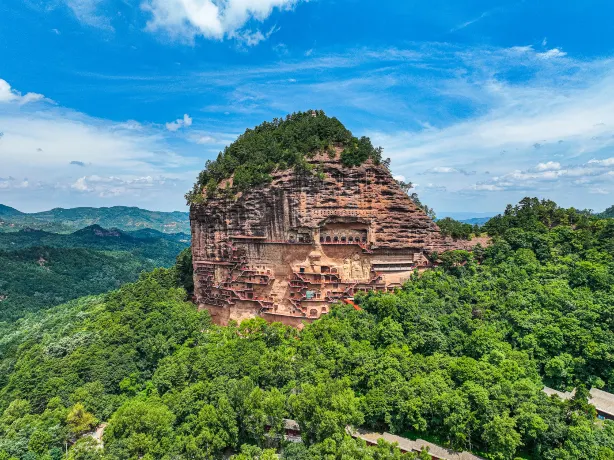
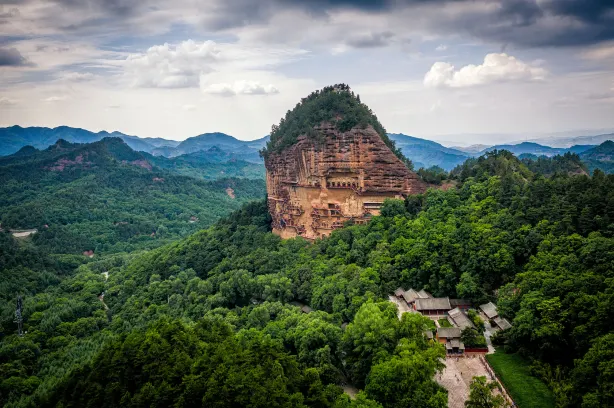
The Maijishan Scenic Area is located in the southeast of Tianshui, Gansu Province, within the Xiaolong Mountain forest area of the western Qinling range. A ridge extending from southwest to northeast separates the Wei River, a tributary of the Yellow River, from the Jialing River, a tributary of the Yangtze, placing them to the north and south respectively. The northern mountains boast majestic peaks, while the southern streams are serene and picturesque, blending both temperaments within the same landscape. The entire attraction comprises five major sections: the Maijishan Cave-Temple Complex, Xianren Cliff, Shimen Mountain, Quxi, and Jieting Hot Springs, with over 180 attractions scattered across more than 200 square km of forested terrain. Ancient Qinzhou scenes like "Maiji mist and rain," "immortals offering lanterns," "night moon at Shimen," and "pine waves in pure land" all originate from these mountains. The core of the attraction is the Maijishan Cave-Temple Complex, renowned alongside the Mogao Caves in Dunhuang, the Yungang Grottoes in Datong, and the Longmen Grottoes in Luoyang as one of China's four great cave-temple complexes. Maiji Mountain is an isolated peak in the Xiaolong range, named for its resemblance to a farmer's wheat stack. Its sheer red cliffs—over 100 m high on the eastern, western, and southern sides—are densely honeycombed with caves, connected by tiered aerial walkways spiraling upward to the Upper Seven-Buddha Pavilion, colloquially called "Sanhua Tower," where railings frame panoramic views of forested peaks. First excavated during the Later Qin period of the Sixteen Kingdoms, the complex saw continuous construction for over 1,600 years through the Northern Wei, Western Wei, Northern Zhou, Sui, Tang, and up to the Ming and Qing dynasties. With over 200 surviving caves and 10,000 clay and stone sculptures, it's hailed as the "Oriental Sculpture Gallery." Particularly lifelike are the life-sized round sculptures, including the smiling novice monk in Cave 133, celebrated as the "Oriental Smile." When rain clears during summer and fall, mist coils around the cliffs, veiling the grottoes in ethereal beauty—a spectacle enshrined as "Maiji mist and rain" among the Eight Views of Qinzhou. The other areas each have their own highlights: Xianren Cliff, located over 10 km from the grottoes, consists of three cliffs, five peaks, and six temples. The halls beneath the cliffs preserve nearly 200 statues dating back to the Northern Wei dynasty, and with the lake reflecting the red cliffs, the old scene of "immortals offering lanterns" has been passed down to this day. Shimen Mountain features a granite peak forest landscape and is known as "Little Huangshan." Juxian Bridge spans the north and south peaks, and on the night of the Mid-Autumn Festival, the bright moon hangs right over the bridge, creating the "night moon at Shimen" scene. Quxi is hidden deep in the Xiaolong Mountain forest, where a stream winds through nine bends, featuring small bridges and flowing water—a secluded spot full of wild charm. The hot spring water in Jieting Ancient Town maintains a temperature of about 40 degrees year-round. The ancient town is said to be related to the Three Kingdoms allusion of "losing Jieting" and also preserves traces of Du Fu's stay in Qinzhou, making it a perfect place to soak and relax after touring the mountains and waters. The major areas are spaced 10 to over 20 km apart, so it's recommended to plan your itinerary priorities in advance. If time is limited, prioritize the Maijishan grottoes. The grotto walkways are suspended with steep and narrow steps, so travelers with acrophobia or limited physical strength should proceed within their capabilities. The walkways become slippery after rain, so take your time ascending—it's also a perfect opportunity to enjoy the mountain mist.

China · Tianshui
From 8.91 AZN
Maijishan Cave-Temple Complex
No. 14 of Best Things to Do in Gansu

Maijishan Cave-Temple Complex

7.2
4.5/5
3.5k reviews

The Maijishan Cave-Temple Complex is carved into the cliff face of an isolated peak resembling a farmer's wheat stack in the Xiaolong Mountains. Alongside the Mogao Caves in Dunhuang, the Yungang Grottoes, and the Longmen Grottoes, it is renowned as one of China's four great cave-temple complexes and serves as the core attraction of the Maijishan scenic area. The caves were first excavated during the Later Qin period of the Sixteen Kingdoms and underwent continuous construction for over 1,600 years through the Northern Wei, Western Wei, Northern Zhou, Sui, Tang, and up to the Ming and Qing dynasties. The site preserves over 200 caves and niches, more than 10,000 clay and stone sculptures, and nearly 1,000 square meters of murals. Featuring predominantly clay sculptures with an unbroken lineage across dynasties, the complex showcases a complete and clear stylistic evolution, earning it the title "Oriental Sculpture Gallery." In 2014, it was inscribed as a UNESCO World Heritage Site as part of the "Silk Roads: the Routes Network of Chang'an-Tianshan Corridor." Maiji Mountain stands alone amidst surrounding peaks, with most of its grottoes carved into sheer cliffs dozens of meters above ground, connected solely by tiered aerial walkways spanning over ten levels. The visit itself becomes a cliffside adventure: at the base, gaze up at the exposed rock face and the colossal cliff-carved Buddha over ten meters tall, then ascend via winding walkways suspended dozens of meters high—both thrilling and offering panoramic views of lush forests. Grottoes along the path vary in size, with smaller ones protected by nets, while larger ones dominate the upper sections. The upper eastern cliff's Sanhua Tower (Upper Seven-Buddha Pavilion) is an unmissable highlight. This seven-bay, eight-pillared hall with a single-eaved hip roof replicates wooden architecture carved directly into the cliff, featuring a grand front corridor and rear chamber. Its ceiling showcases the unique "thin relief" flying apsaras—faces and limbs rendered in shallow sculpture while flowing robes are painted, creating a distinctive fusion of painting and sculpture unparalleled in ancient Chinese murals. As you walk and observe, the stylistic evolution of clay sculptures becomes distinctly visible: the elegant and slender figures of the late Northern Wei, the refined and serene style of the Western Wei, the plump and graceful forms of the Northern Zhou, and the full and rounded shapes of the Sui and Tang dynasties—like flipping through a three-dimensional history of sculpture. On overcast or freshly cleared days after rain, when mist swirls around the peaks and drizzle veils the landscape, the solitary haystack-shaped peaks emerge and fade in the clouds, creating the famous "Maji misty rain" scenery. The plank road is narrow, and visitors may need to queue and proceed slowly when crowded. Travelers with acrophobia should proceed with caution. Flash photography is prohibited in the grotto area, and touching the statues is not allowed. A few classic grottoes are designated as special grottoes and are not included in the regular tour route, such as Cave 133, famous for the "Oriental Smile" novice monk, and Cave 127, known for its large-scale sutra illustration murals. Travelers with a strong interest in statue art can check the special grotto visiting arrangements in advance. Most of the other caves and niches can be viewed in sequence along the plank road.

China · Tianshui
From 8.91 AZN
Jingning Today's weatherClear -5-10℃
Jingning weather for the next 2 days11/28: -5-12℃, 11/29: -1-13℃

Free things to do in Jingning
What travellers say about Jingning

user-avatar
M37***6024 November 2026
5.0
Arriving at Shapotou, I encountered the Yellow River and the desert, and saw the scenery described by Wang Wei as "a lone plume of smoke rises straight from the desert, the setting sun hangs round over the long river." I experienced the ancient transportation tools on the Yellow River, such as sheepskin rafts, camel riding, and other activities, and listened to the songs of the raftmen. It was a very good experience. However, it is more worthwhile to purchase a scenic area package ticket to participate in the activities.

Shapotou Scenic Area

user-avatar
51.铖26 November 2026
5.0
The scenery is absolutely breathtaking, especially the sunset near dusk; it's so stunning it makes you question reality. You absolutely must walk the 3.5-kilometer boardwalk, going against the flow from top to bottom—it's incredibly pleasant and unforgettable.

Lanzhou Danxia Geological Park
user-avatar
买醉吟小曲31 October 2024
5.0
The environment is very good, because there are not many people, there is more atmosphere, it is good, I will come again next time!

Chengji Culture City

user-avatar
lup***ng15 November 2026
4.0
The room view is really great. It's on a high elevation with a large window and a mountain view opposite. The only downside is that after one person finishes showering, you have to wait for almost half an hour before the next person can shower.

Zha Ga Na

user-avatar
玖恩judy31 October 2026
5.0
The Gansu Provincial Museum is an absolute must-see during your trip to Lanzhou! The museum's collection is breathtakingly rich, especially the painted pottery exhibition hall. The patterns from thousands of years ago still possess a remarkable beauty, a testament to the wisdom of the ancients. Of course, the most unmissable exhibit is the museum's crown jewel, the "Flying Horse of Gansu" (bronze galloping horse). Seeing it in person is a truly awe-inspiring experience that pictures can't capture. The row of adorable terracotta figurines is also incredibly photogenic. The entire visit is both educational and entertaining, and with free reservations, it's excellent value. I highly recommend setting aside half a day for a leisurely exploration, and definitely hire a guide or rent an audio guide – it will elevate your experience significantly!

Gansu Provincial Museum

user-avatar
加油加油加油加油!!7 May 2021
5.0
A place of historical memory of the revolution, a place of memory of heroes!

Jingningxian Jieshi Pu Hongjun Changzheng Maozedong Jiuju Memorial Hall

user-avatar
M24***0916 November 2026
5.0
A very good travel experience. Calling in advance to inquire about baggage storage was very thoughtful and saved me a lot of trouble. The ticket purchase advice was practical, the mountain climbing process was pleasant and smooth. The shuttle bus driver drove smoothly, and there was a dedicated car to take you to the museum after the tour, which was excellent.

Kongtong Mountain

user-avatar
会飞的鱼鱼9914 November 2026
4.0
Although it takes several hours to drive to Qingmuchuan Ancient Town, it's well worth the trip. Located in Ningqiang County, Hanzhong City, Shaanxi Province, at the junction of Shaanxi, Gansu, and Sichuan provinces, Qingmuchuan Ancient Town is the hometown of Wei Futang, a legendary figure from the Republic of China era, and is widely known because it was a filming location for the TV series "A Generation of Heroes." Strolling through the ancient town, you'll find the famous Wei Family Manor, as well as opium dens run by the Wei family, Rongshengkui Opium Shop, Furen Middle School, and other interesting sites.

Qingmuchuan Ancient Town

user-avatar
M40***1316 September 2026
5.0
The environment is clean and elegant, the hot spring water is clear and comfortable, the temperature is just right, and you can relax and de-stress after soaking. The service is warm and thoughtful, the price is very reasonable, and the experience is superb.

Maijishan Scenic Area

user-avatar
hutoumao3314 November 2026
5.0
I chose four special caves, which were a bit pricey, but after visiting them, I felt it was definitely worth the ticket price. They truly deserve to be one of the four major grottoes, with a distinct character compared to the other three sites. Their worldly smiles are unforgettable! Visiting this season also allows you to see the autumn scenery of the Qinling Mountains; the fading reds and greens of Maijishan are also uniquely charming. There were few people, and I walked around twice, deeply imprinting the experience in my mind. My only complaint was the male guide at the special caves; he was self-important and sounded like he was reciting a foreign language, making me constantly afraid of being misled, resulting in a poor experience. After coming down from the West Cliff, I rented an audio guide, but the ordinary caves were just reading from a script. Perhaps it's fate, as Buddha said, that I'll encounter a better guide next time.

Maijishan Cave-Temple Complex

Popular cities near Jingning

Frequently asked questions

How can I contact Trip.com customer support?

Get help anytime, anywhere within 30 secondsContact customer support

Change and cancellation policies vary by attractions and tours. Please check the product details page for more information.

Ticket prices may vary between weekdays and weekends, as well as during peak and off-peak seasons. When booking with Trip.com, you can also use Trip Coins to get extra savings. For more tips on booking discounted tickets, please visit Trip.com for the latest information.