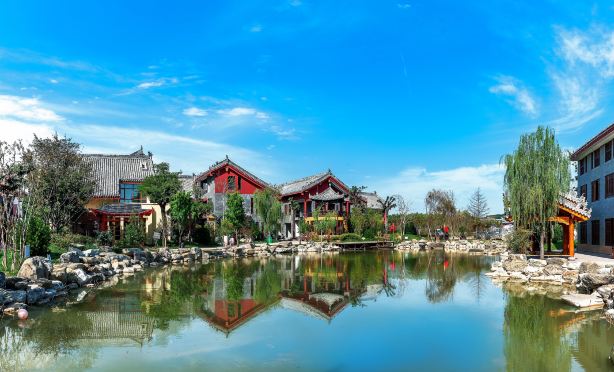
Things to do in Qian County
Explore top experiences
Top 10 attractions in Qian County


Traveller favourites curated for you

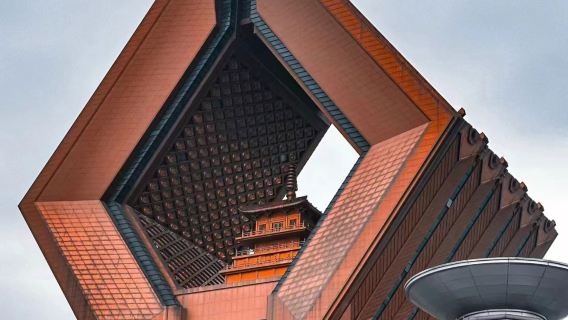

 5D4N • Xi'an + Emperor Qinshihuang's Mausoleum Site Museum + Hukou Waterfall tourist area of the Yellow River + Hanyangling Mausoleum Outer Burial Pit Exhibition Hall
Visit the Terracotta Warriors, walk the Ancient City Wall, and experience the perfect mix of history, culture, and local flavors with an experienced English-speaking guide. | Terracotta Warriors Museum, Small Wild Goose Pagoda, Xi'an City Wall, Wild Goose Pagoda.From EUR 936

6D5N • Emperor Qinshihuang's Mausoleum Site Museum + Mount Hua + Qianling Mausoleum + Famen Temple - Eastern Buddha Capital
Chinese tour guide, 1V1 service throughout the whole process, independent explanation of the scenic spot, equipped with mineral water. With good service guarantee in the industry achieved good credibility. | Terracotta Army is known as the eighth wonder of the world. In addition, we will visit many famous attractions, such as Xi'an City Wall, Big Wild Goose Pagoda, Little Wild Goose Pagoda and etc. Not only can we visit Xi'an, but also many famous scenic spots in Shaanxi province~~Savings EUR 3
From EUR 739EUR 743
Experiences you can't miss in Qian County
Featured Day tours in Qian County
View all Day tours
Free cancellation
Instant confirmation
Book now for tomorrow
From€26.64
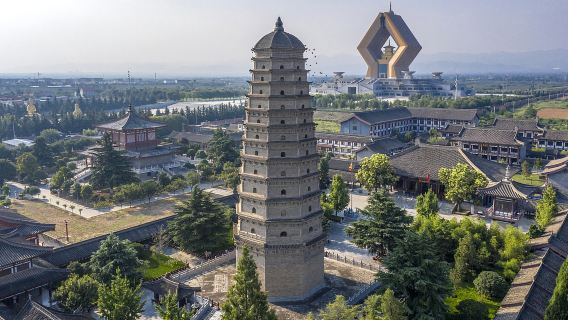
4.9/5
· 408 reviews· 423 bookedFree cancellation
Instant confirmation
99.3% of travelers recommend
From€278.37
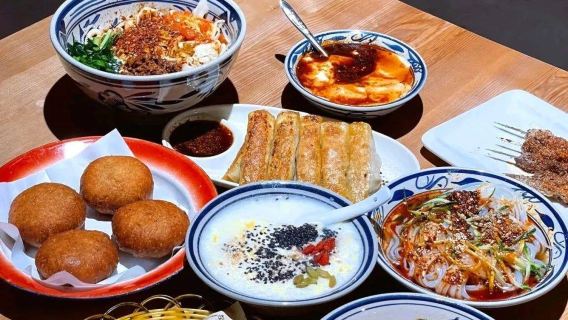
5.0/5
· 1 reviewFree cancellation
Instant confirmation
From€117.73
Free cancellation
Instant confirmation
Book now for tomorrow
From€88.22
5.0/5
· 1 reviewFree cancellation
Instant confirmation
From€53.69
Free cancellation
Instant confirmation
Book now for tomorrow
From€80.88

Free cancellation
Instant confirmation
Book now for tomorrow
From€61.31
Featured Outdoor & sports in Qian County
View all Outdoor & sports
Free cancellation
Instant confirmation
Book now for tomorrow
From€36.70

From€104.95

Free cancellation
Instant confirmation
Book now for tomorrow
From€26.76

Free cancellation
Instant confirmation
Book now for tomorrow
Save €3.51
From€66.73€70.24

4.0/5
· 1 reviewFree cancellation
Instant confirmation
Book now for tomorrow
From€39.45
More things to do
Private Tours in Qian County
View More Private Tours in Qian County




Qian County Today's weatherOvercast 5-15℃
Qian County weather for the next 2 days11/3: 5-13℃, 11/4: 6-18℃
Free things to do in Qian County


What travellers say about Qian County

kiu先生28 October 2026
5.0
The scenic area is large and clean, with a refreshing atmosphere. The children were very happy, and the visit was very comfortable. The staff were very welcoming, and the routes were well-designed, making it incredibly convenient! I will definitely come again next time.
Qianling Mausoleum

老挝彭于晏24 July 2022
4.0
Now the stele without words has become a stele with words, but it is not entirely a bad thing, because there is some calligraphy on it, which is indeed well written, and you can even see the Jurchen characters that were no longer seen later, so it can be considered to have artistic value.
Qianling Mausoleum - Uncharactered Stele

陌染MM15 April 2023
4.0
Traveling to Shaanxi, this stop came to Xianyang City to visit Qianling Mausoleum. Qianling Mausoleum, also known as Tang Qianling Mausoleum, is a tomb of the Tang Dynasty, where Emperor Gaozong Li Zhi and Empress Wu Zetian were buried together. Qianling Mausoleum is relatively scattered. The navigation takes you to the entrance of the ticket office, where you can buy tickets and visit the museum. The Prince Mausoleum, Princess Mausoleum, and the Imitation Underground Palace Museum are also nearby, but if you want to go to the main mausoleum, that is, the joint burial mausoleum, you need to drive there again.
Qianling Museum

望雁19 February 2023
4.0
The Tomb of Prince Yide is the main burial site near the tomb of Emperor Gaozong of Tang and Empress Wu Zetian in Qianling Mausoleum, so it is also the highest-standard cemetery besides the tombs of the two saints.
Although it was robbed, many cultural relics were unearthed during the excavation. Moreover, you can directly enter the tomb passage and visit the tomb chamber.
Tomb of Prince Yide

賢賢君21 October 2026
5.0
Our tour guide, Mr. Li, provided very detailed introductions to the attractions and artifacts. He was also very friendly and patient, and when explaining the artifacts, he would use supplementary pictures to help us gain a deeper understanding.
Famen Cultural Scenic Spot

衔春归玄燕1 August 2025
5.0
Zhaoling, this majestic mausoleum, stands quietly atop the main peak of Jiuyi Mountain in Liquan County, Shaanxi Province. It is the joint burial site of Emperor Taizong of Tang, Li Shimin, and Empress Wende, Zhangsun. As the largest of the 18 Tang Tombs in Guanzhong, its grand scale, vast area, numerous accompanying tombs, and rich cultural relics are all breathtaking.
🕰️ The construction of Zhaoling took 13 years, from the initial burial of Empress Wende in the 10th year of the Zhenguan reign to the interment of Emperor Taizong, Li Shimin, in the 23rd year of the Zhenguan reign. It embodied the wisdom and dedication of countless craftsmen. Meticulously designed and overseen by Yan Lide, Zhaoling is more than just a mausoleum; it is a silent history book, telling the glorious chapter of the Tang Dynasty's prosperity.
🌳 The location of Jiuyi Mountain is truly blessed. Surrounded by mountains, the winding Jing River flows through it, and before it lies the vast Guanzhong Plain, with the Wei River flowing through it like a jade belt. This geographical location is not only excellent for feng shui but also symbolizes peace and prosperity, perfectly complementing the achievements of Emperor Taizong of Tang, Li Shimin, in both civil and military affairs.
🐎 The "Six Horses of Zhaoling" are undoubtedly the crowning jewels of the mausoleum. These six steeds, loyal companions of Li Shimin throughout his campaigns, are immortalized in high-relief stone carvings at the mausoleum's edge. Each steed possesses a unique posture and expression, as if narrating the days of war and battle. Sadly, "Salu Zi" and "Quanmao Gu" were stolen and shipped to the United States, leaving a lasting legacy for the Chinese people. Today, the remaining four are treasured in the Xi'an Forest of Steles Museum, attracting countless visitors to see their splendor.
🏺 In addition to the "Six Horses of Zhaoling," numerous precious cultural relics have been unearthed from the mausoleum, including statues of chieftains from fourteen states, exquisite pottery figurines, and vibrant Tang Dynasty sancai (three-colored glazed pottery). These artifacts are not only artistic treasures but also vivid reflections of the prosperity and prosperity of the "Zhenguan Reign" during the heyday of the Tang Dynasty. From various perspectives, they showcase the remarkable achievements of the time, encompassing economic, social, and cultural fields, offering a glimpse into the splendor and grandeur of that era.
👑 The system of accompanying burials at Zhaoling is also unique. Emperor Taizong of Tang issued an edict requiring meritorious officials, close relatives, and those who assisted his time in their deeds to be buried alongside him. This measure not only demonstrated his deep affection for his deputies but also underscored the harmonious relationship between the emperor and his subjects during the Tang Dynasty. According to statistics, a total of 154 individuals were buried there, including renowned figures such as Zhangsun Wuji, Cheng Yaojin, and Wei Zheng. Their tombs, like stars surrounding the moon, form a vast complex of accompanying burials within the 300,000-mu (approximately 1,000 acres) Zhaoling cemetery. Many ministers considered it an honor to be buried there, and even their descendants followed their fathers' example. This orderly tradition of accompanying burials has become a unique historical hallmark of Zhaoling.
🌟 Today, Zhaoling has been designated a first-tier National Key Cultural Relics Protection Unit and a National AAAA-level Tourist Attraction, attracting visitors from all corners of the world. When you step into this ancient land, it is as if you have traveled through time and space and returned to the magnificent Tang Dynasty.
Zhao Mausoleum

M45***452 November 2026
5.0
Five-star recommendation for guide Zhu Zhu! Her solid knowledge and vivid, easy-to-understand explanations brought the Qin army formations and the stories of the terracotta warriors to life. She patiently answered our questions, maintained a comfortable pace, and truly helped us understand the Terracotta Army. Excellent! Extremely satisfied!
Emperor Qinshihuang's Mausoleum Site Museum

盛夏的清凉16 June 2025
4.0
章怀太子墓是唐高宗乾陵的陪葬墓之一,是典型的唐代长墓道带多个天井的高等级陵墓。墓葬中现有一个石质棺椁,很庞大,上面有雕刻的图像。附近还有永泰公主墓和懿德太子墓,都是规模相近的大型陵墓。
Tomb of Crown Prince Zhanghuai

吃菠萝的人儿12 November 2026
5.0
The Shaanxi History Museum is absolutely worth a special trip! The ticket for the Treasure Gallery included a guided tour, and I also visited the Basic Gallery, making for a very fulfilling experience.
The Treasure Gallery's exhibits are of extremely high quality, ranging from Shang and Zhou bronzes to Tang Dynasty gold and silver artifacts—each piece is a national treasure. The He Zun bronze vessel, the gilded silver ewer with a dancing horse holding a cup, the gold-inlaid agate cup with an animal head… even through the glass, you can feel the exquisite craftsmanship and majesty that transcends a thousand years. The Tang Dynasty artifacts, in particular, are breathtakingly magnificent.
The Basic Gallery is arranged chronologically, from the Lantian Man to the Sui and Tang Dynasties, systematically tracing the development of Shaanxi and even the entire Chinese civilization. After seeing it, I truly understood the significance of Shaanxi as the "Capital of Thirteen Dynasties."
The guided tour was a huge bonus. The guide didn't just read from a textbook; instead, they brought out the historical stories and craftsmanship details behind the artifacts in a lively and engaging way. Many details that I would have missed on my own were highlighted, making the experience far exceed my expectations.
It's recommended to make reservations in advance via their official WeChat account. Tickets for the Treasure Gallery are in high demand, so it's best to book early. If you can only visit two museums in Xi'an, the Shaanxi History Museum is a must-see!
Shaanxi History Museum

M27***0619 June 2025
4.0
Yuanjia Village is an administrative village under the jurisdiction of Yanxia Town, Liquan County, Xianyang City. It is famous for its Guanzhong folk culture and rural tourism and is known as the "No. 1 Village in Guanzhong". The village was formed before the Yuan Dynasty, with an area of 0.4 square kilometers. It was listed in the second batch of traditional Chinese villages in 2013. The main industries include traditional snacks, farmhouses and handicraft workshops. Yuanjia Village is located in the hinterland of the Guanzhong Plain in Shaanxi, China, about 60 kilometers away from Xi'an, with convenient transportation. Tourism Features and Industries Folk Culture Experience: Preserve the style of Guanzhong folk houses, and regularly hold performances such as Qinqiang and shadow puppetry (national intangible cultural heritage). Food Street: It brings together Shaanxi specialty snacks such as mutton soup buns and cold noodles, and is known as the "Guanzhong Food Museum". Handicraft Workshop: Visitors can participate in the production of traditional crafts such as tofu, vinegar, and oil.
Yuanjia Village
Trip Moments in Qian County


