
Things to do in Xixia
Explore top experiences
Top 10 attractions in Xixia


Laojie (Old Boundary) Ridge
The Laojie Ridge Scenic Tourism Area is located in the northeastern part of Xixia County, at the intersection of Nanyang and Luoyang. Consisting of the 4A-level Laojie Ridge Scenic Area and the 4-star Laojie Ridge Summer Resort, it is one of the core areas of the Funiu Mountain Geological Park. The Laojie Ridge Scenic Area has three major natural landscapes: Qifeng, Qishi and Qishu. The scenic area's main peak Jijiaojian is also the main peak of Funiu Mountain and one of the highest peaks of the Central Plains. Along with being Funiu Mountain's main peak, Laojie Ridge is also the east-west watershed dividing line of China's mountain ranges, the north-south climate transition zone and the Yangtze River-Yellow River boundary line. This is why, ever since ancient times, it has been known as the Old Boundary.Xixia · 46.2km from downtown

Shaanxi History Museum
History background: Shaanxi History Museum is located in the northwest of the Dayan Pagoda in Xi'an. It is one of the landmark attractions of Xi'an. The museum was planned in 1983, started in the summer of 1986, and officially opened on June 20, 1991. It was named Shaanxi History Museum. In 2016, Shaanxi History Museum was selected as "China's 20th Century Architectural Heritage" by the Chinese Cultural Relics Society and the Chinese Architectural Society. Museum Features: Shaanxi History Museum is a large modern museum, and its completion marks a new milestone in the development of China's museum industry. This museum is a Tang-style building complex with a "central hall and four corner towers". The main and secondary buildings are well-organized, the heights are staggered, and the momentum is solemn. It integrates national traditions, local characteristics and the spirit of the times. The museum covers an area of 65,000 square meters, and houses more than 380,000 cultural relics ranging from simple stone tools used in the initial stage of ancient humans to various artifacts in social life before 1840, covering a time span of more than one million years. The cultural relics are not only numerous and diverse, but also of high quality and wide value. The collections in the museum are dazzling and exquisite. It is an art hall that showcases the history and culture of Shaanxi and ancient Chinese civilization, and is known as the "Pearl of the Ancient Capital, the Treasure House of China." There are many treasures in the museum, including bronzes from the Shang and Zhou dynasties, pottery figurines from various dynasties, gold and silver utensils from the Han and Tang dynasties, and murals from Tang tombs. Most of them are treasures from the prosperous periods of the Han and Tang dynasties, and some of them are fine items that are prohibited from leaving the country. Collection treasures: There are three exhibition halls in the center of the museum. The first exhibition hall displays cultural relics from the prehistoric civilization of Lantian ape-man 1.15 million years ago to the Qin Dynasty; the second exhibition hall displays cultural relics from the Han Dynasty and the Wei, Jin, Southern and Northern Dynasties; and the third exhibition hall is mainly cultural relics from the prosperous Tang Dynasty. Each exhibition hall has its own treasure. There are special exhibition halls on the east and west sides of the central hall. On the west side, there is a "Special Exhibition of Tang Dynasty Treasures (Treasure Hall, Cultural Relics Unearthed in Hejiacun)", where many fine gold and silver wares from the heyday of the Tang Dynasty were transferred to be exhibited. On the east side, there is a "Treasures of Tang Dynasty Murals Exhibition", which exhibits a number of authentic Tang Dynasty tomb murals. The tripod The tripod is placed in the first exhibition hall at the entrance of the museum, and it can be said to be the treasure of the first exhibition hall. The replica is placed here, and the original is kept in the warehouse. Inscription on the outer wall: The inscription "All under heaven is the king's land; all the people are the king's subjects" reflects the land ownership system in the Western Zhou Dynasty. There are four lines of inscriptions with 28 characters on the inner wall of the Yi Ding. The general meaning is: In early August of a certain year, Wang Jiang took back the land originally given to Shi Lu and gave it to Yi, who then made this tripod to commemorate it. Queen's Seal: One of the treasures worth seeing in the second exhibition hall is the jade seal of the empress of the Han Dynasty, which is displayed separately. The seal is made of Xinjiang Hetian mutton-fat jade and is engraved with a Chihu, symbolizing royal power. Three-color camel figurines carrying music: This world-famous tri-color camel figurine carrying music is located in the third exhibition hall of Shaanxi History Museum. Its overall appearance and color are well preserved. There are seven men sitting on the camel's back, holding different musical instruments in their hands. Among them, the figurine holding the clapboard is listening attentively, as if intoxicated by the wonderful music. The woman in the middle is performing, and the camel opens its mouth wide and looks up to the sky, as if it is also singing with its master. Gold-inlaid animal head agate cup: This cultural relic, located in the special exhibition "Tang Dynasty Relics Special Exhibition", is one of the first 64 national treasures listed by the State Administration of Cultural Heritage that are never allowed to be exhibited abroad. There are also many other treasures such as black-glazed oil-drip bowls, green-glazed porcelain pots with handles, gilded silver bamboo-joint copper incense burners, gold bowls with mandarin duck and lotus petal patterns, and so on.China · Xi'an

The Three Gorges Dam Tourism Area
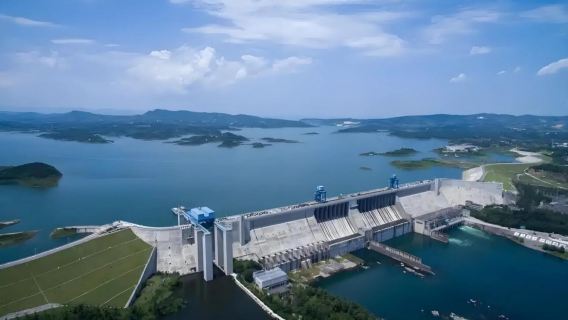
The Three Gorges Dam Tourism Area is located in the Xiling Gorge section of the Yangtze River in Yichang, Hubei. It is a scenic attraction built around the Three Gorges hydro project, covering over ten square kilometers. Currently, it offers travelers three viewing spots: Tanzi Ridge, the 185 viewing platform, and the river closure memorial park. The dam crest itself is not open to travelers, so visits primarily revolve around these three attractions. Tanzi Ridge is the highest accessible point in the dam area, named for its jar-shaped summit viewing platform resembling an overturned jar. It also served as the survey site for the dam's initial location selection. From the ridge top, visitors can overlook the Three Gorges Project in its entirety—the dam, power station, and twin five-level ship locks are all visible. The five lock chambers cascade down the mountainside, earning the nickname "Fourth Gorge of the Yangtze." The park displays engineering artifacts like ancient riverbed stones, river closure rocks, and foundation stones from the dam site, complemented by model exhibits that help visitors intuitively understand the origins and development of this mega-project. The 185 observation platform is located on the left bank of the dam. It gets its name from sharing the same elevation of 185 m as the dam crest. Standing on the platform feels like being atop the dam: on one side, the dam and vertical ship lift are within close reach, offering a chance to witness ships "riding the elevator" over the dam; on the other side lies the vast, tranquil reservoir upstream. The stark contrast between the stillness above and the dynamism below the dam is striking. The closure memorial park is situated on the right bank downstream of the dam, preserving artifacts like tetrahedral closure stones and large loading machinery used during the construction. It's an ideal spot to view the dam's full frontal grandeur. During flood seasons when the dam releases water, torrents rush out from the deep outlets, creating towering mist and thunderous echoes that reverberate through the valley—a truly awe-inspiring spectacle. The three attractions are far apart, and the scenic area provides shuttle buses for transportation. It is recommended to reserve half a day to visit them in order.China · Yichang

Grand Tang Mall
Grand Tang Mall is a large-scale Tang-style architectural pedestrian street in Xi'an's Qujiang New District, built around the Giant Wild Goose Pagoda. It stretches from the Xuanzang Square at the foot of the pagoda in the north to the Tang City Wall Ruins Park in the south, connected by a approx. 1500 m central axis view boulevard running north-south. The boulevard itself resembles an open-air sculpture gallery, featuring themed sculptures arranged sequentially from north to south: Buddhist culture of the Tang Dynasty, Tang heroes, the Zhenguan era governance, Empress Wu's procession, and the Kaiyuan heyday. Statues of eminent monks like Xuanzang and Jianzhen stand at the front, followed by Tang luminaries such as Li Bai, Wu Daozi, Sun Simiao, and Lu Yu in the middle section, with ceremonial processions of Emperor Taizong, Empress Wu Zetian, and Emperor Xuanzong concluding the display. Walking through this boulevard is akin to reading a three-dimensional history of the Tang Dynasty. The block connects three themed squares from north to south—Xuanzang square, Zhenguan square and Kaiyuan square—with Tang-style pavilions lining both sides. Among them are four cultural venues: Xi'an concert hall, Shaanxi grand theater, Xi'an art museum and Qujiang cinema. Enjoying concerts, visiting exhibitions and shopping for photos can all be arranged along the same route. By day, admire the architecture and sculptures, but the real highlight of this street comes after nightfall—when the lights come on, the Tang-style pavilions glow with radiant colors, and the entire street seems to recreate the splendor of the Tang Dynasty. The area features year-round immersive street performances: a "Tumbler Girl" in Tang attire leans in to hold hands with travelers as she spins; Fang Xuanling and Du Ruhui from the "Secret Box of the Tang Dynasty" appear, posing riddles and bantering, with clever answers from selected travelers drawing cheers from the crowd; Hu Xuan dances and Tang-era music performances compete in a colorful parade; and actors dressed as the "Poet Immortal" may challenge you to a verse duel at any moment—strolling around, you might stumble upon a performance. This place gathers trending attractions, highlighting dazzling colors, fantasy, and a tech vibe. Through large-scale installations, it creates a stylish and dynamic interactive experience center, offering a sought-after photo spot for trendy young crowds. In the family-friendly tech zone, scene-based displays and hands-on actions spark children's imagination and creativity, combining play with skill development and experiential gains—making it an ideal destination for family-friendly fun.China · Xi'an

Xi'an Museum
Xi'an Museum is a modern comprehensive museum built upon the cultural relic protection site—the ruins of the Tang Dynasty Jianfu Temple and its iconic structure, the Small Wild Goose Pagoda. It integrates cultural relic collection and protection, academic research, exhibition and display, social education, and garden leisure. Its core area is the location of the original Tang Dynasty royal temple, Jianfu Temple, while the precious and striking historical relic existing within the temple—the Small Wild Goose Pagoda—has become the museum's unique landmark and soul. Therefore, the Jianfu Temple ruins and the Small Wild Goose Pagoda are not only the foundation and core carrier for the establishment of Xi'an Museum, but also important outdoor historical exhibition areas and focal points for visitors. The main building of the museum is located on the north side of the ancient temple ruins. The three elements (ancient temple ruins, ancient pagoda, and modern museum building) are organically integrated, jointly forming a unique cultural space that combines "museum, pagoda, temple, and garden," vividly showcasing the historical context of Xi'an from ancient times to the present. Xi'an Museum officially opened to the public on May 18, 2007. Its establishment aims to comprehensively showcase the glorious history and splendid culture of Xi'an (ancient Chang'an) as the capital of thirteen dynasties, filling the gap of a comprehensive museum of Xi'an's urban history. Collection highlights: The museum houses over 100,000 precious cultural relics from various historical periods of Xi'an. The collection spans from prehistoric times to the Ming and Qing dynasties, with particular emphasis on artifacts from the prosperous dynasties of Zhou, Qin, Han, and Tang, including bronze ware, jade articles, gold and silverware, ceramics, murals, stone steles, epitaphs, and Buddhist statues, systematically reflecting the political, economic, cultural, social life, and foreign exchanges of the ancient capital Chang'an. Main exhibition: The permanent exhibition "Ancient capital Xi'an" takes the urban development history of Xi'an as the main thread, showcasing the evolution and achievements of Xi'an as a capital (Zhou Fenghao, Qin Xianyang, Han Chang'an, Sui-Tang Chang'an) and a prefectural city (Song, Yuan, Ming, and Qing dynasties) through a large number of precious cultural relics, models, charts, and multimedia means. Unique environment: The museum's greatest feature lies in its surroundings. Travelers can not only visit modern exhibition halls but also stroll through the expansive heritage park encompassing the Small Wild Goose Pagoda, the ancient architectural complex of Jianfu Temple (including structures like the Ming dynasty bell tower housing a Jin dynasty ancient bell), an ancient stone sculpture art exhibition area, and garden views—experiencing the charm of the millennia-old capital at its historical site. The view of "morning bells at the Wild Goose Pagoda" is particularly renowned. Functional positioning: The museum is not only an important center for cultural relic collection, research, and display, but also an urban cultural park where citizens can relax, entertain, and immerse themselves in history and culture, undertaking significant social education and cultural exchange functions.China · Xi'an

Luoyang Museum
The Luoyang Museum was established in 1958 and fully opened to the public on April 16, 2011. It is a comprehensive museum integrating cultural relic collection, exhibition display, and social education. Its collections span the long history of Luoyang as an ancient capital of thirteen dynasties. The main building stands like a giant ding (ritual vessel), symbolizing the "establishment of the capital in Luoyang." Its solemn and majestic facade itself serves as a popular photo backdrop. The large-scale permanent exhibition "Heluo civilization" unfolds along the timeline of prehistoric times, the Xia, Shang, and Zhou dynasties, the Han and Wei dynasties, the Sui and Tang dynasties, and the Five Dynasties and Northern Song period, connecting thousands of years of Luoyang's capital history into a complete viewing experience. The treasure hall on the second floor rotates displays of representative artifacts from the collection, including the Cao Wei white jade cup, the Northern Wei clay Buddha face sculpture, and the vividly expressive Northern Wei painted pottery figurine of two women holding hands, affectionately called the "best friends figurine" by visitors, all worth pausing to admire. In the Tang tri-color ceramics hall, the rare and majestic black-glazed tri-color horse and the massive Eastern Han stone artifacts are equally popular. The palace artifacts hall displays Qing Dynasty imperial artifacts transferred from the Forbidden City, including a golden nanmu wood tower carved from a single log and adorned with gilded miniature Buddhas, exuding royal grandeur. The stone carving hall is rustic and imposing, while the Wang Xiu peony art exhibition brings Luoyang peonies into paintings, each showcasing a unique blend of strength and delicacy. You can start your visit from the "Heluo civilization" exhibition and stone carving hall on the first floor, then proceed to the second floor to explore the treasure hall, Tang tri-color glazed pottery hall, and imperial artifacts hall in detail. The treasure hall features rotating exhibitions, and the specific exhibits are subject to the on-site display. A thorough visit typically takes two to three hours, so it is recommended to allocate sufficient time. Luoyang Museum consistently organizes flexible and diverse temporary exhibitions, continuously providing the public with new cultural offerings. It has introduced exotic-themed exhibitions such as "Civilizations of Qin-Han and Rome," "Norwegian style painting exhibition," "African cultural relics and art exhibition," as well as independently curated large-scale temporary exhibitions like "The starting point of the Silk Road - the Silk Road and Luoyang" and "The hub of the Grand Canal - the Grand Canal and Luoyang," enriching the exhibition content and ensuring visitors always find something new. Adhering to its mission of reaching out, Luoyang Museum has independently or collaboratively held cultural relic exchange exhibitions in over 20 countries and regions, including the United States, France, Japan, South Korea, Italy, Belgium, Sweden, and Australia, generating positive impacts both domestically and internationally. Luoyang Museum adheres to the organic integration of collection preservation, scientific research, and social education for balanced development. Practicing a people-oriented service philosophy, it enhances integration and interaction with society while excelling in exhibition reception and educational promotion. The museum actively recruits volunteers passionate about museum education, establishes cooperative units, and extends its reach to communities, schools, rural areas, and military camps to expand its coverage and influence. Additionally, it hosts monthly traditional culture lectures to disseminate heritage knowledge and cultivate museum audiences, achieving remarkable results. Luoyang Museum boasts a team of professionals with high academic standards. It has published numerous works and collections, with over 1,000 papers and representative publications including: "Han tombs at Shaogou in Luoyang," "Luoyang tri-colored glazed pottery of the Tang dynasty," "Bronze mirrors unearthed in Luoyang," "Han dynasty murals in Luoyang," "A collection of essays commemorating the 40th anniversary of Luoyang Museum," "Cultural treasures of Luoyang," "The charm of Luoyang—highlights of archaeological achievements in the Heluo region," "A history of the ancient capital Luoyang," "Research on Western Zhou bronze ware," "Heluo civilization," and more, all widely recognized by society and academia. In the era of promoting cultural development and prosperity, Luoyang Museum is bound to play an even greater role in the construction of socialist spiritual civilization.China · Luoyang

Henan Museum
Located in the city of Zhengzhou, Henan Museum has a rich collection of exhibits displaying Henan's 5,000-year history and offering a window into traditional Henanese culture. The museum has eight exhibition halls that can be visited in chronological order. The collection includes several national treasures, including the lotus crane vase, cloud copper chest, Saohao vase, Jiahu bone flute, Wushu copper plate and more. Be sure to visit them all.China · Zhengzhou

Yangtze River Three Gorges
The Yangtze River Three Gorges is a grand canyon formed by the Yangtze cutting through the Wushan Mountains. It stretches nearly 200 km from White Emperor City in Fengjie, Chongqing, in the west to Nanjin Pass in Yichang, Hubei, in the east, connecting three gorges—Qutang, Wuxia, and Xiling—from west to east. This stretch of river has served as a vital waterway between Ba and Chu since ancient times. Li Bai's verse "Departing at dawn from White Emperor City veiled in colorful clouds" depicts the eastbound journey from the gorge entrance, while Du Fu left his famous line "The endless Yangtze rolls on and on" in Fengjie. Each gorge has distinct characteristics, often summarized as "majestic Qutang, graceful Wuxia, and perilous Xiling." Qutang Gorge spans only about 8 km but is renowned for its sheer cliffs. At Kuimen, its entrance, the river abruptly narrows to less than 100 m between knife-cut bluffs—a scene featured on the back of China's fifth series CNY 10 banknote. Ancient plank road holes and Wind Box Gorge's hanging coffins remain visible on the cliffs. Wuxia Gorge extends over 40 km like a winding gallery, with the Twelve Peaks lining its banks. Goddess Peak stands elegantly photogenic in morning mist. Xiling Gorge was once notorious for rapids, but the Three Gorges Dam has transformed its upper reaches into a "high gorge with placid waters." Riverside landmarks like White Emperor City and Huangling Temple are worth visiting. Cruising is the best way to experience the gorges. Long-distance ships sail downstream, while short round-trip boats shuttle through key sections. Watching peaks drift by from the deck offers a more immersive perspective than shore viewing. Morning mist often creates ideal conditions for photographing Kuimen and Goddess Peak. Cliffside plank road relics and inscriptions may flash by during the cruise—keep an eye out to avoid missing them.China · Yichang

Shaanxi Archaeology Museum
The permanent exhibition of the Shaanxi Archaeological Museum is themed on "Archaeological Sacred Land Huazhang Shaanxi", which is divided into four chapters: "Archaeological History", "Cultural Genealogy", "Archaeological Discovery" and "Cultural Preservation Technology".China · Xi'an

Luoyi Ancient City
The ancient city of Luoyang is located in the old town of Luoyang. It is an ancient city and has many historical sites. "Luoyi" is the old name of ancient times in Luoyang. After the ancient capital of the 13th Dynasty, there proves Chinese culture. Walking in the ancient city of Luoyang, the city walls, ancient courtyards, old trees, these scenery is worthy to visit. The ruins of Wenfeng Tower, Confucian Temple and Tuoling Palace reflect the profound historical and cultural heritage of Luoyang.China · Luoyang
Experiences you can't miss in Xixia
Featured Day tours in Xixia
View all Day tours
5% off
Limited-time sale
FromTWD 8,910TWD 9,379
5% off
Limited-time sale
FromTWD 6,289TWD 6,620
5% off
Limited-time sale
FromTWD 6,289TWD 6,620

5% off
Limited-time sale
FromTWD 6,289TWD 6,620
Free things to do in Xixia
Laojie (Old Boundary) Ridge
Xixia · 46.2km from downtownShaanxi History Museum
China · Xi'anThe Three Gorges Dam Tourism Area
China · YichangGrand Tang Mall
China · Xi'anXi'an Museum
China · Xi'anImmediate access, Book now for today, Cancel anytimeLuoyang Museum
China · LuoyangHenan Museum
China · ZhengzhouYangtze River Three Gorges
China · YichangShaanxi Archaeology Museum
China · Xi'anLuoyi Ancient City
China · Luoyang
What travellers say about Xixia

涅阳小赵11 October 2026
5.0
Henan's underrated 5A-level scenic spots feature geographical wonders and pristine forests, making them excellent summer retreats. They are suitable for those who enjoy tranquil landscapes and learn about geography, but not for those who are simply lazy, dislike long walks, or crave trendy nighttime lights.
Laojie (Old Boundary) Ridge

M32***0713 October 2026
5.0
The Shaanxi History Museum truly lives up to its reputation as a must-visit museum in Xi'an! The atmosphere is fantastic, and it's packed with national treasures. Free reservations make it excellent value. You can learn about a thousand years of history while viewing the artifacts. The staff are very attentive, and you'll gain a wealth of historical knowledge. A must-see when you're in Xi'an! 👍
Shaanxi History Museum

E11***958 October 2026
5.0
The tour takes approximately 3.5 hours. From the visitor transfer center, take a sightseeing bus to Tanziling. After descending Tanziling, proceed to the 185 Park, where you can take an electric cart or walk. From the 185 Park, take a sightseeing bus to the Interception Memorial Park. Finally, take a sightseeing bus to the Miniature Landscape Park (the park's exit), concluding the tour.
The Three Gorges Dam Tourism Area

M33***5514 October 2026
5.0
As night falls, the Tang Dynasty Never Sleeping City is ablaze with lights. The Tang-style architecture, adorned with twinkling palace lanterns, creates a captivating atmosphere, as if transporting you back to the glorious Tang Dynasty capital of Chang'an. The streets offer engaging live performances, including interactive NPC activities with tumbler dolls, and tourists dressed in Hanfu (traditional Han clothing) are a common sight. Adjacent to the Big Wild Goose Pagoda, the pedestrian street exudes ancient charm and is bustling with activity. The only drawback is the large crowds, making some areas quite congested. Overall, the experience is fantastic, offering an immersive glimpse into the grandeur of the Tang Dynasty and making it well worth a visit.
Grand Tang Mall

M23***8514 October 2026
5.0
The museum itself is nice, but the location is a bit hard to find. If you enter from the Small Wild Goose Pagoda entrance, there are very few signs along the way, and the opening hours are a bit short. There's almost nothing on the second floor; the main exhibits are on the basement level. If you're in a hurry, you can go to the basement first. The stairs are a bit ergonomically designed.
Xi'an Museum

薛薛13 October 2026
5.0
Our guide at the Luobo Museum, Mr. Pei, was excellent. He was considerate of the artifact display cases, reminding the children in our group and others to keep a safe distance to avoid obstructing photos or leaving handprints. His explanations were engaging and detailed, although latecomers sometimes interrupted him. Overall, it was a good experience, and we saw all the museum's treasures and popular artifacts within the limited time – definitely worth it.
Luoyang Museum

268***267 October 2026
5.0
The Henan Museum is very large and has a wide variety of exhibits. The guides are detailed and comprehensive, and they clearly explain the stories behind the artifacts. I highly recommend hiring a guide when you visit, as it's easy to rush through things on your own.
Henan Museum

191***3230 April 2026
5.0
The scenery was beautiful, especially after the rain, like walking through a painting; the tour guide at the Three Gorges Dam was beautiful, had a lovely voice, and provided thorough explanations; the young man who accompanied us was professional, dedicated, and provided detailed explanations and made excellent arrangements! Highly recommended!
Yangtze River Three Gorges

M27***t36 October 2026
5.0
Teacher Tangtang's teaching is really excellent! 🤩🤩 I learned a lot from her throughout the course. She reminded me of my high school Chinese teacher, someone incredibly knowledgeable! ✌︎' ֊'🥳🥳🥳 In short, I really enjoyed it! 🥰🥰🥰
Shaanxi Archaeology Museum

Soh Kien Peng23 September 2026
5.0
From Yuntaishan, we boarded a bus bound for Luoyang. The journey was long — more than four hours on the road. We left at 2:30 pm and only arrived close to 7:00 pm, which meant our first day in Luoyang was largely consumed by travel. That evening, drained from the ride, I managed only a brief visit to Yingtianmen, illuminated against the night sky.The following day was devoted entirely to two of Luoyang’s most iconic sites: the Longmen Grottoes and the White Horse Temple. After exploring the temple, we caught bus no. 58 directly to Luoyi Ancient City. By then, the hours of walking through grottoes and temple grounds had left us physically exhausted. Still, the ancient city welcomed us with free admission and a promise of cultural immersion.Dinner was taken at a basement food court along Minzhu Street. By the time we finished, night had fallen, and Luoyi Ancient City had transformed. The streets glittered with lanterns, music pulsed through the air, and the atmosphere was electric. Crowds gathered near the lake to watch 天女散花 — the “Fairy Scattering Flowers” dance performance — though we chose not to linger.Luoyi Ancient City (洛邑古城) remains one of China’s most authentic living historic districts. Here, 3,000 years of dynastic history — from the Zhou to the Ming — can still be felt in its preserved city walls, pagodas, canals, and performances. It is not simply a relic of the past, but a vibrant cultural stage where history and daily life coexist.
Luoyi Ancient City


