How to Import from China to India & Sourcing Tips

Are you an India-based small business owner, eCommerce seller or wholesale trader looking to import products from China? Then, this guide is for you. It addresses several concerns most Indian traders have while importing from China.
Fly to China
Hotels in China
Things to Do in China
See all flights


 NO.1
NO.1












![Mutianyu Great Wal Tour[Small Group of 9 | Private Tour Optional | Multiple Packages]](https://ak-d.tripcdn.com/images/0355l12000qpsc3klD145_C_568_320.jpg)
Does India Allow Imports from China?
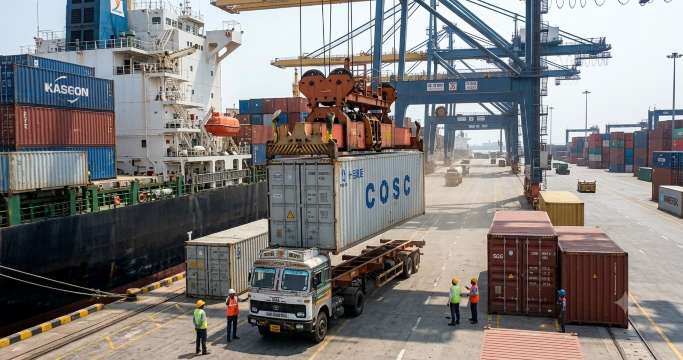
Note: AI-generated image. Only for reference.
Yes, however, the imports are subject to Indian import laws, customs requirements and product-specific regulations and restrictions.
The import requirements of each product are different. For example, some goods may need licenses, registration, certifications (such as BIS or CDSCO) or compliance with specific Indian standards.
Therefore, before you place an order, you must check whether you can import that particular product from China and what requirements apply to it.
For instance, based on the product category, as an importer, you may need to consider,
- Import restrictions or licensing requirements
- Product-specific certifications
- Labelling and packaging requirements
- Safety and quality standards
- Customs duties and taxes
- Intellectual property concerns
- Requirements related to regulated products
Hence, the simplest approach is to identify the right product classification and understand the applicable requirements before you pay for the import.
First-time buyers must work with a customs broker, freight forwarder or seasoned import professional to avoid non-compliance or problems upon goods arrival.
Top Products India Imports from China
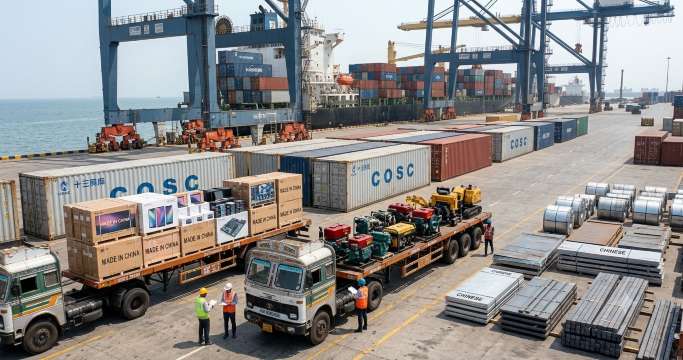
Note: AI-generated image. Only for reference.
India imports several goods from China. However, some categories include but aren't limited to, the following.
Product Category | Examples |
Electronic and Electrical Equipment | Semiconductors, LCDs, mobile phones, electronics parts, keyboards, and USB flash drives |
Machinery and Mechanical Equipment | Boilers, nuclear reactors, CNC industrial tools, cranes, lifts, calculating machines, printing machinery and automatic data processing machines |
Organic Chemicals | Raw materials and active pharmaceutical ingredients. Some chemical products include saturated acyclic monocarboxylic acids, amine-functional compounds, heterocyclic compounds with nitrogen, nucleic acids, and many more. |
Metals and Minerals | Precious stones, iron, aluminium articles and steel. |
Plastics and Polymers | Raw polymers, plastic articles, self-adhesive materials, sheets, polyamides, strips of plastic (non-cellular) and packaging materials |
Fertilisers | Chemical fertilisers such as DAP and urea |
Vehicles | Cars, motorcycles and vehicle components |
See all attractions
How to Import from China to India - Sourcing Strategies
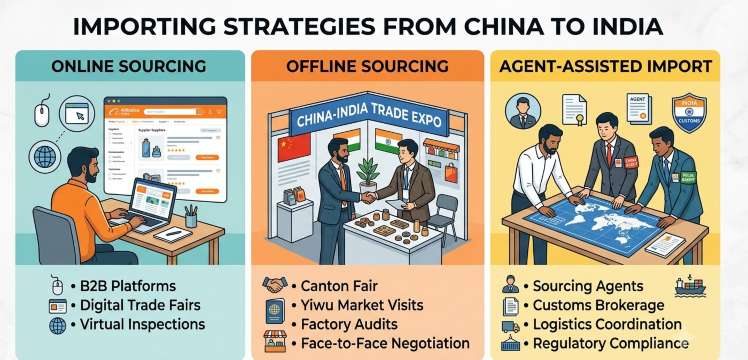
Online Sourcing

Note: AI-generated image. Only for reference.
This is the simplest way for a first-time importer to connect with Chinese manufacturers and suppliers.
Registering on popular B2B sourcing platforms allows you to search for products, compare suppliers, and request quotations. Essentially, these platforms connect with a comprehensive ecosystem of B2B buyers and sellers, broadening your network, and simplifying supplier comparisons.
Online platforms enable you to compare product prices, minimum order quantities, customisation options, manufacturing time, sample availability, and shipping arrangements. They also allow you to communicate with suppliers without travelling to China.
Online sourcing works well for eCommerce sellers, small retailers, start-ups, businesses testing a new product and buyers looking for specialised products.
Offline Sourcing
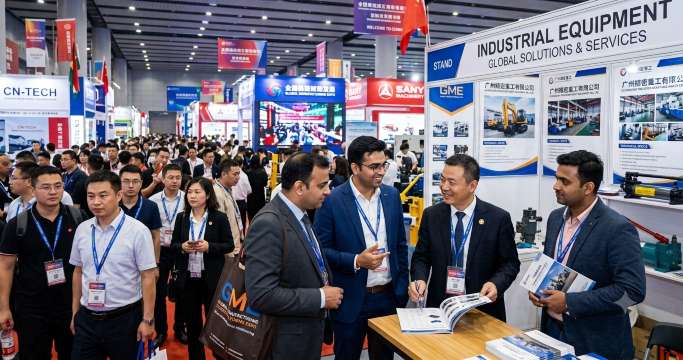
Note: AI-generated image. Only for reference,
Those looking to buy products such as machinery, equipment, etc., prefer travelling to China, seeing the products in-person and making a buying decision.
This is called offline sourcing. It involves visiting the supplier's city, factory, wholesale markets, exhibitions or trade fairs in China.
For instance, speaking of wholesale hubs, markets such as Yiwu Commodity City are famous for small products, toys, and lifestyle items. On the other hand, Shenzhen is popular for electronics. By visiting these markets in person, you can compare suppliers under one roof.
Offline sourcing is useful for the following cases:
- You plan to place large orders
- Product quality is highly important
- You want customised manufacturing
- You need to build long-term supplier relationships
- You want to inspect multiple products personally
Of course, offline sourcing involves a disadvantage and that's travelling time and cost. Hence, it might not necessarily be feasible for small business owners with limited financial muscle and capital. But on the other hand, you cannot risk or compromise quality for larger purchases either.
Agent-Assisted Import
Note: AI-generated image. Only for reference.
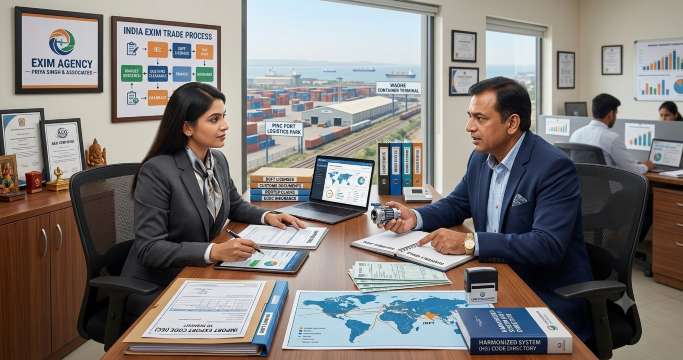
This is yet another popular sourcing method Indian buyers use. It involves using a sourcing or import agent to manage the process. Agents help you find suppliers, communicate with manufacturers, negotiate prices, inspect products, consolidate shipments, manage shipping and coordinate documentation.
Obviously, it involves an additional cost in the form of an agent fee or commission. Yet, it saves the hassles of travelling to China, visas, accommodation, product inspections, shipping and documentation. Thus, those unfamiliar with Chinese suppliers, the import ecosystem and international shipping can benefit from agent-assisted sourcing.
Nonetheless, you must choose an agent carefully. Evaluate potential choices across parameters such as industry experience, legal status, supplier network, factory access, fee structures, quality control measures, compliance and reviews.



Universal Beijing Resort
4.6/5
25302 reviewsIt was incredibly cool, a sea of emotions, positivity, a bunch of cool attractions, I really liked everything

Tianmen Mountain National Forest Park
4.6/5
15334 reviewsA truly beautiful spot! The steps are tough to climb, but the view from the top is worth it—it's magnificent. Be mindful of the weather the day you go! The steps are very slippery when it's raining.
What is the Import Duty from China to India in 2026?
Note: AI-generated image. Only for reference.
Import duty is an ad valorem tax. It is calculated as a percentage of the total value of goods instead of a fixed amount per unit. Simply stated, the higher your shipment value, the more absolute duty you pay, even if the percentage remains unchanged.
Now, who pays the import duty? It is the importer of record (the official person or business legally responsible for ensuring imported goods follow all laws and rules of the destination country). The name of the importer of record appears on the Bill of Entry and customs documents. So, if you are importing goods from a supplier, or any Chinese wholesale platform under your IEC (Importer Exporter Code), you will be legally responsible for paying customs duties and taxes in India.
Let's now understand a few terms associated with import duty from China to India in 2026.
- Basic Customs Duty: This is the core duty set by the HSN (Harmonised System of Nomenclature) code of your product. Usually, it ranges from 7.5% to 28%, based on the category. For example, raw materials and some machinery have a lower percentage. Furniture and finished consumer goods naturally have a higher duty. Since this number differs the most, you must get your HSN code right from the beginning.
- Social Welfare Surcharge (SWS): This is a flat 10% levied on the BCD amount, and not on the value of the goods. For example, if your BCD works out to ₹ 2,00,000, the SWS will be ₹ 20,000.
- Integrated GST (IGST): IGST is charged at 5%, 12%, 18% and 28% based on the product. It is applied above (CIF (Cost, Insurance and Freight) + BCD + SWS), not on the bare goods value.
Let's look at an example of a shipment with a CIF of ₹ 20,00,000, BCD of 10%, and IGST of 18%, which is a common combination for several consumer goods.
CIF Value | ₹ 20,00,000 |
BCD 10% | ₹ 2,00,000 |
SWS | ₹ 20,000 |
IGST 18% | ₹ 3,99,600 |
Landed Cost | ₹ 26,19,600 |
Note: ~31% effective duty on CIF. The above cost does not consider inland transport, CHA charges, and warehousing costs. You must work out these costs as well before you confirm a purchase order. You can recover the IGST amount as Input Tax Credit. BCD + SWS are non-recoverable.
Car Rentals
Car Rental Promo Code - 8% Off
New User Enjoy up to 8% Off
TRIPCAR8
Generic, Step-by-Step Practical Workflow to Import Goods from China to India
Step 1: Decide What You Want to Import
Usually, traders begin with suppliers. Suppliers come in later. You must first begin with the product. Research the Indian market before you begin sourcing.
While researching, you must consider some essential factors that include:
- Who will buy the product?
- What is the expected selling price?
- What is the competition?
- What quantity can you realistically sell?
- Are there seasonal demand patterns?
- What will your total landed cost be?
Initially, avoid ordering large quantities only because your supplier is offering a discount. Begin with smaller quantities to test the market and its response. A step-by-step approach like this can help avoid blocking your business capital.
Step 2: Check if You Can Import the Product
Before you connect with suppliers, check if you can import a particular product from China. For example, several foodstuffs, chemicals, seeds, animals, etc. are banned for import from China to India. You can check the list of banned items from a reputable source to avoid confusion.
While checking if you can import a particular product, you must consider some factors, including:
- The import restrictions on the product
- Special approval and certification requirements
- Labelling requirements
- The applicable duties and taxes
This is because Indian import rules, regulations, terms, conditions and restrictions may vary with the product. Accordingly, you must verify the latest requirements that apply to your goods before you place an order.
Step 3: Obtain the Necessary Business and Import Documentation
A business that imports commercial goods requires appropriate documentation and registrations. A key requirement in this regard is obtaining an Import Export Code (IEC), which is subject to applicable rules and exemptions.
Based on your business and product, you may also need other documents or registrations, including but not limited to:
- Import Export Code (IEC), where applicable
- Business registration details
- PAN
- GST-related details, where applicable
- Purchase order
- Commercial invoice
- Packing list
- Bill of Lading or Air Waybill
- Bill of Entry for customs clearance
- Product-specific certificates or approvals, where applicable
Your customs broker or freight forwarder can guide you concerning the documents you need for a specific shipment.
Step 4: Find and Compare Suppliers
Do not finalise the first supplier you come across. Importing goods involves a significant investment and several intricacies. Hence, you need the right and reliable supplier.
Accordingly, you must contact multiple suppliers and request quotations.
Next, you must compare more than just the unit price.
Ask about product specifications, material quality, minimum order quantity, sample cost, production time, packaging, customisation, and shipping terms.
Remember, low prices do not always mean the best quotes. You must also confirm the inclusions of the quotation, discovering whether the quote includes packaging, local transport or charges.
Step 5: Negotiate the Order and Confirm Terms
Once you finalise a supplier, get all your commercial terms confirmed in writing.
Your agreement must clearly cover some essential terms, including product specifications, quantity, unit price, total price, production timeline, packaging requirements, shipping terms and payment terms.
Avoid making assumptions.
Step 6: Arrange Shipping
Once your goods are manufactured, you must arrange for your shipment to move from China to India. You can do this through the supplier, a freight forwarder, a sourcing agent or a logistics company.
First-time importers usually prefer a freight-forwarder to receive end-to-end import assistance. If you choose one, you must seek clarity concerning pickup location, freight charges, transit time, insurance, documentation, customs clearance assistance and delivery to your location.
Maintain copies of all shipments.
Step 7: Comprehend the Basics of Customs Clearances
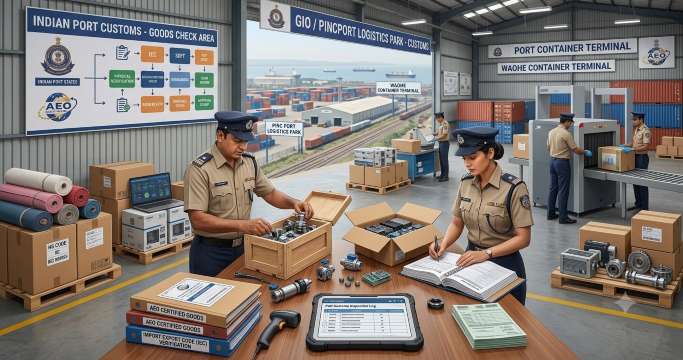
Each commercial import must undergo the required customs process. During the process, authorities review your shipment and relevant documentation. You must pay the applicable duties and taxes.
The shipment documentation must include the commercial invoice, packing list, transport document, product details, importer information, and various other product-specific documents.
The authorities may also examine the goods as part of the clearance process.
A customs broker can help you prepare and submit the required documentation.
Import Documentation Checklist
Note: AI-generated image. Only for reference.
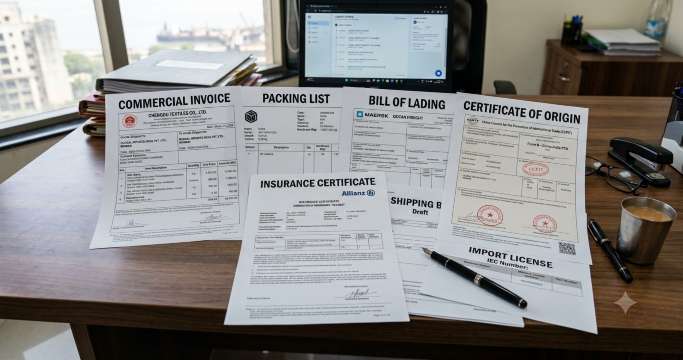
- Commercial Invoice: Details buyer/seller info, item description, HSN code, unit price, and total order value.
- Packing List: Outlines box count, gross weight, net weight, dimensions, and contents of each package.
- Bill of Lading (B/L) or Airway Bill (AWB): Issued by the carrier. It acts as proof of ownership and a contract of carriage.
- Certificate of Origin (CoO): Verifies the country where the product was manufactured, which governs tariff rates and trade agreement benefits.
- Bill of Entry (BOE): Official legal declaration filed with customs authorities for duty assessment and clearance.
- Import Export Code (IEC) & GST Certificate: Business compliance documents linked with customs records.
- Product Test Reports / BIS Certificates: Required for regulated product categories.
- Insurance Certificate: A document that confirms that the cargo is financially protected against loss or damage while in transit.
Supplier Vetting Tips

Note: AI-generated image. Only for reference.
- Verify Business Licenses: Ask for the supplier, vendor, or factory's Chinese business license and check their registered business scope.
- Use Trade Assurance or Escrow: Never pay 100% upfront via direct bank transfer to unfamiliar suppliers. Standard terms are 30% deposit upon order confirmation and 70% upon pre-shipment inspection approval. Yet, you can negotiate or confirm these terms with the suppliers.
- Order Production Samples: Always inspect a physically verified final sample before confirming full production.
🔥Discount - China Hotel Recommendations
Beijing Hotels
Shanghai Hotels
Guangzhou Hotels
See All Hotels
















Commonly Asked Questions About Import from China to India
-
Which shipping option should I choose while importing from China to India
-
What do you mean by customs clearance?
-
Which is the most common mistake first-time importers make?
-
Is it possible to import products directly from an online Chinese supplier?
-
Does India allow imports from China?
-
What is the import cost from China to India?
-
What is the cheapest way to import from China to India?
-
In what ways can you import from China to India?
Disclaimer: This article has been provided by an individual contributor or third party platform. If there is any discrepancy regarding the copyright, please contact us directly and we will delete the content immediately.
Trending Searches
-
Popular Cities
-
Popular Airlines & Airports
-
Top 10 Flight Routes in India
- Air India
- Alliance Air
- IndiGo
- SpiceJet
- Singapore Airlines
- Thai Airways
- Vietnam Airlines
- Air Canada
- Japan Airlines
- American Airlines
- Malaysia Airlines
- Korean Air
- Qantas
- Air New Zealand
- Azerbaijan Airlines
- British Airways
- Air China
- Lufthansa
- Indira Gandhi International Airport
- Chhatrapati Shivaji Maharaj International Airport
- Kempegowda International Airport
- Rajiv Gandhi International Airport
- Chennai International Airport
- Netaji Subhas Chandra Bose International Airport
- Sardar Vallabhbhai Patel International Airport
- Cochin International Airport
- Pune Airport
- Dabolim Airport